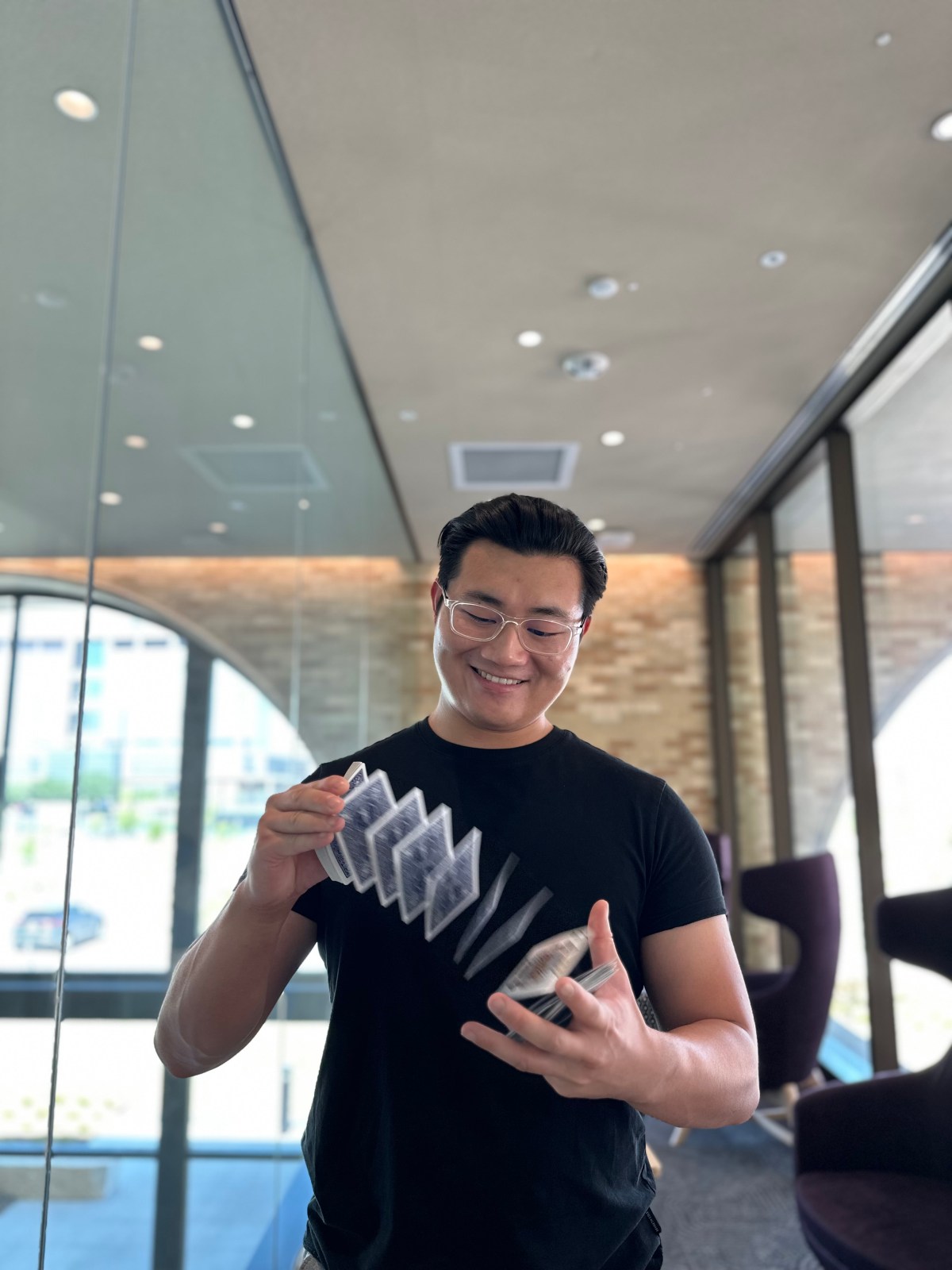
by Justin Choy, MS-III
A five-year-old boy sat nervously on the exam table at Cook Children’s Neighborhood Health Center on McCart Avenue, his small hands gripping the crinkled paper as his wide eyes darted anxiously around the room. His mother murmured reassurances, but the unfamiliar setting left him frozen with apprehension. Noticing his unease, I reached into my pocket and pretended to pluck something from the air—only to reveal a bright, red sponge ball between my fingers. His eyes flickered with curiosity.
“Wait, where did that come from?” he whispered, his guarded expression beginning to soften.
As I continued, I gently tapped his ear and produced another sponge ball from its depths. His nervousness gave way to delight. A hesitant giggle escaped as he reached out to touch the impossible object. Weaving magic into the physical exam, I guided his gaze with each sleight of hand, subtly assessing his eye tracking and coordination. By the time I placed my stethoscope on his chest, his fear had vanished, replaced by eager anticipation for what trick might come next. In that moment, I saw how magic could do more than entertain—it could transform the clinical experience, turning fear into fascination and apprehension into engagement.
Bringing magic into pediatric care was never something I consciously planned. It began organically—during a clinical rotation, I encountered a young patient anxious about an upcoming procedure. Hoping to provide a distraction, I performed a simple card trick. To my surprise, her face lit up with delight, her fear momentarily replaced by curiosity and laughter. That single moment sparked a realization: magic could be more than just a hobby. It could be a tool for healing, a way to build trust, and a means of humanizing the hospital experience.
As my training progressed, I began incorporating magic into patient interactions regularly. I witnessed how it eased not only the children’s anxiety but also their parents’ worries. A simple trick could transform a tense clinical encounter into one of warmth and engagement, shifting the dynamic from apprehension to familiarity. This newfound approach allowed me to connect with families instantly, making medical visits less intimidating and more inviting.
Recognizing the profound impact of these moments, I sought out ways to bring magic to children in more meaningful ways. I started volunteering at the Dialysis Unit at Cook Children’s Hospital, performing tricks for kids as they received treatment. These sessions became transformative—not just for the children, but for me as well. I watched withdrawn patients brighten with curiosity, asking to see another trick, then another. Parents, often weary from the emotional toll of chronic illness, smiled as they watched their children experience moments of joy amidst their challenges.
Medicine is as much about connection as it is about science. Patients do not care how much we know until they know how much we care. A patient may not recall the specifics of a physical exam, the precise words a physician used, or even the exact diagnosis. But they will remember how they felt—whether they were comforted or dismissed, reassured or anxious. This is why, while medical knowledge and technical skill are essential, the ability to connect with patients on a human level is just as critical. A patient who feels at ease and trusts their provider is more likely to engage in their own care, leading to better outcomes. Just as a magician carefully crafts an experience that leaves a lasting impression, physicians must be intentional about creating clinical encounters that prioritize empathy, understanding, and connection. Whether it’s taking an extra moment to offer reassurance, explaining a procedure in a way that alleviates fear, or simply engaging with a patient on a personal level, these efforts make all the difference.
Magic serves as an unexpected yet powerful bridge in this dynamic. When a child sees a physician not merely as an authority figure but as someone who brings joy and wonder, the clinical setting becomes less intimidating. This principle extends beyond pediatrics into all areas of medicine.
As I continue my journey in medicine, I will carry these lessons forward, striving to cultivate human connection in every patient interaction. I encourage my fellow medical students and physicians to bring their passions into patient care—to find ways to forge deeper connections with patients. Whether through music, art, storytelling, or something as unexpected as magic, these personal touches can transform a hospital experience, offering comfort in moments of uncertainty. Medicine, after all, is about more than just curing illness—it is about nurturing hope, fostering connection, and proving that even in difficult times, moments of magic can still exist.
 Tarrant County Physician Online