Posted on 3/27/20
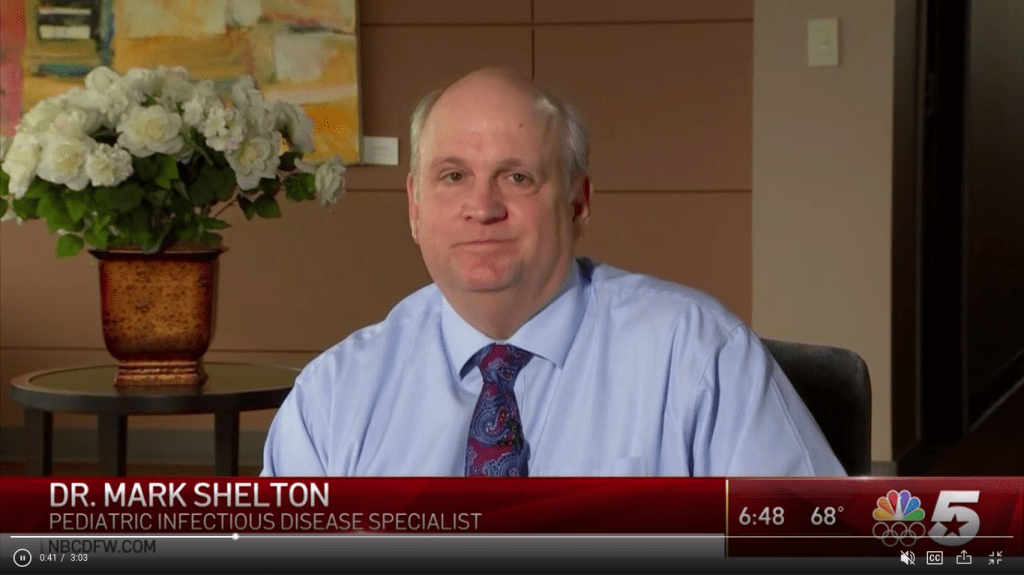
Watch the below video to hear Pediatric Infection Disease Specialist Dr. Mark Shelton explain “community spread” and answer some of your top coronavirus questions.


By Ellen Terry
“Physicians have important new tools to care safely for our most vulnerable patients in this crisis thanks to the timely actions by the Trump administration, Gov. Greg Abbott, Texas Medical Board President Sherif Zaafran, MD, and Insurance Commissioner Kent Sullivan,” TMA President David C. Fleeger said. “We are working closely with congressional leaders to expand telemedicine payment parity to all health plans so we can provide the high quality of care all Texas patients deserve.”
Insurers to Cover Visits
Governor Abbott on Tuesday waived certain regulations and directed the Texas Department of Insurance (TDI) to issue an emergency rule relating to telemedicine provided through state-regulated insurance plans.
Contracted or preferred physicians and other health care professionals will be eligible for payment from TDI-regulated insurance plans for medical visits they conduct over the phone instead of in person at the same rate they would receive for in-person visits. The Texas Medical Board will issue guidance in the coming days, including administrative guidance for billing to ensure claims are processed smoothly, the governor’s office said.
These actions build upon waivers the governor issued last week to allow physicians to establish a doctor-patient relationship over the telephone.
HIPAA Restrictions Suspended
Effective immediately, the U.S. Health and Human Services (HHS) Office for Civil Rights will not penalize physicians for noncompliance with HIPAA when they serve patients in good faith through common, nonpublic-facing communications technologies, such as FaceTime or Skype.
This applies to services provided via telehealth for any reason, regardless of whether the service is related to the diagnosis and treatment of health conditions related to COVID-19, the office said.
HHS encourages physicians to notify patients of the potential security risks of using these services, but notification is not required. Physicians should not use public-facing communication services like Facebook Live, Twitch, and TikTok. Physicians should still document the visit as though it took place in person.
Physicians may want to check with individual payers regarding their telemedicine requirements in light of the HHS announcement.
Medicare Telehealth Expands
The Centers for Medicare & Medicaid Services (CMS) has temporarily broadened telehealth access to Medicare patients.
Under a new 1135 waiver effective March 6:
For details, see Medicare Telehealth Frequently Asked Questions and the Texas Medical Association’s latest telemedicine tools and information. The Texas Medical Board also has published an FAQ on using telemedicine during the COVID-19 disaster declaration.
You can also find the latest news, resources, and government guidance on the coronavirus outbreak by visiting TMA’s COVID-19 Resource Center regularly.
Originally published on Texas Medical Association’s website.

On Thursday, the TMB issued a waiver that allows telephone refills of valid prescriptions for treatment of chronic pain by a physician with an established chronic pain patient.
“Due to the seriousness of the opioid crisis and the need to ensure there is proper oversight of chronic pain management, this suspension is only in effect until April 10, 2020,” the agency said. “The physician(s) remains responsible for meeting the standard of care and all other laws and rules related to the practice of medicine. The standard of care must still be maintained related to the treatment of chronic pain patients.”
Earlier this week, TMB allowed expanding the use of telemedicine, temporarily waived license and permit renewal requirements, and allowed retired physicians to return to active status (See below).
“During this critical time, medical providers will need to focus their attention and energy on the health and well-being of our fellow Texans,” said TMB President Sherif Z. Zaafran, MD. “The Texas Medical Board will be doing all that it can to help assist Texas physicians, and other licensees under our authority, in making sure they stand ready and able to treat patients across the state.”
Texas Medical Association President David C. Fleeger praised the TMB action.
“The physicians of Texas greatly appreciate the speed with which the TMB has made these changes to help us better care for our patients in this crisis,” Dr. Fleeger said. “We are committed to working closely with Dr. Zaafran and TMB Executive Director Brint Carlton to identify and recommend additional necessary changes as the situation progresses.”
Expanded Use of Telemedicine
During the disaster period, telemedicine – including the use of telephone only – may be used to establish a physician-patient relationship, TMB said.
“This expanded use of telemedicine may be used for diagnosis, treatment, ordering of tests, and prescribing for all conditions. The standard of care must be met in all instances.”
Texas laws and regulations on telemedicine have changed considerably to expand access over the past several years. More information on expanding your telemedicine services can be found on the TMA website.
Licensing Requirements
TMB will take into account “extenuating circumstances surrounding the completion of license/permit renewal requirements such as renewal deadlines and completion of continuing education hours” for all license and renewal permit holders regulated by TMB.
Many CME courses, including those offering ethics and professional responsibility credit, are available to TMA members for free on the TMA Education Center thanks to a generous grant from the TMA Insurance Trust.
Retired Physicians Returning to Active Status
Retired physicians whose licenses have been placed on official retired status for less than two years can return to active status during the disaster period, TMB said.
The TMB website includes frequently asked questions (FAQs) on returning to active status, additional requirements, and exemptions for retired physicians to provide voluntary charity care.
Licensing for Out-of-State Physicians
Out-of-state physicians will be allowed obtain a Texas limited emergency license or hospital-to-hospital credentialing “for no more than thirty (30) days from the date the physician is licensed or until the disaster declaration has been withdrawn or ended, whichever is longer,” TMB said.
Governor Abbott fast-tracked temporary licensing of out-of-state physicians last week.
You can also find the latest news, resources, and government guidance on the coronavirus outbreak by visiting TMA’s COVID-19 Resource Center regularly.
Originally published on Texas Medical Association’s website.

The sign, which you can customize for your practice, asks patients if they have symptoms, if they’ve been exposed to the virus, and if they’ve traveled in the past 14 days. Patients who answer yes are told to call the practice from somewhere away from the entrance and wait for instructions.
It is available on the TMA website in English and Spanish as well as in color and black and white.
The Task Force also has updated its “Frequently Asked Questions” that answer many of the questions you might have about caring for people who have been exposed to the virus while keeping your staff and facility safe.
You can find the latest news, resources, and government guidance on the coronavirus outbreak by visiting TMA’s COVID-19 Resource Center regularly.
Originally published on Texas Medical Association’s website.

Likewise, the Texas Attorney General’s Office has issued a warning about outbreak-related scams.
Scammers frequently send emails with malicious attachments or links to fraudulent websites, CISA says. These trick unwary people into revealing sensitive information or donating to phony causes.
“Exercise caution in handling any email with a COVID-19-related subject line, attachment, or hyperlink, and be wary of social media pleas, texts, or calls related to COVID-19,” the agency said in a statement.
CISA advises people to:
The Texas attorney general’s office website details the different types of internet scams and ways to spot scammers.
Physicians and practice managers are encouraged to review CISA’s Risk Management for COVID-19.
You can also find the latest news, resources, and government guidance on the coronavirus outbreak by visiting TMA’s COVID-19 Resource Center regularly.
Originally published on Texas Medical Association’s website.

In light of the COVID-19 nationwide public health emergency, the HHS Office for Civil Rights (OCR) is exercising its enforcement discretion and, effective immediately, will not impose penalties on physicians using telehealth in the event of noncompliance with the regulatory requirements under the Health Insurance Portability and Accountability Act (HIPAA).
Physicians may seek to communicate with patients and provide telehealth services through remote communications technologies. Some of these technologies, and their use, may not fully comply with the requirements of the HIPAA Rules.
However, today’s announcement means that physicians who want to use audio or video communication technology to provide telehealth to patients during the COVID-19 nationwide public health emergency can use any non-public facing service that is available to communicate with patients. This exercise of discretion applies to telehealth provided for any reason, regardless of whether the telehealth service is related to the diagnosis and treatment of health conditions related to COVID-19.
For example, a physician using their professional judgement may request to examine a patient exhibiting COVID-19 symptoms, using a video chat application connecting the physician’s or patient’s phone or desktop computer in order to assess a greater number of patients while limiting the risk of infection of other persons who would be exposed from an in-person consultation. Likewise, a physician may provide similar telehealth services in the exercise of their professional judgment to assess or treat any other medical condition, even if not related to COVID-19, such as a sprained ankle, dental consultation or psychological evaluation, or other conditions.
Under this Notice, physicians may use popular applications that allow for video chats, including Apple FaceTime, Facebook Messenger video chat, Google Hangouts video, or Skype to provide telehealth without risk that OCR might seek to impose a penalty for noncompliance with the HIPAA Rules. Physicians should not use Facebook Live, Twitch, TikTok or other public facing communication services. Physicians are encouraged, but not required, to notify patients of the potential security risks of using these services and to seek additional privacy protections by entering into HIPAA business associate agreements (BAA). HHS also noted that while it hasn’t confirmed such statements, Skype for Business, Updox, VSee, Zoom for Healthcare, Doxy.me, and Google G Suite Hangouts have said that their products will help physicians comply with HIPAA and that they will enter into a HIPAA BAA. Additional information can be found at this notice from Department of Health and Human Services (HHS).

CMS Outlines New Flexibilities Available to People with Medicare
The Trump Administration today announced expanded Medicare telehealth coverage that will enable beneficiaries to receive a wider range of healthcare services from their doctors without having to travel to a healthcare facility. Beginning on March 6, 2020, Medicare—administered by the Centers for Medicare & Medicaid Services (CMS)—will temporarily pay clinicians to provide telehealth services for beneficiaries residing across the entire country.
“The Trump Administration is taking swift and bold action to give patients greater access to care through telehealth during the COVID-19 outbreak,” said Administrator Seema Verma. “These changes allow seniors to communicate with their doctors without having to travel to a healthcare facility so that they can limit risk of exposure and spread of this virus. Clinicians on the frontlines will now have greater flexibility to safely treat our beneficiaries.”
On March 13, 2020, President Trump announced an emergency declaration under the Stafford Act and the National Emergencies Act. Consistent with President Trump’s emergency declaration, CMS is expanding Medicare’s telehealth benefits under the 1135 waiver authority and the Coronavirus Preparedness and Response Supplemental Appropriations Act. This guidance and other recent actions by CMS provide regulatory flexibility to ensure that all Americans—particularly high-risk individuals—are aware of easy-to-use, accessible benefits that can help keep them healthy while helping to contain the spread of coronavirus disease 2019 (COVID-19).
Prior to this announcement, Medicare was only allowed to pay clinicians for telehealth services such as routine visits in certain circumstances. For example, the beneficiary receiving the services must live in a rural area and travel to a local medical facility to get telehealth services from a doctor in a remote location. In addition, the beneficiary would generally not be allowed to receive telehealth services in their home.
The Trump Administration previously expanded telehealth benefits. Over the last two years, Medicare expanded the ability for clinicians to have brief check-ins with their patients through phone, video chat and online patient portals, referred to as “virtual check-ins”. These services are already available to beneficiaries and their physicians, providing a great deal of flexibility, and an easy way for patients who are concerned about illness to remain in their home avoiding exposure to others.
“These changes allow seniors to communicate with their doctors without having to travel to a healthcare facility so that they can limit risk of exposure and spread of this virus.”
A range of healthcare providers, such as doctors, nurse practitioners, clinical psychologists, and licensed clinical social workers, will be able to offer telehealth to Medicare beneficiaries. Beneficiaries will be able to receive telehealth services in any healthcare facility including a physician’s office, hospital, nursing home or rural health clinic, as well as from their homes.
Medicare beneficiaries will be able to receive various services through telehealth including common office visits, mental health counseling, and preventive health screenings. This will help ensure Medicare beneficiaries, who are at a higher risk for COVID-19, are able to visit with their doctor from their home, without having to go to a doctor’s office or hospital which puts themselves or others at risk. This change broadens telehealth flexibility without regard to the diagnosis of the beneficiary, because at this critical point it is important to ensure beneficiaries are following guidance from the CDC including practicing social distancing to reduce the risk of COVID-19 transmission. This change will help prevent vulnerable beneficiaries from unnecessarily entering a healthcare facility when their needs can be met remotely.
President Trump’s announcement comes at a critical time as these flexibilities will help healthcare institutions across the nation offer some medical services to patients remotely, so that healthcare facilities like emergency departments and doctor’s offices are available to deal with the most urgent cases and reduce the risk of additional infections. For example, a Medicare beneficiary can visit with a doctor about their diabetes management or refilling a prescription using telehealth without having to travel to the doctor’s office. As a result, the doctor’s office is available to treat more people who need to be seen in-person and it mitigates the spread of the virus.
As part of this announcement, patients will now be able to access their doctors using a wider range of communication tools including telephones that have audio and video capabilities, making it easier for beneficiaries and doctors to connect.
Clinicians can bill immediately for dates of service starting March 6, 2020. Telehealth services are paid under the Physician Fee Schedule at the same amount as in-person services. Medicare coinsurance and deductible still apply for these services. Additionally, the HHS Office of Inspector General (OIG) is providing flexibility for healthcare providers to reduce or waive cost-sharing for telehealth visits paid by federal healthcare programs.
Medicaid already provides a great deal of flexibility to states that wish to use telehealth services in their programs. States can cover telehealth using various methods of communication such as telephonic, video technology commonly available on smart phones and other devices. No federal approval is needed for state Medicaid programs to reimburse providers for telehealth services in the same manner or at the same rate that states pay for face-to-face services.
This guidance follows on President Trump’s call for all insurance companies to expand and clarify their policies around telehealth.
To read the Fact Sheet on this announcement visit: https://www.cms.gov/newsroom/fact-sheets/medicare-telemedicine-health-care-provider-fact-sheet
To read the Frequently Asked Questions on this announcement visit: https://www.cms.gov/files/document/medicare-telehealth-frequently-asked-questions-faqs-31720.pdf
This guidance, and earlier CMS actions in response to the COVID-19 virus, are part of the ongoing White House Task Force efforts. To keep up with the important work the Task Force is doing in response to COVID-19 click here www.coronavirus.gov. For information specific to CMS, please visit the Current Emergencies Website.

Originally published on Texas Medical Association’s website.
As the number of COVID-19 cases in Texas and around the country grows, what steps should your clinic take to ensure the safety of your staff and patients?
The Texas Medical Association COVID-19 Task Force has published a “Frequently Asked Questions” that answers many of the questions you might have about caring for people who have been exposed to the virus.
Among the questions answered:
The FAQ is based on guidance from the Centers for Disease Control and Prevention (CDC), the Department of State Health Services (DSHS), and other health organizations.
As of Friday, 39 cases have been confirmed in Texas, mostly in the state’s largest metropolitan areas, according to the DSHS tracker for Texas COVID-19 cases.
You can find the latest news, resources, and government guidance on the coronavirus outbreak by visiting TMA’s COVID-19 Resource Center regularly.
COVID-19 Update from TMA – Physician Leaders Also Host Statewide Briefing for Doctors
| The Texas MedicalAssociation (TMA) has assembled the TMA COVID-19 Task Force to help Texas physicians prepare their practices to protect and treat their patients in the event of a community outbreak of the 2019 novel coronavirus. As a first step, the TMA Board of Trustees and the task force convened a statewide tele-town hall phone meeting Tuesday evening to update thousands of primary care doctors from across the state. The call, hosted by TMA Board of Trustees Chair E. Linda Villarreal, MD, and TMA President David C. Fleeger, MD, featured situational reports from Texas Department of State Health Services (DSHS) Commissioner of Health John Hellerstedt, MD, and DSHS Infectious Disease Medical Officer Jennifer Shuford, MD. They highlighted epidemiological updates and evidence-based criteria to evaluate suspected COVID-19 patients, advising doctors how to set up their clinics for a possible community outbreak. Dr. Villarreal said the call was a good first step to inform Texas physicians on how to protect their patients and the community. “Our goal is to help you be as prepared as possible for this serious public health threat,” Dr. Villarreal said. The TMA COVID-19 Task Force is chaired by Wendy Chung, MD, chief epidemiologist at Dallas County Health and Human Services and chair of the TMA Council on Science and Public Health. Dr. Chung will lead the team of 12 front-line infectious disease and primary care physician experts who will stay informed of the latest epidemiological information regarding COVID-19 and advise fellow physicians across the state about developments. The idea is for this TMA blue-ribbon group to empower front-line physicians to have their practices ready to answer the call and help their community’s patients if cases develop in their hometown. Dr. Fleeger said the task force will play a critical role in safeguarding the health of Texans. “We as physicians have an ethical obligation to provide urgent medical care during emergencies such as this. Though it puts us at risk, there are precautions and measures we can take to protect ourselves and still take care of our patients effectively,” Dr. Fleeger said. “The ethical obligation also includes neither stigmatizing nor ostracizing anyone from receiving needed medical care – no matter their race, ethnicity, culture, or infection status.” TMA also has established and continuously updates an online Coronavirus Resource Center for physicians. TMA is the largest state medical society in the nation, representing more than 53,000 physician and medical student members. It is located in Austin and has 110 component county medical societies around the state. TMA’s key objective since 1853 is to improve the health of all Texans. TMA Contacts: Brent Annear (512) 370-1381; cell: (512) 656-7320; email: brent.annear@texmed.org Marcus Cooper (512) 370-1382; cell: (512) 650-5336; email: marcus.cooper@texmed.org Connect with TMA on Twitter, Facebook, and Instagram. Check out MeAndMyDoctor.com for interesting and timely news on health care issues and policy. |
The Texas Medical Association, in conjunction with the Texas Department of State Health Services, has scheduled a critical conference call with Texas physicians next week. Answer your home phone at 7 pm CT, Tuesday, March 10, to take part in TMA’s Tele-Town Hall Meeting on COVID-19.
This is an opportunity get information to proactively protect your practice as COVID-19 continues to spread throughout Texas. Key discussion topics will include working with local/regional health department and how to counsel your patients. TMA President David Fleeger, MD, will moderate the hour-long event, and a number of specialists will participate in the discussion.
Potential speakers include the following:
• John Hellerstedt, MD, DSHS commissioner
• Wendy Chung MD, chief epidemiologist, Dallas County Department of Health and Human Services, and current chair of TMA’s Council on Science and Public Health
• Jennifer Shuford, MD, DSHS infectious disease medical officer
• E. Linda Villarreal, MD, chair of the TMA Board of Trustees
• TMA staff experts
Not only is this an opportunity to learn more about a critical topic, but participants also have the opportunity to earn one hour of CME credit for education in medical ethics and/or professional responsibility.
Click here to find out more information about this event.
Click here to access TMA’s online COVID-19 Resource Center.