The Tom and Joan Rogers Endowment in Support of Academic Excellence for the School of Medicine will provide for the greatest needs and opportunities annually in medical education and physician training.
“I am incredibly grateful for this generous gift, which will empower current and future generations of innovative and talented students,” said Stuart D. Flynn, M.D., Dean of the TCU School of Medicine. “Two of the first people I met upon arriving in Fort Worth were Mrs. and Dr. Rogers and they welcomed me in such a gracious and warm fashion. Their generosity is emblematic of their character as they support our efforts to create physicians who are highly skilled and knowledgeable yet compassionate care givers. Our students are extremely fortunate to have Dr. Rogers, a luminary in caring for our children in Fort Worth, as a role model to emulate on the delivery of care with empathy, passion, and love.”
Tom Rogers, M.D., retired after a 50-year career as a pediatrician, has been referred to as “Fort Worth’s original Empathetic Scholar.” Mrs. Rogers is a longtime member of the TCU Board of Trustees. Their generous gift to create this endowment also supports Lead On: A Campaign for TCU, the university’s most ambitious philanthropic campaign in its nearly 150-year history.
Dr. and Mrs. Rogers, their daughter Kelly, and three grandchildren are TCU graduates.
“Supporting the School of Medicine is pretty much a ‘no-brainer’ for us,” the couple said. “So, when TCU helped establish the M.D. School, we were eager to support it in any way we could.”
“Getting acquainted with many of the faculty and staff and meeting some of the truly amazing students only increased our eagerness to be involved,” they said. “Texas is desperate for more doctors, and hopefully some of these graduates will also choose to stay in Fort Worth to practice. In establishing this endowed program fund for academic excellence, we are supporting medical education while investing in these deserving students through the tough years of becoming a doctor.”
HOW TO GIVE
Gifts of any size may be made to The Tom and Joan Rogers Endowment in Support of Academic Excellence for the School of Medicine by contacting University Advancement at 817-257-7800 or TCU Box 297044, Fort Worth, TX 76129.
Originally published by TCU School of Medicine on April 19, 2022. You can read the original article here.
TCU School of Medicine welcomed experts from Olympus, global leaders in the development of medical devices, onto their campus in early February to give medical students an immersive and hands-on experience using the latest laparoscopic surgery equipment.
Jim Cox, M.D., an assistant professor at TCU School of Medicine, helped organize the event with the help of the Gastrointestinal and Hepatology Student Interest Group (SIG).
“When I was in private practice I worked extensively with Olympus and I reached out to a former colleague and asked could you provide this training session for the students,” Dr. Cox said. “The thing with Gastroenterology is that much of what we do is colonoscopy or upper endoscopy. We have first, second- and third-year medical students here just to give them the opportunity to see if they’re interested in Gastroenterology.”
Before immersing themselves into the technology, about two dozen medical students joined Dr. Cox for a brief presentation in the simulation lab. He gave a brief overview of typical things the students might see during residency.
“Let’s say an ulcer or a polyp or colon cancer and how are we going to treat those things,” said Dr. Cox. “Are we going to remove them? Are we going to remove an inanimate object from the esophagus that someone inadvertently swallowed? We’re talking about both urgent and non-urgent procedures that gastroenterologists encounter every single day.”
The medical schools’ simulation lab had laparoscopy training monitors and tools provided by Ethicon. The training monitors allow the students to see simulated examples of a laparoscopy, which are small scars on the abdomen. Students can use the monitors attached to the machine to practice suturing and knot tying techniques that require basic hand-and-eye coordination.
“This requires more than just being able to coordinate your hands,” said Sujata Ojha, a third-year medical student and co-president of the Gastroenterology and Hepatology Student Interest Group (SIG) at TCU School of Medicine. “There’s visual spatial movement and being able to know where you are in space and being able to maneuver without impacting the patients’ internal organs.”
Dr. Cox added that most of today’s gastrointestinal surgeries are done using a laparoscope, which makes this training much more beneficial for medical students.
“Most gallbladder, appendix and other intraabdominal organ removals are done using a laparoscope,” Dr. Cox said. “They leave very tiny scars which may actually go away in a few years as opposed to having the patient needing a big scar that could possibly stay for a lifetime.”
Gastroenterologists are advancing more and more into the use of laparoscopic procedures. A recent 5-year patient study presented at the 2022 International Gastric Cancer Congress in March showed laparoscopy surgery compared with an open gastrectomy surgery was found to produce better overall survival outcomes for patients, according to the Cancer Network.
Mallory Thompson, a third-year medical student and co-president of the GI and Hepatology SIG, was excited about the demonstrations at the medical school.
“Medical students aren’t exposed to these kinds of medical procedures during their clinical rotations this is more for medical resident training,” Thompson said. “It’s exciting that our medical school faculty like Dr. Cox and our student interest group are setting up these kinds of opportunities for us.”
During a short break from medical school during Summer 2021, Sereena Jivraj, a second-year medical student at the TCU School of Medicine, had a burning desire to create something.
“I’ve had these ideas in the back of my mind for some time,” Jivraj said. “I’ve spent so much time around children whether that was tutoring or babysitting and I’ve always been reading children’s books for years and it just felt like I’ve been so involved with kids in the past that it would be cool to keep it going in the future.”
Sereena Jivraj, a second-year medical student at the TCU School of Medicine, holds her newly published children’s books entitled “Connor and His Composting Adventures” and “Ella and Her Vaccine Soldiers.”
In “Connor and His Composting Adventures,” Connor learns what the difference is between compost and regular trash. Throughout the course of the story Connor learns what everyday items can be composted and how to prevent trash from ending up in a landfill.
“The point is just to educate kids and even parents on what composting is,” Jivraj said. “A lot of people when you speak to them about it they’ve never heard of it. What I really wanted to do is be able to instill that knowledge from a young age. Hopefully that will make it easier to make changes in our society one day in the future.”
Her second children’s book called “Ella and Her Vaccine Soldiers” is about young Ella’s visit to her doctor. Ella learns how important vaccines are and how they can turn into “mini soldiers” to help her body fight viruses and diseases.
“With COVID-19 around last few years and previously with flu shots, I can remember everyone being afraid to go to the doctor just because they knew a shot was coming,” Jivraj said. “I want kids’ fears to be diminished so they can have a healthy relationship with their doctors and not fear them because you’re really brave when you get these vaccinations. I don’t want this fear of vaccines to prevent you getting the help that you need.”
Writing the books was a process that helped Jivraj tackle some of her own issues with long form writing. She reached out to the medical school’s Compassionate Practice® team after she did some volunteer work gathering donations for homeless individuals in Fort Worth and felt compelled to pen a poem about her experience.
“I used it as a way to get out my emotions and help me decompress,” Jivraj said. “I went to the Compassionate Practice® team and that kind of gave me the confidence to do this because I always felt like writing was my weakness.”
She also talked to Samir Nangia, M.D., a Physician Development Coach at the medical school, about the idea of penning the children’s books. During their chats, Dr. Naniga said that her urged Jivraj not to put her ideas off and take some time during her break to pursue them.
“In some instances, through coaching we can help students become more efficient with their time management and help them discover what resources they need to make their dreams a reality,” Dr. Nangia said. “However, in some instances all it takes is that motivation and emotional support. Both of which were true in Sereena’s case.”
In addition to embracing her creativity, Jivraj said that she chose to author children’s books so the information would be easy to understand and accessible to all people.
“This is a book that you can read to your child in your belly or read to your newborn,” Jivraj said. “Because just exposing them to the vocabulary and to the words it helps create those processes in their brains so when they are exposed to it later on, they are not completely confused about it.”
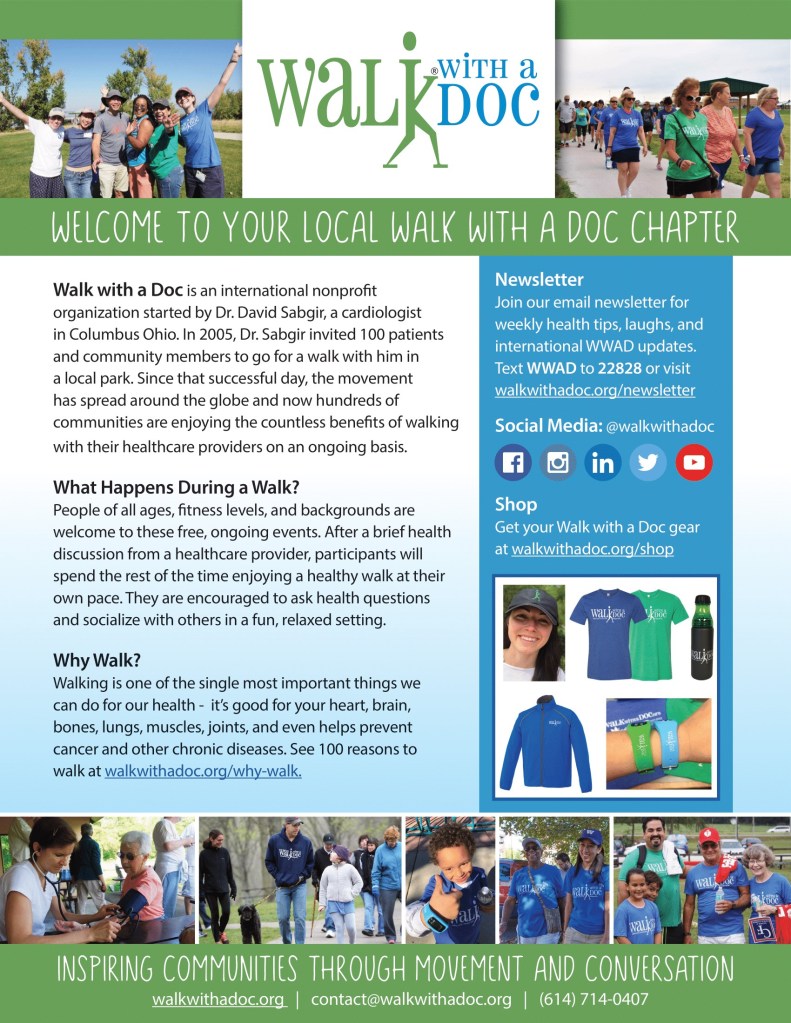
Join our local chapter of Walk with a Doc on Saturday, March 12, for a fun morning walking, talking about health, and meeting people in our community. You can find information about the spring dates here.
The AMA-MSS Region 3 includes medical schools in Arkansas, Kansas, Louisiana, Mississippi, Oklahoma and Texas.
“My job is to learn about what different health care policies are being passed in these different states,” Singh said. “And spread that news and raise awareness among medical students because as we all know these policies impact everyone from students to physicians and patients.”
Singh will oversee the Region 3 advocacy committee and lead advocacy initiatives to engage region chapters.
He will also work with the Advocacy Subcommittee of the Committee on Legislation and Advocacy (COLA) to help our region engage with events like National Advocacy Week (NAW) and the Medical Student Advocacy Conference (MAC). He will also support the Membership Chair and Secretary in reaching out to local chapters to highlight advocacy endeavors and provide advocacy updates in AMA-MSS Region 3 monthly newsletters.
“Policy writing is very niche and not every physician has to do that but the way this connects with the medical school is how they teach us to be an advocate for your patients,” Singh said. “And growing that idea on a larger scale its advocating for your population. Not only talking to physicians you’re talking to legislative members, congress members and kind of impact a larger audience that’s a really great opportunity as future physicians.”
The Medical Student Section (MSS) aims to be a voice for medical students’ across the AMA to help improve medical education and advocating for the future of medicine.
This article was originally published in the November/December issue of the Tarrant County Physician. You can read find the full magazine here.
“Si se puede!” (Yes, you can). . .
. . . is what I have been told throughout my life by my parents and by my entire familia. Being the first ever in my family to go into the medical field is a commonality that many Hispanic students share. My father emigrated from Mexico at the age of 18 and had to delay attending university to first learn English. My mother immigrated here at the age of 26, after already holding a teaching license and an equivalent master’s degree in Mexico. She had to redo her education after first learning English to regain her teaching license in the U.S.
Learning English at the same time as my mother was no easy feat. She taught me my vowels and how to read while we taught her proper syntax and English grammar. When it came time to apply to college, how was I supposed to ask my parents to revise my application essays since when growing up, I was the one who edited and revised their emails and text messages?
When I began college, my father asked me, “What are you going to do with a degree in biology?” to which I responded, “Be a scientist.” He wasn’t asking because he didn’t believe in me; he was asking because he truly didn’t know what I could do with such a degree, and to be 100 percent honest, I didn’t either. Becoming a doctor was not a thought I had before; I fell into this path through getting involved with my passion to serve others and my interest in science. Once I realized that I pictured my future self as being a physician, my family grew concerned about the difficult path I would face. They suggested alternative careers, knowing that no one from our family had ever gone down this path before and that many who try, fail.
Maybe I was naïve and didn’t do the proper research on what a career as a physician entailed, but without any guidance, I faced only my short-term goals, one at a time. What I didn’t realize was that becoming a doctor involved much more than just meeting specific checkboxes. It required immense dedication, time, and sacrifice.
At times, I questioned if I even belonged in medical school. During my application process I was told, “You only interviewed there because you’re Hispanic and speak Spanish,” or “You’re lucky you’re underrepresented in medicine; you’ll get accepted anywhere.” I was continually discredited of my merits and accomplishments because of my ethnicity, even though I had years of volunteering, research, and experiences in the medical field as an EMT, and had not only a bachelor’s but also a master’s degree. Upon entering medical school there were less than 20 Hispanic medical students in my class of 220. Hispanic students make up only 15 percent of the student population of all the health professional colleges combined in the health science center I attend, while in Texas, the Hispanic population comprises roughly 40 percent of the state’s population.
Lacking representation and not having mentors who had faced similar paths, I struggled to fit in and find my place. While many of my colleagues had family and friends that were doctors, I grew up not knowing a single person in this field besides my own doctor. I faced obstacles because I had to find resources on my own to help me accomplish my goals. Every medical experience, preceptorship, or shadowing opportunity was one I went out and found on my own; I didn’t have the luxury of growing up with those opportunities around me. I carved my own path.
Within the first month of my third year, I was reminded of the importance of having Hispanic representation in the medical field. I attended to many patients who were Hispanic and spoke only Spanish. While medical translators are vital and do an amazing job of communicating adequately with a patient when there is a language barrier, being able to communicate directly and relate to a patient forms a bond unlike another. Conversations with a translator can sometimes be procedural and very formal; being able to communicate freely in one’s own language allows for a more human interaction and a better understanding between a provider and a patient.
It is the moment when I see a patient become more animated and more comfortable that I remember why I chose this career and that I bring more representation to this field. I remember why I chose to be the first in my family to carve this path, and why I choose to be involved in leadership and advocacy so that many others like me can take this path a little less blindly. While I still have over a year left until I graduate and become a physician, my message to those who seek this path is, “Si se puede!”
This piece was originally published by TMA onBlogged Arteries,a forum for physician opinion and commentary, on February 28, 2018.
I spoke with a young woman recently who is working on her application to medical school. She had the same excitement and nervousness regarding the application process that I had when I began my journey into medicine. Unfortunately, I was disheartened to find out that she had spoken to many physicians who had tried to talk her out of going to medical school and pursuing her dream of becoming a physician.
I chuckled with her saying I had experienced the same thing. Unfortunately, she was even starting to question her desire to be a physician.
What happened to our field? Why are those of us in practice frequently found telling prospective students not to join our path and seek another one with better pay, better work-life balance, and more appreciation?
Are there frustrations with the health care system, insurance, and electronic health records? Yes.
Do we work long hours with minimal acknowledgment of our dedication? Yes.
Do our years of study and practice get dismissed for the more vaunted Dr. Google? Yes.
Do we sometimes forget why we even became a doctor? Yes.
Do we also have the privilege to help patients through some of the most exciting as well as difficult times in their lives? Yes.
I find it an honor to be a physician. Do I deal with all the above concerns mentioned? Yes.
What happened to our field? Why are those of us in practice frequently found telling prospective students not to join our path and seek another one with better pay, better work-life balance, and more appreciation?
However, when a patient says thank you for my support during a difficult diagnosis, or I see the tears of joy on the face of a new mom as I hand her her baby for the first time, I remember why I became a doctor.
Shanna Combs, MD, is an obstetrician/gynecologist practicing in Fort Worth. Currently, she is serving asthe 2022 president of the Tarrant County Medical Society.
By Susan F. Franks, PhD, David Farmer, PhD, and Janet Lieto, DO The University of North Texas Health Science Center at Fort Worth Texas College of Osteopathic MedicineDepartment of Family Medicine and Osteopathic Manipulative Medicine, Department of Medical Education
Now more than ever, the most satisfying aspect of care—interacting with and helping patients—is overshadowed by the complexities of the modern-day practice of medicine. Your day may be more focused on interacting, coordinating, and making decisions with numerous ancillary people and various entities and stakeholders than the person before you who is seeking care. Coordinating your team and the administration of your practice demands independence, leadership, communication, and organizational skills. As the practice of medicine has evolved, you have progressively faced cumbersome EMRs, nuanced billing and coding expectancies, misinformation that patients get from the Internet, and varying organizational expectations. The on-going evolution of practicing medicine places further demands on the skills of flexibility and stress tolerance.
But perhaps the most subtle transformation in medicine is the increased necessity of creating and maintaining interpersonal relationships. The traditional circle and hierarchical approach of running a practice in the past has transformed into collaborative partnerships with patients, families, colleagues, consultants, administrators, and other key stakeholders. At times you are required to be a team leader, at times a team member. You must still attend to patients and provide expert counsel and education, all the while dealing with interruptions, personal agendas, and a vast array of different communication and personality styles. All your responsibilities are expected to be fulfilled with confidence, respect, professionalism, and above all, treatment effectiveness and a gracious attitude of sharing in successful outcomes, but while still bearing the burden of responsibility when things fall short. You must approach each day with an appropriate balance of assertiveness and impulse control, objectivity and optimism, and emotional expression and empathy.
The twenty-first century physician is immersed in a continually evolving interprofessional, team-based environment where medicine is delivered under an often-fragmented system of care.1 The traditional patient-physician dyad has expanded to encompass a wider net of individuals, all of whom must be integrated to meet clinical outcomes, patient satisfaction, and fiscal demands. Added to this is the increasing awareness of inequities in medical care, an explosion of public access to medical information and misinformation, cost-control strategies, and the politicization of medicine, adding enormous complexities to the primary task of simply caring for the patient sitting before you.
Never has the practice of medicine and the expectations of the people involved in every aspect of it been more dependent on the social and emotional skills of the physician than they are today. This is a world that the doctors of the future must be prepared to enter. A world where cognitive intelligence is not the only predictor of success. A world that depends on the emotional intelligence of the physician for the system to function effectively.
What is Emotional Intelligence?
Emotional intelligence (EI) is a set of social and emotional skills that collectively establish how well we perceive and express ourselves, develop and maintain social relationships, cope with challenges, and use emotional information in an effective and meaningful way.2 EI skills are also associated with the development of empathy, self-awareness, motivation, emotional control, and effective communication.3,4 Compared to people with low EI skills, individuals with high EI perceive, understand, and manage emotions better, are less likely to engage in problematic behavior, and have more positive social interactions.5 Individuals with high EI skills also report lower perceived stress, are highly adaptable, and are more successful in leadership.6
Never has the practice of medicine and the expectations of the people involved in every aspect of it been more dependent on the social and emotional skills of the physician than THEY ARE today.
Several models of EI have been introduced, but all are founded on four related fundamental skills: self-awareness, self-management, social awareness, and social management.7 To best manage your behavior, you must first be aware of your emotional states. People with low self-awareness may have difficulty distinguishing between the nuances of feelings, for example the difference between irritability and anger. They may display emotions that are out of proportion to the situation and have difficulty recognizing that their response may not be appropriate. This places them at risk of not being able to maintain mutually respectful relationships, tolerate frustration, be a collaborative member of a team, or create an environment of psychological safety expected from a good leader. Interestingly, 95 percent of people believe that they are emotionally self-aware, but only 10–15 percent are.8 In contrast to earlier beliefs, we now know that the skills of EI can be taught and improved.9
Emotional Intelligence in Medical Education
Many students entering medical school do not have mature development in interpersonal and communication skills (ICS), particularly in dealing with patients and interprofessional relationships. Competency in ICS is woven throughout Entrustable Professional Activities (EPAs) that are being taught in medical schools. As teamwork becomes increasingly important in medical care and decision-making, physicians of the future need to be poised to collaborate so they can achieve the best patient outcomes. Teams with high EI can create a shared vision and achieve results through mutual trust that is fostered through empathy, flexibility, and other key social and self-regulation skills. Furthermore, EI has been found to predict psychological well-being, life satisfaction, and success in collaborations and interpersonal relationships. It enhances higher level thinking through the development of advanced cognitive strategies used to understand and respond to others, thereby improving diagnostic and therapeutic decision making.3,10 Alarmingly, when unattended, EI may diminish throughout medical training, contributing to reduced resiliency and the increased number of residents entering the profession feeling burned out.11,12 EI is now more widely considered to be an essential skill set for medical student development.13
At the Texas College of Osteopathic Medicine (TCOM), we promote the progressive development of emotional and social self-awareness by having medical students reflect on their EI skills and establish targets for growth. They work with an accountability partner to identify progress and areas needing improvement. It is often during clerkships that the social, emotional, and behavioral skills associated with EI are most observable and can provide a deeper understanding of why a student might be experiencing difficulties. Preceptors and residents give feedback on professionalism, teamwork, and interpersonal communication, helping students explore their use of EI skills. For example, a student who is overoptimistic may miss preceptor comments and clues indicating a need for improvement. They are then caught off guard at the summative performance evaluation when they rate lower than they anticipated. Progressive guidance in targeted EI skill growth can help students manage pertinent skills effectively.
In the TCOM curriculum, we integrate educational activities to improve the skills of EI. We start with a baseline assessment during the first week of their Medical Practice class using a well-established self-report assessment of EI called the EQi-2.0.®14 A student’s results are explained, and the student is introduced to the basics of EI and given a framework that emphasizes how EI skills are applied to patient care, teamwork, leadership, and personal well-being.
Activities to develop EI are strategically integrated into our Medical Practice course curriculum, which teaches students to gather health information and perform appropriate physical examinations, acquire competency in Osteopathic Manipulative Medicine, and apply knowledge and skills to patient encounters. Topics begin with a focus on self-care and the use of the EI skills of flexibility, optimism, and stress tolerance to aid in adjustment to the rigors of medical school. Students later examine the role of emotional self-awareness, self-expression, and empathy as applied through standardized patient encounters. As students engage in small-group learning, EI skills of teamwork and leadership are introduced, and students rotate leading their team. In one particularly cogent activity, students each select a respected faculty physician as a model of emotionally intelligent leadership.
When students approach Year 2 board exams, we advance their stress management skills toward peak performance, and they evaluate their balance of optimism and reality. In the Professional Identity and Health Systems Practice Course, EI aids students in the development of professional identity and in management of that identity as they contemplate how they will fit into the healthcare system as an osteopathic medical student, a resident, an attending, and a life-long learner. EI is reassessed prior to the clerkship year to identify their progress and areas in need of further improvement. It is then revisited in the Family Medicine Clerkship, with a focus on patient care and interprofessional collaboration. Throughout the integrated EI curriculum, evidence-based principles of social learning and cognitive-behavior strategies help promote lasting change.
Conclusion
EI development can help physicians navigate the intra- and interpersonal complexities of the practice of medicine in areas not directly related to technical skill or medical knowledge.13,15 EI is a significant part of clinical competence and is tied to increased patient satisfaction, because it affects a physician’s ability to understand and relate to emotional barriers that patients experience.16,17 In support of the patient, EI can also increase the effectiveness of the healthcare team. In support of the healthcare team, EI can help reduce burnout through the development of resiliency, psychological safety, and mutual support. A focus on personal well-being can include EI development for improved resiliency, personal relationships, and work-life balance. With this understanding of the nature of EI, educational strategies are being utilized to prepare high EI physicians for the challenges of the twenty-first century.
4Orak, Roohangiz Jamshidi, Mansoureh Ashghali Farahani, Fatemeh Ghofrani Kelishami, Naima Seyedfatemi, Sara Banihashemi, and Farinaz Havaei. “Investigating the Effect of Emotional Intelligence Education on Baccalaureate Nursing Students’ Emotional Intelligence Scores.” Nurse Education in Practice 20 (June 23, 2016): 64–68. https://doi.org/10.1016/j.nepr.2016.05.007.
5Mayer, John D., Peter Salovey, and David R. Caruso. “Emotional Intelligence: Theory, Findings, and Implications.” Psychological Inquiry 15, no. 3 (2004): 197-215. http://www.jstor.org/stable/20447229.
6Chun, Kyung Hee, and Euna Park. “Diversity of Emotional Intelligence among Nursing and Medical Students.” Osong public health and research perspectives vol. 7,4 (2016): 261-5. doi:10.1016/j.phrp.2016.06.002
7Bradberry, Travis, and Jean Greaves. Emotional Intelligence 2.0. San Diego, CA: TalentSmart, 2009.
8Eurich, Tasha. Insight: The surprising truth about how others see us, how we see ourselves, and why the answers matter more than we think. New York, NY: Penguin Random House, LLC. 2001.
10Johnson, Debbi R. “Emotional Intelligence as a Crucial Component to Medical Education.” International Journal of Medical Education 6 (2015): 179–83. https://doi.org/10.5116/ijme.5654.3044.
11Dyrbye, Liselotte N., Colin P. West, Daniel Satele, Sonja Boone, Litjen Tan, Jeff Sloan, and Tait D. Shanafelt. “Burnout Among U.S. Medical Students, Residents, and Early Career Physicians Relative to the General U.S. Population.” Academic Medicine 89, no. 3 (2014): 443–51. https://doi.org/10.1097/acm.0000000000000134.
12Hansell, Maggie W., Ross M. Ungerleider, Courtney A. Brooks, Mark P. Knudson, Julienne K. Kirk, and Jamie D. Ungerleider. “Temporal Trends in Medical Student Burnout.” Family Medicine 51, no. 5 (2019): 399–404. https://doi.org/10.22454/fammed.2019.270753.
13Parks, Mitchell H., Chau-Kuang Chen, Christina D. Haygood, and M. Lisa McGee. “Altered Emotional Intelligence through a Health Disparity Curriculum: Early Results.” Journal of Health Care for the Poor and Underserved 30, no. 4 (2019): 1486–98. https://doi.org/10.1353/hpu.2019.0091.
14Multi-Health Systems, Inc. The Emotional Quotient-Inventory 2.0® (EQi-2.0®). MHS Beyond Assessments. https://mhs.com/.
15Coskun, Ozlem, Ilkay Ulutas, Isıl Irem Budakoglu, Mehmet Ugurlu, and Yusuf Ustu. “Emotional Intelligence and Leadership Traits among Family Physicians.” Postgraduate Medicine 130, no. 7 (2018): 644–49. https://doi.org/10.1080/00325481.2018.1515563.
17Wagner P.J., Ginger C. Moseley, Michael M. Grant, Jonathan R. Gore, ChristopherOwens. Physicians’ emotional intelligence and patient satisfaction. Fam Med. 2002 Nov-Dec;34(10):750-454. PMID: 12448645.



 Tarrant County Physician Online