The Magic in Medicine

by Justin Choy, MS-III

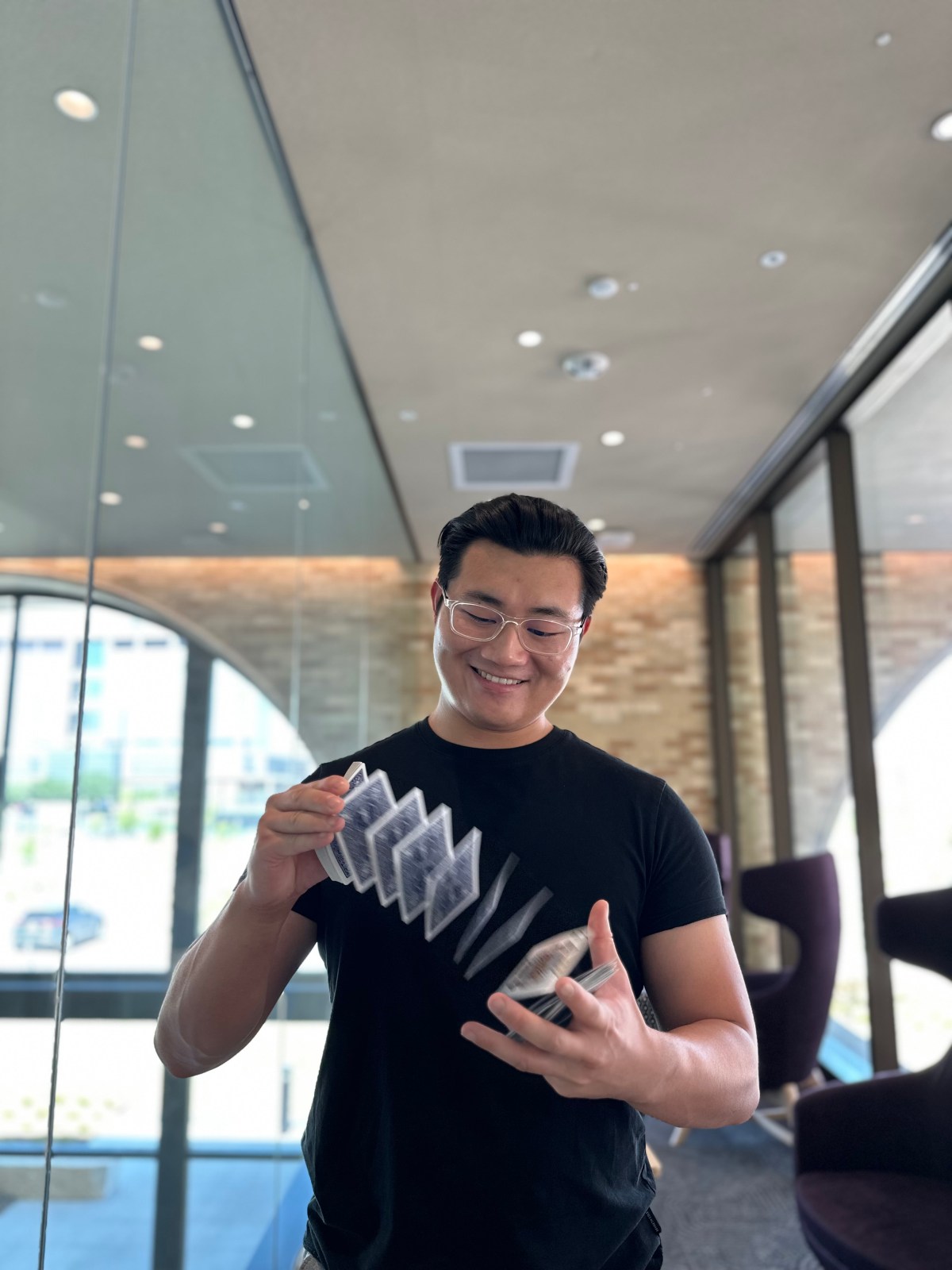
A five-year-old boy sat nervously on the exam table at Cook Children’s Neighborhood Health Center on McCart Avenue, his small hands gripping the crinkled paper as his wide eyes darted anxiously around the room. His mother murmured reassurances, but the unfamiliar setting left him frozen with apprehension. Noticing his unease, I reached into my pocket and pretended to pluck something from the air—only to reveal a bright, red sponge ball between my fingers. His eyes flickered with curiosity.

“Wait, where did that come from?” he whispered, his guarded expression beginning to soften.

As I continued, I gently tapped his ear and produced another sponge ball from its depths. His nervousness gave way to delight. A hesitant giggle escaped as he reached out to touch the impossible object. Weaving magic into the physical exam, I guided his gaze with each sleight of hand, subtly assessing his eye tracking and coordination. By the time I placed my stethoscope on his chest, his fear had vanished, replaced by eager anticipation for what trick might come next. In that moment, I saw how magic could do more than entertain—it could transform the clinical experience, turning fear into fascination and apprehension into engagement.

Bringing magic into pediatric care was never something I consciously planned. It began organically—during a clinical rotation, I encountered a young patient anxious about an upcoming procedure. Hoping to provide a distraction, I performed a simple card trick. To my surprise, her face lit up with delight, her fear momentarily replaced by curiosity and laughter. That single moment sparked a realization: magic could be more than just a hobby. It could be a tool for healing, a way to build trust, and a means of humanizing the hospital experience.

As my training progressed, I began incorporating magic into patient interactions regularly. I witnessed how it eased not only the children’s anxiety but also their parents’ worries. A simple trick could transform a tense clinical encounter into one of warmth and engagement, shifting the dynamic from apprehension to familiarity. This newfound approach allowed me to connect with families instantly, making medical visits less intimidating and more inviting.

Recognizing the profound impact of these moments, I sought out ways to bring magic to children in more meaningful ways. I started volunteering at the Dialysis Unit at Cook Children’s Hospital, performing tricks for kids as they received treatment. These sessions became transformative—not just for the children, but for me as well. I watched withdrawn patients brighten with curiosity, asking to see another trick, then another. Parents, often weary from the emotional toll of chronic illness, smiled as they watched their children experience moments of joy amidst their challenges.

Medicine is as much about connection as it is about science. Patients do not care how much we know until they know how much we care. A patient may not recall the specifics of a physical exam, the precise words a physician used, or even the exact diagnosis. But they will remember how they felt—whether they were comforted or dismissed, reassured or anxious. This is why, while medical knowledge and technical skill are essential, the ability to connect with patients on a human level is just as critical. A patient who feels at ease and trusts their provider is more likely to engage in their own care, leading to better outcomes. Just as a magician carefully crafts an experience that leaves a lasting impression, physicians must be intentional about creating clinical encounters that prioritize empathy, understanding, and connection. Whether it’s taking an extra moment to offer reassurance, explaining a procedure in a way that alleviates fear, or simply engaging with a patient on a personal level, these efforts make all the difference.

Magic serves as an unexpected yet powerful bridge in this dynamic. When a child sees a physician not merely as an authority figure but as someone who brings joy and wonder, the clinical setting becomes less intimidating. This principle extends beyond pediatrics into all areas of medicine.

As I continue my journey in medicine, I will carry these lessons forward, striving to cultivate human connection in every patient interaction. I encourage my fellow medical students and physicians to bring their passions into patient care—to find ways to forge deeper connections with patients. Whether through music, art, storytelling, or something as unexpected as magic, these personal touches can transform a hospital experience, offering comfort in moments of uncertainty. Medicine, after all, is about more than just curing illness—it is about nurturing hope, fostering connection, and proving that even in difficult times, moments of magic can still exist.

My Journey to DREAM

by Jackson Tobler, OMS-I

When I first met Alex in high school, I never anticipated that we’d become life-long friends. Alex has an intellectual and developmental disability (IDD), and we met through Best Buddies—an organization that promotes inclusion and friendship for individuals with disabilities. Alex and I developed a good friendship in high school, and we still maintain it today. We talk on the phone each week, and he participates in my family’s March Madness bracket pool each year. He lives in a different state now, but I was recently able to fly out to visit him and his family. His face lit up when I surprised him at his door, and we enjoyed spending a few days together. I am grateful for my long-lasting friendship with Alex and that I have gotten to know him beyond his intellectual disability. Meeting Alex in high school is what first sparked my desire to serve the IDD community—a desire that grew during college and has continued into medical school.

As an undergraduate student, I expanded my involvement with the IDD community by becoming president of my university’s Best Buddies chapter. I got to connect students to community members with IDD and plan fun events celebrating inclusion. Some of our biggest events were a talent show, a bowling night, and a Halloween party. I was moved when one of the parents told me how much our program meant to her adult son with Down syndrome. She shared that her son sometimes felt lonely or excluded, but our events provided him a welcoming environment where he felt he could belong. This experience showed me the power of inclusion.

When I began medical school at TCOM, I was excited to discover the DREAM student organization. DREAM, which stands for Disability Rights, Education, and Advocacy in Medicine, has allowed me to merge my interest in the IDD community with my career in medicine. DREAM’s mission is to advocate for individuals with disabilities and to prepare future health professionals to care for their unique needs. I attended the first meeting and was inspired by the story of DREAM’s faculty advisor, Brandie Wiley. Brandie is the mother of three adopted children with disabilities. She shared some of the challenges that her children have faced when receiving healthcare, such as barriers in accessibility and communication. She also detailed the qualities she saw in the physicians who were best able to interact with her daughter. Hearing Brandie’s experiences strengthened my desire to advocate for patients with disabilities.

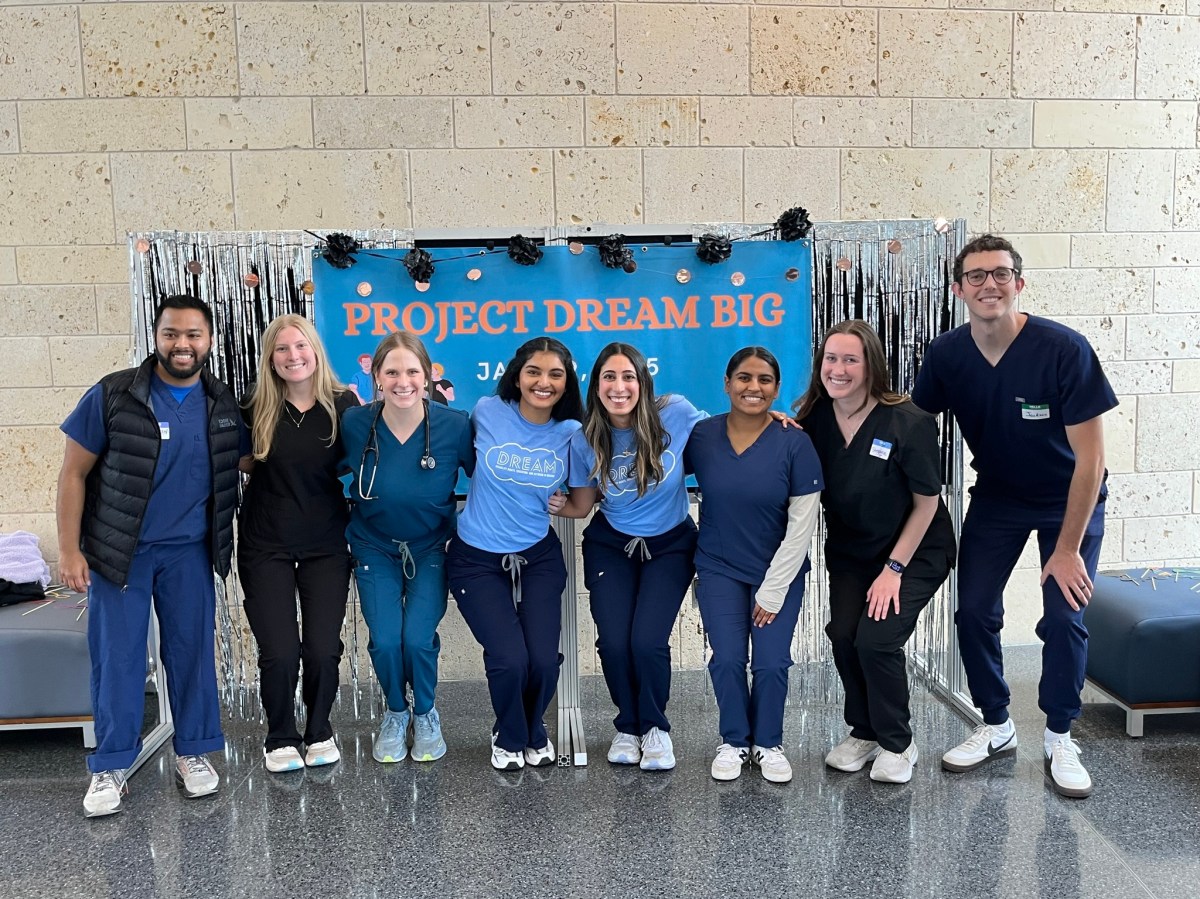
I became a first-year representative on DREAM’s leadership team, which we aptly call “the DREAM team.” We began planning DREAM’s main event of the year, Project Dream Big. In collaboration with Special Olympics Texas and the Fort Worth ISD Boulevard Heights School and Transition Center, we arranged to host over 50 individuals with intellectual disabilities on campus. We planned to pair them with medical student volunteers for an afternoon of games, crafts, physical exams, and a multi-specialty provider panel. The goal of the event was to help medical students learn inclusive healthcare principles and to help the individuals with IDD become more comfortable around medical professionals.

After months of planning, the event successfully came together. As the Special Olympics athletes arrived, it was rewarding to watch them mingle with the medical students and bond at the cornhole and coloring stations. When the physical exam portion began, the medical students were instructed by physician faculty on how to properly obtain consent from individuals with IDD. It was a valuable experience to practice our bedside manner and physical exam knowledge on a different demographic, one that we get little exposure to in the normal curriculum. Connecting with the individuals in both a casual and a clinical setting that day was impactful for everyone. This exposure is helping us become compassionate future physicians and equipping us with the tools to provide quality care for our friends with IDD.

From high school to medical school, advocating for individuals with intellectual disabilities has been a meaningful part of my journey. Each experience—from developing a friendship with Alex, to leading my college’s Best Buddies chapter, and now being involved with DREAM—has reinforced the importance of inclusion, empathy, and advocacy for individuals with IDD. Each step has influenced the kind of physician that I aspire to be. As I continue my medical training and involvement with DREAM, I look forward to more opportunities to help create a healthcare environment that is compassionate, inclusive, and equitable for people with intellectual and developmental disabilities.

The Poison, the Clouds, and the Clearing: Mindfulness in Medicine

BY SETU SHIROYA, MS-II TCU , WITH NEHA SOOGOOR, MS-II TCU; EDITED BY JAYESH SHARMA, MS-II TCU

Breathe in. Breathe out.

It is my first day in the clinic. My heart is racing in my white coat that I have little confidence wearing. My anxiety skyrockets, as do my feelings of not belonging.

What if my attending doesn’t like me? What if I make a mistake? What if my patient starts crying? How do I do a lung auscultation again? What does losartan do?

I can’t remember. I can’t think.

Breathe in. Breathe out.

I have been studying the whole day, my career-defining board exam is in one week, my head is throbbing, my eyelids are drooping. I am clicking through flashcards but nothing sticks. The days are merging into one; someone asked me for the day of the week, and I came up blank.

Breathe in. Breathe out. Breathe in. Breathe out.

Only one year into medical school, and everything feels like a dream. I’ve made it so far, yet the future seems so daunting. I love my life but also fear it at the same time. I want to keep going. I’m excited, but I’m nervous. Where am I in my life? Do I even belong here? Am I the only one thinking this?

Breathe in. Breathe out.

I say it to myself over and over again—my thoughts have been spiraling for days. I need to breathe. I need to calm down.

Breathe in. Breathe out.

I do belong here. I’ve made it so far in this journey; the hard work, the endless hours were not in vain. There is so much more to go and I remind myself that I am excited. I just need to take it one step at a time.

Breathe in. Breathe out.

I am going to be present for patients. I will be a doctor. One step at a time.

Breathe in. Breathe out.

The rampaging thoughts settle, my mind clears, and I open my eyes.

It’s going to be okay.

The morning alarm rings, and my first thought is always the same: “Can I sleep for five more minutes and not think about the long day ahead?” I have stressful exams to take and sometimes dread the workload awaiting me. It feels like the only quiet time I get is in the morning, when I am drinking coffee, working out, or just embracing the quietness. I try to find time to relax, but burnout feels like it is always looming over my shoulder. However, mindfulness and meditation have helped me reorient myself and develop a healthy way to process these feelings.

What does it truly mean to be mindful? To me, mindfulness is staying grounded to what is in the present moment. It can be easy to think of the past or try to anticipate the future. However, the only inevitability we hold is this present moment. Not a second before, not a second after.

How can we practice this? Mindfulness comes in many forms; some find relief in running or weightlifting, making it a point to have a constant regimen at the gym. Others find it through meditation, focusing on breathing and relaxing the mind. These share one commonality: a mental space we create where we stop thinking about the past or trying to anticipate the future, focusing instead on what is present within and around us. There isn’t one answer to seeking mindfulness; the greatest difficulty lies in knowing where to begin.

As medical students and future doctors we are expected to quickly calm ourselves after these stressful moments and proceed. Sadhguru, a guru who is the founder of the Isha Foundation, states: “Fear, anger, resentment, and stress are poisons you create in your mind. If you take charge of your mind, you can create a chemistry of blissfulness”.1 It is especially easy in a hectic and high-paced environment or period of life to get lost in our thoughts about the stressors we experience. Our thoughts are like clouds. We can either let them pass, or we can dive into them. Taking control of our mind to let the clouds pass, helping our mind become still and focus on the present, is difficult.

This is where meditation techniques can help train our mind. Meditation techniques often involve bringing awareness to a single action or sound. For example, they can be used to bring awareness to your breathing or the repetition of a few words. One method I use is called “4-7- 8 breathing.” Close your eyes. Breathe in for four seconds through your nose. Hold your breath for seven seconds. Breathe out for eight seconds through your mouth. As you inhale, stay aware of how the air flows through your body, from the tip of your nose to your navel. As you exhale, follow the air out from your navel to your mouth. Repeat this about two to three times.

At TCU Burnett School of Medicine, our Meditation and Mindfulness Student Interest Group aims to educate medical students about techniques such as 4-7-8 breathing and help them stay engaged in healthy mindful practices to avoid burnout. Our goal is to cultivate a supportive student community dedicated to mindfulness, fostering connection through monthly meditation sessions, inspiring physician guest speakers, and meaningful community volunteering.

It is going to be okay.

My mother always told me, “Take it one step at a time, one day at a time.” As medical students, we’re often exposed to patients and situations that can take an emotional toll on our mental well-being; times such as witnessing a patient’s death or delivering a life-shattering diagnosis. Before we can process what we’ve witnessed, we’re often thrown back into a fast-paced environment without a moment to rest. In such a high intensity life, grounding ourselves with activities that bring comfort and ease becomes crucial to our mental well-being. My hope is that we future physicians can practice mindfulness early, so that we can be present for our patients. In turn, we can help our patients be mindful as we work together throughout our most difficult moments to maintain healthy behaviors.

References:

1. Sadhguru Quotes – Fear, anger, resentment, and stress are poisons you create. If you take charge, you can create a chemistry of blissfulness within yourself. Accessed February 13, 2025. https://isha.sadhguru.org/en/wisdom/quotes/date/december-06-2021

Student Article: Carrying the Torch

By Olivia Mayer, OMS-II, TCOM

In one way or another, I have always been tied to medicine by an invisible string. One of my fondest memories of my childhood was around the age of five, when I would help my mom put together goodie-baskets for the oncology patients she would be visiting the upcoming week. This was a Sunday ritual for my mother and me, one we did while simultaneously baking chocolate chip cookies in the oven. No, my mom is not a medical provider; she is a pharmaceutical sales rep who spent any extra time she had on the weekends creating those baskets to show the patients that were taking part in clinical trials for the lymphoma drug she sold that she cared about them. This was an act out of pure benevolence and servitude for those who needed it more than the average person.

In a similar light, my grandmother spent most of her nursing career as a breast cancer nurse in Buffalo, New York. Growing up, I remember Grandma always sharing her favorite memories as a nurse. She was glowing with pride when I told her that I had a similar interest in oncology. Fast forward to today—now Grandma and I share conversations and exchange information about new developments in the breast cancer world. It is truly a full-circle moment with a touch of nostalgia from my younger days. Now as a medical student, I have the immense privilege to carry the torch of my mother and grandmother into my own medical journey. Besides being introduced to this field at a very early age, oncology has piqued my interest by its very nature. The endless opportunities to become a pioneer in cancer research or navigate complex treatment options that can potentially impact countless lives is truly the epitome of medicine, and continues to be the center of my “why.”

It has always been extremely important to me that I seek out any opportunity to create an impact in this field, just as my mother and grandmother did. As the current vice president for my school’s Oncology Student Interest Group (OSIG), I have had the amazing opportunity to assist in cultivating a tight-knit community of passionate students united by a shared commitment to being a source of support and positive change for patients during their most vulnerable moments.

One of the most significant moments I have had serving as a leader of this organization was in honoring the memory of my childhood friend, Zach, who passed away from astrocytoma in the fall of 2018. I felt a personal calling to head an OSIG fundraiser in honor of Zach and in support of his charity, the Big Z Foundation. The Big Z Foundation is led by Zach’s mother and father and financially supports terminally ill children and their families around the DFW area. Just in time for North Texas Giving Day on September 19th of this year, OSIG was able to raise hundreds of dollars for the Big Z Foundation. This support will help local families by assisting with the cost of their hospital bills, treatments, and housing costs. I can only describe the feeling I experienced as true enrichment when I surprised Zach’s parents on behalf of OSIG with our collective donations for the charity. The profound gratitude they expressed is something I will forever hold near and dear.

In moments like this, sharing acts of servitude and benevolence with fellow classmates is an experience so rewarding that it is impossible to fully express in words. This journey has brought me a feeling of gratification in service that is similar to the one I reminisce about when remembering making oncology patient baskets in my childhood. As I continue on my path in medicine, it is my personal mission to continue these acts of benevolence and shed light on those around me so that the flame of my mother’s and grandmother’s torch continues to be passed forward and illuminate a new generation’s impact on the field of oncology.

Student Article: Representation in Medicine

by Lindsey Thomas, OMS-II

I chose to practice medicine because of my love for science, personal family connections in the field, and even the embellished view of Medicine in the media. However, the most impactful factor was that I had a female African American physician during a time of vulnerability and academic transition. I was balancing health challenges while also deciding what I was going to do in college, and it was my hematologist who provided the example of what I wanted a future for myself to look like. Seeing her success in a field that was dominated by a different demographic propelled my passion to be a physician. She showed me that I could also strive for greatness among the barriers set by society. Throughout my work as a medical assistant and now as a medical student, I have seen firsthand the disparities faced by physicians of color compared to other physicians, and I want to be part of the movement to change the narrative.

One way I knew I could make my aspirations a reality was by joining TCOM’s chapter of Student National Medical Association, or SNMA. On the national level, SNMA strives to serve underrepresented communities as well as produce physicians with cultural humility. One of the ways I’ve been able to further the organization’s mission is by my participation in the Mini Medical School events. We have partnered with the Fort Worth ISD’s after school program to give age-appropriate presentations on a medical topic at the elementary schools in the district. The students have particularly liked our superhero-themed presentation on the lobes of the brain and our introduction to the organs. Some of the elementary schools have already started to incorporate this basic anatomy instruction into the curriculum, so many of these students are able to answer questions during the presentation. The students are predominantly from underserved areas, and it is our hope that having medical students that are from similar backgrounds will inspire them to dream big. Additionally, we speak with high school and undergraduate students interested in joining the medical profession and advise them on achieving their goals. Through SNMA, I can reach students in a personable way and be a figure of possibility to young students that look like me.

As I continue through medical school, I aspire to use the knowledge I gained from student organizations like SNMA to give back to my community and to be a voice of advocacy in the need for diversity in medicine. The practice of medicine is constantly evolving and the people who are delivering healthcare should be evolving as well.

STUDENT ARTICLE: ADVOCACY FOR PATIENTS’ MENTAL HEALTH

by AIYANA PONCE, OMS-II

This article was originally published in the March/April issue of the Tarrant County Physician.

HISTORICALLY, STIGMA AGAINST MENTAL HEALTH, ACCESS to care, and discrimination contribute to worsened health outcomes. This is especially true for certain racial or ethnic groups such as those made up of Black and Hispanic individuals, as there are culturally negative views on mental health symptoms and/or treatment, a fear of mistrust of the medical community due to historical discrimination or mistreatments, or lack of access to mental health services.

To help address this, the Lay Mental Health Advocates (LMHA) program was created. This free, virtual training program is designed to teach laypersons the fundamentals needed to advocate for someone who is dealing with mental illness. LMHA focuses on teaching mental health advocacy by understanding how social determinants worse mental health and play key roles in overall health outcomes for marginalized communities. The social determinants of health are defined by the U.S. Department of Health and Human Services as “the conditions in the environments where people are born, love, learn, work, play, worship, and age that affect a wide range of health, functioning, and quality-of-life outcomes and risks.”

LMHA began as a volunteer project during my time as a research trainee at the National Institute of Allergy and Infectious Diseases before beginning medical school. In addition to conducting experiments in a traditional laboratory setting, I was a fellow of the National Institutes of Health Academy. This program allowed me to meet other trainee scientists equally as passionate about patient advocacy. Ultimately, the goal of this program was to implement a volunteer project that addresses health disparities in the local community.

We saw a need for interventional programs to fill the mental health gap that is particularly prevalent among marginalized communities. Our program consists of a weekly online workshop led by psychiatry residents or attendings from Duke University Hospital and local community leaders. they include interactive role-playing advocacy practice, case study reviews, and other informative components. Our eight-week-long program was modeled after the Johns Hopkins Medicine Lay Health Advocate Program and the Mental Health Allyship Program. Through LMHA, advocates can identify several different mental health conditions, gain a greater understanding of the factors that exacerbate health disparities, understand how to provide effective emotional support, and gain confidence in the role they can play in the lives of their community members by BEING mental health advocates.

The pilot program took place during Spring of 2021, and we had 100 participants whose ages ranged from 18-58. We are now on track to our third workshop series, with participants from across the county. In addition to that, we are currently expanding our team, working on our non-profit application, and establishing a volunteer program to work with the Duke Behavioral Health Inpatient Unit.

Watching this program grow beyond anything my team had imagined has been very rewarding. I wanted to share this journey with those of you reading to encourage you to continue advocating for yourself, your patients, and your community. If you ever see a problem that needs to be addressed or a gap that needs to be filled, just go for it- you never know what may come of it.

References:


Student Article: Continuing the Passion for Science in Medicine

This article was originally published in the January/February 2023 issue of the Tarrant County Physician.

OFTEN ONE OF THE FIRST QUESTIONS I AM ASKED WHEN I mention that I am in medical school is, “How did you know you wanted to become a doctor?” Sometimes I scramble to find the most inspirational and motivating answer, as there were many reasons why I chose the career path that I did, However, at the core of every underlying reason was first, my love for science, and second, the desire to put that love into good use. Throughout my undergraduate years, I made sure to put scientific research at the forefront of my priorities. I took additional classes to help develop my skills as a researcher and participated in local symposiums whenever I could. Going into medical school, I kept research and the scientific process in mind as I learned about each body system. Given my medical education, I could delve further into the pathologies and the application of their respective treatments, and, if there were any developing treatments, I could keep an open mind about them and seek an opportunity to participate in the field research (if my busy school schedule let me). Thankfully, this past summer, my school presented the perfect chance to participate in the Pediatric Research Program (PRP) with Cook Children’s Hospital.

The PRP selects a group of second year medical students to take part in research “that aligns with their specialty interest.” There are also additional benefits such as being provided a mentor who guides you along the way and opportunities to present work at local/regional/national conferences. I chose neurology as y number one field of interest, so I was assigned a case study with a pediatric neurologist as my research mentor. I was excited and eager at the prospect of beginning work, especially since I had been assigned to Cook Children’s. The idea of being in an environment that was dedicated to helping children with challenging diseases brought a sense of fulfillment to my foundational goal of helping people heal.

Writing a case study was a novel experience, but I was fortunate to have a dedicated mentor who aided me through the process and helped me understand clinical information that my then year-one-medical-student mind could not comprehend. My mentor further allowed me to shadow her periodically throughout the summer, which was a nourishing experience to my medical education. I was able to interact with many pediatric patients who were affected by a variety of neurological disorders, especially congenital ones. This provided me with an appreciation for specialist physicians since they offer a great sense of hope and security to their patients- something I had associated more with primary care. What was even more admirable was my own mentor pursuing her research and developing case studies to help spread awareness of the pathologies that affect her patients.

Regarding my own project, I was able to learn more about the neurovascular complications of Marfan syndrome and the importance of considering it as a possible cause of stroke. I thoroughly enjoyed the process of gathering information and researching literature since it showed me how physicians from different parts of the country can come together and use their scientific nature to bring light to issues and possibly come to solutions. I look forward to working on more case studies and research projects as a medical student because it reaffirms my belief in using scientific methods and research to better the lives of patients and reach new heights in treatments.

Medical Student Syndrome

By Sujata Ojha, MS – III

This article was originally published in the July/August 2022 issue of the Tarrant County Physician.

As medical students, we have an incredible opportunity to discover a vast amount of medical knowledge, learn about the normal and the pathological, and to immerse ourselves in clinical settings where we witness the complexity of diseases. In the process of learning about life-threatening diseases, the risk of nosophobia, or illness anxiety disorder, can develop. More commonly termed “Medical Student Syndrome,” it is a concept that medical trainees are well acquainted with. 

What is Medical Student Syndrome? It is the phenomenon that causes fear of contracting or experiencing symptoms of the disease that the students are studying or are exposed to.  

Medical students learn the pathophysiology, the diagnosis, the treatment, the prognosis, the best-case scenario, and the worst-case scenario of diseases. We learn about teenagers diagnosed with melanoma and hear stories about patients in their early 20s diagnosed with breast or cervical cancer. The worst-case scenario tends to grab our attention. This reinforces us to not ignore a patient or symptom that doesn’t follow the general pattern of the disease, allowing us to widen our baseline scope of clinical suspicion when it comes to debilitating pathologies. The constant medical stimulation and limited clinical experience earlier on in our education can cause students to become preoccupied with symptoms and construct connections between what we are experiencing with the worse-case scenarios we learn about. 

“I booked an appointment with the dermatologist because I thought I had a melanoma,” said one classmate after we shortly finished our dermatology unit. After undergoing a biopsy, the classmate discovered that the melanoma in question was a benign nevus. During the cardiopulmonary block, another medical student said he went to the ER after experiencing mild epigastric pain and tachycardia, thinking he was experiencing symptoms of atypical myocardial infarction. He had recently encountered a patient in his late 30s with a history of MI who presented with similar symptoms, further reinforcing the “worst-case scenario” in this trainee’s mind. After hours spent in the ER, he was diagnosed with gastritis and sent home with a prescription for a proton-pump inhibitor. 

Throughout my medical training, I have heard countless stories resembling these. This is not an uncommon phenomenon that trainees experience. It is a topic that everyone in medicine is familiar with, whether through personal anecdotes or through stories discussed with classmates, mentors, and acquaintances. Understanding the complexity of medicine takes more than four years of medical school. Medicine is a field that requires life-long learning and an internal motivation to be updated with evidence-based practice. Expertise comes with clinical experience and after encountering numerous successes and failures. I believe that these experiences can help future physicians connect with their patients more effectively. If we as medical trainees can fall victim to an overwhelming fear of vague symptoms, how can we expect our patients with limited medical knowledge to be immune to this? With Dr. Google, a benign tension headache can be escalated to look like brain cancer. Understanding these fears and reflecting on the days when we experienced these uncertainties can bridge the gap in patient-physician encounters. It allows us to effectively address the patient’s fears without judgement, urging us to educate our patients about their symptoms instead of dismissing or minimizing them. 

Medicine on the Road

by Sebastian Meza, OMS-I

This article was originally published in the July/August 2022 issue of the Tarrant County Physician. You can read find the full magazine here.

Texas is suffering a healthcare crisis from a lack of practicing physicians. This fact is even graver in rural communities, where the nearest hospital might be a couple of hours away. It is time that we take medical care closer to these vulnerable patients, and that is where mobile healthcare clinics can offer an efficient solution.

As a first-year medical student at the Texas College of Osteopathic medicine, I was fortunate enough to serve with the Pediatric Mobile Clinic at the Health Science Center. To picture this mobile clinic, you must imagine a bus or RV that has been transformed into a fully functional pediatric clinic. It might seem like there would not be much space in the mobile unit, but it is fully equipped to perform many medical services. The unit carries out vaccination drives, full screen wellness check-ups, sports physicals, and much more. It is a small glimpse into the future of medicine.

Looking back at my very first day serving as a student doctor, I did not know the extent of what the pediatric mobile clinic could do. My first patient came in and presented with learning difficulties, café au lait spots, and some vision problems. It was an enormous surprise to find myself examining a possible case of neurofibromatosis, a rare disease that we had covered just a few days prior. I left that day thinking about how this child would not have been able to receive care or be referred to a specialist if the Pediatric Mobile Clinic had not shown up at his school. I felt grateful and fortunate to have been there to serve the children of our Fort Worth community.

It was not until I had a chance to serve in this mobile unit that I realized that this concept was a great solution for Texas’ rural communities. Mobile clinics bring medical services to areas that are hours away from major cities with large medical centers. These clinics are easily adaptable and can be transformed to house many different kinds of practices. They operate much like a regular clinic; patients can look up when the mobile clinic will be near them and then schedule appointments online. Primary care practices can take full advantage of transforming and adapting the mobile units to serve a specific patient population. 

For example, mobile clinics can directly help many underserved communities by being closer to patients, which saves time and transportation costs that can often be barriers to seeking treatment. Mobile health clinics do require an initial capital expense for institutions and hospitals. However, they bring in enough revenue to cover their own costs, they draw patients into the sphere of the base clinic or the hospital, and they help keep our community healthier. 

I did not expect to feel so strongly about the concept of mobile healthcare clinics when I first set foot onto that crowded bus, but it is impossible not to recognize how efficient it is to have mobile clinics at our major schools and hospital institutions, as well as in rural communities. These mobile clinics should be part of our vision for the future of healthcare. It is time to advocate for more mobile clinics on our Fort Worth roads!

Behavioral Health to Combat Physician Burnout

By Sofia Olsson, MS-I, and Anand Singh, MS-I

This article was originally published in the July/August 2022 issue of the Tarrant County Physician. You can read find the full magazine here.

Burnout is not a new term for physicians. In fact, prior to the pandemic, an online survey conducted by the American Medical Association in January 2020 found that there was an overall physician burnout rate of 46 percent.1 Unfortunately, the pandemic has exacerbated burnout for physicians due to a multitude of unprecedented factors. Burnout can be defined by three main symptoms: exhaustion, depersonalization, and lack of efficacy.2 Physicians may exhibit harmful behaviors as coping methods in response to burnout, so it is important to acknowledge behavioral health as it addresses how individuals’ daily habits and actions impact their mental and physical health. As two medical students, we founded Behaviors Supporting Mental Health (BSMH) to raise awareness surrounding behavioral health for all individuals. For our current campaign, we are focusing on physicians’ response to burnout. Through BSMH, we hope to provide resources for physicians to address their behavioral health and reduce or prevent burnout.

Continuous refinement of our daily habits, actions, and behaviors leads to better
mental and physical health. 

First, though, we want to acknowledge the prevalence of burnout and what factors are contributing to this phenomenon. According to research conducted by the Agency for Healthcare Research and Quality, the cause of physician burnout is multifactorial.3 The study found that some of the main causes of physician burnout are tied to physicians having to balance family responsibilities, work under time pressure, deal with a chaotic work environment, have a low control of pace, and implement electronic health records.3 Unfortunately, physician burnout has been linked to consequences such as lower quality of patient satisfaction and care, physician alcohol and drug abuse, and even physician suicide.2 Therefore, addressing physician burnout and combatting unhealthy behaviors are critical for physicians themselves as well as for the patients they serve.

The activities physicians partake in can impact their risk for burnout, so assessment of one’s behavioral health is important regardless of current mental health. Several coping strategies, such as making an action plan, taking a time out, or having discussions with colleagues, have been correlated with a lower frequency of emotional exhaustion in physicians.4 On the other hand, keeping stress to oneself has been associated with a greater frequency of emotional exhaustion.4 After making note of behaviors and identifying their purpose, one can decide whether these actions should be eliminated, continued, or supplemented.5 Changing behaviors, however, is easier said than done. Since useful coping skills are not “one size fits all,” BSMH aims to provide resources that help physicians build a toolkit of ways to improve their behavioral health. For example, the app Provider Resilience, designed by the Defense Health Agency, functions as a method to keep physicians motivated and hold them accountable in their behavioral health.6 The QR code shown is a link to the BSMH website (https://tinyurl.com/bsmhproject), which includes further resources tailored to prevent or relieve burnout in physicians. Our contact information can also be found here for anyone with questions or a desire to collaborate.

Continuous refinement of our daily habits, actions, and behaviors leads to better mental and physical health. Regardless of the extent of a physician’s burnout, addressing behavioral health is always a necessity. Intentional actions impact one’s identity as a physician and any other role they have outside the clinic. Transitioning one’s behavioral health from passive to intentional can improve one’s ability to balance familial responsibilities, work under pressure, and deal with a chaotic work environment.2 This puts physicians in control of their behaviors and decreases their risk for substance abuse and suicide while improving the quality of patient care.7,8 Meaningful reflection and continuous behavioral health improvement creates a healthier mindset that allows physicians to better care for their patients and themselves.  

References

1. Berg S. Physician burnout: Which medical specialties feel the most stress. American Medical Association. https://www.ama-assn.org/practice-management/physician-health/physician-burnout-which-medical-specialties-feel-most-stress. Published January 21, 2020. Accessed May 18, 2022. 

2. Drummond D. Physician Burnout: Its Origin, Symptoms, and Five Main Causes. Fam Pract Manag. 2015;22(5):42-47.

3. Physician Burnout. Content last reviewed July 2017. Agency for Healthcare Research and Quality, Rockville, MD. https://www.ahrq.gov/prevention/clinician/ahrq-works/burnout/index.html      

4. Lemaire JB, Wallace JE. Not all coping strategies are created equal: a mixed methods study exploring physicians’ self reported coping strategies. BMC Health Serv Res. 2010;10:208. Published 2010 Jul 14. doi:10.1186/1472-6963-10-208

5. Hem, Marit Helene, et al. “The Significance of Ethics Reflection Groups in Mental Health Care: A FOCUS Group Study among Health Care Professionals.” BMC Medical Ethics, vol. 19, no. 1, 2018, https://doi.org/10.1186/s12910-018-0297-y. 

6. Provider Resilience. Version 2.0.1. National Center for Telehealth & Technology. 2021.

7. Harvey, Samuel B, et al. “Mental Illness and Suicide among Physicians.” The Lancet, vol. 398, no. 10303, 2021, pp. 920–930., https://doi.org/10.1016/s0140-6736(21)01596-8. 

8. Panagioti M, Geraghty K, Johnson J, et al. Association Between Physician Burnout and Patient Safety, Professionalism, and Patient Satisfaction: A Systematic Review and Meta-analysis. JAMA Intern Med. 2018;178(10):1317–1331. doi:10.1001/jamainternmed.2018.3713

Design a site like this with WordPress.com
Get started