The Last Word: The Troll

“The mass of men lead lives of quiet desperation.”
-Henry David Thoreau – Walden

by Tom Black, MD – Publications Committee

As I reflect upon the thousands of patients with whom I had contact during my general surgery residency training, one stands out as perhaps the most important, at least in the sense that she is the one from whom I learned the most profound lesson.

I can see Sara Hardin in my mind’s eye. She occupied bed space 15, the middle bed of the three just to the left of the 2nd floor nurses’ desk, facing south. Sara was 49 years old, but she appeared to be at least 70. She was thin and bent. Her wrinkled and leathery skin spoke of a life none of us could hope to understand, undoubtedly spent out of doors and working hard. Her teeth were gone and she either didn’t bother putting in her dentures or didn’t own any. Her unkempt short gray hair and the dirt under her nails contributed to her derelict appearance. Sara was admitted to the county hospital for evaluation of intestinal bleeding. 

No one came to visit Sara, at least, no one that I was ever aware of. Whenever I saw her, she was generally napping or staring out the window. I don’t recall that she ever said a word to us as we rounded each morning and evening, but then again, I don’t recall ever saying much to her either.   

Once, when I was a senior resident, a new second year resident was assigned to our surgical service. We had never worked with each other and I knew nothing of him aside from the expensive watch he wore. I always thought it was in poor taste, if not ill advised, to flaunt something of such value in front of so many people who themselves had so little. One day during rounds at Sara’s beside, this new resident concluded his introductory remarks with the words, “She’s your typical troll.” All present nodded knowingly.

   “Troll” was Ben Taub Hospital parlance for a homeless individual, and the term carried with it, as one might imagine, a terribly negative connotation. It comes, I’m sure, from the Norwegian folktale of the ugly ogre who lived under the bridge that the Three Billy Goats Gruff had to cross. In Houston, as in many other cities, many homeless people live under the shelter of bridges and overpasses.

I am quite embarrassed now to admit that I neither said nor did anything at the time to set the young man straight regarding his opinion of someone of whose situation he was ignorant. But the label stuck in my mind, and it troubled me. In retrospect I can only hope that Sara either did not overhear that young man’s comment or did not understand his insinuation.

I suppose I had fallen, as do most students and residents, into the depersonalizing mindset of those who say, “the appendix in room five,” or “I admitted a head injury last night.” Most physicians-in-training are much more focused on the task of developing clinical acumen and less on humanity, but that’s a poor excuse. Nurses are often guilty, as they tend to report, “Four fifty-seven needs some pain medication.” HIPAA has greatly exacerbated the problem by disallowing the use of names in favor of initials or anonymous room numbers. But it’s a leap beyond depersonalization into cruelty to demean and denigrate another individual, particularly when he or she is in a debilitated condition and worse yet, when he or she is dependent upon you for assistance. 

What right did I have to do anything other than to exhibit the utmost respect for everyone as unique individuals of worth, while administering to them
the best possible care?

A day or two after the episode, I stopped by Sara’s bed. She was sleeping, which allowed me the opportunity to observe and to learn a bit about her. A book lay on the bedside table. It was a well-worn copy of the Bible. The bookmark and the pair of scratched and repaired eyeglasses nearby indicated that the book was read often and was of significance to her. A cross hanging next to her bed showed her personal devotion. Although she wore no jewelry, the proximal phalanx of her left ring finger was noticeably narrower than the same area of her other fingers, indicating that a ring had once held a longstanding position of importance there. Perhaps she had been recently widowed; who knew? And who even asked? I studied the lines on her face. They indicated that she had spent much more of her life smiling than frowning and spoke of happier and perhaps more secure days now past. Taped to the side of the bedside table, in such a manner as to be easily visible by her, but nearly invisible to casual visitors, was a simple crayon drawing with a crudely scrawled caption that read, “I love you Gramma.” Next to that was a small photograph of the type taken annually in public schools, of a little girl aged five or six years. I was even more ashamed of the callous attitude my colleague had displayed toward one of our fellow human beings and of myself for having remained silent. 

I may have been as guilty as others of depersonalization, but never of cruelty, and having witnessed that appalling lack of compassion was a wakeup call for me to reassess my own values. I began to appreciate the people who passed through the hospital in a new light and as being more than “clinical material” who existed for my benefit. Each became an individual. Each old man was someone’s father, and if not father or grandfather, then at least someone’s son. Each elderly woman was someone’s daughter and, as in Sara’s case, likely to be loved by someone. There were experiences etched into the wrinkles of each of Sara’s hand that I could not even begin to understand. What right did I have to do anything other than to exhibit the utmost respect for everyone as unique individuals of worth, while administering to them the best possible care?

Several days later, in a different location but similar circumstance, I heard the term “troll” again used in a similarly insensitive manner. This time I was determined not to allow the opportunity to pass.

“Stop right there. Everyone remember from this moment on that the word you just used is not acceptable on this service, at least as long as I’m here.” I paused to collect my thoughts, although I had mentally rehearsed my comments many times. 

I addressed the speaker. “When you applied to medical school, you were probably asked why you wanted to become a doctor, and you probably said ‘Because I want to help people.’ Well, either you meant it or you didn’t, but if you were honest and you do want to help others, start by treating everyone as a fellow human being. You wouldn’t appreciate someone speaking that way about your mother or grandmother.” There was some resentment after that over the reprimand, but I heard no more “troll” comments.

On the evening of the day Sara was discharged, the team assembled at the nurses’ station for rounds. “Dr. Black,” the charge nurse said. “This was left for you.” It was an orange mailing envelope with Sara’s name on it. Opening it, I pulled out a nice greeting card addressed to our team. I read the card aloud to the members present. “Dear Blue Surgery team. Thank you all so much for the kindness and care you gave to our mother and grandmother while she was recovering in the hospital.” I was gratified to see that the irony of the message had wounded a few egos. 

A few months ago, an essay by medical student Sneha Sudanagunta appeared in this journal. In it, Ms. Sudanagunta concluded that medical schools must do a better job teaching what she called “humanism,” (an ambiguous word for which I suggest “compassion” may be a more apt term). While I applaud her passion for this important topic, it is disconcerting that Ms. Sudanagunta felt compelled at all to implore physicians to teach more compassion. My experience leads me to believe that her observations represent an exception rather than the rule among practicing physicians. 

I suppose medical students and residents are much the same as they were forty years ago. Sometime between acceptance to medical school and the completion of medical training, one must resolve one’s personal standards regarding the treatment of others and the sanctity of human life. Of course, cruelty must be categorically opposed and compassion fostered just as strongly. While I am doubtful that compassion can be taught, per se, I am quite certain that it can be effectively modeled, and a receptive individual can be influenced to change his or her own behavior. 

I am convinced that we are surrounded by compassionate physicians; their names are in the TCMS directory. It is who we are, or at least, who we want to be. Nevertheless, it is wise for us to recall from time to time the wisdom of the Dalai Lama: “Be kind whenever possible. It is always possible.” We need to show Ms. Sudanagunta that whatever she experienced was the exception, not the rule.
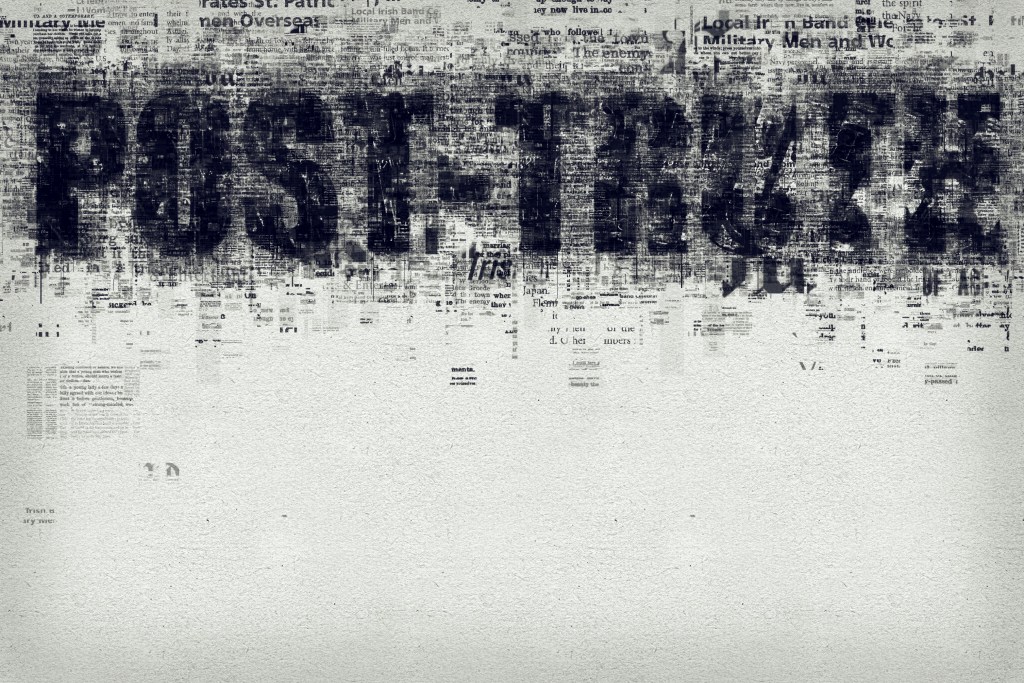

The Last Word: Post-Truth

by Robert Bunata, MD – Publications Committee Interim Chair

I don’t consider myself to be a superstitious person, but when certain omens appear, I am not one to tempt fate.  That’s what happened recently when I read a series of publications, two books and a book review, all pointing in the same direction, and suddenly became credulous, convinced mysterious forces were at work. 

All three publications, in one way or another, discussed present-day marketing of pharmaceuticals. The first was Salman Rushdie’s Quichotte, a story based on Cervantes’ Don Quixote.  The protagonist is a salesman for his cousin’s budding drug manufacturing company.  They are both immigrants from India.  The cousin got a “great idea” for selling his new powerful fentanyl nasal spray from reading a business card handed to him by an urchin in Mumbai that said on its front side, “Do you have a problem with alcoholism?”  Turning the card over explained, “We can help. Call this number for liquor home delivery.” It’s all very clever, but deceptive, and, eventually, as we know from our own opioid epidemic, disastrous.

The second was a book review by David J. Elpern, MD. Out of curiosity I read the book itself, Ghost-Managed Medicine, Big Pharma’s Invisible Hands, by Sergio Sismondo.  (Ghost-Managed Medicine is available for free online at http://www.matteringpress.org/books/ghostmanagedmedicine). The book tells of the author’s extensive investigation into several drug producing and drug marketing companies’ roles in influencing doctors’ diagnosing and prescribing.  It describes how drug companies “ghost-manage the production of medical research, shepherd the key opinion leaders who disseminate the research as both authors and speakers and orchestrate the delivery of CME courses. In so doing, they position themselves to provide the information physicians rely on to make rational decisions about patient care.”  These medical authors are prominent and often academic physicians with credentials in a given field who get paid or are otherwise compensated for adding their names as authors to papers even though they may not even read them, let alone participate in the research.  They are also paid to speak at cost-free CME courses.  Sismondo emphasized that such articles don’t mispresent information or lie.  The questionable part was the “ghost” association of the author(s) with the articles to enhance credibility.  (As a side note, I was especially disappointed to see members of our profession so susceptible to selling their reputations.) While Rushdie’s book was somewhat funny while being scary, this one was just plain scary because of the blatant perversions it reports.  

The third was a review by Jack Coulehan, MD, of the book, Mind Fixers: Psychiatry’s Troubled Search for the Biology of Mental Illness, by Anne Harrington, PhD.  Harrington, according to Coulehan, describes medical science’s effort to find chemical and/or physical causes for mental illnesses and their treatments.  The creepy part of this book was a sentence discussing the efficacy of antidepressants which reads, “In an analysis of all clinical trials performed with six widely prescribed antidepressants—not just published studies, but those withheld from publication by pharmaceutical companies—it was found that the drug(s) outperformed placebo in only 47 percent of the studies.” (My italics.)  Why did they withhold those studies from publication?  One can only imagine.  Another topic the article reported was the underutilization of lithium after the expensive antiepileptic drug, Depakote, was approved for bipolar disorder in 1995, despite the fact that lithium is at least as effective and much less expensive.  Hence this is another book that records covert marketing efforts to guide medical choices.    

These three pieces pretty much speak for themselves.  I couldn’t help remembering when I was growing up and in medical school, I readily accepted that what I was told was true, that the therapies I was taught were the most appropriate, not the most profitable, and that lecturers taught without concern for compensation.  Our country was still basking in the victory of WWII and we had a feeling of unity.  We had confidence in our leaders and government institutions.  We overlooked the little lies of Eisenhower and Kennedy as oddities, not defects in character.  Then the discords of race relations and Vietnam took away our trust.  We were forced learn a certain level of “civic skepticism” appropriate to a democratic society.  

“It seems the level of skepticism is over our heads.”

Now, it seems the level of skepticism is over our heads.  Instead of everybody being entitled to their own “opinions but not their own facts” (to paraphrase Senator Daniel Patrick Moynihan), we have a continuous stream of “alternative facts,” ghost-writing, fake news, and post-truth.  The main news source for many, social media, is rife with dishonest, emotion-provoking opinions posing and accepted as true.  Some sites are outright dishonest; Wikipedia has a list of more than eighty fake-news websites, and even the most popular websites vary in their insistence on truth.  For instance, in October 2019, Facebook, reportedly very influential in the 2016 election, made the controversial decision to exempt most political ads from fact-checking, while Twitter decided to ban political ads completely.  While lying, cheating, and post-truth have also been around as long as man, they seem to be more wide-spread, becoming accepted as normal and main-stream.  This may seem, at first glance, to be nothing to be concerned about, but it’s a blurring of reality, and eventually, as we know from the experience of Germany in the 1930s, can turn out to be disastrous.

Back to how this relates to medicine.  In my literary meanderings I found this excerpt from a 1988 presidential address Robert J. Lefkowitz, MD, quoted by Douglas L. Mann, MD (https://www.ncbi.nlm.nih.gov/pmc/articles/PMC6115645/): in the article “Fake News, Alternative Facts, and Things That Just Are Not True. Can Science Survive the Post-Truth Era?” 

The importance of honesty in research is not over the issue of truth vs. blatant falsehood that our integrity is most likely to be compromised. It is rather in the realm of a whole series of more subtle corruptions that integrity may be tested…. whereas lying involves falsity, bullshit involves fakery: it is essentially phony rather than false…In a sense, these bullshitters are even greater enemies of the truth than liars. At least the liar is guided by the truth, for to lie he must first define what he takes to be the truth. Not so the bullshitter. He pays no attention at all to the truth. Overindulgence in bullshit thus ultimately tends to corrupt the most fundamental aspect of the scientific process, the founding of conclusions on accurate and appropriate data.

So, what was the message I took away from these musings caused by my mysterious forces?  I am reminded to be alert and not take anything for granted or at face value. I should check my sources, verify “facts,” ask questions, and be careful not to spread half-truths, post-truths, or lies myself. Most importantly, I must keep my own “confirmation bias” in check.  We must all protect the reputation and integrity of our noble profession and not let the morals of business people, insurance executives, drug companies, and (especially) politicians, define the standards we live and practice by.    

Why Stop at Healing?

by Sneha Sudanagunta, OMS-III

Originally published in the May/June 2020 issue of the Tarrant County Physician.

Medical schools emphasize two main concepts throughout the first two didactic years: medical knowledge and humanism—the art of forming human connections. The first encompasses learning the ins and outs of normal and pathologic functions of the body, different disease states, and how to properly diagnose and treat diseases. This, some can argue, is the most important aspect of medical school. Medical students spend countless hours during the first two years learning as much as they can. During their clinical years, they’re “pimped” on what they learned the first two years and learn how to integrate their book knowledge into the real world. The latter concept, humanism, focuses on the actual human contact part of being a doctor. This includes showing empathy, communicating appropriately, and partnering with patients. During the first two years of medical school, most schools teach humanism through interactions with actor patients. During this course, we are evaluated based on these aspects of humanism. Even our national board exam tests our ability to communicate with patients and empathize with them. It’s engrained into how we interview patients and it seems to come naturally. It’s why we all went to medical school in the first place, right? To help those in need.

However, that’s not how it always works in the real world. Medical knowledge is increased every day and every physician I have encountered during my third-year rotations has an immense fund of knowledge. That aspect of education continues past medical school. In my experience, however, the humanism aspect seems to be dwindling from memory every year a physician is out of medical school. Is this due to burnout? Can it be because physicians become jaded? Or is it because doctors are so overworked? Whatever the reason may be, physicians must strive to remember why they began this journey and keep humanism at the forefront. 

Physicians must strive to remember why they began this journey and keep humanism at the forefront.

As a third year medical student, I have noticed that appropriate communication with patients is not as emphasized in the real world as it is in our preclinical years. I have seen patient interactions where physicians take the extra minute to educate their patients, and I have also witnessed many occasions where patients are left with more questions than answers. The difference in patient care and outcome is shocking. A young adult female came to the OB/GYN clinic for increased uterine bleeding and had been taking three times the recommended oral contraceptive dose for two weeks longer than protocol. When this mistake in drug use was explained to her, she said she never fully understood the instructions the ER doctor gave her about her new medications. The mother of a five-year-old boy in the hospital for rhabdomyolysis was told her son had high liver enzymes and was transferred to this hospital for better care without further explanation of the disease. I watched as the fear of her son having liver disease left her eyes when I explained to her what rhabdomyolysis is and how it can falsely elevate liver enzymes. When a patient hears 60 percent ejection fraction, do they understand that their heart is pumping effectively and not that it has lost 40 percent of its function? When doctors use words like peritoneum, cardioversion, or even EKG, do patients truly understand what they’re saying or do they begin to zone out?

This is where the ideologies of patient communication that are engrained in us as medical students need to shine. Humanism isn’t just about caring for patients; it’s about effectively communicating with them. As we’re taught in medical school, effective communication includes using language the patient will understand, educating them properly on their disease processes, and developing a treatment plan that the patient is comfortable with and able to maintain. Though knowing medical concepts is imperative as a physician, our job doesn’t end there. We have the unique opportunity to be more than just doctors. We are educators, confidants, and our patients’ best advocates. If we have the ability to be all of these things, why stop at being just healers?

Design a site like this with WordPress.com
Get started