The Last Word

by Robert Bunata, MD – Publications Committee Interim Chair

This piece was originally published in the September/October issue of the Tarrant County Physician. You can read find the full magazine here.


After our first year of college, my little group of high school friends had a summer reunion.  Ed was pursuing literature and publishing, Steve accounting, and Roger a business degree.  We had the following conversation after Roger said, “I have a great idea. You be the doctor and I’ll run the business.”

To that I replied, “Why would I do that?  I’ve watched my father and mother run their business just fine for years. I think I can do it myself with a little help and I’d have control like my dad.” 

“But with smart business practices you could make more money and I’d handle the stress of the paperwork.”

“Granted,” I said, “I might make more money, but that’s not what I want. I want freedom, control, and to do what I’ll be trained for, to take care of patients.  I want to make sure my business runs like I want. And, besides, I’d have to pay your salary as well as mine, meaning I’d have to take home less or charge the patients more.” At that time I failed to add: “Besides, Roger, if I approach my patients with a bill collector they would think I was only interested in making money and not in them.”  

Over the next decade or two, due to the mix of new health insurance companies, specialization, technical development, and lots of greed, medical costs got out of hand and the specter of Roger came back in the form of big business and managed care.  

About 25 years ago, as our autonomy was being eroded, I wrote an article for The Physician advocating that doctors stand up for their rights.  I went so far as to recommend we form a union even though it was illegal.  But I did not have a plan or even an idea of what to actually do.  Business and politics won and they set the agenda for the practice of medicine, and we followed like sheep to the slaughter—literally to the slaughter in the form of burn-out, depression, retirement, and suicide.  

“We should admit that we gave up control of our profession too easily, and let politicians and businesspeople define who we are.”

Two recent articles I read express the same exasperation. Richard Byyny, MD, and George E. Thibault, MD, have recently published a monograph entitled, “Burnout and resilience in our profession.”1 Since I am unable to paraphrase the article satisfactorily, I will quote the part I found most interesting, shortening where possible. 

Our current problems with burnout were anticipated by sociologists who posed that bureaucratic and professional forms of organizing work are fundamentally antagonistic. Medical schools do not yet prepare graduates as practitioners who can best resist the bureaucratic and market forces shaping health care and the care of the patient. 

Physicians experience conflict between what they …should do, and what they have been educated and socialized to do. They have been professionalized for acquiescence, docility, and orthodoxy. They are taught to be more like sheep than cats—ultra-obedient following the rules. They are not taught to be cats—independent activists – … advocating for medical values.

We have prepared physicians to follow the rules; however, whose rules? The rules generated by … (our own) … profession?  Or the rules generated by the organization with different values and objectives?

As a result, physicians see professionalism more about conformity. This creates a conflict in the current health care system and organizations. Physicians seem to be perverting core principles of the profession to a just-follow-the-rules … practice of medical professionalism. We are essentially responsible for the problems we now encounter, especially when the care of the patient is often not the focus.

We need cats who will resist conformity in service of extra-professional forces. The mission … (should be) about saving health care for patients and society and enabling (us) … to care for patients and not experience burnout.

That article was sitting in my mind when I came across another— “After the storm”—by Siddhartha Mukherjee, MD, subtitled, “The pandemic has revealed dire flaws in American medicine. Can we fix them?”2 Mukherjee is an oncologist who won a Pulitzer Prize for his book, The Emperor of All Maladies: A Biography of Cancer. He says he wrote this article to use this tragedy to improve American medicine.  First he discusses the points of failures in the organization and implementation of the medical distribution system, and the tendency to buy the cheapest foreign products (masks, gowns, pharmaceuticals), shunning our local providers. He especially criticizes the underfunding of medical research and public health.   

Then he reaches the most interesting part of the article, an anecdotal story about how he contacted doctors in different parts of the country on Twitter and Facebook to share ideas on treating COVID-19 patients.  In their informal transmissions they shared minute by minute discussions like the cause and treatment of thrombi, or how to best position patients to breathe. That improvised social media exchange drew his attention to the fact our balky, billion-dollar electronic medical record (EMR) system doesn’t provide a medical, but rather a financial database.   

These articles tell us that we need some housekeeping, some specific and some general changes.  By “we” I must emphasize that means every doctor, not just a few with an interest in politics.  This involves not just every doctor’s practice or earnings, but our whole life.  If we don’t work together and improve this, burnout will spread like COVID-19.   

There are many things that need improvement (to my mind too, especially the underfunding of medical research), but I’d like to look at two specific changes to consider.  

The first specific change is improving our EMR system to make it more medically useful. Mukherjee’s anecdote tells our story.  If we compare our EMR to the system in Taiwan— which may or may not be fair given such factors as their size and homogeneity—their electronic health records system made a swift targeted response to COVID-19 possible.3 Although the system was not designed to stop a pandemic, it was nimble enough to be reoriented toward one. The government merged the health card database with information from immigration and customs to send physicians alerts about patients at higher risk for having COVID-19 based on their travel records.  

While the U.S. has come a long way with its use of electronic records, thanks in part to the financial incentives built into the Health Information Technology for Economic and Clinical Health (HITECH) Act of 2009, the sharing of data—so called interoperability between different electronic health record vendors—has lagged. It’s expensive, but shoring up the U.S.’s digital health infrastructure will help improve routine care while empowering us to better respond to future infectious disease outbreaks.4,5,6 

Next specific change, the topic of EOBs, is one of my pet peeves.  Whenever I get an EOB for services I’ve received, the doctor’s charge is high compared to the payment received.  This is especially obvious dealing with Medicare EOBs with approved payments from Medicare being about a third of what the doctor charges.  When physicians see an EOB, we think how we’re being underpaid, but many patients have told me they think it shows the doctor is overcharging.  When I see this, I think this is exactly what “Roger” would have done, and it paints a bad image of doctors.  It makes us look like we’re only interested in making money and not in them.

As you can imagine, the list of improvements we could make can go on forever. But the point is we have to work together to improve the practice of medicine and the lives of doctors. 

Now for the general changes to consider. They are more vague and difficult to enumerate.  In my opinion, we should admit that we gave up control of our profession too easily, and let politicians and businesspeople define who we are. For instance, we should stop ridiculous requirements like having our payments reduced if a patient doesn’t take his medicine. We should take back what is rightfully ours—control of our profession, our practices, and our lives.  A big part of burnout is the feeling of not being in control; the best way to feel like we’re in control is to actually be in control. While I don’t have a detailed plan to do this, identifying the objective is a start. This should be a prime issue on the agenda of the AMA, AOA, TMA, TOMA, and of every doctor.  

Another general change concerns professionalism.  We all know what professionalism means on an individual level: put the patient’s interests ahead of our self-interests. We have all done that at one time or another—missed a Thanksgiving dinner or a child’s soccer game.  But what does professionalism look like on a national level?  What does it mean to put the nation’s patients’ interests ahead of our collective own?  While I have a few ideas I would rather not reveal them now. I am asking each of you to consider the question and write a letter to the editor or send an email with your observations and ideas. You can email us at editor@tcms.org, or mail us at 555 Hemphill St, Fort Worth, 76104.

References
1. http://alphaomegaalpha.org/medprof2015.html

2. After the storm. New Yorker, May 4, 2020

3. https://www.healthit.gov/topic/laws-regulation-and-policy/health-it-legislation

4. https://www.healthit.gov/topic/laws-regulation-and-policy/health-it-legislation

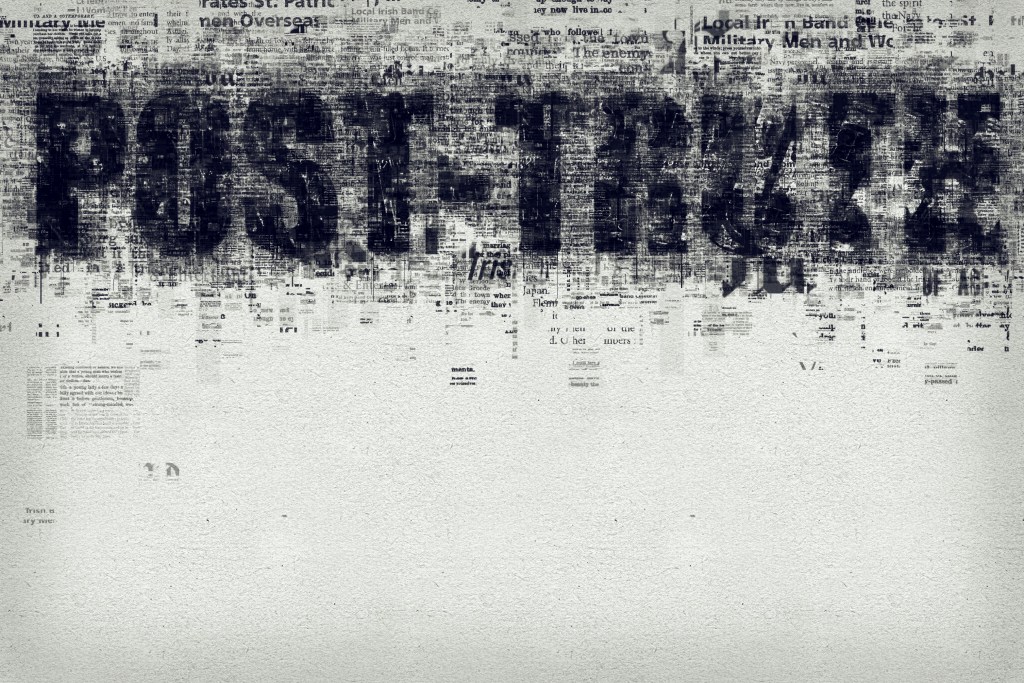
The Last Word: Post-Truth

by Robert Bunata, MD – Publications Committee Interim Chair

I don’t consider myself to be a superstitious person, but when certain omens appear, I am not one to tempt fate.  That’s what happened recently when I read a series of publications, two books and a book review, all pointing in the same direction, and suddenly became credulous, convinced mysterious forces were at work. 

All three publications, in one way or another, discussed present-day marketing of pharmaceuticals. The first was Salman Rushdie’s Quichotte, a story based on Cervantes’ Don Quixote.  The protagonist is a salesman for his cousin’s budding drug manufacturing company.  They are both immigrants from India.  The cousin got a “great idea” for selling his new powerful fentanyl nasal spray from reading a business card handed to him by an urchin in Mumbai that said on its front side, “Do you have a problem with alcoholism?”  Turning the card over explained, “We can help. Call this number for liquor home delivery.” It’s all very clever, but deceptive, and, eventually, as we know from our own opioid epidemic, disastrous.

The second was a book review by David J. Elpern, MD. Out of curiosity I read the book itself, Ghost-Managed Medicine, Big Pharma’s Invisible Hands, by Sergio Sismondo.  (Ghost-Managed Medicine is available for free online at http://www.matteringpress.org/books/ghostmanagedmedicine). The book tells of the author’s extensive investigation into several drug producing and drug marketing companies’ roles in influencing doctors’ diagnosing and prescribing.  It describes how drug companies “ghost-manage the production of medical research, shepherd the key opinion leaders who disseminate the research as both authors and speakers and orchestrate the delivery of CME courses. In so doing, they position themselves to provide the information physicians rely on to make rational decisions about patient care.”  These medical authors are prominent and often academic physicians with credentials in a given field who get paid or are otherwise compensated for adding their names as authors to papers even though they may not even read them, let alone participate in the research.  They are also paid to speak at cost-free CME courses.  Sismondo emphasized that such articles don’t mispresent information or lie.  The questionable part was the “ghost” association of the author(s) with the articles to enhance credibility.  (As a side note, I was especially disappointed to see members of our profession so susceptible to selling their reputations.) While Rushdie’s book was somewhat funny while being scary, this one was just plain scary because of the blatant perversions it reports.  

The third was a review by Jack Coulehan, MD, of the book, Mind Fixers: Psychiatry’s Troubled Search for the Biology of Mental Illness, by Anne Harrington, PhD.  Harrington, according to Coulehan, describes medical science’s effort to find chemical and/or physical causes for mental illnesses and their treatments.  The creepy part of this book was a sentence discussing the efficacy of antidepressants which reads, “In an analysis of all clinical trials performed with six widely prescribed antidepressants—not just published studies, but those withheld from publication by pharmaceutical companies—it was found that the drug(s) outperformed placebo in only 47 percent of the studies.” (My italics.)  Why did they withhold those studies from publication?  One can only imagine.  Another topic the article reported was the underutilization of lithium after the expensive antiepileptic drug, Depakote, was approved for bipolar disorder in 1995, despite the fact that lithium is at least as effective and much less expensive.  Hence this is another book that records covert marketing efforts to guide medical choices.    

These three pieces pretty much speak for themselves.  I couldn’t help remembering when I was growing up and in medical school, I readily accepted that what I was told was true, that the therapies I was taught were the most appropriate, not the most profitable, and that lecturers taught without concern for compensation.  Our country was still basking in the victory of WWII and we had a feeling of unity.  We had confidence in our leaders and government institutions.  We overlooked the little lies of Eisenhower and Kennedy as oddities, not defects in character.  Then the discords of race relations and Vietnam took away our trust.  We were forced learn a certain level of “civic skepticism” appropriate to a democratic society.  

“It seems the level of skepticism is over our heads.”

Now, it seems the level of skepticism is over our heads.  Instead of everybody being entitled to their own “opinions but not their own facts” (to paraphrase Senator Daniel Patrick Moynihan), we have a continuous stream of “alternative facts,” ghost-writing, fake news, and post-truth.  The main news source for many, social media, is rife with dishonest, emotion-provoking opinions posing and accepted as true.  Some sites are outright dishonest; Wikipedia has a list of more than eighty fake-news websites, and even the most popular websites vary in their insistence on truth.  For instance, in October 2019, Facebook, reportedly very influential in the 2016 election, made the controversial decision to exempt most political ads from fact-checking, while Twitter decided to ban political ads completely.  While lying, cheating, and post-truth have also been around as long as man, they seem to be more wide-spread, becoming accepted as normal and main-stream.  This may seem, at first glance, to be nothing to be concerned about, but it’s a blurring of reality, and eventually, as we know from the experience of Germany in the 1930s, can turn out to be disastrous.

Back to how this relates to medicine.  In my literary meanderings I found this excerpt from a 1988 presidential address Robert J. Lefkowitz, MD, quoted by Douglas L. Mann, MD (https://www.ncbi.nlm.nih.gov/pmc/articles/PMC6115645/): in the article “Fake News, Alternative Facts, and Things That Just Are Not True. Can Science Survive the Post-Truth Era?” 

The importance of honesty in research is not over the issue of truth vs. blatant falsehood that our integrity is most likely to be compromised. It is rather in the realm of a whole series of more subtle corruptions that integrity may be tested…. whereas lying involves falsity, bullshit involves fakery: it is essentially phony rather than false…In a sense, these bullshitters are even greater enemies of the truth than liars. At least the liar is guided by the truth, for to lie he must first define what he takes to be the truth. Not so the bullshitter. He pays no attention at all to the truth. Overindulgence in bullshit thus ultimately tends to corrupt the most fundamental aspect of the scientific process, the founding of conclusions on accurate and appropriate data.

So, what was the message I took away from these musings caused by my mysterious forces?  I am reminded to be alert and not take anything for granted or at face value. I should check my sources, verify “facts,” ask questions, and be careful not to spread half-truths, post-truths, or lies myself. Most importantly, I must keep my own “confirmation bias” in check.  We must all protect the reputation and integrity of our noble profession and not let the morals of business people, insurance executives, drug companies, and (especially) politicians, define the standards we live and practice by.    

Design a site like this with WordPress.com
Get started