PRESIDENT’S PARAGRAPH

Showing Hospitality to the Stranger (and the One with Strange Ideas)

by Stuart Pickell, MD, MDIV, TCMS President

This article was originally published in the July/August issue of the Tarrant County Physician.

MANY MAJOR RELIGIONS ENCOURAGE adherents to break down barriers between people. The Abrahamic tradition, which includes Judaism, Christianity, and Islam, commends the practice of hospitality, of removing barriers and welcoming the stranger as a guest. The Buddhist tradition takes it a step further, teaching that our connections are real and our divisions are not, so that the very distinction between one group and another- between insider and outsider- is an illusion.

Hospitality is the art of creating community. It is an act- a choice- of welcoming the stranger as a friend, choosing amity over enmity. But encountering the stranger can engender uncertainty. We must decide if the stranger will remain a foreigner whom we keep at a safe distance or become a guest whom we welcome in. Put another way, will we demonstrate hostility or hospitality?

Hostility and hospitality, quite different in meaning, derive from the same reconstructed Proto-Indo-European noun ghóstis, which highlights the ambiguity we experience and the choice we must make. The stranger- or even a strange idea- challenges us. The stranger can be a guest or an enemy but not both at once. The stranger’s presence forces upon us a decision that will require us to examine and assess our relationship to the stranger. As a rule, communities are strengthened when they successfully create room for the stranger to feel welcomed.

On a national level, our ability to find common ground amid diverse viewpoints has been a hallmark of American democracy and the reason it has worked. But something has changed. Historically, healthcare policy has been one topic on which there has been broad bipartisan support. The Medicare and Medicaid Act (1965) is a classic example of bipartisan healthcare legislation. But when congress passed the Affordable Care Act in 2010, not a single Republican voted for it and not a single Democrat voted against it.

Over the last 45 years, tribalism has become ingrained in our political discourse. John Dingell (D-MI), who served in congresses for 60 years, noted that when he began serving in the House in 1955, members saw themselves first as representatives of their state, second as representatives of an institution like the House or Senate, and only third as members of a party. By the time he left Congress in 2015, the order has reversed.

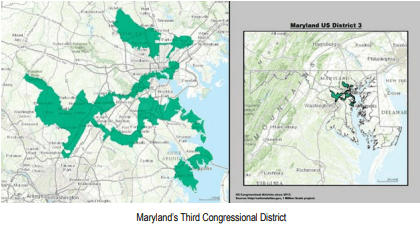
The way state legislatures draw congressional districts illustrates the extent to which parties in power will go to maintain control. One bizarre example is Maryland’s third congressional district, in which I lived until I was 16. It is called by many the most gerrymandered district in the country.
This practice has had toxic downstream effects. It amplifies the voices of those on the political extremes. Candidates in reliable liberal or conservative districts know that elections are won and lost not in the general election but in the primaries. And to win in the primaries they must “play to the base.”

We come by this honestly. We are, after all, a group-based species. But the resulting tribalism pits in-groups against out-groups, where the respective in-groups wield the political issues of the day to define and secure their status. We divide ourselves up as friends and enemies, creating hostility and polarization.

The cleavage that exists between the two tribes no longer cuts across a variety of social and cultural strata as it did 50 years ago. It’s singular and primal, so much so that a 2019 study showed that a significant number of people in each party consider people in the opposing party “evil” and that the country would be better off if members of the opposing party simply died.

The result is two Americas. At their extremes, one tribe would do away with guns altogether while the other would argue that citizens who so desire should be able to arm themselves with an M1A2 Abrams tank (version three, of course, because it’s the best). One tribe argues that abortion should be permissible to the point of birth while the other would criminalize all abortions. When either one of these Americas- right or left- senses they are losing control, they tend to dig in, inconsistencies and cognitive dissonance be damned. Both Americas defend their tribe even when it makes no logical sense to do so and (depending on the tribe) consider adherence to behavioral codes or resistance against them a moral virtue.

To circumvent this impasse, I believe we must cultivate the middle majority, by which I mean the middle 70 percent. I submit that liberal and conservative leaning people who live on either end of that middle 70 percent often have more in common with one another than they do with the extremes of their respective tribes. We must engage those with whom we disagree not on Twitter or in partisan echo chambers but in a non-partisan forum in which all viewpoints may be seriously considered, including those we find objectionable. Perhaps in such a forum we can entertain the possibility that someone who disagrees with us is not evil and does not harbor ill intent. In such a place, hospitality can be both extended and received, a place where the focus is on what unites us, not what devices us.

This may reveal some significant differences in opinion that make us uncomfortable or create uncertainty and ambiguity, but we are strong enough to manage that. To paraphrase Friedrich Nietzsche, what doesn’t kill us makes us stronger, and listening to each other with open minds certainly won’t kills us. We must find the intestinal fortitude to endure the discomfort and consider the possibility that those with whom we disagree may have a valid point; they may teach us something we need to know. Listen more, talk less, or as my wife’s license plate holder puts it, “Wag more, bark less.” When it comes to hospitality, people should be more like dogs.

One thing I’ve learned in my practice is that arguing with a patient who refuses to do what I think is in their best interest never convinces them to change their mind, but if I engage them, if I meet them where they are- not as an enemy but as a friend- if I listen to their concerns and their fears and share with them why I think it would be in their best interest to do something, they may take down the walls and adopt the healthier choice. When that happens, I know that it is not because I have made a convincing argument but because I have treated them with respect, listened to their concerns, and built a trusting relationship.

We must seize the opportunity to move from hostility to hospitality, which means engaging the stranger- and those with “stranger” ideas- not as an enemy but as a friend, a guest, a fellow traveler. We must be able to see those with whom we disagree with new eyes and hear them with new ears, and recognize in all of them that we are member of the same tribe.

Catholic priest and author Henri Nouwen put it this way:

Hospitality is not to change people, but to offer them space where change can take place. It is not to bring men and women over to our side, but to offer freedom not disturbed by dividing lines. It is not to lead our neighbor into a corner where there are no alternatives left, but to open a wide spectrum of options for choice and commitment.

I would like to see TCMS, and the Tarrant County Physician, in particular, utilized by our members as such a space in healthcare. Maybe then we will rediscover- or perhaps learn for the first time- that we have much in common, that what unites us is stronger than what divides us. Maybe then we will make the stranger a guest, if not a friend.

References:

  1. “Hospes or Hostis.”Accessed May 27, 2023. https://biblonia.com/2020/08/13/hospes-or-hostis/
  2. Seib, Gerald. “Gerrymandering Puts Partisanship in Overdrive; Can California Slow it?” Wall Street Journal. November 29, 2021. https://www.wsj.com/articles/gerrymandering-puts-partisanship-in-overdrive-can-california-reverse-it-11638198550
  3. Edsall, Thomas B. “No Hate Left Behind: Lethal partisanship is taking us into dangerous territory.” New York Times. March 13, 2019. https://ww.newyorktimes.com/2019/03/13/opinion/hate-politics.html
  4. Kalmoe, Nathan and Lillian Mason. “Lethal Mass Partisanship: Prevalence, Correlates, & Electoral Contingencies.” Prepared for presentation at the January 2019 NCAPSA American Politics: 17, https://www.dannyhayes.org/uploads/6/9/8/5/69858539/kalmoe___mason_ncapsa_2019_-_lethal_partisanship_-_final_lmedit.pdf
  5. Nouwen, H. “Reaching Out: The Three Movements of the Spiritual Life.” Penguin Books. 1986

PRESIDENT’S PARAGRAPH

How Much Does It Cost NOT to Provide Healthcare Services to the Undocumented?

by Stuart Pickell, MD, TCMS President

This article was originally published in the May/June issue of the Tarrant County Physician.

Note from the author: Although I have sourced much of the content in this article, some of the information comes from off-the-record conversations I have had with people who are or have been in leadership positions within the hospital district. In exchange for their honest assessment, I promised not to quote them.

I SUSPECT THAT, IF ASKED, THE average Tarrant County taxpayer would oppose spending tax dollars to fund healthcare for undocumented residents. I suspect also that they have at best a partial understanding of the issue borne out of media mischaracterizations and confirmation biases- on both ends of the political spectrum. Would that we could focus our attention on the information we need- as opposed to the information we want- when we make policy decisions that impact the community.

Harvard psychologist William James, in his presidential address to the American Philosophical Association, stated, “We are making use of only a small part of our possible mental and physical resources.”1 From this case the notion that we use only 10 percent of our brains, a myth so perpetuated by self-help books throughout the 20th century that by 2014, a survey revealed that roughly 50 percent of teachers around the world believed the myth to be true. 2 But James was not asserting that we use only a small part of our brain; he contended that we do not engage it fully. What he described is consistent with what we now know about attention and flow states. To solve problems, our brains work best when we focus our attention. This is also true for communities. If we want to address community concerns seriously, we must focus our attention not just to what we see on the surface, but on the currents that run underneath it. However, when it comes to healthcare and undocumented residents, you can’t finish the question before the knives come out and the war paint goes on. But this question is more nuanced than a soundbite debate regarding immigration. Let me provide some context and propose a path forward.

The County Health System

JPS is the “safety net” facility for those who “fall through the cracks” in our healthcare system. The county health system traces its origin to 1877 when the then-future mayor Jogn Peter Smith donated five acres of land south of town to provide medical care to city and county residents.3

The first public hospital opened in 1906. Associated with the Fort Worth Medical College, it was called the City-County Hospital and was free to all accident victims and others by agreement.4 In 1914, a new hospital was built across the alley from the medical college which, by this time, was affiliated with TCU. This building, at 4th and Jones, still stands and is now the Maddox-Muse Center. By the 1930s, the city had outgrown this facility and a new City-County Hospital was built on the land originally donated by John Peter Smith. In 1954, the hospital changed its name to honor the land donor.

Until the 1950s, faith-based healthcare institutions managed many of the hospitals and health networks in Texas. Fort Worth’s first hospital was St. Joseph (1885).5 The demand for reliable access to healthcare services for the indigent drove initiatives to create a taxing mechanism to improve healthcare resources in growing Texas communities. This resulted in a Texas state constitutional amendment in 1954 permitting the creation of county-wide hospital districts in counties with a population of at least 900,000 to better serve those communities. 6 Tarrant County formed its hospital district in 1959, centered around JPS. As needs increased, the facility grew, and in 2008, it acquired St. Joseph Hospital, which was torn down in 2012 to create space for ongoing expansion.

Because the hospital districts fall along county lines, they come under county jurisdiction and are overseen and managed by the county commissioners court. By statute, every Texas county must have a county judge and four county commissioners, each representing a district consisting of one-fourth of the county’s population. Every county, from Harris County’s 4.7 million residents to Loving County’s 83 residents, has four commissioners and a county judge. The commissioners courts are responsible for setting policy and determining budgets, many of which are dedicated to roads and bridges, law enforcement, and the hospital districts. 7,8 According to the Texas Health & Safety Code, the county must “provide health care assistance… to each of its eligible county residents.” 9 But who is “eligible”?

JPS has enjoyed excellent executive leadership, as evidenced by their ranking in Washington Monthly as the best teaching hospital in the county. 10 Yet while the executive team has significant authority to create a vision, establish priorities, and execute the network’s mission, it’s the Board of Managers- the JPS governing authority- that funds it and determines eligibility criteria. This board consists of representatives appointed to two-year terms by the commissioners court.

In 1996, Congress passed the Personal Responsibility and Work Opportunity Reconciliation Act deeming undocumented residents ineligible for many federal, state, and local public benefits, but it allowed states to expand benefits if they wanted to. 11 This created some uncertainty at the state level. In September 2003, a Texas law went into effect that deemed undocumented immigrants eligible for non-emergency care subsidized with local funds. According to the Fort Worth Star-Telegram, the JPS Board of Managers interpreted this law to be a mandate and voted to allow undocumented immigrants to enroll in JPS Connection starting in January of 2004. 12 The following month, Senator Jane Nelson wrote a letter to then Attorney General Greg Abbott seeking clarification regarding the statute. 13 Five months later, the Attorney General rendered his opinion that the code “permits, but does not require, a hospital district to provide nonemergency public health services to undocumented persons who are otherwise ineligible for those benefits under federal law.”14 A few weeks later, the JPS Board of Managers rescinded their expansion policy, although those who had already enrolled were permitted to remain in the system.

Cracks in the System

Texas has the ignominious distinction of leading the nation in uninsured residents. At 18 percent, our uninsured rate is over twice the national average. 15 There are many factors, including Texas’ decision not to accept federal funding for Medicaid expansion (as of July, Texas will be one of only 11 states that has not accepted it) and a knowledge gap on the part of currently eligible people who don’t know how to enroll.16,17 But another driving factor is undocumented residents, the number of whom living in Texas is anyone’s guess.

Castigating immigrants, documented or not, as “the problem” obfuscates the bigger picture. We live in a transportation hub that provides ready access to much of the world. Immigration is considered a good thing. People come here because our expanding economy offers them jobs. Immigrants constitute 23 percent of the Texas workforce. A 2019 DFW survey revealed that immigrants made up 46 percent of our workforce in construction, 30 percent in manufacturing, and 26 percent in restaurant and food services. They contributed $119 billion to the Texas economy in personal income. Furthermore, 71 percent speak English, about 59 percent own homes, and 79 percent have lived in Texas for at least 10 years. 18 A recent national study focused on the experiences of undocumented immigrants revealed that immigrants typically pay more into the health system through taxes and premiums than they use in the form of healthcare services. 19 They do the same for the Social Security trust fund, something the Social Security Administration has known for years.20

And yet, at least in Tarrant County, undocumented immigrants struggle to access healthcare. they go to JPS at a discounted rate (typically 40-80 percent), but because of their legal status they often forego routine care even if they can swing a hammer of lift a beam or scrub a floor- they keep working for fear of losing their jobs. For the undocumented, the fear of discovery and deportation is real. They don’t just fall through the cracks; they hide in them. This works until a chronic problem becomes and urgent one, and they can no longer work and must seek care. With the average three-day hospitalization costing $30,000, the patient will still owe $6,000-$12,000 after discounts, which most cannot afford.21 Since they cannot enroll in federal programs, JPS will end out absorbing the cost.

JPS probably provides a lot of uncompensated care that we don’t know about. It would be illegal not to provide care in an urgent/emergent situations- not to mention unethical- so why don’t we focus our attention on the cost of NOT taking care of undocumented residents?

The fact is, no one wants to talk about this because its political kryptonite. State legislators say this is a county issue. The county commissioners say it’s the Board of Managers’ decision, but the Board of Managers is appointed by and serves at the pleasure of the county court. Everyone says it’s a federal issue, and yet when Medicaid expansion comes up the state turns it down. Geez.

I attended First Tuesdays at the capitol on March 6th, where I had the opportunity to sit down with the legislative aid for a Republican senator. When Medicaid expansion came up, she admitted, of the record, that Texas should accept it, but that this issue is a non-starter for her senator. Why? As Robert Frost put it,

Before I built a wall I’d ask to know what I was walling in, or walling out. 22

Likewise, before we say we’re not going to provide basic healthcare services, shouldn’t we want to know all the facts? The JPS Health Network’s report regarding healthcare planning for Tarrant county states that its critical for the system to “continue to shift the emphasis from hospital care- for medical and behavioral health issues- to ambulatory care to decrease the need for preventable and costly inpatient care.” 23 But our current policy creates a Gordian Knot in which a sizeable number of Tarrant County residents are forced to do the opposite. So, they wait until they can no longer work, at which point the problem may require a hospitalization and a more expensive “fix.”

A Proposal

What we need is to get past the political campaign slogans and focus our attention on the actual problem. Immigration reform is a valid concern and should be addressed, but it’s not the issue here. Our issue is local, and it impacts the people with whom. we live and work, and those we hire to work for us. The undocumented residents in Tarrant County aren’t leaving anytime soon. Furthermore, they contribute to the economy and pay taxes. What we need, then, is a task force to examine seriously and assess honestly all the issues that contribute to the problem. They should focus their attention not on the surface concerns that we find in a political campaign ad but on the underlying currents, the factors that make this problem more nuanced than can be contained in a soundbite. This task force should be apolitical by intention (to the extent that anything can be) and include people who care about the community, economic development, fiscal responsibility, and, of course, healthcare. TCMS is well positioned to help lead this initiative. We represent a variety of political viewpoints, but we share a common concern for taking care of our patients individually and collectively.

Factors this task force should consider include:

  • How Harris, Bexar, Dallas, and Travis Counties are managing this issue.
  • The number of people living in Tarrant County who are barred from county healthcare services.
  • The impact undocumented residents have on the community, including:
    • Their contribution to the economy
    • How much they pay in taxes
    • How much we are spending urgently treating preventable conditions.

Money is a finite commodity, so it, too, must be included in the conversation. Tax dollars should be spent wisely. County Judge Time O’Hare pledged to do this during his campaign, especially regarding the hospital district.24 He also promised to cut taxes, fund law enforcement, and eliminate waste, fraud, and abuse. 25 This alignment of priorities suggests that hospital district funding may be in peril.

But it doesn’t need to be. A serious study may reveal that we are “wasting money” by NOT providing these services, especially when we factor in the cost of uncompensated urgent and emergent care and the loss of worker productivity. We won’t know unless we ask. Furthermore, the surge in property values, and therefore property taxes, has afforded the state a $32.7 billion surplus. 26 Many constituencies are vying for that money- the taxpayers themselves, law enforcement, teachers- and all should be given serious consideration. But could we not give serious consideration also to addressing the healthcare needs of some of the most vulnerable individuals in our community by allowing undocumented residents to access the county healthcare network?

Once we know what we’re dealing with, we can begin to chart a course forward, riding the underlying currents rather than fighting them until we arrive at a destination that demonstrates hospitality, compassion, and fiscal responsibility. We may even find that the most fiscally responsible thing we could do is to offer basic primary care to these populations through a creative collaboration between JPS and other community resources. But we won’t know unless we ask.

References:

  1. James W. The Energies of Men. Science. 1907; (Vol. 25, No 635 (March 1, 1907)): 332-323.
  2. Howard-Jones PA. Neurosciences and education: myths and messages. Nature reviews Neuroscience. 2014; 15 (12):817-824. doi:10.1038/nrn3817
  3. History of JPS. Accessed March 25, 2023, https://www.jpshealthnet.org/about-jps/history
  4. Site of the Fort Worth Medical College. Historical Marker for the Fort Worth Medical College. https://www.hmdb.org/m.asp?m=53215
  5. Park KB. St. Joseph Hospital. Texas State Historical Association. Accessed March 25, 2023, https://www.tshaonline.org/handbook/entris/st-joseph-hospital
  6. McKinley RD. Texas Hospital Districts: Past, Present, and Future. Affairs DoP; 2019. August 2019.
  7. What Is a County Commissioner? Texas Association of Counties. Accessed March 19, 2023. https://www.county.org/About-Texas-Counties/About-Texas-County-Officials/Texas-County-Commisioner
  8. What Does a County Commissioner Do in Texas? Texas Association of Counties. Accessed March 19, 2023. https://www.county.org/About-Texas-Counties/About-Texas-County-Officials/Texas-County-Commissioner
  9. Health and Safety Code, Texas State Legislature §61.022 (2023). https://statutes.capitol.texas.gov/ Docs/SDocs/HEALTHANDSAFETYCODE.pdf
  10. Editors T. Introducing the Best Hospitals for America. Washington Monthly 2020.
  11. Personal Responsibility and Work Opportunity Reconciliation Act of 1996. 1996.
  12. Allison A. Local, state policies may contribute to higher cervical cancer death rate for Hispanic women in Tarrant County. Fort Worth Report. November 22, 2021. https://fortworthreport. org/2021/11/22/local-state-policies-may-contribute- to-higher-cervical-cancer-death-rate-for-hispanic- women-in-tarrant-county/
  13. Nelson J. Senator Jane Nelson to Attorney General Greg Abbott, February 4, 2004. In: Abbott AGG, editor. Letter from Senator Jane Nelson to Attorney General Greg Abbott seeking a clarifying opinion regarding the eligibility of undocumented residents for health care services under the Health and Safety Code Section 285.201 as added by Chapter 198, Acts of the 78th Legislature, Regular Session, 2003. ed 2004.
  14. Abbott G. Opinion No. GA-0219. 2004.
  15. Percentage of Population Without Health Insurance Coverage by State: 2019 and 2021. United States Census Bureau. Accessed March 25, 2023, https://www.census.gov/library/visualizations/ interactive/population-without-health-insurance- coverage-2019-and-2021.html
  16. Status of State Medicaid Expansion Decisions: Interactive Map. Kaiser Family Foundation. Updated February 16, 2023. Accessed March 25, 2023, https:// www.kff.org/medicaid/issue-brief/status-of-state- medicaid-expansion-decisions-interactive-map/
  17. Barton K. Tarrant County residents have access to free health care, but some say awareness is a barrier. Fort Worth Report. October 11, 2021. Accessed March 19, 2023. https://fortworthreport.org/2021/10/11/ tarrant-county-residents-have-access-to-free-health- care-but-some-say-awareness-is-a-barrier/
  18. Garcia Z. Immigrants are crucial to Texas’ economy. FWD.us. Updated February 23, 2022. Accessed March 19, 2023. https://www.fwd.us/news/ texas-immigrants/
  19. Ku L. Who Pays for Immigrants’ Health Care in the US? JAMA Netw Open. Nov 1 2022;5(11):e2241171. doi:10.1001/ jamanetworkopen.2022.41171
  20. Goss S, Wade A, Skirvin JP, Morris M, Bye KM, Huston D. Effects of Unauthorized Immigration on the Actuarial Status of the Social Security Trust Funds. Actuarial Note. April 2013. Accessed April 2, 2023. https://www.ssa.gov/oact/NOTES/pdf_notes/ note151.pdf
  21. Why health insurance is important: Protection from high medical costs. Accessed March 27, 2023, https://www.healthcare.gov/why-coverage-is- important/protection-from-high-medical-costs/
  22. Frost R. Mending Wall. North of Boston. 1914;
  23. Health Care Planning for Tarrant County and the Role of JPS Health Network. 2018. February 27, 2018. https://www.tarrantcountytx.gov/ content/dam/main/administration/JPS/CBRC%20 Report%20FINAL%20%202%2021%2018.pdf
  24. Allison A. Commissioners court elections could shift priorities of JPS Health Network during pandemic. Fort Worth Report. February 2, 2022.
  25. Judge Tim O’Hare website. https://www. electtimohare.com/
  26. Harper KB, Schumacher Y, Fort A. How could Texas spend its record $32.7 billion surplus? The Texas Tribune. March 13, 2023. Accessed March 27, 2023. https://www.texastribune.org/2023/03/13/ texas-budget-surplus/

PRESIDENT’S PARAGRAPH

by Stuart Pickell, MD, TCMS President

This article was originally published in the March/April issue of the Tarrant County Physician.

Why Do We Not Have a Pediatric Residency Program in FORT WORTH?

WHEN I MOVED BACK TO FORT WORTH in 2001, I wondered why we had so few graduate medical education (GME) programs. I came to understand, from those who should know, that Fort Worth simply wasn’t an “academic” city. We had one of the finest osteopathic medical schools in the country, several excellent medical centers, and a fine children’s hospital, but relatively few residency positions for a city our size. In 2011, the Texas Legislature, concerned that the physician workforce would not keep pace with Texas’ rising population, established a goal of 1.1 residency training positions for every Texas medical school graduate. Physicians often remain near where they train, so the reasoning was and continues to be sound. Achieving and maintaining this goal helps to build and sustain the physician workforce.

Fortunately, with no help from Tarrant County, Texas achieved its goal in 2017 (see Table 1). However, the impending graduation of student from new medical schools in the next two years will increase the demand for PGY-1 positions. the Burnett TCU School of Medicine will graduate its first class in May. A year later the Sam Houston University College of Osteopathic Medicine and the University of Houston College of Medicine will graduate their first classes. By 2024, to maintain the minimum 1.1 ratio, Texas will need to increase the number of residency positions by 5 percent, and to maintain its current 1.16 ratio, it will need to increase the number of positions by 10.8 percent.

In the last few years, Tarrant County’s medical community began meeting the challenge by starting several new residency programs. This is a welcome, albeit long overdue, development. Baylor Scott and White and Texas Health Resources have led the way to these recent changes by starting programs in internal medicine, ob-gyn, emergency medicine, and general surgery- this in addition to the programs already established at John Peter Smith and Medical City. The elephant in the room is pediatrics.

Why does Fort Worth, the 13th largest city in the country and home to the 13th largest children’s hospital, not have a pediatric physician residency program? I include the word “physician” because Cook children’s does have a pediatric residency program for nurses. In fact, it has one of the only 34 such programs in the country, but it does not have a program to train physicians- and its the only children’s hospital that has a program for nurses and not physicians. But as the population grows, won’t we need more pediatricians? Regional growth trends suggest we will. For instance, in just the last five years:

• The U.S. population increased by 2.7 percent

• The Texas population increased by 5.8 percent

• The Fort Worth population increased by 9.3 percent

• Fort Worth went from being the 16th to the 13th largest city in the country

• The number of PGY-1 pediatric residency positions in Texas increased from 211 to 213, or 0.95 percent

Looking at the 30 largest cities in the United States, Fort Worth is the only one that doesn’t have a pediatric residency program. Jacksonville, FL, which ranks just ahead of Fort Worth in population, for now, has a pediatric residency program, and it doesn’t even have a medical school. Fort Worth has two medical schools.

Within Texas you will find residency programs in the larger cities – Houston, San Antonio, Dallas, and Austin – but you will also find them in El Paso, Corpus Christi, Lubbock, Temple, Galveston, and Amarillo. The only other cities in Texas that have a medical school and no pediatric residency program are College Station, Edinburgh and Conroe. So, why not Cook Children’s?

I’ve asked this question to more than a few people affiliated with Cook Children’s – some who would like to see a physician GME program and others who would not. While they disagree on the proposition, they generally agree on the historical timeline and current sentiment. Cook Children’s, the result of a merger of Fort Worth’s two children’s hospitals in the 1980s, had a unique vision from its inception. Like many large children’s hospitals, it offered state-of-the-art care for pediatric patients, but it also vowed that patients would only be treated by board-certified pediatricians, i.e., no students or residents. Since most of Fort Worth’s hospitals didn’t have GME programs, Cook Children’s was not an outlier.

What made Cook Children’s particularly unique was its size and resources combined with its lack of GME entanglements. Cook Children’s leveraged this latter feature to recruit physicians who wanted to be clinicians, not educators. A vocal minority of the current medical staff have embraced this feature and do not want it to change. There is also a vocal minority who knew Cook Children’s wasn’t an academic institution when they joined but believe now that it should be. Many others – probably a majority, although no formal vote has been taken – would be fine with a GME program if one existed, but they could go either way.

In recent years, the subject has been revisited several times. About five years ago, Cook Children’s hired Germane Solutions, a GME consulting firm, to examine the viability of a GME program and assist in its development. Their findings are proprietary, but the consensus of the people with whom I talked is that Cook Children’s is positioned to have an outstanding GME program if it wants one. Furthermore, it would enhance the hospital’s national profile and be a financial boon to the local economy. But the success of a GME program hinges on having a medical staff who supports it. One vocal minority does, the other does not. And while the support doesn’t need to be unanimous to make it work, it wasn’t clear that enough of the middle majority supported it to the point it would reach the critical mass needed to make it worth pursuing.

Some theorize that demand for more pediatric residency positions among graduating medical students is lacking, and there is some truth to this claim. In the 2021 match, there were 1.47 pediatric PGY-1 positions for every graduating U.S. medical student who applied for one. But this doesn’t tell the whole story. Between 2016 and 2021, a concerning trend emerged. While nationally the number of pediatrics PGY-1 positions increased by 6 percent there was a 14 percent decrease in the number of U.S. medical graduates applying for them.

Fortunately, foreign medical graduates have filled the void, resulting in a match-fill rate consistently over 98 percent, which makes pediatrics appear both desired and competitive. But shouldn’t the decreased domestic interest in pediatrics provoke more questions? Why are U.S. medical students not considering pediatrics?

One perennial concern is low pay relative to other specialties, including pediatric subspecialties. As one of my residency attendings used to quip, “Little people, little money.” This must be on the minds of even the most altruistic of medical students for whom the average student loan debt upon graduation is over $200,000. But perhaps students everywhere are picking up on a trend that Cook Children’s is actively embracing- a hidden curriculum embedded in the cook Children’s philosophy as evidenced by the presence of a residency program for nurses but not physicians, that the future of primary care pediatrics is really nursing.

“Baylor Scott and White and Texas Health Resources have led the way to these recent changes . . . this in addition to the programs already established at John Peter Smith and Medical City. The elephant in the room is pediatrics.”

I hope this is not the case, because while value the contributions that nurses and APPs bring to the clinical care team, their training is qualitatively and quantitatively different from that of a physician. These teams should be supervised by physicians, and those physicians need to be trained… somewhere.

Why no Cook Children’s? Medical staff aside, they have the resources. So, how many attendings does Cook Children’s need to reach the critical mass necessary to start a residency program for physicians as well as nurses. A hospital with their resources could have a large residency program. To make a comparison, Children’s Hospital of Los Angeles is roughly the same size as Cook Children’s could start with eight, the same size as Texas Tech’s program in Lubbock. considering that physicians often practice where they train, could Cook Children’s not do this for the community’s sake?

The Cook Children’s Health Care System and its flagship hospital are. a well-kept secret that will not reach its full potential until It becomes an academic training facility with education and research affiliations. To illustrate this, U.S. News & World Report ranks the top 50 children’s hospitals in 10 different specialties. Most hospitals comparable to Cook Children’s rank in nine or 10 of these specialties, often in the top 30. Cook Children’s ranks in only six, the highest being neurosurgery at 20. The others come in at 38, 41, 43, 48 and 50.

The hospital website states: “As one of the fastest growing areas in the United States, Cook Children’s is continually looking ahead to meet the needs of a very diverse population.” No one will argue with this. Cook Children’s is one of the finest children’s hospitals in the United States. As a city and as a medical community we should be- and are- proud of it. But can it not look further ahead and become home to one of the finest pediatric residency programs as well? Becoming an academic center will enhance its national profile and bolster the pediatric workforce in Texas by exposing students to high-quality pediatric primary care and specialty services early in their training, while providing an exceptional place for them to continue their training and work after they graduate.

Most things worth doing require effort. Starting a new residency program is no exception. Some physicians to me that now is not the right time, that in the wake of COVID-19 they don’t have the bandwidth for it. But will there ever be a “right” time? wll there ever be a time when the stars in heaven align, and there is a unanimous agreement that the time has arrived?

First century rabbi Hillel the Elder once said, “If I am not for myself, who will be for me? If I am only for myself, what am I? If not now, when?” Indeed. Given the need and the benefit to the community, perhaps now is the right time after all.

References:

1. The Texas Hospital Association’s educational series on hospital finance: “Graduate Medical Education, Part 5” – https://www.tha.org/wp- content/uploads/2022/04/Financing_GME_FI- NAL.pdf

2. Data for 2011-2019 may be found in a paper written by the Academic Quality and Workforce of the Texas Higher Education Coordinating Board: “The Graduate Medical Education (GME Report: An Assessment of Opportunities for Graduates of Texas Medical Schools to Enter Residency Programs in Texas.” This was a report to the Texas Legislature per Texas Education Code, Section 61.0661, October 2020, p.x.

3. See: The Kaiser Family Foundation website: https://www.kff.org/other/state-indicator/total-medical-school-graduates/

4. See: https://www.residencyprogramslist.com/ in-texas

5. “The Graduate Medical Education (GME) Report: An Assessment of Opportunities for Graduates of the Texas Medical Schools to Enter Residency Programs in Texas.” October 2020, P. 17

6. Cook Children’s Hospital consistently ranks between the 10th and the 18th largest children’s hospital in the United States depending on whether we are looking at licensed beds, staffed beds, and when the reporting was obtained.

7. See U.S. Census data at: https://www.census. gov/
8. See data from the National Residency Matching
nrmp.org/
9. Not surprisingly, every U.S. city with more than one medical school has a pediatric residency program, except Fort Worth.
10. Information obtained for this article synthe- sizes conversations I had with 10 different people, all of whom are knowledgeable of Cook Children’s Medical Center (CCMC) and the movement to develop a physician residency program. Because of the sensitive nature of this topic, I promised that I would not reveal their names or quote them directly but would make a good faith effort to com- municate their understanding of the issue. They did not all agree on whether CCMC should pursue a residency, but they did agree on the major points outlined in the article. Of the 10, eight are or were employed by CCMC, almost all in leadership posi- tions. Three of those have retired and five remain on staff. The other two, both physicians, are lead- ers in the medical community and/or at CCMC and in a position to speak to this topic.
11. See: https://educationdata.org/average-medi- cal-school-debt
12. See https://health.usnews.com/best-hospitals/ pediatric-rankings
13. See: https://www.cookchildrens.org/about/ history/
14. Mishnah Avot 1:14. See: https://www.sefaria. org/Pirkei_Avot.1.14?lang=bi

President’s Paragraph – “Reflections”

by Tilden Childs, MD – TCMS President

This piece was originally published in the November/December issue of the Tarrant County Physician. You can read find the full magazine here.

by Tilden Childs, MD – TCMS President

This is my last article as president, and as I think upon the past year, my mind drifts to reflections upon my life, my family, my friends, my associates, my teachers, and my profession—especially to the many patients for whom I have worked and strived for excellence in care over the last four decades. The seasons of life pass before our eyes in slow motion, but when the fall of our life arrives, we wonder how it all went so fast. I am thankful for the time that I have had on this earth and for the exposure to the many various facets of our world, both directly and vicariously, and particularly in what I consider to be the most intense and rewarding profession, the practice of Medicine. It is a privilege, indeed a calling, to be part of this greatest of professions.  Thank you for the opportunity to serve as your TCMS president this year.

One of the interesting and entertaining friends who appeared ever so briefly in my life is Dr. Charles D. Williams. Charlie is a radiologist in Tallahassee, Florida. I met him through my participation at the American College of Radiology on the AMA Delegation. Charlie was awarded the ACR Gold Medal a couple of years ago. He wrote two books called Simpler Times (1993) and More Simpler Times (2008), where he reflected on his life growing up in Moultrie, Georgia, as the son of a Colquitt County sharecropper during the 1940s, “during the time when life was less complicated—the time when people had to make over, make do, or do without.” Believing that laughter is the best medicine, Dr. Williams’ books are collections of stories written through the eyes and innocence of a young boy nicknamed Pedro at birth by his grandmother. The short stories reflect on the wisdom and humor of his grandma and her three boys—Millard, Dillard, and Willard. As he states in the introduction to his second book, “we need to understand and appreciate where we came from so that we can recognize where we are.” Or as his grandma used to say, “The main thang is to keep the main thang the main thang.” Charlie is a dear friend!

“The seasons of life pass before our eyes in slow motion, but when the fall of our life arrives, we wonder how it all went so fast.”

In my own life, when summer comes to an end and the fall begins, I always reflect on my time at the former boys’ camp in Hays County known as Friday Mountain Boys Camp. I first went there in the early 1960s when I was eleven years old after failed strenuous resistance to my parents unwavering determination to deliver me to the hands of unknown strangers in a foreign land. But what a magical place it was! I went there for four summers as a camper, two summers as kitchen help, and a total of six summers as a counselor during college and medical school. The daily routines and weekend programs offered at the camp seem remarkable now. In one place, a kid could learn about nature (I tried hard to learn to like snakes), horseback riding, swimming, scuba diving, and handicrafts. They had various opportunities to learn and participate in sports in a relatively non-competitive and friendly environment, as well as learn how to safely handle and shoot a rifle and throw horseshoes. Hiking over the several hundred acres of the camp, and particularly up and down Friday Mountain, gave everyone a wonderful exposure to nature and an appreciation of the land. There was even an educational day trip into town to see parts of Austin (it was my one and only time to go to the top of the UT Tower), and a three-day overnight trip to Lake Travis with swimming, water skiing, and sailing. As a counselor, I had the opportunity to learn and then teach sailing on Lake Travis. Yes, I got paid to go swimming and sailing on Lake Travis! And many kids and a few of us young adults learned some of life’s lessons as well as a number of Baptist hymns.  Sunday morning services on the wooded, shaded banks of Bear Creek were special. 

But as is true of life in general, times have changed, and the former camp is now the oldest Hindu Temple in Texas and the largest in North America, Radha Madhav Dham (formerly called Barsana Dham). For an interesting and insightful reflection on the history of the camp and its subsequent transformation, I refer you to the article by David Gaines in The Wall Street Journal issue dated September 12, 2020, entitled “I Climbed Up Friday Mountain and Down Barsana Hill.” Some of us former campers and counselors still remember the way it was and are sad that it is no longer, but in some small way, this article helps to provide me with at least a measure of closure. To quote the final sentence of the article, “Land uses change, but the land abides. And the characters just keep rolling through.” 

How true, how true! And that is one of the things I have come to realize about life in general—“the characters just keep rolling through.”

And finally, whatever your belief, I hope that you can appreciate what my friend Dr. Doug Cecil has shared, as gleaned from an old benediction from a circa 1850 Anglican Prayer Book:

Now go into the world in peace,
Have courage,
Hold on to what is good.
Honor all men,
Strengthen the fainthearted,
Support the weak,
Help the suffering,
And share the Gospel.
Love and serve the Lord in the power of the Holy Spirit.

Design a site like this with WordPress.com
Get started