PRESIDENT’S PARAGRAPH

Showing Hospitality to the Stranger (and the One with Strange Ideas)

by Stuart Pickell, MD, MDIV, TCMS President

This article was originally published in the July/August issue of the Tarrant County Physician.

MANY MAJOR RELIGIONS ENCOURAGE adherents to break down barriers between people. The Abrahamic tradition, which includes Judaism, Christianity, and Islam, commends the practice of hospitality, of removing barriers and welcoming the stranger as a guest. The Buddhist tradition takes it a step further, teaching that our connections are real and our divisions are not, so that the very distinction between one group and another- between insider and outsider- is an illusion.

Hospitality is the art of creating community. It is an act- a choice- of welcoming the stranger as a friend, choosing amity over enmity. But encountering the stranger can engender uncertainty. We must decide if the stranger will remain a foreigner whom we keep at a safe distance or become a guest whom we welcome in. Put another way, will we demonstrate hostility or hospitality?

Hostility and hospitality, quite different in meaning, derive from the same reconstructed Proto-Indo-European noun ghóstis, which highlights the ambiguity we experience and the choice we must make. The stranger- or even a strange idea- challenges us. The stranger can be a guest or an enemy but not both at once. The stranger’s presence forces upon us a decision that will require us to examine and assess our relationship to the stranger. As a rule, communities are strengthened when they successfully create room for the stranger to feel welcomed.

On a national level, our ability to find common ground amid diverse viewpoints has been a hallmark of American democracy and the reason it has worked. But something has changed. Historically, healthcare policy has been one topic on which there has been broad bipartisan support. The Medicare and Medicaid Act (1965) is a classic example of bipartisan healthcare legislation. But when congress passed the Affordable Care Act in 2010, not a single Republican voted for it and not a single Democrat voted against it.

Over the last 45 years, tribalism has become ingrained in our political discourse. John Dingell (D-MI), who served in congresses for 60 years, noted that when he began serving in the House in 1955, members saw themselves first as representatives of their state, second as representatives of an institution like the House or Senate, and only third as members of a party. By the time he left Congress in 2015, the order has reversed.

The way state legislatures draw congressional districts illustrates the extent to which parties in power will go to maintain control. One bizarre example is Maryland’s third congressional district, in which I lived until I was 16. It is called by many the most gerrymandered district in the country.
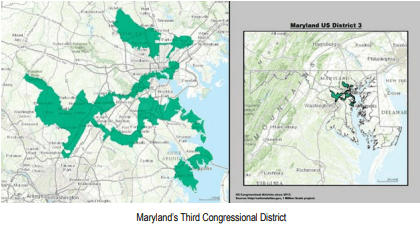
This practice has had toxic downstream effects. It amplifies the voices of those on the political extremes. Candidates in reliable liberal or conservative districts know that elections are won and lost not in the general election but in the primaries. And to win in the primaries they must “play to the base.”

We come by this honestly. We are, after all, a group-based species. But the resulting tribalism pits in-groups against out-groups, where the respective in-groups wield the political issues of the day to define and secure their status. We divide ourselves up as friends and enemies, creating hostility and polarization.

The cleavage that exists between the two tribes no longer cuts across a variety of social and cultural strata as it did 50 years ago. It’s singular and primal, so much so that a 2019 study showed that a significant number of people in each party consider people in the opposing party “evil” and that the country would be better off if members of the opposing party simply died.

The result is two Americas. At their extremes, one tribe would do away with guns altogether while the other would argue that citizens who so desire should be able to arm themselves with an M1A2 Abrams tank (version three, of course, because it’s the best). One tribe argues that abortion should be permissible to the point of birth while the other would criminalize all abortions. When either one of these Americas- right or left- senses they are losing control, they tend to dig in, inconsistencies and cognitive dissonance be damned. Both Americas defend their tribe even when it makes no logical sense to do so and (depending on the tribe) consider adherence to behavioral codes or resistance against them a moral virtue.

To circumvent this impasse, I believe we must cultivate the middle majority, by which I mean the middle 70 percent. I submit that liberal and conservative leaning people who live on either end of that middle 70 percent often have more in common with one another than they do with the extremes of their respective tribes. We must engage those with whom we disagree not on Twitter or in partisan echo chambers but in a non-partisan forum in which all viewpoints may be seriously considered, including those we find objectionable. Perhaps in such a forum we can entertain the possibility that someone who disagrees with us is not evil and does not harbor ill intent. In such a place, hospitality can be both extended and received, a place where the focus is on what unites us, not what devices us.

This may reveal some significant differences in opinion that make us uncomfortable or create uncertainty and ambiguity, but we are strong enough to manage that. To paraphrase Friedrich Nietzsche, what doesn’t kill us makes us stronger, and listening to each other with open minds certainly won’t kills us. We must find the intestinal fortitude to endure the discomfort and consider the possibility that those with whom we disagree may have a valid point; they may teach us something we need to know. Listen more, talk less, or as my wife’s license plate holder puts it, “Wag more, bark less.” When it comes to hospitality, people should be more like dogs.

One thing I’ve learned in my practice is that arguing with a patient who refuses to do what I think is in their best interest never convinces them to change their mind, but if I engage them, if I meet them where they are- not as an enemy but as a friend- if I listen to their concerns and their fears and share with them why I think it would be in their best interest to do something, they may take down the walls and adopt the healthier choice. When that happens, I know that it is not because I have made a convincing argument but because I have treated them with respect, listened to their concerns, and built a trusting relationship.

We must seize the opportunity to move from hostility to hospitality, which means engaging the stranger- and those with “stranger” ideas- not as an enemy but as a friend, a guest, a fellow traveler. We must be able to see those with whom we disagree with new eyes and hear them with new ears, and recognize in all of them that we are member of the same tribe.

Catholic priest and author Henri Nouwen put it this way:

Hospitality is not to change people, but to offer them space where change can take place. It is not to bring men and women over to our side, but to offer freedom not disturbed by dividing lines. It is not to lead our neighbor into a corner where there are no alternatives left, but to open a wide spectrum of options for choice and commitment.

I would like to see TCMS, and the Tarrant County Physician, in particular, utilized by our members as such a space in healthcare. Maybe then we will rediscover- or perhaps learn for the first time- that we have much in common, that what unites us is stronger than what divides us. Maybe then we will make the stranger a guest, if not a friend.

References:

  1. “Hospes or Hostis.”Accessed May 27, 2023. https://biblonia.com/2020/08/13/hospes-or-hostis/
  2. Seib, Gerald. “Gerrymandering Puts Partisanship in Overdrive; Can California Slow it?” Wall Street Journal. November 29, 2021. https://www.wsj.com/articles/gerrymandering-puts-partisanship-in-overdrive-can-california-reverse-it-11638198550
  3. Edsall, Thomas B. “No Hate Left Behind: Lethal partisanship is taking us into dangerous territory.” New York Times. March 13, 2019. https://ww.newyorktimes.com/2019/03/13/opinion/hate-politics.html
  4. Kalmoe, Nathan and Lillian Mason. “Lethal Mass Partisanship: Prevalence, Correlates, & Electoral Contingencies.” Prepared for presentation at the January 2019 NCAPSA American Politics: 17, https://www.dannyhayes.org/uploads/6/9/8/5/69858539/kalmoe___mason_ncapsa_2019_-_lethal_partisanship_-_final_lmedit.pdf
  5. Nouwen, H. “Reaching Out: The Three Movements of the Spiritual Life.” Penguin Books. 1986

Student Article: Representation in Medicine

by Lindsey Thomas, OMS-II

I chose to practice medicine because of my love for science, personal family connections in the field, and even the embellished view of Medicine in the media. However, the most impactful factor was that I had a female African American physician during a time of vulnerability and academic transition. I was balancing health challenges while also deciding what I was going to do in college, and it was my hematologist who provided the example of what I wanted a future for myself to look like. Seeing her success in a field that was dominated by a different demographic propelled my passion to be a physician. She showed me that I could also strive for greatness among the barriers set by society. Throughout my work as a medical assistant and now as a medical student, I have seen firsthand the disparities faced by physicians of color compared to other physicians, and I want to be part of the movement to change the narrative.

One way I knew I could make my aspirations a reality was by joining TCOM’s chapter of Student National Medical Association, or SNMA. On the national level, SNMA strives to serve underrepresented communities as well as produce physicians with cultural humility. One of the ways I’ve been able to further the organization’s mission is by my participation in the Mini Medical School events. We have partnered with the Fort Worth ISD’s after school program to give age-appropriate presentations on a medical topic at the elementary schools in the district. The students have particularly liked our superhero-themed presentation on the lobes of the brain and our introduction to the organs. Some of the elementary schools have already started to incorporate this basic anatomy instruction into the curriculum, so many of these students are able to answer questions during the presentation. The students are predominantly from underserved areas, and it is our hope that having medical students that are from similar backgrounds will inspire them to dream big. Additionally, we speak with high school and undergraduate students interested in joining the medical profession and advise them on achieving their goals. Through SNMA, I can reach students in a personable way and be a figure of possibility to young students that look like me.

As I continue through medical school, I aspire to use the knowledge I gained from student organizations like SNMA to give back to my community and to be a voice of advocacy in the need for diversity in medicine. The practice of medicine is constantly evolving and the people who are delivering healthcare should be evolving as well.

PRESIDENT’S PARAGRAPH

by Stuart Pickell, MD, TCMS President

This article was originally published in the March/April issue of the Tarrant County Physician.

Why Do We Not Have a Pediatric Residency Program in FORT WORTH?

WHEN I MOVED BACK TO FORT WORTH in 2001, I wondered why we had so few graduate medical education (GME) programs. I came to understand, from those who should know, that Fort Worth simply wasn’t an “academic” city. We had one of the finest osteopathic medical schools in the country, several excellent medical centers, and a fine children’s hospital, but relatively few residency positions for a city our size. In 2011, the Texas Legislature, concerned that the physician workforce would not keep pace with Texas’ rising population, established a goal of 1.1 residency training positions for every Texas medical school graduate. Physicians often remain near where they train, so the reasoning was and continues to be sound. Achieving and maintaining this goal helps to build and sustain the physician workforce.

Fortunately, with no help from Tarrant County, Texas achieved its goal in 2017 (see Table 1). However, the impending graduation of student from new medical schools in the next two years will increase the demand for PGY-1 positions. the Burnett TCU School of Medicine will graduate its first class in May. A year later the Sam Houston University College of Osteopathic Medicine and the University of Houston College of Medicine will graduate their first classes. By 2024, to maintain the minimum 1.1 ratio, Texas will need to increase the number of residency positions by 5 percent, and to maintain its current 1.16 ratio, it will need to increase the number of positions by 10.8 percent.

In the last few years, Tarrant County’s medical community began meeting the challenge by starting several new residency programs. This is a welcome, albeit long overdue, development. Baylor Scott and White and Texas Health Resources have led the way to these recent changes by starting programs in internal medicine, ob-gyn, emergency medicine, and general surgery- this in addition to the programs already established at John Peter Smith and Medical City. The elephant in the room is pediatrics.

Why does Fort Worth, the 13th largest city in the country and home to the 13th largest children’s hospital, not have a pediatric physician residency program? I include the word “physician” because Cook children’s does have a pediatric residency program for nurses. In fact, it has one of the only 34 such programs in the country, but it does not have a program to train physicians- and its the only children’s hospital that has a program for nurses and not physicians. But as the population grows, won’t we need more pediatricians? Regional growth trends suggest we will. For instance, in just the last five years:

• The U.S. population increased by 2.7 percent

• The Texas population increased by 5.8 percent

• The Fort Worth population increased by 9.3 percent

• Fort Worth went from being the 16th to the 13th largest city in the country

• The number of PGY-1 pediatric residency positions in Texas increased from 211 to 213, or 0.95 percent

Looking at the 30 largest cities in the United States, Fort Worth is the only one that doesn’t have a pediatric residency program. Jacksonville, FL, which ranks just ahead of Fort Worth in population, for now, has a pediatric residency program, and it doesn’t even have a medical school. Fort Worth has two medical schools.

Within Texas you will find residency programs in the larger cities – Houston, San Antonio, Dallas, and Austin – but you will also find them in El Paso, Corpus Christi, Lubbock, Temple, Galveston, and Amarillo. The only other cities in Texas that have a medical school and no pediatric residency program are College Station, Edinburgh and Conroe. So, why not Cook Children’s?

I’ve asked this question to more than a few people affiliated with Cook Children’s – some who would like to see a physician GME program and others who would not. While they disagree on the proposition, they generally agree on the historical timeline and current sentiment. Cook Children’s, the result of a merger of Fort Worth’s two children’s hospitals in the 1980s, had a unique vision from its inception. Like many large children’s hospitals, it offered state-of-the-art care for pediatric patients, but it also vowed that patients would only be treated by board-certified pediatricians, i.e., no students or residents. Since most of Fort Worth’s hospitals didn’t have GME programs, Cook Children’s was not an outlier.

What made Cook Children’s particularly unique was its size and resources combined with its lack of GME entanglements. Cook Children’s leveraged this latter feature to recruit physicians who wanted to be clinicians, not educators. A vocal minority of the current medical staff have embraced this feature and do not want it to change. There is also a vocal minority who knew Cook Children’s wasn’t an academic institution when they joined but believe now that it should be. Many others – probably a majority, although no formal vote has been taken – would be fine with a GME program if one existed, but they could go either way.

In recent years, the subject has been revisited several times. About five years ago, Cook Children’s hired Germane Solutions, a GME consulting firm, to examine the viability of a GME program and assist in its development. Their findings are proprietary, but the consensus of the people with whom I talked is that Cook Children’s is positioned to have an outstanding GME program if it wants one. Furthermore, it would enhance the hospital’s national profile and be a financial boon to the local economy. But the success of a GME program hinges on having a medical staff who supports it. One vocal minority does, the other does not. And while the support doesn’t need to be unanimous to make it work, it wasn’t clear that enough of the middle majority supported it to the point it would reach the critical mass needed to make it worth pursuing.

Some theorize that demand for more pediatric residency positions among graduating medical students is lacking, and there is some truth to this claim. In the 2021 match, there were 1.47 pediatric PGY-1 positions for every graduating U.S. medical student who applied for one. But this doesn’t tell the whole story. Between 2016 and 2021, a concerning trend emerged. While nationally the number of pediatrics PGY-1 positions increased by 6 percent there was a 14 percent decrease in the number of U.S. medical graduates applying for them.

Fortunately, foreign medical graduates have filled the void, resulting in a match-fill rate consistently over 98 percent, which makes pediatrics appear both desired and competitive. But shouldn’t the decreased domestic interest in pediatrics provoke more questions? Why are U.S. medical students not considering pediatrics?

One perennial concern is low pay relative to other specialties, including pediatric subspecialties. As one of my residency attendings used to quip, “Little people, little money.” This must be on the minds of even the most altruistic of medical students for whom the average student loan debt upon graduation is over $200,000. But perhaps students everywhere are picking up on a trend that Cook Children’s is actively embracing- a hidden curriculum embedded in the cook Children’s philosophy as evidenced by the presence of a residency program for nurses but not physicians, that the future of primary care pediatrics is really nursing.

“Baylor Scott and White and Texas Health Resources have led the way to these recent changes . . . this in addition to the programs already established at John Peter Smith and Medical City. The elephant in the room is pediatrics.”

I hope this is not the case, because while value the contributions that nurses and APPs bring to the clinical care team, their training is qualitatively and quantitatively different from that of a physician. These teams should be supervised by physicians, and those physicians need to be trained… somewhere.

Why no Cook Children’s? Medical staff aside, they have the resources. So, how many attendings does Cook Children’s need to reach the critical mass necessary to start a residency program for physicians as well as nurses. A hospital with their resources could have a large residency program. To make a comparison, Children’s Hospital of Los Angeles is roughly the same size as Cook Children’s could start with eight, the same size as Texas Tech’s program in Lubbock. considering that physicians often practice where they train, could Cook Children’s not do this for the community’s sake?

The Cook Children’s Health Care System and its flagship hospital are. a well-kept secret that will not reach its full potential until It becomes an academic training facility with education and research affiliations. To illustrate this, U.S. News & World Report ranks the top 50 children’s hospitals in 10 different specialties. Most hospitals comparable to Cook Children’s rank in nine or 10 of these specialties, often in the top 30. Cook Children’s ranks in only six, the highest being neurosurgery at 20. The others come in at 38, 41, 43, 48 and 50.

The hospital website states: “As one of the fastest growing areas in the United States, Cook Children’s is continually looking ahead to meet the needs of a very diverse population.” No one will argue with this. Cook Children’s is one of the finest children’s hospitals in the United States. As a city and as a medical community we should be- and are- proud of it. But can it not look further ahead and become home to one of the finest pediatric residency programs as well? Becoming an academic center will enhance its national profile and bolster the pediatric workforce in Texas by exposing students to high-quality pediatric primary care and specialty services early in their training, while providing an exceptional place for them to continue their training and work after they graduate.

Most things worth doing require effort. Starting a new residency program is no exception. Some physicians to me that now is not the right time, that in the wake of COVID-19 they don’t have the bandwidth for it. But will there ever be a “right” time? wll there ever be a time when the stars in heaven align, and there is a unanimous agreement that the time has arrived?

First century rabbi Hillel the Elder once said, “If I am not for myself, who will be for me? If I am only for myself, what am I? If not now, when?” Indeed. Given the need and the benefit to the community, perhaps now is the right time after all.

References:

1. The Texas Hospital Association’s educational series on hospital finance: “Graduate Medical Education, Part 5” – https://www.tha.org/wp- content/uploads/2022/04/Financing_GME_FI- NAL.pdf

2. Data for 2011-2019 may be found in a paper written by the Academic Quality and Workforce of the Texas Higher Education Coordinating Board: “The Graduate Medical Education (GME Report: An Assessment of Opportunities for Graduates of Texas Medical Schools to Enter Residency Programs in Texas.” This was a report to the Texas Legislature per Texas Education Code, Section 61.0661, October 2020, p.x.

3. See: The Kaiser Family Foundation website: https://www.kff.org/other/state-indicator/total-medical-school-graduates/

4. See: https://www.residencyprogramslist.com/ in-texas

5. “The Graduate Medical Education (GME) Report: An Assessment of Opportunities for Graduates of the Texas Medical Schools to Enter Residency Programs in Texas.” October 2020, P. 17

6. Cook Children’s Hospital consistently ranks between the 10th and the 18th largest children’s hospital in the United States depending on whether we are looking at licensed beds, staffed beds, and when the reporting was obtained.

7. See U.S. Census data at: https://www.census. gov/
8. See data from the National Residency Matching
nrmp.org/
9. Not surprisingly, every U.S. city with more than one medical school has a pediatric residency program, except Fort Worth.
10. Information obtained for this article synthe- sizes conversations I had with 10 different people, all of whom are knowledgeable of Cook Children’s Medical Center (CCMC) and the movement to develop a physician residency program. Because of the sensitive nature of this topic, I promised that I would not reveal their names or quote them directly but would make a good faith effort to com- municate their understanding of the issue. They did not all agree on whether CCMC should pursue a residency, but they did agree on the major points outlined in the article. Of the 10, eight are or were employed by CCMC, almost all in leadership posi- tions. Three of those have retired and five remain on staff. The other two, both physicians, are lead- ers in the medical community and/or at CCMC and in a position to speak to this topic.
11. See: https://educationdata.org/average-medi- cal-school-debt
12. See https://health.usnews.com/best-hospitals/ pediatric-rankings
13. See: https://www.cookchildrens.org/about/ history/
14. Mishnah Avot 1:14. See: https://www.sefaria. org/Pirkei_Avot.1.14?lang=bi

PRESIDENT’S PARAGRAPH

by Stuart Pickell, MD, TCMS President

This article was originally published in the January/February 2023 issue of the Tarrant County Physician. You can read find the full magazine here.

IT IS AN HONOR AND A PRIVILEGE TO serve as president of the Tarrant County Medical Society for 2023. I aspire to lead as ably as those who have preceded me and to move the ball forward on the many priorities we have as physicians and citizens of Tarrant County. To that end, I posed several questions at the installation event in November that I will follow up on this year, using this space as a launchpad for discussion. At the root of these questions is identity- our identity as physicians and leaders in our community.

For many physicians, and I know this is true for me, there is a sense that, like Harry Potter’s wand, we didn’t choose medicine- it chose us. We have a sense of “calling” to the profession, as if by something external to us or deep within us- either way, something so profound and unknowable that it may defy articulation.

The language of “calling” resonates with nem although for me it was problematic because I had two. When I was five years old, I told my family that when I grew up, I was going to be a minister, a doctor, and a fireman. I have done all three. Firefighting didn’t stick.

What did stick was ministry and medicine. I hoped it would be one or the other, but it never was. In college, I took classical greek and 400-level biology and chemistry courses and majored in history because I liked it. i sought advice from people I respected who were ministers and physicians and they all said the same thing: If you’ve ever thought about doing something besides ministry or medicine, do that instead. As my wife would say, “Hmmmm.”

Years later, and several years into a full-time ministry position, I told a parishioner about my dilemma. He also happened to be a therapist, which only reinforced my commitment to Calvinism. After patiently listening to me explain all the reasons why it wasn’t practical to do both, he looked at me and asked, “Why not?”

Hmmmm.

Ministry and medicine are similar. They are both vocations in the truest sense of the word, a word derived from the Latin vocare, which means “to call.” Both are professions to which the people in them tend to feel a sense of calling that compels and propels them to serve.

It makes sense that medicine, as a profession, would be hardwired toward serving others. After all, our calling first had to be validated by a medical school that saw in us what we saw in ourselves. We had to be chosen by someone else to become part of a tribe. Do you remember how you learned that you had been accepted to a medical school? I do. I got a letter. I think it’s fitting, however, that student admitted to TCU’s Anne Burnett School of Medicine literally get a call- by telephone- telling them the good news. And admissions committees seek candidates who have integrity and demonstrate empathy; people who are team players and servant leaders. This is and always has been at the core of our identity as physicians.

How we grow into that identity, and how our call to serve becomes manifest, will be as unique as each one of us. People who are called are called not just to be but to do- to apply their knowledge and expertise in a unique and meaningful way. In a way, physicians don’t have a career so much as a mission- which, at the risk of sounding pedantic, comes from the Latin word mitterre, which means “to send.” The English word is rooted in medieval Christianity, but today’s “mission” is more likely to describe the driving principles of an individual, or a business, or a non-profit group or a healthcare institution. it speaks to their identity, their raison dêtre. We are called, and we are sent, sent on a mission to serve the people in our charge- our patients- and the community in which we all live.

So, how are we doing? Are we fulfilling our mission? In many ways, we are doing quite well. We have excellent physicians in just about every specialty. We have fine institutions for adults and children and one of the best county health systems in the country. But we still have pressure points. How does the execution of our mission, individually and corporately, impact the larger community- not just us or our practices or our institutions but the people we have been called to serve?

Throughout the year I will use this space to explore this question, examining our individual and corporate roles and responsibilities as physicians in the hope that doing so will promote a constructive dialogue that furthers our mission to serve the larger community. Some of the pressure points I see and hope to explore include:

    • The inadequacy of Graduate Medical Education in Fort Worth, and especially at Cook Children’s Health System. The Cook Children’s Health System and its flagship hospital are among the finest in the country. It has excellent leadership and medical and support staff. But would the community not be better served if it leveraged this prestige and became an academic center as well, training physicians and pediatric specialists who, by the way, often practice near where they train?

    • Lack of access to the county healthcare system for undocumented county residents. Undocumented residents can receive emergency care at a reduced rate (which is often still too expensive for most) but are ineligible for the preventive care that might have averted the need for emergency services in the first place. Even Project Access can’t access county health facilities for use by our member physicians who are willing to donate their time and expertise to do necessary but non-emergent procedures.

    • Lack of physician input in the assessment, planning and implementation of strategies to address community healthcare needs and crises. Such planning should start with physicians, the people in the community who know the patients personally and who, because of these relationships, the patients trust to act in their best interest. COVID – a crisis made worse by its politicization – quickly devolved into divisive rhetoric that led to a profound mistrust of medical authorities, especially at the national level. Our member physicians voluntarily stepped into this nightmare. We partnered with neighboring county medical societies and aided the local health authorities with its media information operations, providing an honest assessment of available information to inform and educate physicians and the public. And yet, when it came to planning and implementation, the local authorities turned to non-clinical hospital leadership for input and direction.

Working together to address challenges and overcome obstacles is the center of our mission, a mission that emanates from a calling, a calling that forges our identity as physicians. What makes our calling and its ensuing mission so important, and our profession so rewarding, is the relationship we share with each patient – one that is founded on empathy, trust, and mutual respect. It’s the one thing that remains constant in the chaos, because when our patients don’t trust anyone else, they still trust us.

Our mission is not about us – it’s about our patients and our community. And if our mission is to improve their health and safety, we must be willing to take an honest look at ourselves, to understand where we have been, assess where we are, and anticipate where we are headed. And if we discover that our mission is no longer serving our patients or our community, we must have the courage to change it.

Organized medicine helps us identify challenges, assess the adequacy of our mission, and if needed, adjust it. I am honored to be a part of that process and look forward to continuing our conversation.

Closing a Medical Practice

Issues for Physicians to Consider when Closing or Relocating a Medical Practice
by Cheryl Coon, Healthcare Attorney

There are several scenarios that can lead to the closing of a physician’s practice, including relocation, retirement, or an unexpected event such as a serious illness or disability. There are many issues to be considered when closing a practice, including what to do with patient medical records. If the physician is part of a physician group practice, often the employment agreement, shareholder agreement, or other related agreement will address ownership of medical records and other similar issues. Such agreements, however, rarely address the myriad of other factors that should be addressed. Moreover, compliance with those agreements does not guarantee compliance with laws. 

The following is a short overview of some of the issues that a physician should consider ahead of time to address closing or leaving a practice. In the best of worlds, the physician has planned ahead (some suggest a year in advance for retirement) to address most if not all of the issues noted below, and developed a plan that is known and accessible to other practice and/or family members, including the location of relevant documents and contact information. Note for solo practitioners: terminating an entire practice has more issues to consider than the retirement of one physician in a group practice, such as transfer or sale of equipment, and what to do with any associated real property, whether owned or leased. For the most part, this discussion does not focus on a solo practitioner. 

Before addressing the issues, it is important to note that physicians need to keep accurate and thorough records of the steps taken so that compliance can be verified and the process kept organized. Also, when sending notices, it is important that if the method of communication is not specified in an agreement, notices should be sent via certified mail or using some process that provides a similar evidentiary record. 

Medical Records 
If the physician is part of a practice group, often the practice agreements deal with medical record ownership, transfer, and notification of patients. As noted, however, compliance with the agreements does not equate with compliance with law. In Texas, absent an agreement that states the contrary, employers own the records/work product of employees, and in practice settings, group practice agreements almost always incorporate this concept. 

Texas law also requires that practices provide certain information to physicians who are leaving, to permit the physicians to provide the required notice to patients, discussed below. 

A separate issue related to medical records is record retention requirements under various laws. Physicians need to address the times that various state and federal laws require for retention of patient records in the medical record plan. 

Finally, a note to solo practitioners: having a medical record company serve as custodian is very expensive and should be avoided if possible. It is best to have a plan to transfer records ahead of time. 

As an aside, physicians also should have a plan for preservation of business records that may be necessary in the future, such as for tax preparation.

Notice to Patients 
As noted, practices often have agreements that address notification of patients in the event a physician leaves the practice. Regardless of whether practice-related agreements address notification of patients, the Texas Medical Board (TMB) rules address the issue and have some specific requirements. Under the TMB rules, if a physician relocates, retires, terminates employment, or otherwise leaves a practice, the physician must provide reasonable written notice to patients and provide them with an opportunity to obtain copies of their records or arrange for transfer of their records. Notice (1) can be by either posting notice on the practice website or posting in the local newspaper of greatest circulation in the county, and (2) must also include notice in the practice location, and (3) must include written notice to patients seen in the last two years. 

Also, if the physician wants to recommend another physician to patients in the patient notification or otherwise, the information needs to be included in the retirement/relocation checklist.  The recommendation can be provided to patients in the notice letter discussed above.

Providers also need to review third party payor agreements for notice requirements. 

When providing patient notices, it may be prudent to put a copy of the notice provided in the patient chart, if not for all patients at least for those that are deemed high risk.

Notice to Agencies

Texas Medical Board 
A physician should provide written notice to the TMB of retirement or voluntary relinquishment of a license on the form provided by the TMB. The form must be notarized. If relocating, the TMB must be provided with new contact information. The TMB has an online “change of address” feature and will now accept hard copy notices only in limited circumstances.

Federal Drug Enforcement Administration (DEA) 
When relocating, physicians need to provide written notice to the DEA at least six weeks prior to the move and provide the old and new address for the physician. Notice should be sent to the closest DEA office in the state. Written notice also must be provided for retirement in the same manner. 

Any unused controlled substance prescription forms and other prescription forms must be returned, after being marked “VOID,” to the Texas State Board of Pharmacy within 30 days of (1) when the physician’s DEA license/number is canceled, revoked, suspended or surrendered, or (2) the date the physician died. 

If an entire practice is closing, controlled drugs will need to be inventoried and disposed of in accordance with federal and state laws, with particular care given to the disposal of controlled substances. Laws to be considered include the new Environmental Protection Agency laws on disposal of discarded (or waste) pharmaceuticals. Note that non-controlled drugs may be (1) donated, such as to community medical clinics, under the Texas Prescription Drug Donation Program established by the Texas State Department of Health Services, (2) sold with a practice, or (3) disposed of in accordance with laws.
 

Medicare/Medicaid, Tricare,
other HMOs and PPOs 

Upon retirement, physicians must notify Medicare and Medicaid and submit a voluntary withdrawal form. For Medicaid, physicians leaving a group practice must send a letter or a Provider Information Change Form to the Texas Medicaid & Healthcare Partnership. If the physician is joining a new group, the physician also must complete a new Texas Medicaid Provider Enrollment Application. 

Tricare, HMOs, and PPOs, as well as other third-party payors, will almost certainly have similar provisions. Physicians need to review all these agreements for this issue and other issues noted herein, i.e., provisions relating to patient notice and payment on termination.

Notice to Others 

Hospitals 
If a physician has privileges at a hospital, he or she needs to review the hospital bylaws and other policies carefully to see what obligations exist for retirement or relocation, whether related to notice or otherwise.

Liability Insurance Carrier 
Most liability policies now are “claims made” policies, meaning that the insurance company will pay claims made during term of the insurance contract. Therefore, if a physician leaves a practice, the general liability policy will terminate and a “tail” policy to cover claims made after the termination is crucial. In some instances, the practice will cover this expense, but the physician should verify this and obtain a certificate of insurance showing the coverage. If the practice does not provide a tail policy, one should be obtained.

National, State, and
County Medical Societies 

Physicians can provide notice to the American Medical Association by a call to its 800 number, an email or letter, or on-line. The same is true for most medical societies, including the Texas Medical Association and the Texas Osteopathic Association.

National Provider Identification System 
If the physician has a national provider identifier, the physician needs to provide notice to the National Plan and Provider Enumeration System by phone, mail, or email (again, remember that having a written record is vital).

Employees 
Physicians at some point need to notify employees so they can seek other employment at the appropriate time and so they can assist with issues such as patient notification and other transition issues.

Landlord 
Assuming the termination of a solo practice or of an entire group practice, real estate becomes an issue, particularly if the practice location is leased. The physician and his or her attorney should review the lease carefully to determine notice requirements and terms related to termination of the lease.

Supplies/Vendors 
Physicians should review their supplier and vendor agreements to see if there are provisions relating to termination (and/or relocation) and notification, or other issues that may be relevant. If there are standing orders, these will need to be addressed and possibly the issue of returns and/or credits.
Utilities/Other Accounts 

Notices to utilities and other accounts are relevant in the event a solo practitioner or an entire practice terminates or relocates. Aside from utilities, banks are clearly a significant area for review and planning. This should include making sure that access to accounts is controlled, appointing someone to be responsible who can deal with issues, particularly if physician death is the trigger. 

Review should include any subscriptions that the physician may have for magazines and periodicals from memberships in professional societies or other business-related accounts. 

Additionally, if there is an after-hour call service or something similar, the relevant agreement should be reviewed and the termination coordinated with the service.

Post Office 
Notice should be given to the post office for any change of address and/or mail forwarding.

Review all Professional Agreements 
One of the first steps for a physician should be to carefully review all professional related agreements, particularly any employment agreement or shareholder agreement if the physician is a shareholder in a professional association. Items to look for/consider include the following: 

  1. Required notice to the practice of intent to leave or retire 
  1. Non-competition and non-solicitation provisions 
  1. Medical records ownership
    and transfer 
  1. Notice to patients 
  1. Insurance, in particular issues related to tail coverage 
  1. For shareholders, transfer of shares, both the process and valuation. What notice is required? How will shares be valued? What is the timing of the buyout? 
  1. Did the physician sign any guarantees on loans for equipment, operations, real estate, or otherwise?

Winding Down anyProfessional Entity 
Physicians should assess if a professional entity, for example, a professional association or “PA,” needs to be shut down, or as the laws refer to the process, wound down and terminated.  If applicable, winding down and termination of a professional entity is a multi-stepped process that involves filing with two different agencies in Texas: the Texas Secretary of State and the Texas Comptroller. Parties will need to address tax issues and more than likely involve an accountant, preferably one who is already familiar with the practice.   In fact, the entity must file a certificate of account status from the Texas Comptroller indicating that all its taxes have been paid and it is in good standing with the Comptroller as part of the package of documents that must be filed with the Texas Secretary of State (SOS).  A certificate of termination must be filed with the SOS.

Additionally, state law requires that an entity that is winding down have a dissolution plan which addresses how claims and assets will be dealt with and distributed, and that dissolution plan must be approved as required by law. 

If there was an assumed name, that name will need to be released by filing a form with the SOS.

Licenses 
If the provider had any x-ray equipment or other equipment that required a license, the relevant licenses will need to be addressed and notice provided to the appropriate licensing agency, the Texas Department of State Health Services. 

Any wall licenses displayed should be stored in a secure location to help prevent fraud. 

Other 
Physicians should consider the tax consequences and financial issues associated with retirement and/or relocation, such as whether there are any outstanding loans (e.g., equipment, real property, other) and whether any real property has liens associated with it. Final tax returns will be required if the entire practice is closing. 

Conclusion 
In summary, there are a myriad of issues that physicians need to consider in advance of any planned retirement or relocation, and the help of other professionals is highly advised, from tax advisors to accountants and attorneys. Particularly when reviewing agreements, having someone versed in the lingo and contract law will reduce confusion and/or frustration and time. 

Design a site like this with WordPress.com
Get started