Project Access Tarrant County: Spring Highlights

Project Access

By Kathryn Keaton

This article was originally published in the July/August 2026 issue of  Tarrant County Physician.

April: Through its Salud en Tus Manos health literacy initiative, Project Access Tarrant County partnered with three other community organizations to present a financial literacy class for uninsured adults. Made possible through BEACON (Building Economic Access, Community, Opportunity & Network) funding from North Texas Community Foundation, the class focused on practical skills such as budgeting, managing debt, building credit, and making informed financial decisions. By strengthening financial literacy, participants are better equipped to reduce financial stress and improve their ability to access and maintain healthcare.

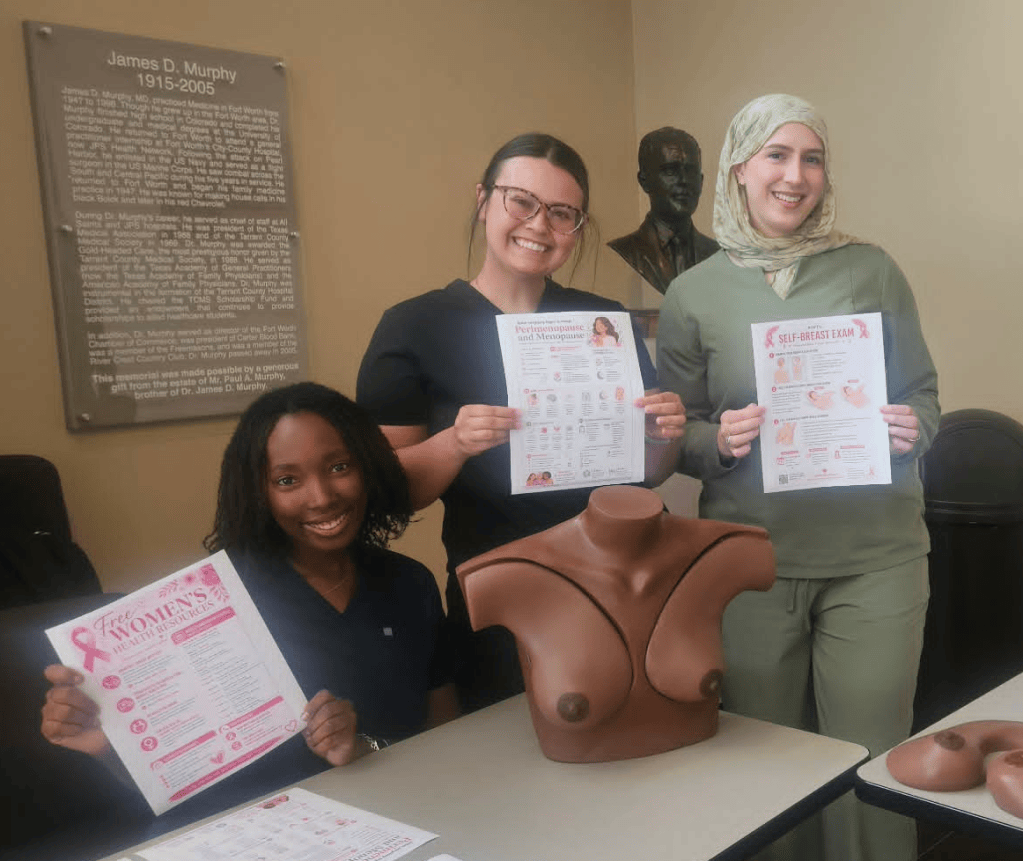
May: Project Access Tarrant County hosted a well-woman event in the Tarrant County Medical Society parking lot in partnership with the Texas Health Community Hope Wellness for Life Mobile Unit. During the event, 15 uninsured women received well-woman and/or mammogram services. Students from TCOM’s Underserved Women’s Health Initiative also provided hands-on instruction on breast self-awareness and distributed educational materials on menopause, helping patients better understand preventive care and recognize changes that should be discussed with a healthcare provider.

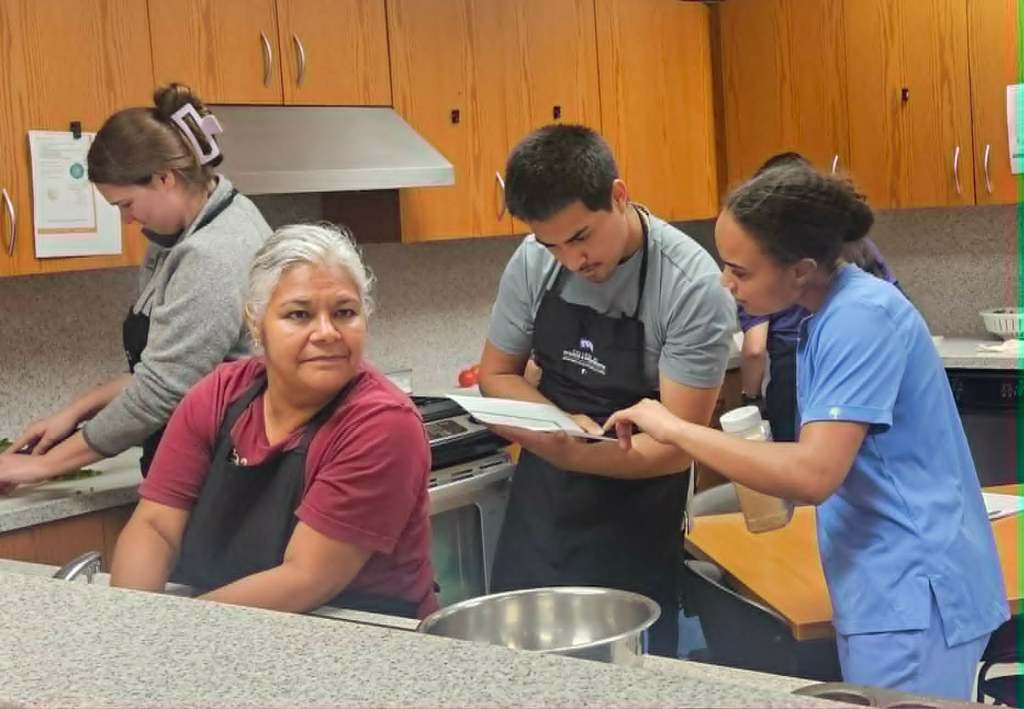
June: Salud en Tus Manos continued to grow with the launch of Food as Medicine, a new four-part series developed in partnership with TCU. Designed for patients living with diabetes or hypertension, each session combined nutrition education with hands-on cooking instruction in TCU’s culinary classroom. Participants learned how everyday food choices can support chronic disease management while preparing healthier versions of familiar meals. The series empowers patients with practical, culturally relevant strategies they can confidently incorporate into their daily lives.

Upcoming: Project Access Tarrant County is preparing for its inaugural golf tournament on September 28, a new fundraising event supporting specialty and surgical care for uninsured adults in Tarrant County. Teams and sponsorship opportunities are still available, and we look forward to launching what we hope will become a long-standing tradition in support of our mission. To sign up, visit the Tarrant County Academy of Medicine website or email Kathryn at kkeaton@tcms.org!

May and June’s events were supported by Texas Health Resources as part of a Texas Health Community Impact grant award. The contents are those of the author and do not necessarily represent the official views of Texas Health.

It’s About Time

The Last Word

By Tom Black, MD, Publications Committee

This article was originally published in the July/August 2026 issue of  Tarrant County Physician.

Recently I have found that I am less interested in making new friends, who I will probably associate with for a relatively short time, than I am in renewing past friendships with people who contributed to my being who I am today. I recently visited a friend I had known for, we decided, 49 years. This would clearly be our final visit since his stage IV renal cancer was causing his health to fail quickly. As we reminisced, he asked the rhetorical question often heard under such circumstances, “Where did all the time go?”

Last week I unexpectedly encountered a neonatologist I had worked with 30 years ago, in a hospital far, far away. We, too, reminisced for an hour over lunch. Later, I realized that neither of us had asked, “Where did the time go?” That thought never crossed my mind, and I doubt it crossed hers.

These two encounters made me realize that we physicians should rarely feel the need to ask, “Where did the time go?” because we know where our time goes. It goes to our patients, our families, and often, to other worthwhile activities and groups. My professional time is documented in operative notes, clinic appointments, hospital visits, deliberating over patients, preparing for upcoming procedures, advising fellow physicians, and keeping current with journals and CME. I spend much of my non-professional time with my wife, children, and grandchildren. A significant amount of time is occupied with church-related activities and constructive hobbies. Of the 1,440 minutes allotted to us each day, most of us can account for nearly every one of them.

These days my precious time is being siphoned off in new ways. “Just one more signature on one more form. Don’t forget the date and time. Initial this report. Complete this evaluation and these recredentialing forms.” Another spam call and another five-minute survey. Required medical record documentation occupies more time now than ever. EHRs take more time than paper records ever did. Logging in to the hospital computer takes over a minute while logging in to my office computer program takes 58 interminable seconds; I timed it. Aggravatingly, when I return to my desk after seeing a patient, I’ve been timed out and must log in again. More time lost.

Passwords deserve a special mention. Most of my passwords are now mandatorily sixteen digits, making them even less memorable and more time-consuming to enter. I see only asterisks, so I don’t realize a mistake until I hit “Enter” and must restart. Too many and too complex passwords for any human to remember requires a written list; doesn’t that defeat their purpose? I was recently introduced to multiple-step verification through a separate app and login before I could proceed. We are now subjected to the irony of a non-human computer requiring that we prove we are human by identifying in boxes stop lights or motorcycles that require a magnifying glass to see. Repeat until every pixel that might be a crosswalk is guessed correctly. It’s obvious what’s coming next—AI is already better at identifying school busses in such mini-photos than is a human, so we will be forced to prove somehow that we’re not AI. Good luck with that!

Even more time is consumed by seemingly endless forms I must now complete and “peer-to-(not a) peer” phone calls to justify what I plan to do or, worse, what I have already done. I detest getting a phone call from a secretary who then asks me to hold until the doctor can come to the phone. What is the purpose of a “heads-up” phone call anyway? I don’t need to be called at 2 a.m. to inform me that I might get a call at 4 a.m.! Stop doing that, please. Particularly annoying are required videos instructing me how to comply with governmental and hospital regulations. To complete the training, one must slide this box to that space or click on an arrow so that a door opens to reveal the next bit of information. We have each been through years of medical school, where we learned to learn by drinking from a proverbial fire hose. This type of slow-as-molasses-but-required computerized compliance training both wastes my time and insults my intelligence.

Why mention these “insignificant” intrusions? Because the most important lesson I learned from high school calculus is that enough miniscule—even infinitesimally small—bits of anything do eventually add up to a significant amount of something. Time is the perfect example. All those seconds and minutes wasted every day add up to a significant amount of time, every day, every week, every month, and every year. A Microsoft survey estimated that an average person spends sixteen hours per year entering passwords (not counting failed attempts and resets)—it is significantly longer for physicians. It’s no wonder that old-timers are leaving their medical practices while the younger ones just accept it as normal. Well, it isn’t. At least, it wasn’t.

Our profession demands our time and attention, and in return, we deserve the satisfaction of knowing that the hours of our lives have been well spent. After a busy day filled with office appointments, hospital visits, and surgical procedures, I want never to wonder where my time went—I fully experienced and can account for it. I just don’t want it wasted. Paradoxically, perhaps, it’s my days off from work when I look back in the evenings and wonder where the time went because I don’t seem to have much to show for it. No one’s life was made any better because of anything I did, sometimes including even my own.

That’s not to say that every moment must be spent in the relentless pursuit of professional goals. Stephen Covey taught this in his landmark book, The 7 Habits of Highly Effective People. His seventh habit is the need to Sharpen the Saw. This means to take time to relax and refresh, literally to “re-create,” so you can return to doing whatever you do and do it even better.1

The next time you hear someone say, “Where did all the years go?” you will realize that those words are code for, “My life is passing and I don’t have as much to show for it as I would like.” You, I expect, will think otherwise. My now deceased friend had spent his career in finances. Not that finances aren’t important, but his had been neither a happy nor rewarding life. We are fortunate to be in a profession that can offer that satisfaction, and I applaud the dedication each of you has that allows you to make a difference in people’s lives.

Embrace every opportunity to take control of your time. Rely on physician extenders to help you clinically. Rely on your office staff to do as much paperwork (now computer work—even worse!). Seek out and utilize the short cuts and templates available on many EHR programs. Embrace AI for the unimaginable improvements in time and accuracy it will offer us. Manage time—don’t allow it to manage you. For physicians especially, time is the substance from which healing, compassion, and a meaningful life are made.

References:

  1. Stephen R. Covey, The 7 Habits of Highly Effective People: Powerful Lessons in Personal Change (Free Press, 1989).

Your Attention, Please! A Commentary on the Delayed Diagnosis of ADHD in Female Patients

TCOM Student Article

By Cassandra Miller, OMS-II

This article was originally published in the July/August 2026 issue of  Tarrant County Physician.

Are you prone to losing things? Are you frequently absentminded or easily distracted? These tendencies may seem like the byproducts of a busy lifestyle or personality traits. However, they may also reflect an underlying condition such as an undiagnosed neurodevelopmental disorder like Attention-Deficit/Hyperactivity Disorder (ADHD). Historically, ADHD has been regarded as a predominantly male disorder, leading to gender-based bias in diagnostic criteria and clinical recognition.1,2 As a result, many female patients remain undiagnosed during childhood. Recent literature suggests that the increasing rate of ADHD diagnoses in women later in life may be linked to differences in symptom presentation, the development of compensatory masking behaviors that obscure clinical detection, and symptom overlap between various psychiatric conditions.3,4 Addressing diagnostic gaps is of paramount importance to improving early identification of ADHD in female patients and optimizing long-term treatment outcomes.

Despite increasing awareness of ADHD’s prevalence, it remains underrecognized in younger females. Original ADHD diagnostic criteria were derived from studies of hyperactive boys and placed emphasis on behaviors such as impulsivity.1 As a result, patients with primarily inattentive symptoms are less likely to be diagnosed in childhood. This disparity in diagnosis contributes to the pattern of women being diagnosed in adulthood, as they tend to exhibit primarily inattentive symptoms such as difficulties with time management, overall task completion, and frequent mistakes during routine activities.3

Another contributor to the delayed diagnosis of ADHD in women is the phenomenon of masking. Masking is defined as “a key component of social camouflaging and refers to the concealment of neurodivergent traits and the adoption of alternate social personas.”5,6 Although more heavily studied in the context of Autism Spectrum Disorder, masking can have positive social effects in overcoming societal stigma associated with ADHD.6 However, this method of meeting external expectations can prove challenging for clinicians as key symptoms may be obscured. Additionally, masking can be exhausting for patients and, over time, lead to poor self-esteem and burnout.5,6 This, coupled with a disproportionate rate of psychiatric comorbidity in women, represents another factor in ADHD misdiagnosis.

Moreover, women with ADHD are more likely to be diagnosed with a mood or anxiety disorder prior to receiving an ADHD diagnosis.7 The overlap in symptoms across these psychiatric conditions can lead clinicians to attribute symptoms such as impaired concentration, restlessness, and emotional dysregulation to mood disorders rather than a neurodevelopmental disorder.7 As a result of delayed diagnosis, ineffective and potentially unnecessary treatments may ensue.

Delayed diagnosis has also been attributed to sociocultural and hormonal factors.3 Regardless, the consequences of delayed diagnosis are substantial. Women with a late ADHD diagnosis report higher levels of academic underachievement, interpersonal difficulties, and feelings of shame.6 Clinical education to reduce diagnostic bias and refinement of screening tools is vital to bridging this gender-based gap and reducing the long-term burden of untreated ADHD in young women.

References:

  1. Stephen P. Hinshaw, Phuc T. Nguyen, Sinclaire M. O’Grady, and Emily A. Rosenthal, “Annual Research Review: Attention-Deficit/Hyperactivity Disorder in Girls and Women: Underrepresentation, Longitudinal Processes, and Key Directions,” Journal of Child Psychology and Psychiatry 63, no. 4 (2022): 484–496, https://doi.org/10.1111/jcpp.13480.
  2. Patricia O. Quinn and Manisha Madhoo, “ADHD in Women and Girls: Uncovering This Hidden Diagnosis,” Primary Care Companion for CNS Disorders 16, no. 3 (2014), https://pubmed.ncbi.nlm.nih.gov/25317366/.
  3. Susan Young et al., “Females with ADHD: An Expert Consensus Statement Taking a Lifespan Approach Providing Guidance for the Identification and Treatment of Attention-Deficit/Hyperactivity Disorder in Girls and Women,” BMC Psychiatry 20, no. 1 (2020): 404, https://pubmed.ncbi.nlm.nih.gov/32787804/.
  4. Joanna C. Agnew-Blais, “Hidden in Plain Sight: Delayed ADHD Diagnosis in Girls and Women,” Journal of Child Psychology and Psychiatry 65, no. 9 (2024): 1018–1020, https://pubmed.ncbi.nlm.nih.gov/38798101/.
  5. Patricia Wurth et al., “Masking in Adults with Attention-Deficit/Hyperactivity Disorder and Autism Spectrum Disorder: A Systematic Review,” Frontiers in Psychiatry 16 (2025), https://doi.org/10.3389/fpsyt.2025.1668780.
  6. Emily Holden and Helen Kobayashi-Wood, “The Adverse Life Experiences of Women with Undiagnosed Attention-Deficit/Hyperactivity Disorder: A Qualitative Study,” Scientific Reports 15 (2025), https://doi.org/10.1038/s41598-025-04782-y.
  7. Darby E. Attoe and Emma A. Climie, “Miss. Diagnosis: A Systematic Review of ADHD in Adult Women,” Journal of Attention Disorders 27, no. 7 (2023): 645–657, https://doi.org/10.1177/10870547231161533.

AI Analyzes Data, but Whole-Person Care Still Matters

Feature Article

By Nelumdini Samaranayake, PhD, Assistant Professor
Department of Medical Education and Health Systems Science at Texas College of Osteopathic Medicine, UNT Health Fort Worth

Sponsored by Robert Bunata, MD

This article was originally published in the July/August 2026 issue of  Tarrant County Physician.

Artificial Intelligence (AI) is no longer something discussed only as the future of medicine; it is already part of everyday healthcare practice. From documentation and ambient scribing to decision-support tools, AI is increasingly integrated into the workflows physicians use each day. In many ways, these technologies are improving efficiency, reducing administrative burden, and helping clinicians manage growing amounts of clinical information. This article reflects the rapidly changing developments and evidence available as of May 2026.

As this technology continues to evolve in healthcare, an important question emerges: how will AI—and how should AI—influence the way clinicians think and make decisions? AI excels at identifying problems, processing vast amounts of data, detecting differences that might otherwise go unnoticed, and offering insights faster than any human could.

Cardiologist and author Eric Topol notes in Deep Medicine that, as technology becomes more capable of handling technical tasks, it may create more space for human-centered care in healthcare.1 While AI has the potential to support broader clinical insight and decision-making, human interpretation and communication, along with the ability to understand a patient’s real-life circumstances, cannot be fully replaced by technology.

What AI Does Not Fully Capture
What AI often struggles to capture is the bigger picture surrounding the patient.
Although newer AI systems are increasingly capable of analyzing conversational, behavioral, and contextual information, the challenge has shifted from simply processing data to meaningfully understanding the broader context of an individual’s life and circumstances. AI may detect patterns in speech, documentation, and other data sources, but it does not experience a patient’s circumstances firsthand. Family concerns, cultural influences, financial realities, and unspoken worries often require human interpretation and meaningful conversation to fully understand. These factors can be difficult to measure, and even when represented in data, they may not always be recognized within the context of an individual patient’s life.

As AI becomes more integrated into care, there is a growing risk of overly narrow clinical thinking, where complex human conditions are interpreted primarily through structured data. A patient can gradually become a set of variables rather than a person with a story. While this may improve efficiency, it can narrow clinical reasoning in ways that are not immediately obvious.

When Data Does Not Tell the Whole Story
This becomes particularly relevant in educational discussions when considering a patient with poorly controlled diabetes. An AI tool may appropriately highlight lab values and suggest adjustments to the treatment plan. From a data standpoint, that recommendation makes sense. However, even when social, cultural, and environmental factors are available, understanding how they influence a patient’s daily life can be more complex. Access to food, cultural dietary practices, health literacy, transportation barriers, financial constraints, and social support may affect whether a recommendation is realistic, acceptable, or sustainable for an individual patient. While AI may increasingly incorporate such information into its analyses, determining how these factors shape a patient’s choices and circumstances often requires human judgment, conversation, and shared decision-making. Without that broader understanding, even the most evidence-informed recommendation may not work effectively in practice. This is where thoughtful integration becomes important. AI should be viewed as a tool. Although powerful, it remains a tool. It is not the decision-maker, and it does not carry responsibility or accountability. Those responsibilities remain with clinicians. The concern is not the presence of AI itself, but how increasing reliance on these tools may skew clinical reasoning over time.

Trust in AI is not only a technical challenge but also a legal one. Recent healthcare AI discussions published in JAMA have highlighted that regulatory and accountability frameworks are still evolving, leaving important questions unanswered regarding accountability, oversight, and liability when AI-supported tools contribute to errors or patient harm. As AI becomes increasingly integrated into healthcare decision-making, establishing clear standards for accountability will be essential for maintaining public trust.2

The Responsibility Still Belongs to Us
We are already seeing AI embedded in documentation workflows, particularly through the use of ambient scribing technologies. These tools can generate clinical notes, summarize encounters, and even suggest language for patient communication. They may reduce administrative burden and allow physicians to spend more time interacting directly with patients, which is a meaningful advancement. However, their use also requires careful clinical judgment and oversight. There have been situations in which AI-generated outputs were shared with patients without being fully reviewed or validated. In some cases, information that appeared to represent a diagnosis or clinical conclusion created confusion or unnecessary distress when it had not been carefully verified by the responsible physician. These moments are not failures of technology alone; they are reminders of how easily shortcuts can influence communication and clinical interpretation. They reinforce an important point: anything generated by AI must be reviewed, interpreted, and confirmed before it is shared with a patient. This includes not only the accuracy of the information itself, but whether it is appropriate for the situation and whether the patient has been adequately prepared.

Clear communication and informed patient consent are not optional steps; they are essential components of care. AI does not remove that responsibility; it reinforces it.

Why Clinical Judgment Matters More
As healthcare environments become increasingly influenced by AI, the role of the clinician becomes more important. AI should not come first in the clinical process. Instead, it should come after an initial, patient-centered assessment. First, we engage with the patient; we listen, observe, and begin to understand their story. Then we form an initial impression grounded in both data and human interaction. Afterward, AI may be used to expand or challenge that thinking. This sequence matters because it preserves clinical reasoning while allowing AI to serve as a cognitive support tool rather than a directive force. This approach helps keep clinical decision-making focused on the patient rather than solely on algorithmic output. Equally important is maintaining a mindset of critical evaluation.

AI systems are not perfect. They can generate highly confident responses that are incorrect, particularly when built on biased, incomplete, and non-representative data. They may produce outputs that appear highly credible but lack important context or accuracy. In those moments, the clinician must be willing to pause, question, and reassess. This is not about distrust, but responsibility. The presence of AI requires us to think more carefully, not less. It challenges us to ask better questions: Does this output align with what I am seeing? What might be missing? What does the patient’s situation reveal that the data does not? These are the questions that protect against over-reliance and preserve sound clinical judgment.

Looking Ahead
The role of AI in medicine goes beyond technology. It influences how clinicians think, how decisions are made, how information is presented, and how care is delivered. As AI continues to grow within healthcare, it brings both valuable opportunities and new responsibilities.

The benefits are promising. AI can assist clinicians in processing information, recognizing patterns within datasets, and highlighting details that may otherwise go unnoticed. When used thoughtfully, these tools can strengthen clinical assessment and support decision-making without replacing professional judgment. But the risk is less visible. If we are not careful, AI can narrow our thinking. Clinical attention can gradually shift toward structured data while real-life circumstances receive less consideration. Over time, this can influence how patients are understood and how decisions are made.
This issue is not rooted solely in AI. In many ways, the outcome depends on how thoughtfully these tools are incorporated into clinical care. It also creates an opportunity to shape how future clinicians think about AI—not as a shortcut or an answer engine, but as a tool that requires interpretation, reflection, and responsibility. We can guide this use of AI to strengthen clinical reasoning rather than weaken it. AI may assist with information analysis, but medicine continues to rely on human interpretation, empathy, and trust. Medicine is not defined by competing with machines in processing data. That is not where our value lies. It is in the human qualities that machines cannot replace. We understand nuance. We interpret context. We recognize emotion. We build trust. We see the patient not as a set of data points, but as a person with a life, a story, and circumstances that matter.

AI may assist in clinical decision-making, but accountability, interpretation, and patient care remain human responsibilities. While AI can analyze data, clinicians are still responsible for seeing the whole person. AI is already a part of everyday medicine; now the question is how AI will shape the way we think, decide, and care.

References

  1. Eric Topol, Deep Medicine: How Artificial Intelligence Can Make Healthcare Human Again (New York: Basic Books, 2019).
  2. Michelle M. Mello and I. Glenn Cohen, “Regulation of Health and Health Care Artificial Intelligence,” JAMA 333, no. 20 (2025): 1769–1770, https://jamanetwork.com/journals/jama/fullarticle/2831831.
Design a site like this with WordPress.com
Get started