One of the most significant misconceptions about palliative care is that it’s solely focused on end-of-life care. This couldn’t be further from the truth. Palliative medicine is a specialized area of medicine that focuses on improving the quality of life for people living with serious illnesses. By addressing physical, emotional, and spiritual needs, palliative care helps patients and their families navigate difficult times with grace and dignity.
Beyond Physical Symptoms
While palliative care can certainly help manage physical symptoms like pain and fatigue, it goes far beyond that. It’s about addressing the whole person, including their emotional, social, and spiritual well-being. This might involve counseling, support groups, or spiritual guidance.
The Importance of Early Palliative Care
Many people believe that palliative care is only for those in the final stages of life. However, palliative care can be beneficial at any stage of an illness. Early palliative care can help patients and their families make informed decisions about treatment options, manage symptoms effectively, and improve quality of life.
A Growing Need
Despite its many benefits, palliative care remains underutilized. There is a significant shortage of palliative care physicians, and many healthcare providers are not adequately trained to provide palliative care. This can lead to suboptimal care for patients with serious illnesses.
A Call to Action
To address this growing need, we must increase awareness of palliative care and encourage more healthcare providers to specialize in this field. By working together, we can ensure that all patients have access to the compassionate and effective care they deserve.
A Personal Perspective
As a palliative care physician, I have the privilege of witnessing firsthand the transformative power of this specialty. By focusing on the patient’s overall well-being, we can help them live their best lives, even in the face of serious illness.
Morvarid “Mo” Rezaie, DO, HMDC, FACOI is a Palliative Medicine physician at The Center for Cancer and Blood Disorders.
“Project Access Tarrant County has coordinated over $20 million in donated health services.”
I’ve written sentences like this countless times—I’m sure you’ve seen this or something like it from us and from various charitable agencies. Quantifying donated care isn’t an easy task, but it is necessary to share any nonprofit’s impact and, really, the “return on investment.” So how do we quantify this for our supporters and donors?
Well, let’s walk through a patient’s story together.
“Nancy” is a 44-year-old Hispanic female who was referred by Mission Arlington for a hernia repair. She is single and lives with family members. She has two minor children and works as a housekeeper. She needs a medical interpreter for her appointments and has her own transportation.
Once the patient has been entered, screened, and medically approved, the hard work begins. We aim to initiate the enrollment process as soon as medical director approval is granted. This is currently true for many specialties, but not all—and the availability can change at any moment.
Enrollment is hard—and as I often respond when asked what documentation is required, the unintentionally vague answer is, “It depends.” Part of working with our population means that not everyone has documents often assumed to be commonplace. Income is often hardest to document, especially with patients who may get paid in cash only, not have a tax return, or not even have a bank account. In addition, we must identify in advance at which hospital the patient will most likely have surgery—each hospital’s requirements are different, even within the same system.
This chart shows the cost of Nancy’s care through Project Access—the “real dollars” spent on her prescreening and enrollment processes and coordination of her medical care to completion. In Nancy’s case, the full administrative cost is $627. Since she had six appointments, this leads to an average cost of $105 per medical appointment.
Here’s where the magic happens!
PATC receives statements from each of the donating entities. The physicians, hospitals, anesthesia providers, and any others providing services all send insurance claim forms or some form of a “mock bill” so we can document the donated value for each service. The cost for Nancy’s care totaled over $25,000. This is not “real” money, but it shows the value of the care that $627 provided. That means that the return on investment for Nancy’s hernia repair is over 97 percent!
Currently, the Project Access website is housed in the TCAM section of the Tarrant County Medical Society website; however, in the coming weeks, Project Access Tarrant County is excited to launch its standalone website under “Tarrant County Academy of Medicine.” This in-house platform will have many benefits, including the following:
• Increased Donations: Streamlined online donation process and targeted campaigns
• Enhanced Visibility: PATC will have increased visibility
• Streamlining Daily Operations: PATC can use this website to inform patients about eligibility and include online forms
Most importantly, having a dedicated website will make showing our impact and patient stories easier than ever—and supporting PATC will be easier than ever.
We’ve been using the phrase, “$1,000 can save a life” lately—and this will be a focus of our new website. By showing real patient stories and the administrative cost of their donated medical services (an average of $1,000 per patient), we plan to enable you to follow along our patients’ journeys.
Stay tuned—we can’t wait to bring this vision to life!
In 2018, an American Academy of Medical Colleges (AAMC) report projected a national shortage of up to 121,900 physicians by the year 2033.1 Just a few months ago, that number was reduced to 86,000 by 2036.2 While the trend is moving in the right direction, this improvement is based on the hypothetical but not guaranteed increase in graduate medical education spots.3 The current number of incoming primary care physicians is simply not sufficient to replace the number who are retiring, much less to grow to meet the expanding need, and that is just among primary care physicians. Other specialties have not been studied to the same extent, but the AAMC has stated this will be researched more in the coming years.4
Unfortunately, Texas ranks forty-second in primary care physician availability5 and is predicted to be short by over 20,000 primary care physicians by 2030.6 In 2021, 249 of Texas’s 254 counties reported a shortage – including Tarrant and all of its surrounding counties.7
While current and predicted physician shortages are hot topics in the medical realm, the metroplex is also making headlines with the recent and projected population boom. The latest census shows that DFW added over 150,000 residents between 2022 and 2023, and Tarrant County ranked number nine out of ten among Texas counties with the most growth in the same time frame.8 Specifically, Fort Worth had the greatest increase in population of all cities in the state between 2020 and 2023, with a growth rate of 5.3 percent,9 and Fort Worth’s population will likely surpass one million by the end of 2024.10
The Fort Worth Chamber recognizes that “transportation, mobility, water, and energy infrastructure” need to be prioritized11 and has recently announced the new “Moving a Million” project to streamline transportation issues,12 but the looming collision of the impending physician shortage and continuing population boom seems to be unaddressed or unacknowledged – maybe even unrecognized.
“The urgency is now,” said Gerald Harmon, MD, past president of the American Medical Association, in a 2022 podcast.13 And for Fort Worth and all of Tarrant County, projections show that our healthcare access will only get worse as the physician shortage and the population growth gap widens.
Leonard Glass, MD, formerly of the University of California San Diego School of Medicine, recognized the coming physician shortage when he founded Physician Retraining and Reentry.14 In partnership with the medical school faculty, this national program has been addressing this issue since 2013 by creating an online training pathway for physicians who may have left the profession or let their license lapse. They also provide training for surgeons who may no longer be able to perform procedures but who are fully capable of performing primary care duties. The program website lists five major impacts of the physician shortage. One of those five is a growth of healthcare disparities, especially among communities who already face barriers to obtaining basic healthcare.15
Tarrant County has a well-documented network of free and charitable clinics that serve mostly uninsured patients. These clinics, along with JPS resources, bridge this gap – which is mostly primary care – in our community. But as with any charitable endeavor, resources are limited. Lori Kennedy, director of healthcare services at Cornerstone Assistance Network’s clinic, says that the organization is seeing the impact of physician and advanced practitioner shortages firsthand. “The need is up, but volunteer numbers are down,” she says. She encourages retiring doctors to hold on to their licenses for at least a year after retirement. “Sometimes after a year, doctors realize they miss seeing patients and want to do a little volunteer work.” Clinics like Cornerstone rely on volunteer physicians, and retired or almost-retired physicians make up most of this volunteer base.
Linda Siy, MD, a family medicine physician, says that the Tarrant County indigent population needs are handled through specific resources and safety net programs. “The need will grow, and the population will feel the strain,” she says, “and so will our safety net programs.”
While Ms. Kennedy and Dr. Siy share their concerns from a primary care perspective, Project Access is beginning to notice that patients across many specialties are having to wait 3–4 weeks for an initial phone call and often several more weeks before the next new patient appointment opening. This is in no way a slight to our volunteers – our dedicated volunteers and their offices treat PATC referrals in the same way they would any other funded patient.
The problem of the physician shortage and its exacerbation by our population boom has to be solved on many levels from the city and county management, healthcare infrastructure, medical education, and the business sector. The alarm bells are sounding, and hopefully healthcare access is a topic of discussion during this time of growth.
The average physician is not going to be involved in these strategic planning discussions, but you can still make a difference starting today. Our charitable clinic network is always in need of primary care volunteers, and they even take care of malpractice coverage when needed.
Of course, PATC always needs your help too. One of the beautiful things about PATC is that YOU are in control of how many patients you see per year, and you don’t have to leave your practice to see them – they are scheduled in the course of your normal workday and any surgeries are done where you are already credentialed.
We know this won’t solve all of Tarrant County’s problems. Physicians alone cannot fix this issue – this will have to be addressed by the local municipalities. Unless dramatic action is taken, physician shortages will still get worse and wait times will continue to increase as the population grows. But we as a physician-led charitable program can pave the way, showing our community that we will do everything within our power to help those in need.
When medical students don their freshly starched white coats for their first days of medical school, they cross the bridge from being a patient to also becoming a clinician. This evolution, from one side of the doctor-patient relationship to the other, provides medical students a unique perspective. It is at this phase of our training that we arguably have the greatest ability to have clear insight into the nuances of the healthcare system. Armed with the textbook knowledge of how to recognize, diagnose, and treat our patients’ ailments, we have a front row seat to the struggles our patients have in accessing the care they need. We also become privy to the ever-growing challenges that physicians face in providing quality care to their patients while also caring for themselves. With fresh eyes, we witness the successes and failures of the healthcare system. This lens brings into focus much of the scholarly activity medical students engage in. Our curiosity and motivation to advocate for our patients drives us to ask questions, design research projects, and share our findings with others.
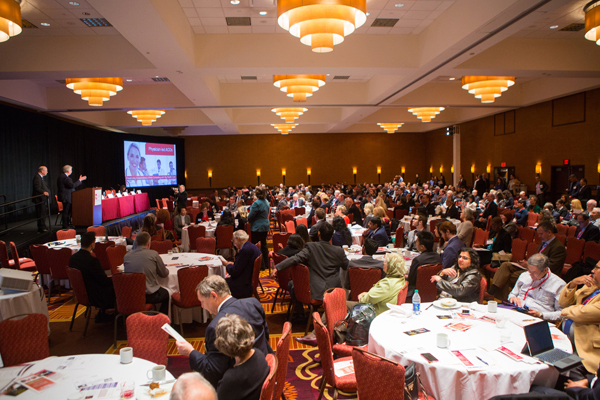
The poster session at the 2024 TexMed conference that took place in Dallas this year provided medical students the perfect venue to share such scholarly work with fellow attendees. Participants were required to submit an abstract outlining their projects that were then reviewed in a selection process. Once selected, presenters designed and submitted their posters for display in the gallery. Posters were judged by attendees of the conference for recognition with the “People’s Choice Award.” The gallery provided local students with an opportunity to present their work and featured several posters from the Anne Burnett Marion School of Medicine and Texas College of Osteopathic Medicine.
The works submitted covered a variety of topics, from advocacy and medical education to public health and the presentation of clinical cases. A team of students from the Burnett School of Medicine, including Carter Clatterbuck, MS-IV, and Peter Park, MS-IV, presented on the effects of the new Texas abortion legislation on medical school admission rates. They found that after the overturning of Roe v. Wade, there was a significant drop in female applicants to Texas medical schools. Many physicians stopped at the poster, surprised at how quickly health policy seems to have influenced the decisions of future students and reflected on the effects of certain health policies on their own specialties.
As a first-time presenter at the conference this year, my poster outlined my project investigating patients who connected with specialty care through Project Access. Project Access connects underserved patients who do not have access to insurance to charity care, particularly specialists and surgical services. I wanted to investigate the utilization of these services in order to better understand gaps in access to care locally. The project was inspired by an interaction on my very first day of outpatient clinic, where an unfunded patient was struggling to connect with a specialist they needed. Through my work, I hope to identify where vulnerable patients that fall through the cracks end up seeking care and the burden that inaccessibility to care places on our health system.
During the poster session, I had conversations with physicians that broadened my understanding of the challenges different communities face. One physician from the Rio Grande Valley shared how his community had a shortage of specialists. Many of his patients were thus forced to present to the emergency department with complex diseases without the specialty care they needed. In another conversation, I spoke with a retired local rheumatologist about how many of his patients would lose their jobs due to complications of their conditions. When they lost their jobs, they lost their health insurance and, by extension, access to their immunotherapies. These stories raised so many questions about further areas for study, and I realized that there is no-one-size-fits all solution to the challenges we face in our different communities.
Our clinical experiences and patient narratives have the potential to become major drivers for shaping research and health policy. The TexMed poster session fostered dialogue and facilitated the exchange of ideas between students, physicians, researchers, and clinicians from across Texas with a shared passion for policy and advocacy work. The opportunity to share research findings and to use that research as a springboard for discussions on what our work means to our patients and our practice was immensely valuable.
When I received an email from the Texas Medical Association inviting me and other medical students to the annual TexMed conference, my initial thought was that it might be fun to do something other than go to class and study that weekend. I had no idea what TexMed was all about or why I was invited as a first-year medical student, but the thought of a change of scenery was very appealing to me, so I decided to sign up. To my surprise, I was unable to convince any of my friends to attend with me. As more of an introverted individual, the idea of going alone was daunting, but I am beyond happy that I did.
The first night I arrived at TexMed, I attended the Medical Student Section Networking Event where I met dozens of students from around the state, including several from my own school with whom I had not previously had the opportunity to become acquainted. I also began to meet physicians from various parts of the state; each of them was surprisingly friendly, engaging, and eager to get to know me and answer my questions. I am not sure why I was under the impression that the title “networking event” implied that we would all be sitting at a formal table while I tried my best to remember all of my manners while struggling to make conversation with some highly accomplished physician who did not wish to speak to me, but my expectations could not have been more off the mark. I had not been there five minutes before Melissa Garretson, MD, from Cook Children’s Medical Center was offering me her phone number and agreeing to come speak at the next UNTHSC Pediatrics Club meeting that I was organizing. I was blown away by her willingness to help me, a student she had just met, and this feeling continued the rest of the evening as I met more and more physicians who were equally kind and eager to help me succeed. I quickly grew comfortable in this new setting and could not wait to return the next day.
Friday morning came around, and I took my seat with thousands of others in the expo hall for the Opening General Session. Harvey Castro, MD, gave us a presentation on the future of medicine involving AI and what this means for us as students and physicians. His talk was both fascinating and terrifying, but what I really gathered from that morning was the realization that medicine is constantly changing and that it is crucial for all of us to stay up to date on innovations and advancements in the field in order to provide the highest quality care to patients. Another key point that I took away from his lecture was that every person there has a purpose. I found it truly inspiring to look around the room at so many different faces, knowing that we all shared the same objective of learning how we can be the best physicians possible so that we can then provide our best to others.
When the morning’s opening events were complete and we were free to attend our meetings of choice, I headed to what I found to be the most entertaining part of the weekend: the reference committee meetings. Wanting to learn more about healthcare policy, I took a seat in the Science and Public Health committee meeting, per the suggestion of a physician I had just met at lunch, completely oblivious as to how it would work. A few minutes in, I began to understand why he had made this suggestion. I was completely enthralled by the debates unfolding before me, and, naively, I had not expected such current, controversial topics to be discussed. I did my best to absorb all of the information and opinions being presented while frantically googling terms I had never heard and taking notes on the key points that I wanted to use later as subjects for my own research. This meeting was easily the highlight of the conference for me as well as an invaluable learning experience. When I started medical school last summer, I thought the only thing I would ever need to care about again was learning science and doing research, but I now know that there is much, much more to practicing medicine.
My weekend at TexMed ended up being one of the most transformative educational experiences of my life. From meeting physicians of all ages and from all different fields to learning how TMA adopts policies and what they stand for as an organization, I gained more from the conference than I could have ever imagined. I understand now that practicing medicine involves more than scientific knowledge and empathy toward patients. In order to truly put patients’ best interests first, we, as current and future physicians, must be involved on a much larger scale outside of the hospital. It is our responsibility to stay up to date on ever-changing technological advancements, to form and maintain relationships with other physicians and healthcare workers so that we may work as a successful team, and to identify areas of healthcare that need improvement. We need to then introduce and adopt policies that will benefit our patients while also allowing us to effectively practice medicine. Who knew I could learn so much outside of the classroom?
I watched as my mom got out of the car and walked towards the dumpster behind the 7-Eleven. My eight-year-old eyes widened as she approached an elderly man who was trying to stay warm. She bent down, handed him a blanket, and then spent a few minutes talking with him. When she came back to the car, she turned to my brothers and me and said we were going home to get a few things. We came back 30 minutes later with food and some of my dad’s winter clothing, and this time we all got out of the car.
These were among the most formative moments of my childhood. Through my mom’s family organization, Operation Hope, we were able to serve those most in need in our community along the Texas-Mexico border. The mission was simple. As my mom put it, “Although we are aware that we can only do so much, it still makes a difference in our hearts and lives when we give someone that little bit of love and hope. I guess you can say that these are the seeds that we are growing.”
We provided clothing and supplies for women and children living in domestic abuse shelters, visited elderly people without family at our local nursing home, and did various donation drives for those experiencing homelessness. Being exposed to suffering at a young age permeated my personality and embedded a deep desire to help others. It eventually led to my passion for medicine and social justice.
Growing up in Laredo, Texas, an underserved community, further fueled my pursuit of this journey. Many in my hometown face obstacles in securing quality primary and specialty care. There is also a huge need for mental health and addiction services. According to the Texas Health Institute, overdose rates have doubled in the last two decades.1 Up until recently, there were no detox facilities and few halfway homes within the community.2 As of February 2024, there is only one new detox facility that serves a population of over 250,000 people.
These barriers have affected hundreds of families, including my own. When loved ones began struggling with substance abuse and mental health disorders, I saw how detrimental hindrances to medical services can be. I also learned how my Latino culture introduced an additional hurdle to receiving care. For instance, the “machismo” belief often keeps men from seeking help and reinforces stigmas by associating mental illness as a weakness or character flaw.
The disparities in my hometown aren’t singular; they’re the reality for many people across the United States. The homeless community is perhaps the hardest hit of all. This population has higher rates of disease and a shorter life expectancy. They also experience increasing incidences of substance abuse and mental illness.
Additionally, the stigmatization of people experiencing homelessness exacerbates their conditions. The article “Tackling Health Disparities for People Who are Homeless? Start with Social Determinants” discusses how many unhoused people have gone through traumatic life experiences that health services aren’t able to address.3 This leads to a delay in seeking help, with most people waiting until their conditions are severe.
This knowledge, along with my life experiences and journey in medicine, have led me to street medicine. It is at the intersection of health, disease, culture, and society, and it’s a path that is rooted in the values my mother instilled in me.
When I met Madison Stevens last July during orientation for our first year as medical students, we talked about our common interest in serving unsheltered people as future physicians. A few months later, along with Angelica Washington and Sydney Diep, who are also first year medical students at TCOM, we created the Street Medicine Student Coalition at UNTHSC.
Our goal is to make a meaningful impact in the unhoused community in Fort Worth by meeting people where they are. We are working on creating relationships with other organizations and health providers to set up street medicine rounds. While we develop that, we are holding donation drives and panel discussions and attending a street medicine conference in May 2024.
We hope that by addressing the unique needs and circumstances facing those that experience homelessness, we will be able to reduce the barriers to care and connect people with resources in the community. As my mom said, there are limitations to our capabilities when it comes to serving others, but we do possess the ability to cultivate the seeds of compassion and social justice. By nurturing these seeds, we make a difference not only in our own garden, but in communities beyond Fort Worth.
Find out how you can get involved with the Street Medicine Student Coalition Share a Pair Shoe & Sock Drive.
Stafford, Amanda and Lisa Wood, “Tackling Health Disparities for People Who Are Homeless? Start with Social Determinants,” International Journal of Environmental Research and Public Health 14, no. 12 (December 8, 2017): 1535, https://doi.org/10.3390/ijerph14121535.
Men’s Health is a critical field within urology that emphasizes the overall health and well-being of men. Our focus primarily lies on issues related to sexual function and fertility, as these concerns are often top of mind for younger men.
The Healthcare Gap for Men
From birth until around age 18, children regularly see a pediatrician. However, after this age, healthcare trajectories diverge significantly for men and women. Women continue to receive routine care from their OB/GYNs, including Pap smears and other essential check-ups. Unfortunately, men often do not seek regular medical care until something serious occurs, typically in their 40s and 50s. This delay means that from ages 18 to 50, men may silently accumulate health issues such as high blood pressure, high cholesterol, and diabetes. Often, these conditions manifest dramatically, like a heart attack, around age 50.
Engaging Men Early
Preventing these serious health issues requires engaging men in their healthcare sooner. Sexual dysfunction and fertility are significant concerns for younger men as they begin to start families. These issues can be leveraged to bring men into the healthcare system. Fortunately, erectile dysfunction, sperm parameters, and low testosterone levels are excellent indicators of overall health. We refer to them as the “check engine light” of the body. When these issues arise—such as erectile dysfunction, low testosterone, or poor sperm count—they often signal underlying health problems, including high blood pressure, high cholesterol, and diabetes.
The Role of Men’s Health Specialists
Addressing concerns about sexual function and fertility provides a gateway to broader health assessments and interventions. By engaging with men on these topics, we can diagnose and treat health issues early, potentially preventing severe comorbidities later in life. This proactive approach is why it’s critically important to reach out to younger men and involve them in their healthcare before it’s too late.
As a men’s health specialist focusing on sexual health, including testosterone replacement and treating sexual dysfunction, I am uniquely positioned to connect with this underserved population.
Recent Developments and Challenges
Recent studies during the COVID-19 pandemic revealed a high rate of erectile dysfunction, likely due to vascular damage caused by the virus. Additionally, there has been a surge in online pharmacies selling Viagra and Cialis, leading to increased use among younger men. However, these online telehealth services often do not screen for the underlying health issues causing these symptoms. Therefore, men’s health specialists play a crucial role as primary care providers for men, ensuring proper workups to address root causes rather than just treating symptoms like erectile dysfunction.
The Broader Health Picture
News articles have highlighted the decline in sperm parameters and testosterone levels over time. These trends reflect a general decline in overall health. Diet, exercise, and proper sleep are critical components of health that are often neglected in Western countries. Much of our counseling focuses on lifestyle measures to improve overall health and metabolism.
A Case in Point
Consider the story of a 41-year-old man who hadn’t seen a doctor since he was 18. He came to me complaining of new erectile dysfunction, which was affecting his self-esteem. A full diagnostic panel revealed he had a hemoglobin A1c of 14 and a blood glucose level of 388, indicating severe uncontrolled diabetes. He was unaware of the impact diabetes could have on his penile health, but this discovery motivated him to seek treatment. This case illustrates how issues with penile health can serve as a “check engine light,” prompting men to address their overall health. With a new primary care doctor, he is now on the path to better health.
Conclusion
Men’s Health is about more than just addressing immediate concerns; it’s about fostering a lifetime of well-being. By focusing on issues that matter to younger men, we can engage them in their healthcare earlier, providing opportunities for early diagnosis and intervention. This proactive approach can help prevent severe health issues later in life, leading to better health outcomes for men. Let’s prioritize men’s health and encourage men to take charge of their well-being today.
IN 1885, ELEVEN YOUNG NUNS WITH LITTLE TO NO medical experience arrived in “bawdy” Fort Worth via horse-drawn carriage. Their charge was to staff the Missouri Pacific Infirmary. While their initial task was to tend to injured and ill railroad workers, by 1889, The Incarnate Word Order had purchased land and built a hospital that became known as St. Joseph Infirmary.1 In 1923, after a boy died from lack of medical treatment at a different local hospital, Mother Superior proclaimed that both those with means and without would have equal treatment at St. Joseph – including Black patients – when many other hospitals did not.2 During the Depression, Fort Worthians lined up for food distributed by the nuns. Renamed St. Joseph Hospital in 1966, the sisters continued staffing St. Joseph Hospital, working alongside Fort Worthʼs physicians, many of whom still have core memories of the sisters and the care provided until its closure in 2004.3
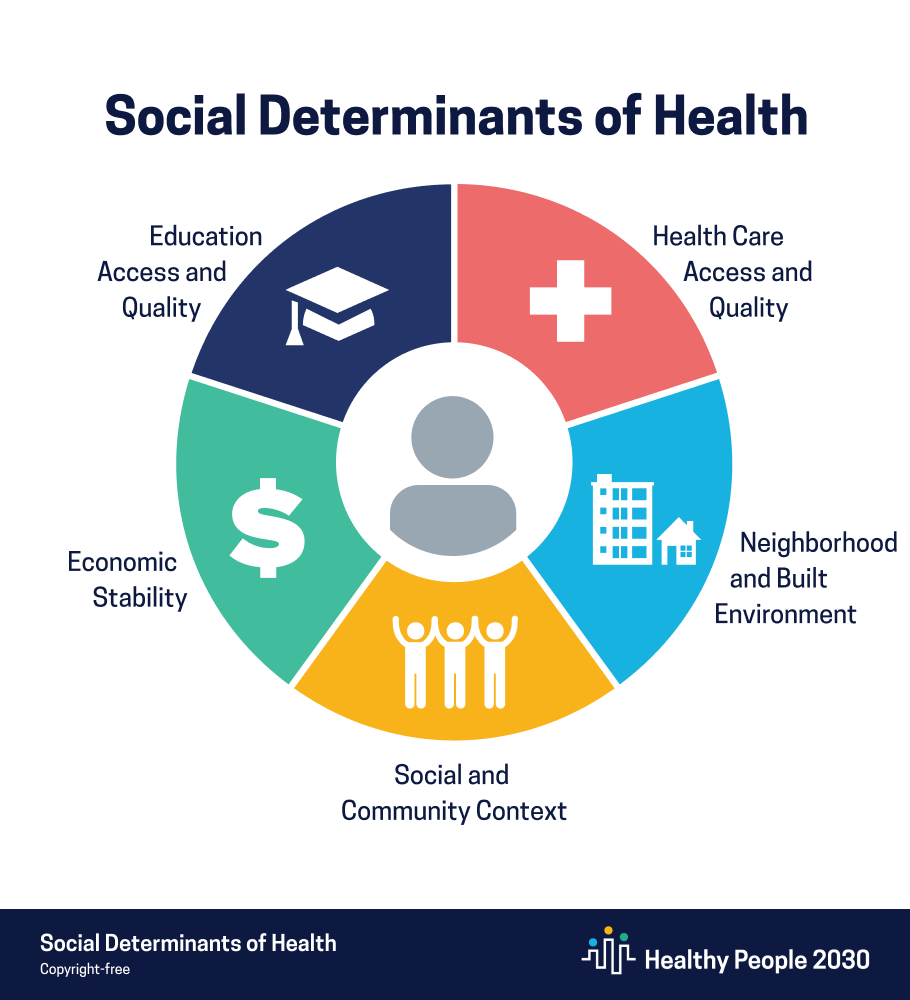
These sisters never heard the term “Social Determinants of Health,” but in Fort Worth, the nuns were pioneers of the practice. The Office of Disease Prevention and Health Promotion defines Social Determinants of Health (SDOH) as “the conditions in the environments where people are born, live, learn, work, play, worship, and age that affect a wide range of health, functioning, and quality of-life outcomes and risks.”4 The World Health Organizationʼs more simple definition is “non-medical factors that influence health outcomes.”5 These issues vary greatly and are different for every community and individual, but they each fall into one of five categories: economic stability, education access and quality, healthcare access and quality, neighborhood and environment, and social and community context.6
There is no one list of what these categories include, but the factors account for 50 to 70 percent of all health outcomes.7 The Nova Institute for Health of People Places and Planet claims that “A personʼs health . . . is determined far more by their zip code than by genetics or their family history.”8 This fact is sobering considering that Fort Worthʼs 76104, home of the Hospital District, has the lowest life expectancy in the state, first reported by UT Southwestern in 2019.9
Equitable access to timely healthcare is certainly among the SDOH that Project Access Tarrant County addresses, but since the beginning, PATC has striven to go much deeper than only access to specialty and surgical care.
The two factors most impacting SDOH for many low-income, uninsured Tarrant County patients are healthcare access and financial stability. These are inextricably linked, particularly for noncitizens who rely on their health to maintain employment and upon their continued employment for their health. Even among American citizens, the uninsured percentage of the Tarrant County (and all of Texas) population is 20 percent, double the national average; however, the percentage among Tarrant County Hispanics or Latinos is over 28.10
Healthcare access, the primary SDOH that PATC addresses, has a direct link to financial stability, especially when our intervention leads to continued or regained employment. In addition, PATC strives to identify other social determinants our patients face and address and/or refer to the best of our ability.
Primary Care In addition to the growing number of JPS neighborhood clinics, Tarrant County is home to a vital network of free, low-cost, or sliding scale clinics that provide essential primary care to the underinsured or uninsured population. These clinics are geographically scattered across the county, including locations in Fort Worth, Arlington, Mansfield, Grapevine, Crowley, and others. Most of these are community- or church-based clinics, but Tarrant County is also home to one federally qualified health clinic (with three locations) and an optometry clinic that is based on a sliding scale model but also takes private insurance.
While most PATC referrals come from these clinics (including JPS), we also receive referrals from our volunteer physicians, emergency departments, and the general public. The patients that come from places other than a primary care setting are more likely to have untreated (and sometimes undiagnosed) medical conditions. At least 28 percent of all active and pending PATC patients have diabetes and/or hypertension. Among Tarrant County Hispanics and Latinos, who comprise about 90 percent of all PATC patients, heart disease is the second leading cause of death, followed by diabetes at number six. In 2020, 30 percent of adults whose annual income was below $50,000 had not had a routine check-up in the past year. Because they lack basic primary care, they may not understand the importance of preventative medical care, or they may have other SDOH barriers. Others are simply unaware of what resources are available to them.
“Ray” recently met with PATC Case Manager Karla Aguilar. Referred by a PATC volunteer ophthalmologist who specializes in retina diseases, Ray has severe diabetic retinopathy requiring surgery. He told Karla he could barely see to work and relied on his wife to drive him everywhere. While simultaneously working on the paperwork needed for Rayʼs enrollment and surgery, Karla asked about the primary care Ray has been receiving. The answer was “none.” She helped him choose from PATCʼs partner clinics and made a direct referral. She seized the opportunity to educate him on the importance of primary care, especially with a chronic disease like diabetes. Ray seemed unaware that untreated diabetes can lead to serious health conditions, including a recurrence of his retina disease. Further into the discussion, Karla discovered that Rayʼs wife and their children, ages 12 and seven, were also without a primary care home. PATC referred the patientʼs wife to the same clinic as Ray and, since their children are citizens, referred them to a social service agency that can help them apply for Medicaid.
Healthcare Literacy Ray needed a primary care physician, but the underlying problem was not understanding its importance. Formal education isnʼt the only factor in understanding oneʼs own healthcare. Language, culture, and knowledge of resources also impact this SDOH. PATC caseworkers frequently educate patients on what many would consider common knowledge. They also empower patients to ask questions and understand their own health.
“Sandra” called former PATC Case Manager Diana Bonilla to complain about her PATC volunteer physician. “Heʼs not treating me correctly,” she vented. “I want a different doctor.” After some investigating, Diana learned that the patient was not asking any questions of the doctor (who, of note, is very well known in his field) – and the patient admitted that she felt that, as a charity patient, she did not have the “right” to ask questions about her own health. After a long conversation, Diana encouraged the patient to take written notes of what she didnʼt understand about her care and questions she had about her condition. After Sandraʼs next appointment with the same doctor, she called Diana back. She excitedly told Diana that her questions were patiently answered, she understood her diagnosis and the prescribed course of treatment, and she was thrilled to complete her care with this same physician. Healthcare literacy and patient empowerment likely prevented a patient from discontinuing her medical care. In this case, a delay of care would have had a devastating impact on her health and her familyʼs wellbeing.
Another PATC patient, “Enrique,” was enrolled in PATC for heart issues, but he also had a severe psychiatric diagnosis. His mother was his caregiver. She was often sad about her sonʼs mental health diagnoses, and, apparently as a coping mechanism, she told Diana that she had started sampling her sonʼs medication. “I want to see how it makes him feel.” Taking a deep breath (and quickly Googling), Diana explained to her that not only would his medication not make her “feel” the same way as it made Enrique feel but was also very dangerous. She read off a list of possible outcomes of taking a medication that was not prescribed to her by her doctor.
PATC also provides practical solutions to common SDOH, such as interpretation and transportation barriers. The 2022 Tarrant County Public Health Community Health Assessment reports that almost 6 percent of all Tarrant households have limited English proficiency; however, among Spanish-speaking households, that number is over 20 percent. Many non-English-speaking patients have adult family or friends they prefer to take with them for interpretation, but PATC has provided interpreters for close to one thousand medical appointments. Spanish is the main language requested, but we have also received referrals for patients who speak Arabic, Burundi, Farsi, French, Hindi, Korean, Mandarin, Mandigo, Nepalese, Persian, Portuguese, Swahili, Tanghulu, Urdu, Vietnamese, and Wolof. We provide in-person interpreters whenever possible; however, for some less common languages, we employ a national phone-based service.
Healthy People 2030’s social determinants of health. 4
Transportation is another potential barrier to care, especially in Tarrant County, where most municipalities have no public transit. While Arlington does have a rideshare program, it is the largest city in the United States with no public transportation. The cities that do have mass transit are limited and they usually donʼt cross city lines. Fortunately, most PATC patients have access to transportation. PATC can provide private rides for the ones who do not.
Vulnerable Communities Immigrants and people of color are among the most vulnerable communities in Tarrant County. Because the Tarrant County Commissionerʼs Court disallows undocumented individuals from enrolling in JPS Connection,11 the countyʼs indigent program, existing SDOH barriers are exacerbated. PATC excludes those enrolled in JPS Connection 11, so most of our patients are the undocumented, a segment PATC has dubbed the “never served” when it comes to specialty and surgical healthcare. Eighty-five percent of PATC patients are Hispanic who speak Spanish only. The remaining 15 percent are mostly undocumented patients of non-Hispanic origin. Covering racial inequality in the United States down to our own community would take years of Tarrant County Physician magazines, and the Robert Wood Johnson Foundationʼs report “What Can the Health Care Sector Do to Advance Health Equity?” gives an in-depth summary of the problems and roads to solutions for some of the factors.
One of the guiding principles of this report states, Pursuing health equity entails striving to improve everyone’s health while focusing particularly on those with worse health and fewer resources to improve their health. Equity is not the same as equality; those with the greatest needs and least resources require more, not equal, effort and resources to equalize opportunities.12
Conclusion Project Access excels at providing medical treatment, and this is, of course, why the program was created. We also enjoy showcasing the medical care provided. What we have not done as well is communicate the depth of services we offer to make sure that our patients not only have access to medical services, but that we also address the issues that have prevented the care in the first place. We are not a wide program, but we are deep. PATC will never be able to fix the global issues of inequality, poverty, and education; but we can (and do) address the issues facing our individual patients that impact their access to and understanding of their own care. Hopefully, they will possess more knowledge and tools for the next time they face a healthcare crisis.
References:
Steve Martin, “Goodbye St. Joseph Hospital.” Tarrant County Physician, 90, no. 8 (August 2012): 8-9, 16.
Regrettably, Black patients were confined to the St. Joseph basement, as were Black physicians. Riley Ransom, Sr., MD, opened the 20-bed Booker T. Washington Hospital, later known as the Fort Worth Negro Hospital and then the Ethel Ransom Memorial Hospital, in 1914. “1115 E. Terrell Ave: Tarrant County Black Historical & Genealogical Society,” TCBHGS, accessed March 2024, https://www.tarrantcountyblackhistory.org/1115-e-terrell-ave#:~:text=Booker%20T.,by%20the%20American%20 Medical%20Association.
“Social Determinants of Health,” Social Determinants of Health – Healthy People 2030, accessed March 2024, https://health.gov/healthypeople/priority areas/social-determinants-health.
Karen Hacker et al., “Social Determinants of Health—an Approach Taken at CDC,” Journal of Public Health Management and Practice 28, no. 6 (September 8, 2022): 589–94, https://doi.org/10.1097/phh.0000000000001626.
FORT WORTH, TX – Longtime Tarrant County Medical Society (TCMS) leader Linda Siy, MD, has been elected as one of Texas Medical Association’s (TMA) Alternate Delegates to the American Medical Association (AMA). The election took place on May 4, 2024, at TMA’s annual conference, TexMed. The delegation represents the interests of TMA physicians at the AMA, the largest organized medicine association in the U.S.
“Dr. Siy has always led by example with physicians, residents, and students here at TCMS,” says TCMS CEO and VP Brian Swift. “As a former AMA staff person, I know how her valuable expertise and knowledge will serve physicians around the country.”
Dr. Siy, a family medicine physician, has served in a number of leadership roles, including as TCMS president and as president of her state specialty medical society, Texas Academy of Family Physicians (TAFP), and the TAFP Foundation. In 2019, she received TMA’s C. Frank Webber Award for Outstanding Service to the TMA Medical Student Section, and in 2022, she was recognized as TAFP’s Texas Family Physician of the Year. Dr. Siy has served on a number of committees at TCMS, TMA, and TAFP, and is currently completing a term on TMA’s Council on Legislation. Dr. Siy is also a delegate representing TCMS at the TMA House of Delegates. She has served as a member and chair of multiple reference committees at the House of Delegates over the years.
Dr. Siy graduated in 1990 from the University of Missouri-Kansas City School of Medicine. She completed her family medicine residency program at John Peter Smith Hospital in Fort Worth and pursued a career through JPS Health Network so she could continue helping underserved populations. Dr. Siy joined the JPS Northeast Medical Home in Bedford, Texas, in 1995 and has practiced there for nearly 30 years. On top of her clinic work, she is on the faculty at UT Southwestern Medical Center, the University of North Texas Health Science Center Texas College of Medicine (TCOM), and the Burnett School of Medicine at TCU. She dedicates her time to precepting medical students in her office and serving as a small-group facilitator for a second-year course at TCOM.
“I’m excited to begin my service on the Texas Delegation to the AMA,” says Dr. Siy. “The Texas Delegation has a reputation for excellence and a legacy of leadership. I have a passion for organized medicine and believe in the power of a unified voice to effect change. I bring my perspective as a primary care physician, an employed physician, an educator, a community preceptor, and a proud member of the TMA!”
The Tarrant County Medical Society is a professional organization that has been dedicated to the improvement of the art and science of medicine for the residents of Tarrant County since 1903. TCMS serves over 4,000 physicians, residents, medical students, and Alliance members, and is a component society of the Texas Medical Association.
Statement by Rick W. Snyder II, MD, Texas Medical Association (TMA) president, in response to the ruling by the U.S. District Court for the Eastern District of Texas on TMA’s fourth No Surprises Act lawsuit. TMA challenged a 600% hike in administrative fees and batching rules used in arbitration cases governed by the federal law.TMA argued the case in the U.S. District Court for the Eastern District of Texas Tyler Division on April 19. TMA has filed four lawsuits against federal agencies related to rulemaking under the federal surprise-billing arbitration law pertaining to certain out-of-network care.
“We are pleased a federal court has once again agreed with the Texas Medical Association (TMA) in finding the federal agencies acted unlawfully when implementing provisions of the No Surprises Act (NSA). In TMA’s latest case, the court determined the federal agencies violated the notice and comment requirements of the Administrative Procedure Act when imposing 600% higher fees on physicians seeking arbitration in disputes with health insurers under the federal NSA.
“The federal agencies set the initial administrative fee at $50, saying last October the fees would remain at that rate through this year. However, just two months later, the agencies announced the fee would jump to $350 beginning in January 2023. TMA believes this unfair steep jump in fees has dramatically curtailed many physicians’ ability to seek arbitration when a health plan offers insufficient payment for out-of-network care.
“Likewise, TMA is pleased the court decided, based on a lack of notice and comment, to invalidate certain rules narrowing the law’s provisions on ‘batching’ claims for arbitration. Congress authorized batching in the law to encourage efficiency and minimize costs in the independent dispute resolution process. It is vital the law be applied as Congress intended.
“While the court declined to provide deadline extensions and certain other requested relief, we remain pleased with the overall outcome. Yesterday’s decisions on batching rule provisions and administrative fees will aid in reducing barriers to physician access to the law’s arbitration process, which is vital to both patient access to care and practice viability.”
TMA’s first lawsuit challenging the No Surprises Act rules– filed in October 2021, and which TMA won at the federal district court level – alleged that in the interim final rules governing arbitrations between insurers and physicians, the agencies unlawfully required arbitrators to “rebuttably presume” the offer closest to the qualifying payment amount (QPA) was the appropriate out-of-network rate.
TMA filed its second lawsuit in September 2022 challenging the NSA’s August 2022 final rules published by the federal agencies, alleging the final rules unfairly advantage health insurers by requiring arbitrators to give outsized weight or consideration to the QPA. The court ruled in TMA’s favor on that case in January 2023. This lawsuit is currently being appealed by the federal government to the Fifth Circuit.
TMA filed its third NSA rules lawsuit in November 2022 challenging certain portions of the July 2021 interim final rules implementing the federal NSA. This lawsuit is pending a decision at the district court level.
TMA is the largest state medical society in the nation, representing more than 57,000 physician and medical student members. It is located in Austin and has 110 component county medical societies around the state. TMA’s key objective since 1853 is to improve the health of all Texans.










 Tarrant County Physician Online