This Can Help Your Practice’s Revenue During COVID-19

This was published by Texas Medical Association. You can read the original version here.

This is not business as usual. The COVID-19 pandemic has affected physician practices both clinically and economically. 

You may already have made changes in how you care for patients, such as utilizing telemedicine in place of in-person visits. 

For a big picture perspective, Catalyst Health Network, a clinically integrated primary care network, has created a financial workbook you can download that calculates the effect a decrease in patient encounters and revenue has on your practice. 

You also can make adjustments in operating expenses that can keep your practice’s finances healthy. 

According to the Medical Group Management Association (MGMA) benchmark data, staff salaries and building occupancy are the two largest expenses in a physician practice. Staffing alone typically accounts for 25% of total operating expenses, and leases account for another 6% to 10%. 

However, these can be difficult sums to change: We want to support our staff, and we need to maintain an office space. 

There are other fixed expenses, like insurance payments, that may be deferred but not necessarily adjusted. However, there are some things you can do: 

Lease: Contact your landlord to discuss a deferment of monthly payments. If you are in your renewal period, negotiate a deal that includes a lower payment and/or deferment for the first few months of the new lease. 

Staffing: There are a few options like layoffs or furloughs, but be sure to consider your future funding needs as your decision could have an impact on loan forgiveness. If you furlough, you still need to pay for benefits. Furloughed staff are eligible to apply for unemployment as well. You also can consider rotating staff if you have patient care or billing needs to fulfill. 

Supplies: Stop automatic orders so you can have more control over which medical and office supplies you pay for. Consider joining a group purchasing organization (GPO) for pricing considerations if you are not already a member. 

Equipment leasing: Contact your vendors for any assistance they could provide during the current crisis. Your vendors might be able to defer or lower payments for a period of time. Evaluate use of equipment to determine if it is truly necessary to your practice. If not, return it and eliminate a payment. 

Subscriptions: Suspend any magazine or other unnecessary subscriptions. 

Shredding/Biohazard/Laundry Services: Suspend services you are currently not using. 

On the income side, Catalyst Health Network also has created a tool that compares the Small Business Association’s (SBA) lending options: Express Loan, the Paycheck Protection Program, and Economic Injury Disaster Loans. The tool has information on when and where to apply, the qualification requirements, and other pertinent details. 

The Texas Medical Association Practice Viability webpage includes more information and resources to help keep your practice afloat, including frequently asked questions (FAQs) on practice viability and human resources issues. 

Remember, you can find the latest news, resources, and government guidance on the coronavirus outbreak by visiting TMA’s COVID-19 Resource Center regularly.
Fort Worth-area hospitals prepared for coronavirus ‘worst-case scenario,’ leader says

by Nichole Manna

Originally published in the Star-Telegram.

The leader of the Tarrant County Medical Society said he believes county health care professionals are prepared for a possible surge of COVID-19 patients. Furthermore, he’s been struck by the amount of specialty and retired physicians who have told him they want to help people who become infected with the novel coronavirus.

The spike of patients could hit Texas around May 5, according to projections from the University of Washington’s Institute for Health Metrics and Evaluation.

Brian Swift, the society’s chief executive officer, said on Tuesday that he participates in two phone calls a day with professionals from across the state about their response to COVID-19 and the issues facing doctors. Based on those calls, Swift said he thinks Tarrant County is prepared for the worst-case scenario.

“I feel very good just talking with some of the medical directors,” he said. “I do feel optimistic that we know what to do. It is just a matter of execution on a lot of these things.”

Click here to read the entire article.

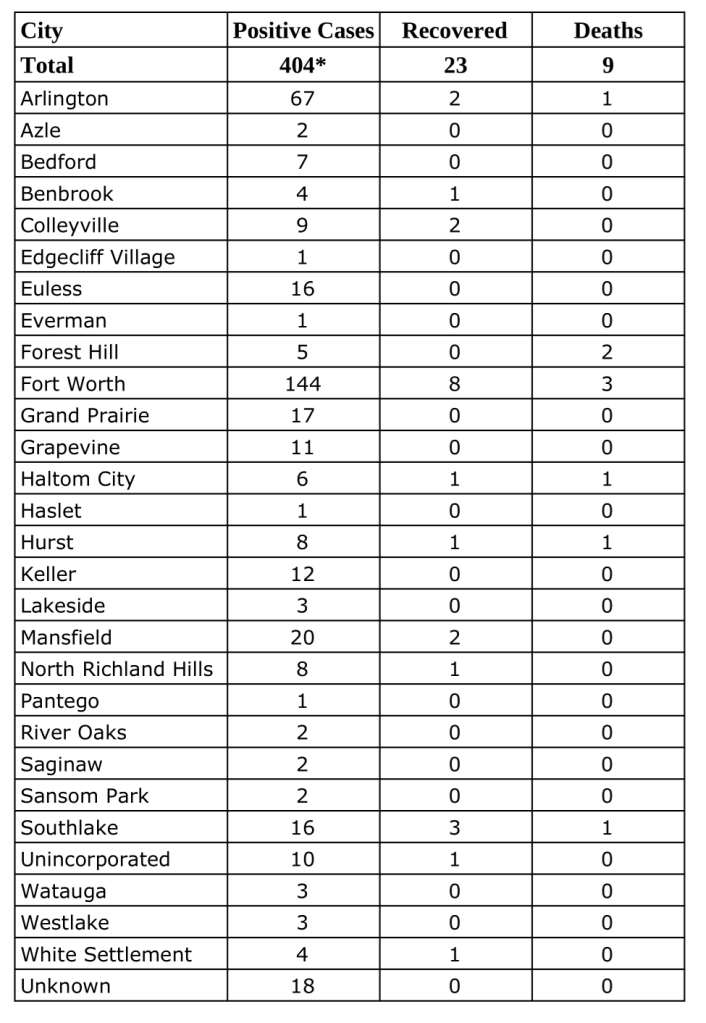
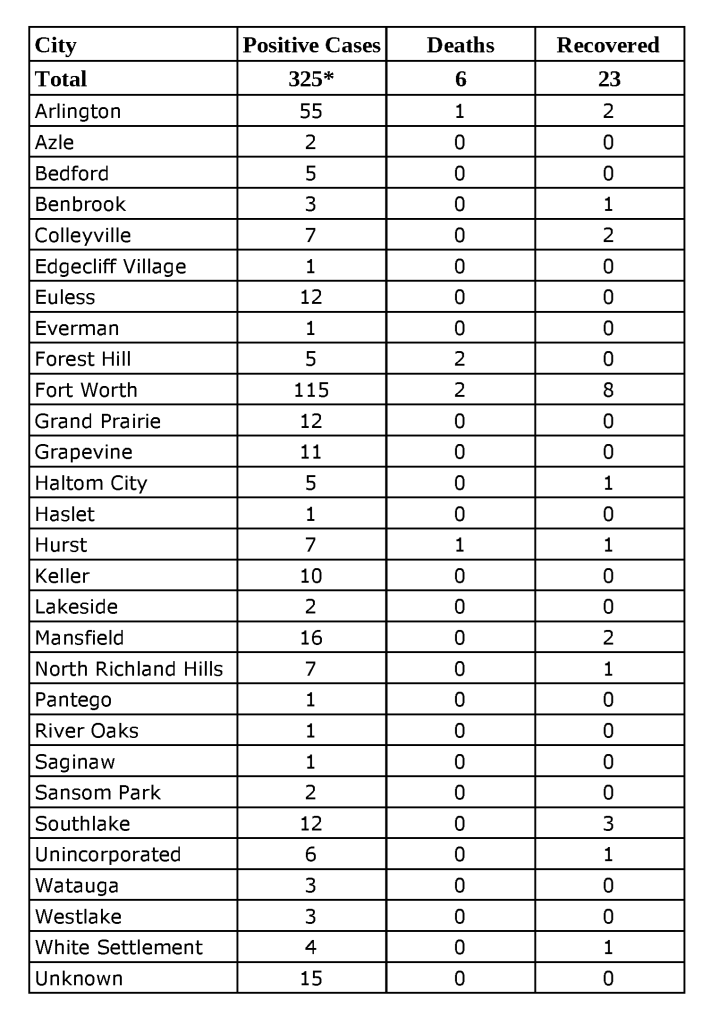
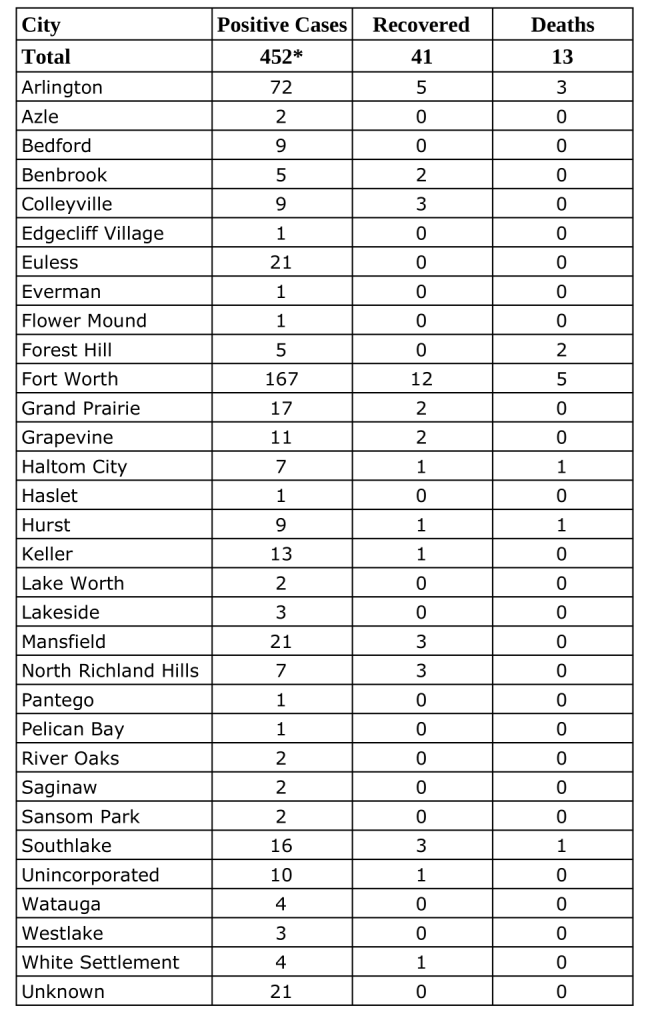
Tarrant County COVID-19 Activity – 3/31/20

COVID-19 Positive cases: 273*

COVID-19 related deaths: 1

Recovered COVID-19 cases: 8

Data from Tarrant County Public Heath’s (TCPH) report of COVID-19 activity in Tarrant County, updated Tuesday, March 31, 2020 at 1:15 p.m. Find more COVID-19 information from TCPH here.

* These data are provisional and are subject to change at any time.

Updated TMA White Paper Explains Non-Urgent Surgeries Rule

Worried, concerned, confused about the Texas Medical Board’s emergency rules on “non-urgent elective surgeries or procedures” during the COVID-19 crisis? What about the new FAQ the board issued over the weekend? You’re not alone.

Many Texas physicians have called the Texas Medical Association about the rules.

If you’re uncertain about what are considered non-urgent, elective surgeries and procedures – as well as what you or your practice will be required to report – TMA’s Office of the General Counsel produced this white paper to help you better understand the emergency rules.

In addition, the TMA COVID-19 Task Force has created a document that provides links to COVID-19 resources, including state and federal guidance as well as specialty societies that have published resource pages.

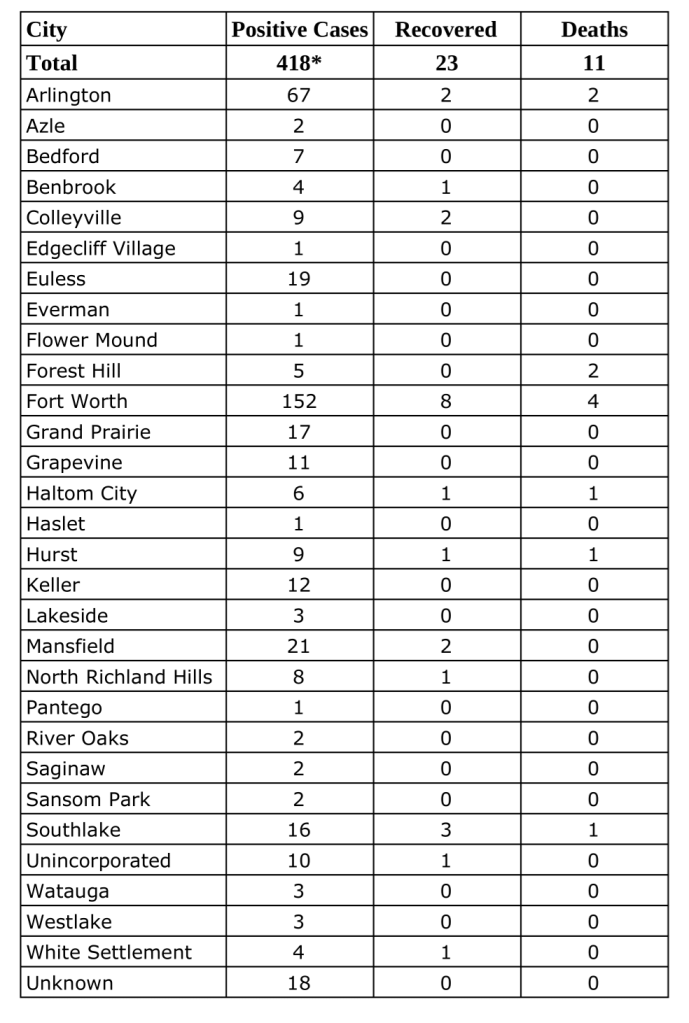
Tarrant County COVID-19 Activity – 3/30/20

COVID-19 Confirmed Cases: 155

COVID-19 Active Cases: 146

COVID-19 Provisional cases: 83

COVID-19 related deaths: 1      

Recovered COVID-19 cases: 8

Data from Tarrant County Public Heath’s (TCPH) report of COVID-19 activity in Tarrant County, updated Monday, March 30, 2020 at 1:15 p.m. Find more COVID-19 information from TCPH here.

AMA President-Elect Dr. Susan Bailey on PPE Shoratges and Social Distancing

Watch NBC5’s interview with TCMS member Dr. Susan Bailey, AMA’s president-elect, about PPE shortages, how they may impact our local community, and the importance of staying at home. Dr. Bailey is an allergist/immunologist practicing in Fort Worth, TX. This was originally posted on 3/25/20.

PPE Supply and Shortage FAQ Answered by TMA’s COVID-19 Task Force

One of the biggest obstacles physicians are facing in the COVID-19 pandemic is a lack of access to personal protective equipment (PPE). The TMA COVID-19 Task Force has worked to compile a list to answer the most common PPE questions. Read the PPE Supply and Shortage FAQ to find out more information, from conservation strategies to the best course of action if N95 respirators or face masks are not available.

Dr. Robert Rogers highlights the difference between spring allergies and coronavirus symptoms

By Dr. Robert Rogers

Originally published in the Star-Telegram. Find the original here.

If it weren’t for the coronavirus pandemic, health reporters in North Texas would be focused on allergies now, as we have entered the spring pollen season.

The beauty of the emerging leaves on the trees, the greening of grass and the appearance of flowers is accompanied by prodigious amounts of tree and grass pollen. Also, because many of us are spending more time at home and are looking for activities, people will be spending more time outside than usual, and thus be exposed to more pollen.

Cough is one of the most telling symptoms of COVID-19, and cough is also very common for those with allergies and asthma. So it’s more important than ever for those with allergies to keep their symptoms under control.

One of our patients said: “It’s a bad time to have allergies because every time you cough, someone looks at you scared!”

So, if you have allergies, how can you distinguish between allergy and COVID-19? First, although many call their allergies “hay fever”, allergy never causes a fever. Never.

If you have a dry cough and a fever, don’t blame your allergies. Talk with your doctor to see if you need to be evaluated for COVID-19.

The symptoms of allergy that are not commonly described in patients with COVID-19 include sneezing, itching of the eyes, ears, or nose, and nasal stuffiness. If there is no fever with these symptoms, they are likely due to seasonal allergies.

As mentioned, cough is common to both COVID-19 and allergy and/or asthma, so that complaint is a little trickier. Nasal allergies can trigger coughing due to postnasal drainage, and asthma causes coughing through irritation of the bronchial tubes. Again, if there is no fever, there is less concern about COVID-19.

People with mild-to-moderate nasal allergies can typically control their symptoms well by using safe, inexpensive medicines (non-sedating antihistamines and nasal cortisone sprays) that are available without a prescription. Those who have asthma will need help from a physician, as there are no effective asthma medicines in the over-the-counter market.

With stay-at-home orders in place, many people are hesitant to call their doctors because they are worried about going to a clinic where people might be sick. Many doctors now have the ability to do telemedicine visits through a smartphone, tablet, or computer. There is no need to suffer in silence – call for help!

I have been an allergist in Fort Worth for 36 years. It has never been this quiet in our office in the spring, and I suspect this is true for all allergists. If you are having trouble with your allergies, call your primary care physician or an allergist.

We are ready to help.

Dr. Robert Rogers is a Fort Worth allergist and former president of the Tarrant County Medical Society.
Design a site like this with WordPress.com
Get started