Blog Feed

Keep Patients Prepared with Good Medical Recordkeeping

by Hannah Wisterman

Originally published by Texas Medical Association on July 25, 2023.

Hurricane season in the Atlantic Ocean opened June 1 and typically runs through November, and Texas physicians and patients alike may be bracing for the possibility of property damage and displacement. 

With electronic health records (EHRs) proliferating, it’s never been easier for a patient to take agency over their own health care by having access to their documentation. Physicians and medical staff can help by aiding patients in accessing their patient portal and knowing what information to find there, and quickly. 

“It is wise for every person to have their own medical information, including a current list of any medications they are taking,” said Gary W. Floyd, MD, immediate past president of the Texas Medical Association. “Such information can be very helpful, if not critical, if the patient is displaced due to a natural disaster or public health emergency.” 

As part of regular emergency preparations, use TMA’s flyer to encourage patients to log in to your practice’s online patient portal to download and save or print their medical records summary. The flyer is customizable to include your practice’s web address for portal access.   

Patients are urged to compile and save current information on their:  

  • Medications and vaccinations;  
  • Allergies;  
  • Recent diagnoses and treatments; and 
  • A primary physician contact. 

This information is important when a patient sees any new physician but is especially useful in times of crisis. 

“What happens when a disaster happens, and [patients] get displaced? Or they get in a traffic accident on a highway – who would know their information?” asked Sunny Wong, MD, a gastroenterologist and internist in Laredo and a member of TMA’s Committee on Health Information Technology. “[Patients] ought to have access to the record.” 

Physicians who use a web-based EHR can rest assured that even if their practice is damaged by disaster, sensitive health information will remain safe. EHR vendors use networks of redundant servers to protect data if a hub goes down, says Shannon Vogel, TMA’s associate vice president of health information technology.  

TMA surveys indicate most Texas doctors (89%) have electronic medical records; physicians who do not use a web-based EHR should have policies to back up and access medical records offsite.   

The Office of the National Coordinator’s Information Blocking Final Rule requires that patients be given immediate access to their electronic health information, structured and/or unstructured, at no cost. 

TMA staff also remind physicians that their role in medical recordkeeping continues even after a patient is out of their care or a physician has made a career change, such as moving or retirement. For instance, even when records are accounted for, physicians have a duty to inform any patient whose record they have that the practice is closing, explains TMA’s whitepaper on medical record maintenance, which details other requirements and exceptions. 

For more information on good medical recordkeeping practices, visit TMA’s Medical Records page

PRESIDENT’S PARAGRAPH

Showing Hospitality to the Stranger (and the One with Strange Ideas)

by Stuart Pickell, MD, MDIV, TCMS President

This article was originally published in the July/August issue of the Tarrant County Physician.

MANY MAJOR RELIGIONS ENCOURAGE adherents to break down barriers between people. The Abrahamic tradition, which includes Judaism, Christianity, and Islam, commends the practice of hospitality, of removing barriers and welcoming the stranger as a guest. The Buddhist tradition takes it a step further, teaching that our connections are real and our divisions are not, so that the very distinction between one group and another- between insider and outsider- is an illusion.

Hospitality is the art of creating community. It is an act- a choice- of welcoming the stranger as a friend, choosing amity over enmity. But encountering the stranger can engender uncertainty. We must decide if the stranger will remain a foreigner whom we keep at a safe distance or become a guest whom we welcome in. Put another way, will we demonstrate hostility or hospitality?

Hostility and hospitality, quite different in meaning, derive from the same reconstructed Proto-Indo-European noun ghóstis, which highlights the ambiguity we experience and the choice we must make. The stranger- or even a strange idea- challenges us. The stranger can be a guest or an enemy but not both at once. The stranger’s presence forces upon us a decision that will require us to examine and assess our relationship to the stranger. As a rule, communities are strengthened when they successfully create room for the stranger to feel welcomed.

On a national level, our ability to find common ground amid diverse viewpoints has been a hallmark of American democracy and the reason it has worked. But something has changed. Historically, healthcare policy has been one topic on which there has been broad bipartisan support. The Medicare and Medicaid Act (1965) is a classic example of bipartisan healthcare legislation. But when congress passed the Affordable Care Act in 2010, not a single Republican voted for it and not a single Democrat voted against it.

Over the last 45 years, tribalism has become ingrained in our political discourse. John Dingell (D-MI), who served in congresses for 60 years, noted that when he began serving in the House in 1955, members saw themselves first as representatives of their state, second as representatives of an institution like the House or Senate, and only third as members of a party. By the time he left Congress in 2015, the order has reversed.

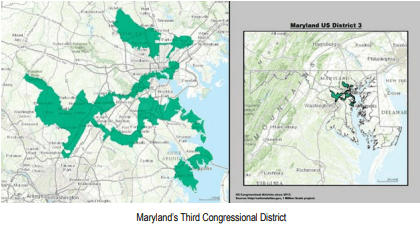
The way state legislatures draw congressional districts illustrates the extent to which parties in power will go to maintain control. One bizarre example is Maryland’s third congressional district, in which I lived until I was 16. It is called by many the most gerrymandered district in the country.

This practice has had toxic downstream effects. It amplifies the voices of those on the political extremes. Candidates in reliable liberal or conservative districts know that elections are won and lost not in the general election but in the primaries. And to win in the primaries they must “play to the base.”

We come by this honestly. We are, after all, a group-based species. But the resulting tribalism pits in-groups against out-groups, where the respective in-groups wield the political issues of the day to define and secure their status. We divide ourselves up as friends and enemies, creating hostility and polarization.

The cleavage that exists between the two tribes no longer cuts across a variety of social and cultural strata as it did 50 years ago. It’s singular and primal, so much so that a 2019 study showed that a significant number of people in each party consider people in the opposing party “evil” and that the country would be better off if members of the opposing party simply died.

The result is two Americas. At their extremes, one tribe would do away with guns altogether while the other would argue that citizens who so desire should be able to arm themselves with an M1A2 Abrams tank (version three, of course, because it’s the best). One tribe argues that abortion should be permissible to the point of birth while the other would criminalize all abortions. When either one of these Americas- right or left- senses they are losing control, they tend to dig in, inconsistencies and cognitive dissonance be damned. Both Americas defend their tribe even when it makes no logical sense to do so and (depending on the tribe) consider adherence to behavioral codes or resistance against them a moral virtue.

To circumvent this impasse, I believe we must cultivate the middle majority, by which I mean the middle 70 percent. I submit that liberal and conservative leaning people who live on either end of that middle 70 percent often have more in common with one another than they do with the extremes of their respective tribes. We must engage those with whom we disagree not on Twitter or in partisan echo chambers but in a non-partisan forum in which all viewpoints may be seriously considered, including those we find objectionable. Perhaps in such a forum we can entertain the possibility that someone who disagrees with us is not evil and does not harbor ill intent. In such a place, hospitality can be both extended and received, a place where the focus is on what unites us, not what devices us.

This may reveal some significant differences in opinion that make us uncomfortable or create uncertainty and ambiguity, but we are strong enough to manage that. To paraphrase Friedrich Nietzsche, what doesn’t kill us makes us stronger, and listening to each other with open minds certainly won’t kills us. We must find the intestinal fortitude to endure the discomfort and consider the possibility that those with whom we disagree may have a valid point; they may teach us something we need to know. Listen more, talk less, or as my wife’s license plate holder puts it, “Wag more, bark less.” When it comes to hospitality, people should be more like dogs.

One thing I’ve learned in my practice is that arguing with a patient who refuses to do what I think is in their best interest never convinces them to change their mind, but if I engage them, if I meet them where they are- not as an enemy but as a friend- if I listen to their concerns and their fears and share with them why I think it would be in their best interest to do something, they may take down the walls and adopt the healthier choice. When that happens, I know that it is not because I have made a convincing argument but because I have treated them with respect, listened to their concerns, and built a trusting relationship.

We must seize the opportunity to move from hostility to hospitality, which means engaging the stranger- and those with “stranger” ideas- not as an enemy but as a friend, a guest, a fellow traveler. We must be able to see those with whom we disagree with new eyes and hear them with new ears, and recognize in all of them that we are member of the same tribe.

Catholic priest and author Henri Nouwen put it this way:

Hospitality is not to change people, but to offer them space where change can take place. It is not to bring men and women over to our side, but to offer freedom not disturbed by dividing lines. It is not to lead our neighbor into a corner where there are no alternatives left, but to open a wide spectrum of options for choice and commitment.

I would like to see TCMS, and the Tarrant County Physician, in particular, utilized by our members as such a space in healthcare. Maybe then we will rediscover- or perhaps learn for the first time- that we have much in common, that what unites us is stronger than what divides us. Maybe then we will make the stranger a guest, if not a friend.

References:

  1. “Hospes or Hostis.”Accessed May 27, 2023. https://biblonia.com/2020/08/13/hospes-or-hostis/
  2. Seib, Gerald. “Gerrymandering Puts Partisanship in Overdrive; Can California Slow it?” Wall Street Journal. November 29, 2021. https://www.wsj.com/articles/gerrymandering-puts-partisanship-in-overdrive-can-california-reverse-it-11638198550
  3. Edsall, Thomas B. “No Hate Left Behind: Lethal partisanship is taking us into dangerous territory.” New York Times. March 13, 2019. https://ww.newyorktimes.com/2019/03/13/opinion/hate-politics.html
  4. Kalmoe, Nathan and Lillian Mason. “Lethal Mass Partisanship: Prevalence, Correlates, & Electoral Contingencies.” Prepared for presentation at the January 2019 NCAPSA American Politics: 17, https://www.dannyhayes.org/uploads/6/9/8/5/69858539/kalmoe___mason_ncapsa_2019_-_lethal_partisanship_-_final_lmedit.pdf
  5. Nouwen, H. “Reaching Out: The Three Movements of the Spiritual Life.” Penguin Books. 1986

PRESIDENT’S PARAGRAPH

How Much Does It Cost NOT to Provide Healthcare Services to the Undocumented?

by Stuart Pickell, MD, TCMS President

This article was originally published in the May/June issue of the Tarrant County Physician.

Note from the author: Although I have sourced much of the content in this article, some of the information comes from off-the-record conversations I have had with people who are or have been in leadership positions within the hospital district. In exchange for their honest assessment, I promised not to quote them.

I SUSPECT THAT, IF ASKED, THE average Tarrant County taxpayer would oppose spending tax dollars to fund healthcare for undocumented residents. I suspect also that they have at best a partial understanding of the issue borne out of media mischaracterizations and confirmation biases- on both ends of the political spectrum. Would that we could focus our attention on the information we need- as opposed to the information we want- when we make policy decisions that impact the community.

Harvard psychologist William James, in his presidential address to the American Philosophical Association, stated, “We are making use of only a small part of our possible mental and physical resources.”1 From this case the notion that we use only 10 percent of our brains, a myth so perpetuated by self-help books throughout the 20th century that by 2014, a survey revealed that roughly 50 percent of teachers around the world believed the myth to be true. 2 But James was not asserting that we use only a small part of our brain; he contended that we do not engage it fully. What he described is consistent with what we now know about attention and flow states. To solve problems, our brains work best when we focus our attention. This is also true for communities. If we want to address community concerns seriously, we must focus our attention not just to what we see on the surface, but on the currents that run underneath it. However, when it comes to healthcare and undocumented residents, you can’t finish the question before the knives come out and the war paint goes on. But this question is more nuanced than a soundbite debate regarding immigration. Let me provide some context and propose a path forward.

The County Health System

JPS is the “safety net” facility for those who “fall through the cracks” in our healthcare system. The county health system traces its origin to 1877 when the then-future mayor Jogn Peter Smith donated five acres of land south of town to provide medical care to city and county residents.3

The first public hospital opened in 1906. Associated with the Fort Worth Medical College, it was called the City-County Hospital and was free to all accident victims and others by agreement.4 In 1914, a new hospital was built across the alley from the medical college which, by this time, was affiliated with TCU. This building, at 4th and Jones, still stands and is now the Maddox-Muse Center. By the 1930s, the city had outgrown this facility and a new City-County Hospital was built on the land originally donated by John Peter Smith. In 1954, the hospital changed its name to honor the land donor.

Until the 1950s, faith-based healthcare institutions managed many of the hospitals and health networks in Texas. Fort Worth’s first hospital was St. Joseph (1885).5 The demand for reliable access to healthcare services for the indigent drove initiatives to create a taxing mechanism to improve healthcare resources in growing Texas communities. This resulted in a Texas state constitutional amendment in 1954 permitting the creation of county-wide hospital districts in counties with a population of at least 900,000 to better serve those communities. 6 Tarrant County formed its hospital district in 1959, centered around JPS. As needs increased, the facility grew, and in 2008, it acquired St. Joseph Hospital, which was torn down in 2012 to create space for ongoing expansion.

Because the hospital districts fall along county lines, they come under county jurisdiction and are overseen and managed by the county commissioners court. By statute, every Texas county must have a county judge and four county commissioners, each representing a district consisting of one-fourth of the county’s population. Every county, from Harris County’s 4.7 million residents to Loving County’s 83 residents, has four commissioners and a county judge. The commissioners courts are responsible for setting policy and determining budgets, many of which are dedicated to roads and bridges, law enforcement, and the hospital districts. 7,8 According to the Texas Health & Safety Code, the county must “provide health care assistance… to each of its eligible county residents.” 9 But who is “eligible”?

JPS has enjoyed excellent executive leadership, as evidenced by their ranking in Washington Monthly as the best teaching hospital in the county. 10 Yet while the executive team has significant authority to create a vision, establish priorities, and execute the network’s mission, it’s the Board of Managers- the JPS governing authority- that funds it and determines eligibility criteria. This board consists of representatives appointed to two-year terms by the commissioners court.

In 1996, Congress passed the Personal Responsibility and Work Opportunity Reconciliation Act deeming undocumented residents ineligible for many federal, state, and local public benefits, but it allowed states to expand benefits if they wanted to. 11 This created some uncertainty at the state level. In September 2003, a Texas law went into effect that deemed undocumented immigrants eligible for non-emergency care subsidized with local funds. According to the Fort Worth Star-Telegram, the JPS Board of Managers interpreted this law to be a mandate and voted to allow undocumented immigrants to enroll in JPS Connection starting in January of 2004. 12 The following month, Senator Jane Nelson wrote a letter to then Attorney General Greg Abbott seeking clarification regarding the statute. 13 Five months later, the Attorney General rendered his opinion that the code “permits, but does not require, a hospital district to provide nonemergency public health services to undocumented persons who are otherwise ineligible for those benefits under federal law.”14 A few weeks later, the JPS Board of Managers rescinded their expansion policy, although those who had already enrolled were permitted to remain in the system.

Cracks in the System

Texas has the ignominious distinction of leading the nation in uninsured residents. At 18 percent, our uninsured rate is over twice the national average. 15 There are many factors, including Texas’ decision not to accept federal funding for Medicaid expansion (as of July, Texas will be one of only 11 states that has not accepted it) and a knowledge gap on the part of currently eligible people who don’t know how to enroll.16,17 But another driving factor is undocumented residents, the number of whom living in Texas is anyone’s guess.

Castigating immigrants, documented or not, as “the problem” obfuscates the bigger picture. We live in a transportation hub that provides ready access to much of the world. Immigration is considered a good thing. People come here because our expanding economy offers them jobs. Immigrants constitute 23 percent of the Texas workforce. A 2019 DFW survey revealed that immigrants made up 46 percent of our workforce in construction, 30 percent in manufacturing, and 26 percent in restaurant and food services. They contributed $119 billion to the Texas economy in personal income. Furthermore, 71 percent speak English, about 59 percent own homes, and 79 percent have lived in Texas for at least 10 years. 18 A recent national study focused on the experiences of undocumented immigrants revealed that immigrants typically pay more into the health system through taxes and premiums than they use in the form of healthcare services. 19 They do the same for the Social Security trust fund, something the Social Security Administration has known for years.20

And yet, at least in Tarrant County, undocumented immigrants struggle to access healthcare. they go to JPS at a discounted rate (typically 40-80 percent), but because of their legal status they often forego routine care even if they can swing a hammer of lift a beam or scrub a floor- they keep working for fear of losing their jobs. For the undocumented, the fear of discovery and deportation is real. They don’t just fall through the cracks; they hide in them. This works until a chronic problem becomes and urgent one, and they can no longer work and must seek care. With the average three-day hospitalization costing $30,000, the patient will still owe $6,000-$12,000 after discounts, which most cannot afford.21 Since they cannot enroll in federal programs, JPS will end out absorbing the cost.

JPS probably provides a lot of uncompensated care that we don’t know about. It would be illegal not to provide care in an urgent/emergent situations- not to mention unethical- so why don’t we focus our attention on the cost of NOT taking care of undocumented residents?

The fact is, no one wants to talk about this because its political kryptonite. State legislators say this is a county issue. The county commissioners say it’s the Board of Managers’ decision, but the Board of Managers is appointed by and serves at the pleasure of the county court. Everyone says it’s a federal issue, and yet when Medicaid expansion comes up the state turns it down. Geez.

I attended First Tuesdays at the capitol on March 6th, where I had the opportunity to sit down with the legislative aid for a Republican senator. When Medicaid expansion came up, she admitted, of the record, that Texas should accept it, but that this issue is a non-starter for her senator. Why? As Robert Frost put it,

Before I built a wall I’d ask to know what I was walling in, or walling out. 22

Likewise, before we say we’re not going to provide basic healthcare services, shouldn’t we want to know all the facts? The JPS Health Network’s report regarding healthcare planning for Tarrant county states that its critical for the system to “continue to shift the emphasis from hospital care- for medical and behavioral health issues- to ambulatory care to decrease the need for preventable and costly inpatient care.” 23 But our current policy creates a Gordian Knot in which a sizeable number of Tarrant County residents are forced to do the opposite. So, they wait until they can no longer work, at which point the problem may require a hospitalization and a more expensive “fix.”

A Proposal

What we need is to get past the political campaign slogans and focus our attention on the actual problem. Immigration reform is a valid concern and should be addressed, but it’s not the issue here. Our issue is local, and it impacts the people with whom. we live and work, and those we hire to work for us. The undocumented residents in Tarrant County aren’t leaving anytime soon. Furthermore, they contribute to the economy and pay taxes. What we need, then, is a task force to examine seriously and assess honestly all the issues that contribute to the problem. They should focus their attention not on the surface concerns that we find in a political campaign ad but on the underlying currents, the factors that make this problem more nuanced than can be contained in a soundbite. This task force should be apolitical by intention (to the extent that anything can be) and include people who care about the community, economic development, fiscal responsibility, and, of course, healthcare. TCMS is well positioned to help lead this initiative. We represent a variety of political viewpoints, but we share a common concern for taking care of our patients individually and collectively.

Factors this task force should consider include:

  • How Harris, Bexar, Dallas, and Travis Counties are managing this issue.
  • The number of people living in Tarrant County who are barred from county healthcare services.
  • The impact undocumented residents have on the community, including:
    • Their contribution to the economy
    • How much they pay in taxes
    • How much we are spending urgently treating preventable conditions.

Money is a finite commodity, so it, too, must be included in the conversation. Tax dollars should be spent wisely. County Judge Time O’Hare pledged to do this during his campaign, especially regarding the hospital district.24 He also promised to cut taxes, fund law enforcement, and eliminate waste, fraud, and abuse. 25 This alignment of priorities suggests that hospital district funding may be in peril.

But it doesn’t need to be. A serious study may reveal that we are “wasting money” by NOT providing these services, especially when we factor in the cost of uncompensated urgent and emergent care and the loss of worker productivity. We won’t know unless we ask. Furthermore, the surge in property values, and therefore property taxes, has afforded the state a $32.7 billion surplus. 26 Many constituencies are vying for that money- the taxpayers themselves, law enforcement, teachers- and all should be given serious consideration. But could we not give serious consideration also to addressing the healthcare needs of some of the most vulnerable individuals in our community by allowing undocumented residents to access the county healthcare network?

Once we know what we’re dealing with, we can begin to chart a course forward, riding the underlying currents rather than fighting them until we arrive at a destination that demonstrates hospitality, compassion, and fiscal responsibility. We may even find that the most fiscally responsible thing we could do is to offer basic primary care to these populations through a creative collaboration between JPS and other community resources. But we won’t know unless we ask.

References:

  1. James W. The Energies of Men. Science. 1907; (Vol. 25, No 635 (March 1, 1907)): 332-323.
  2. Howard-Jones PA. Neurosciences and education: myths and messages. Nature reviews Neuroscience. 2014; 15 (12):817-824. doi:10.1038/nrn3817
  3. History of JPS. Accessed March 25, 2023, https://www.jpshealthnet.org/about-jps/history
  4. Site of the Fort Worth Medical College. Historical Marker for the Fort Worth Medical College. https://www.hmdb.org/m.asp?m=53215
  5. Park KB. St. Joseph Hospital. Texas State Historical Association. Accessed March 25, 2023, https://www.tshaonline.org/handbook/entris/st-joseph-hospital
  6. McKinley RD. Texas Hospital Districts: Past, Present, and Future. Affairs DoP; 2019. August 2019.
  7. What Is a County Commissioner? Texas Association of Counties. Accessed March 19, 2023. https://www.county.org/About-Texas-Counties/About-Texas-County-Officials/Texas-County-Commisioner
  8. What Does a County Commissioner Do in Texas? Texas Association of Counties. Accessed March 19, 2023. https://www.county.org/About-Texas-Counties/About-Texas-County-Officials/Texas-County-Commissioner
  9. Health and Safety Code, Texas State Legislature §61.022 (2023). https://statutes.capitol.texas.gov/ Docs/SDocs/HEALTHANDSAFETYCODE.pdf
  10. Editors T. Introducing the Best Hospitals for America. Washington Monthly 2020.
  11. Personal Responsibility and Work Opportunity Reconciliation Act of 1996. 1996.
  12. Allison A. Local, state policies may contribute to higher cervical cancer death rate for Hispanic women in Tarrant County. Fort Worth Report. November 22, 2021. https://fortworthreport. org/2021/11/22/local-state-policies-may-contribute- to-higher-cervical-cancer-death-rate-for-hispanic- women-in-tarrant-county/
  13. Nelson J. Senator Jane Nelson to Attorney General Greg Abbott, February 4, 2004. In: Abbott AGG, editor. Letter from Senator Jane Nelson to Attorney General Greg Abbott seeking a clarifying opinion regarding the eligibility of undocumented residents for health care services under the Health and Safety Code Section 285.201 as added by Chapter 198, Acts of the 78th Legislature, Regular Session, 2003. ed 2004.
  14. Abbott G. Opinion No. GA-0219. 2004.
  15. Percentage of Population Without Health Insurance Coverage by State: 2019 and 2021. United States Census Bureau. Accessed March 25, 2023, https://www.census.gov/library/visualizations/ interactive/population-without-health-insurance- coverage-2019-and-2021.html
  16. Status of State Medicaid Expansion Decisions: Interactive Map. Kaiser Family Foundation. Updated February 16, 2023. Accessed March 25, 2023, https:// www.kff.org/medicaid/issue-brief/status-of-state- medicaid-expansion-decisions-interactive-map/
  17. Barton K. Tarrant County residents have access to free health care, but some say awareness is a barrier. Fort Worth Report. October 11, 2021. Accessed March 19, 2023. https://fortworthreport.org/2021/10/11/ tarrant-county-residents-have-access-to-free-health- care-but-some-say-awareness-is-a-barrier/
  18. Garcia Z. Immigrants are crucial to Texas’ economy. FWD.us. Updated February 23, 2022. Accessed March 19, 2023. https://www.fwd.us/news/ texas-immigrants/
  19. Ku L. Who Pays for Immigrants’ Health Care in the US? JAMA Netw Open. Nov 1 2022;5(11):e2241171. doi:10.1001/ jamanetworkopen.2022.41171
  20. Goss S, Wade A, Skirvin JP, Morris M, Bye KM, Huston D. Effects of Unauthorized Immigration on the Actuarial Status of the Social Security Trust Funds. Actuarial Note. April 2013. Accessed April 2, 2023. https://www.ssa.gov/oact/NOTES/pdf_notes/ note151.pdf
  21. Why health insurance is important: Protection from high medical costs. Accessed March 27, 2023, https://www.healthcare.gov/why-coverage-is- important/protection-from-high-medical-costs/
  22. Frost R. Mending Wall. North of Boston. 1914;
  23. Health Care Planning for Tarrant County and the Role of JPS Health Network. 2018. February 27, 2018. https://www.tarrantcountytx.gov/ content/dam/main/administration/JPS/CBRC%20 Report%20FINAL%20%202%2021%2018.pdf
  24. Allison A. Commissioners court elections could shift priorities of JPS Health Network during pandemic. Fort Worth Report. February 2, 2022.
  25. Judge Tim O’Hare website. https://www. electtimohare.com/
  26. Harper KB, Schumacher Y, Fort A. How could Texas spend its record $32.7 billion surplus? The Texas Tribune. March 13, 2023. Accessed March 27, 2023. https://www.texastribune.org/2023/03/13/ texas-budget-surplus/

ALLIED HEALTH SCHOLARSHIP PRESENTED TO 17 STUDENTS

The Tarrant County Scholarship Committee grants scholarships for allied health students.

Tarrant County Medical Society (TCMS) and TCMS Alliance Foundation’s Scholarship Committee awarded 17 estimable students a total of $36,250.

Every year, the Scholarship Committee meets to review Allied Health Scholarship applications. As the final selection process, the Committee interviewed finalists to learn more about each individual’s story and why they are pursuing a career in allied health. Its aim is to award qualifying students in financial need to aid them in their educational and professional careers.

“Making the road easier for even one person has many rewards, but to be able to provide scholarships to several people is beyond gratifying,” said TCMS Alliance Foundation President and Scholarship Committee member Debbie Massingill. “Many students come from non-medical backgrounds. You are giving them a ‘you’re doing great’ when many have heard ‘you can’t do that.’”

The Allied Health Scholarship Committee is comprised of TCMS physicians and Alliance members. Since 1972, the Committee has awarded allied health students to help aid their education. “The desire, dedication, and hard work of so many students who wish to become healthcare providers give me hope for the future of medicine,” said Massingill.

All applicants must attend colleges in Tarrant, Parker, or Johnson counties, such as Tarrant County Community (TCC), University of Texas at Arlington (UTA), Texas Christian University (TCU), Weatherford College, Southwestern Adventist University, Hill College, Tarleton State University, or Texas Wesleyan University.

2023 Allied Health Scholars:

Tolani Adebowale of Weatherford College; Victoria Alexander of Weatherford College; Makenzee Benson of TCU; Sarah Broder of TCU; Leah DeLeon of UTA; Peyton Elvington of Weatherford College; Carolina Flores of TCC; Megan Harmon of UTA; LaToya L. Jones of UTA; Ruby Le of TCC; Courtney Lemons of Weatherford College; Kayla Robinson of UTA; Alexandria Snider of UTA; Alexandra Sonsini-Hornick of TCU; Emily Tanner of Weatherford College; Erin Tanner of Weatherford College; Ashley Wheeler of TCU.

The Tarrant County Medical Society is a professional organization dedicated to improving the art and science of medicine for the residents of Tarrant County since 1903. TCMS serves over 4,000 physicians, residents, medical students, and Alliance members and is a component society of the Texas Medical Association. To learn more, visit here.

###

Media Contact:
Elizabeth Ramirez, Communications Coordinator;

eramirez@tcms.org / (817) 632-7519

Student Article: Representation in Medicine

by Lindsey Thomas, OMS-II

I chose to practice medicine because of my love for science, personal family connections in the field, and even the embellished view of Medicine in the media. However, the most impactful factor was that I had a female African American physician during a time of vulnerability and academic transition. I was balancing health challenges while also deciding what I was going to do in college, and it was my hematologist who provided the example of what I wanted a future for myself to look like. Seeing her success in a field that was dominated by a different demographic propelled my passion to be a physician. She showed me that I could also strive for greatness among the barriers set by society. Throughout my work as a medical assistant and now as a medical student, I have seen firsthand the disparities faced by physicians of color compared to other physicians, and I want to be part of the movement to change the narrative.

One way I knew I could make my aspirations a reality was by joining TCOM’s chapter of Student National Medical Association, or SNMA. On the national level, SNMA strives to serve underrepresented communities as well as produce physicians with cultural humility. One of the ways I’ve been able to further the organization’s mission is by my participation in the Mini Medical School events. We have partnered with the Fort Worth ISD’s after school program to give age-appropriate presentations on a medical topic at the elementary schools in the district. The students have particularly liked our superhero-themed presentation on the lobes of the brain and our introduction to the organs. Some of the elementary schools have already started to incorporate this basic anatomy instruction into the curriculum, so many of these students are able to answer questions during the presentation. The students are predominantly from underserved areas, and it is our hope that having medical students that are from similar backgrounds will inspire them to dream big. Additionally, we speak with high school and undergraduate students interested in joining the medical profession and advise them on achieving their goals. Through SNMA, I can reach students in a personable way and be a figure of possibility to young students that look like me.

As I continue through medical school, I aspire to use the knowledge I gained from student organizations like SNMA to give back to my community and to be a voice of advocacy in the need for diversity in medicine. The practice of medicine is constantly evolving and the people who are delivering healthcare should be evolving as well.

Texas AMA Delegation Leads Way Toward Medicare Solution for Patients

Originally published by Texas Medical Association on June 12, 2023.

Texas Medical Association (TMA) statement by TMA President Rick Snyder, MD, regarding approval today by the American Medical Association (AMA) House Delegates policymaking body of a Texas-led resolution calling for comprehensive action to ensure access to care for all Medicare patients.  


“We applaud all physicians and medical students from across the United States who stood with Texas on new policy empowering AMA to take action to ensure all Medicare patients receive timely access to the highest quality health care.

“Today our nation’s physicians declared Medicare reform as an urgent, top advocacy and legislative priority, with strategies to solve the problem.

“Rarely have we seen such unified support and commitment in organized medicine to improve Medicare access, which will involve a comprehensive advocacy and public relations strategy over the next year.

“We look forward to working with Congress to achieve our common goal of a stable, sensible Medicare system that results in better access to physician-led care for all Texans.”

TMA is the largest state medical society in the nation, representing more than 57,000 physician and medical student members. It is located in Austin and has 110 component county medical societies around the state. TMA’s key objective since 1853 is to improve the health of all Texans.

Tarrant County Public Health: Health Advisory Alert

An original message by Tarrant County Public Health announced on June 9, 2023.

Tarrant County Public Health (TCPH) is issuing this Health Alert Network (HAN) Health Advisory to notify clinicians about a confirmed measles case in a Hood County resident in a Tarrant County Hospital. TCPH has worked closely with the facility to identify exposure to some patients and staff that occurred before measles was suspected. All exposed people have been contacted and advised to watch for signs and symptoms through June 22nd. TCPH collaborated with the facility and Texas Department of State Health Services (DSHS), to investigate and respond to this measles case and exposures.

Below is a forwarded HAN from DSHS with background information about the current measles case, information on measles and the importance of early recognition, diagnosis, and appropriate treatment. TCPH recommends that clinicians be on the alert for cases of measles that meet the case definition.

Due to the highly contagious nature of this disease, additional cases may occur. We advise clinicians to follow the recommendations below and report any suspected cases immediately to Tarrant County Public Health’s 24-hour reporting line at (817)321-5350, preferably while the patient is present.

Background

A young child who is a resident of Hood County was recently diagnosed with measles. The child had no history of travel to an area where measles is spreading and no known exposure to a person with measles. The child has been treated and is recovering.

This is the first confirmed case of measles in Texas since travel-related outbreaks in 2019, which led to 23 cases. Completion of the two-dose series of the measles vaccine is highly effective at preventing measles, however even vaccinated people may occasionally become infected.

Measles is a highly contagious respiratory illness. The virus is transmitted by direct contact with infectious droplets or by airborne spread when an infected person breathes, coughs, or sneezes. Measles virus can remain infectious in the air for up to two hours after an infected person leaves an area. The illness usually starts a week or two after someone is exposed with symptoms like a high fever, cough, runny nose and red, watery eyes. A few days later, the telltale rash breaks out as flat, red spots on the face and then spreads down the neck and trunk to the rest of the body. A person is contagious about four days before the rash appears to four days after. People with measles should stay home from work or school during that period.

The best way to prevent getting sick is to be immunized with two doses of the measles- containing vaccine, which is primarily administered as the combination of measles-mumps- rubella (MMR) vaccine. DSHS and the Centers for Disease Control and Prevention recommend children receive one dose at 12 to 15 months of age and another at 4 to 6 years. Children too young to be vaccinated or who have only had one dose of vaccine are more likely to get infected and more likely to have severe complications if they do get sick.

Recommendations For Health Care Professionals:

Healthcare providers should consider measles in patients presenting with the following symptoms, particularly those who have traveled abroad or had contact with known measles cases:

• Fever ≥101°F (38.3°C) AND
• Generalized maculopapular rash lasting ≥3 days AND Rash begins at the hairline/scalp and progresses down the body
• Cough, runny nose, conjunctivitis OR Koplik spots (bluish-white specks or a red-rose background appearing on the buccal and labial mucosa usually opposite the molars)

Immediately report any suspected cases of measles to Tarrant County Public Health at our 24 hour hotline (817)321-5350) (dshs.texas.gov/idcu/investigation/conditions/contacts). If possible, please report while the patient is present to facilitate testing and the public health investigation, including follow-up of potential exposures.

Infection Control Precautions

  • Airborne precautious should be followed to reduce possible exposures in healthcare settings.
  • In urgent/emergency healthcare settings, suspected cases should be masked with a surgical mask and triaged quickly from waiting areas into a room with a closed door, airborne isolation precautions recommended. In other outpatient settings, suspected cases should be scheduled at the end of the day, if possible. Healthcare workers caring for patients suspected of having measles should use airborne infection control precautions. (www.cdc.gov/hicpac/2007IP/2007isolationPrecautions.html)
  • Since measles is so highly transmissible and can spread in health care settings, people who work in places like a doctor’s office or emergency room should have evidence of measles immunity to prevent any potential outbreak. (https://www.cdc.gov/vaccines/pubs/surv-manual/chpt07- measles.html#f21).

Diagnostic Testing

  • Testing for measles should be done for all suspected cases of measles at the time of the initial medical visit:
  • Measles PCR and serology (IgM and IgG) testing is available at both the Texas DSHS Laboratory in Austin and at commercial laboratories.
  • The Texas DSHS Laboratory can perform PCR testing on throat swabs (preferred) or nasopharyngeal swabs placed in viral transport media and serology on serum specimens.
  • DSHS strongly encourages providers to submit PCR specimens to the DSHS Laboratory because genotyping will be performed on positive PCR specimens, which can be helpful during outbreaks.
  • Providers should work with their local health department or DSHS regional office to coordinate testing at the DSHS laboratory to ensure specimens are submitted correctly and meet testing requirements.
  • Unless coordinated in advance, specimens may only be received during normal business hours Monday through Friday.

Recommendations for Public Health:

Control and Prevention Measures

  • Measles vaccination may prevent disease in exposed people if given within 72 hours of exposure. People 6 months and older who have not been fully vaccinated would be eligible for vaccination under those circumstances. It may provide some long-term protection but should be followed with a second vaccination at least one month later. Immune globulin (IG) may be indicated for some people but should not be used to control an outbreak.
  • Pregnant women, people with severe immunosuppression, and anyone with a previous anaphylactic reaction to a vaccine component should not get a measles vaccine.

Controlling Outbreaks in Group Settings

  • People with confirmed or suspected measles should stay home from school, work, and other group settings until after the fourth day of rash onset.
  • During an outbreak, people without documented immunity from vaccination or previous measles infection should be isolated from anyone with measles to protect those without immunity and control the outbreak. Additional information on school exclusion and readmission can be found at dshs.texas.gov/idps- home/school-communicable-disease-chart

Recommendations for the Public

If you think you have measles or have been exposed to someone with measles, isolate yourself from others and call your healthcare provider before arriving to be tested so they can prepare for your arrival without exposing other people to the virus. Measles is extremely contagious and can cause life-threatening illness to anyone who is not protected against the virus.

TCMS Gold-Headed Cane Nominations Open for 2023

Physicians, nominations are now open for the 2023 Gold-Headed Cane Award, which is given annually to an outstanding TCMS member who has made a significant impact on our medical community.

To be eligible for the award, a nominee must be a current member of TCMS and have been a TCMS member for at least 15 years.

All current TCMS members have the opportunity to nominate one candidate for this award. You can make your nomination or learn more here.

All nominations must be received by July 31, 2023.

Scope, Insurance, Vaccine Battles Ramp Up in Session’s Final Weeks as Women’s Health Bills Progress

by Emma Freer

Originally published by Texas Medical Association on May 12, 2023.

With just 17 days until “sine die,” the adjournment of the regular state legislative session, the Texas Medical Association has been mounting a tough defense against problematic bills related to scope-of-practice expansion, insurance practices, and COVID-19 vaccine requirements. There’s good news, too, as several measures to expand access to women’s reproductive health care move through the legislative process, after years of physician advocacy. 

Scope creep containment 

Preventing scope creep is TMA’s top legislative priority this session. Although the association has successfully beat back several bad bills, one bill still stands out at this late stage for its potential to corrode established patient protections.  

Senate Bill 666 would restrict the Texas Medical Board’s (TMB’s) complaint process, weaken its disciplinary authority, and increase its operating costs. The legislation recently passed the Senate, so TMA lobbyists are focused on battling it in the House. 

Fortunately, TMA advocacy killed the only scope-related legislation to make it to the House floor: House Bill 2553 would have given patients direct access to a physical therapist without a physician referral for 20 business days, up from 15. This bill failed by a wide margin on May 8 in a huge win for medicine. 

Two other concerning scope measures are all but dead:  

  • House Bill 724 and its companion, Senate Bill 161, would prevent TMB from issuing cease-and-desist letters to nonphysicians practitioners who venture into the practice of medicine.  
  • House Bill 1767, would allow podiatrists to access hospital privileges, regardless of medical staff decision-making. 

Insurance update

In the insurance category, TMA is battling several pieces of problematic legislation that jeopardize patient safety and physician protections, including: 

  • Senate Bill 490 and its companion, House Bill 1973 would require patients be given an itemized billing statement before any payment is collected. TMA lobbyists fought for amendments removing individual physicians from this bill, which the House passed and with which the Senate must concur before it heads to Gov. Greg Abbott’s desk.  
  • House Bill 2414 would allow health plans to steer patients to physicians or other health professionals of their choosing, regardless of quality. The House Insurance Committee voted in favor of HB 2414, teeing up its May 2 passage out of the House and into the Senate.  
  • House Bill 3351would undo physician protections in health plans’ ranking and tiering programs. Following its May 9 passage in the House, the bill now lies with the Senate.   

Public health pushback

TMA continues to oppose two concerning public health bills that would have far-reaching consequences beyond the COVID-19 vaccine mandates they purport to legislate. 

  • Senate Bill 177 and its companion, House Bill 81, would redefine informed consent, putting employers, patients, and physicians at risk. Although TMA lobbyists kept HB 81 from the House floor, they remain concerned about SB 177, which passed the Senate and the House Public Health Committee. It’s now pending a hearing on the House floor. 
  • House Bill 44 would kick physicians out of Medicaid and the Children’s Health Insurance Program for having a “discriminatory” vaccination policy, such as requiring patients to be vaccinated against certain diseases. The Senate Health and Human Services Committee heard HB 44 on May 10, following its passage out of the House, but left it pending. 

TMA also is pushing legislation related to federal medical privacy rules, including Senate Bill 1467, which would modify sensitive medical test disclosures under the federal rules to protect patients.  

Dallas oncologist David Gerber, MD, testified on behalf of TMA in support of SB 1467 before the House Public Health Committee on May 8. He told lawmakers the bill would help prevent potentially traumatic situations, such as when one of his patients learned of a cancer diagnosis from an automatic patient portal notification while reading a bedtime story to a toddler.  

“We are not seeking to withhold important information from patients,” Dr. Gerber said. “Rather, we are seeking to deliver the information the best way we can.”  

SB 1467, having passed the Senate and the House Public Health Committee, was scheduled for a hearing on the House floor on May 12 as of this writing. 

Finally, Senate Bill 415 awaits Governor Abbott’s signature – its last step to becoming law – after passing both chambers. The bill builds on state rules regarding the number of human trafficking-related CME physicians must take.   

Women’s Health wins 

On the budget front, TMA lobbyists continue to work to preserve health care gains – including critical investments in women’s reproductive and pediatric health care – in the House version as the two chambers reconcile their competing bills

TMA, along with four state specialty societies and the Texas Public Health Coalition, recently sent a letter to the conference committee members tasked with this reconciliation process, reiterating its budget priorities. They include: 

  • Increasing Medicaid physician payments for women’s reproductive and certain pediatric services; 
  • Tripling rural hospital maternal health add-on payments from $500 to $1,500 to help preserve local access to these services;  
  • Expanding mobile women’s preventive health care clinics in rural and underserved communities; and 
  • Broadening eligibility for the Medicaid Breast and Cervical Cancer Program to 250% of the federal poverty level, up from 200%.  

TMA lobbyist Caitlin Flanders says these budget items are especially important in the wake of the June 2022 U.S. Supreme Court decision in Dobbs v. Jackson Women’s Health Organization regarding abortion. The decision triggered additional restrictions under state law and is expected to lead to an increase in pregnancies and young children. 

In other positive news, the Senate Health and Human Services Committee recently passed House Bill 916, which would require health plans to provide a 12-month supply of a covered prescription contraceptive drug, up from a 90-day supply. HB 916 passed the House in mid-April.  

The same Senate committee is expected to hear House Bill 12, which would extend continuous Medicaid coverage for postpartum women for 12 months, although as of this writing, a date hasn’t been set.  

Find all the testimonies by TMA physician advocates during the current session in TMA’s Advocacy Center

Physician Wellness

Tarrant County Physician Wellness Program: Addressing Burnout and Promoting Resiliency

by Casey Green, MD

THE TARRANT COUNTY MEDICAL SOCIETY IS launching a new wellness initiative available to medical society members and their families. We recognize the challenges associated with an ever-changing landscape in healthcare exacerbated by the COVID-19 pandemic that contribute to stress, burnout, and job dissatisfaction.

Modeled on the successful program at Travis County Medical Society, the Tarrant County Medical Society Wellness Program seeks to proactively address those among us who may be struggling. We have a mission to enhance the health of physicians, their families, and the communities in which we all live and work.

Physician burnout, the apparent catalyst to this situation, is considered a psychological response that may be experienced by doctors exposed to chronic situational stressors in the healthcare practice environment. It is often characterized by overwhelming exhaustion, feelings of cynicism and detachment from work, and a sense of ineffectiveness and lack of accomplishment.1

Physicians experiencing burnout, according to the medical literature, exhibit a wide array of signs, symptoms, and related conditions, including fatigue, loss of empathy, detachment, depression, and suicidal ideation. Nearly 25 percent of physicians surveyed last year were experiencing clinical depression. There were also significantly increased rates of depression among their family members.2

The most cited reasons for burnout include too many bureaucratic tasks, decreasing autonomy, increased work hours, and recent additional contributing factors related to COVID-19. Of those physicians experiencing burnout, more than half report it is strongly affecting their daily life and more than two thirds acknowledge impairments in relationships.2

Physicians often have to deal with difficult and tragic situations and losses. This continued exposure to human suffering can have a significant impact on mental and emotional wellbeing over time that often goes unrecognized.

Burnout is not always related to stressors arising in a work environment or to an individual’s character traits. Family issues, personal and professional relationships, financial pressures, insufficient work-life balance, or other external stressors may also contribute. Efforts aimed at the identification, treatment, or prevention of burnout must, therefore, approach the issue from a broad enough perspective to take all of these factors into account.

Too many physicians are reluctant to seek help for fear that they will be perceived as weak or unfit to practice medicine by their colleagues or employers, or because they assume that seeking such care may have a detrimental effect on their ability to renew or retain their state medical license.

The TCMS Wellness Program has developed relationships with community therapists who work with physicians or their family members to help them back on the path to wellness. These services will be confidential and paid for by this program for the first four sessions for any members or their families.

The goal of this new initiative is to provide information and resources to support physicians and their families in order to encourage and inspire each other to practice physical, mental, emotional, spiritual, and social wellness. The program is in its final formation steps, and we hope to meet these needs with workshops, mentorship, education, and other activities to promote healing, growth, and resiliency. We are excited about the future and will share more details as the program grows.

You can find more information about how to access the program at www.tcms.org/TMAiMis/Tarrant/Wellness or call 972-449-0762.

References

1. Maslach, C., Jackson, S.E. (1981). The Measurement of Experienced Burnout. Journal of Occupational Behavior, 2(2):99-113. See also, Maslach C, Jackson SE, Leiter MP. (1996). Maslach Burnout Inventory Manual. 3rded. and Maslach C, et al. (2001). Job Burnout. Annu Rev Psychol, 52:397–422

2. Kane L. ‘I Cry but No One Cares’: Physician Burnout & Depression Report 2023. Medscape. Published January 27, 2023. Available at: https://www.medscape.com/slideshow/2023-lifestyle-burnout-6016058.

Design a site like this with WordPress.com
Get started