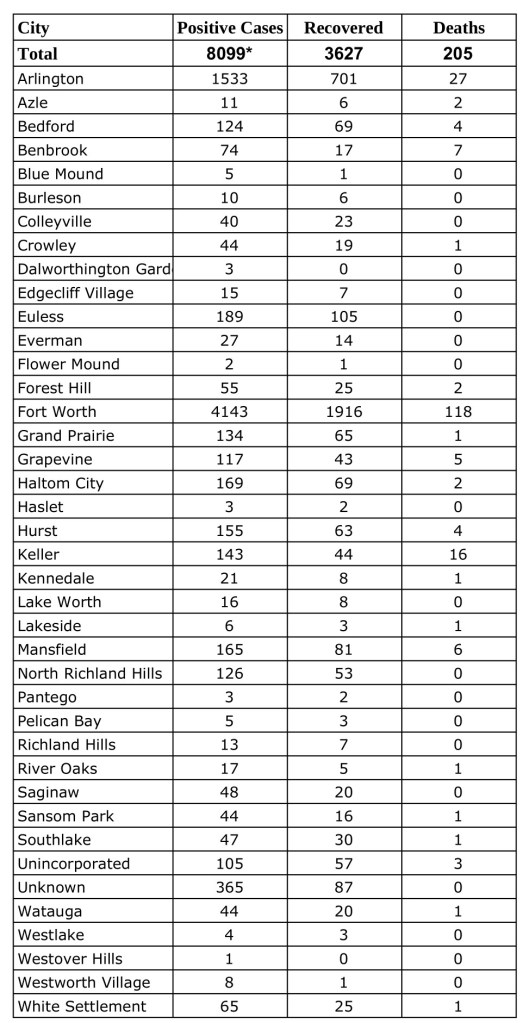
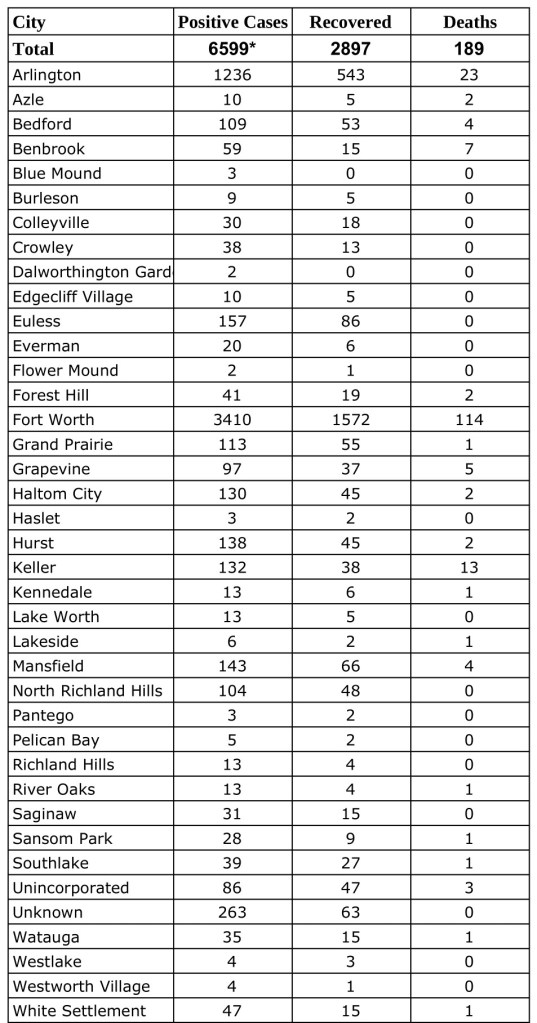
Data from Tarrant County Public Heath’s (TCPH) report of COVID-19 activity in Tarrant County, updated Thursday, June 18, 2020.Find more COVID-19 information from TCPH here.
* These data are provisional and are subject to change at any time.
Deaths and recovered cases are included in total COVID-19 positive cases.
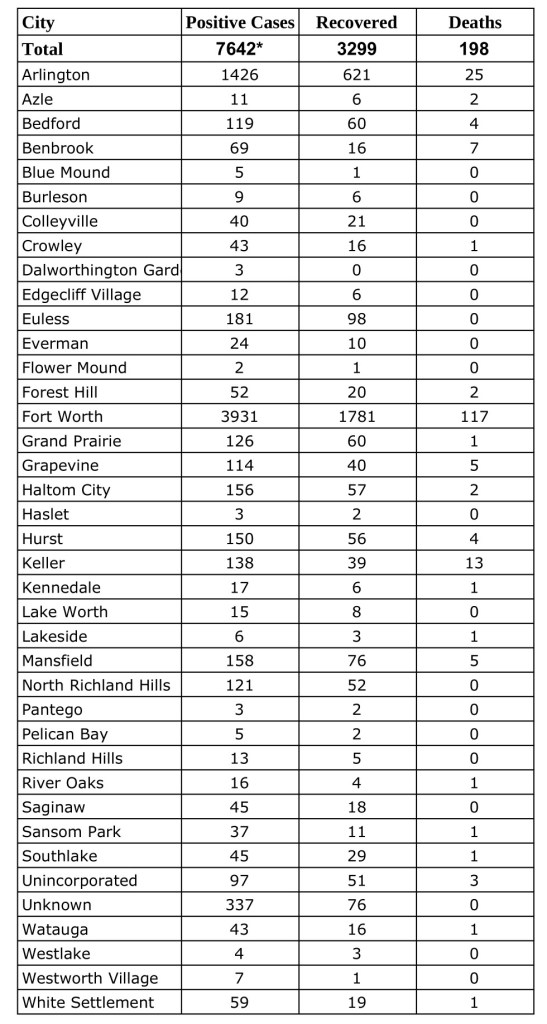
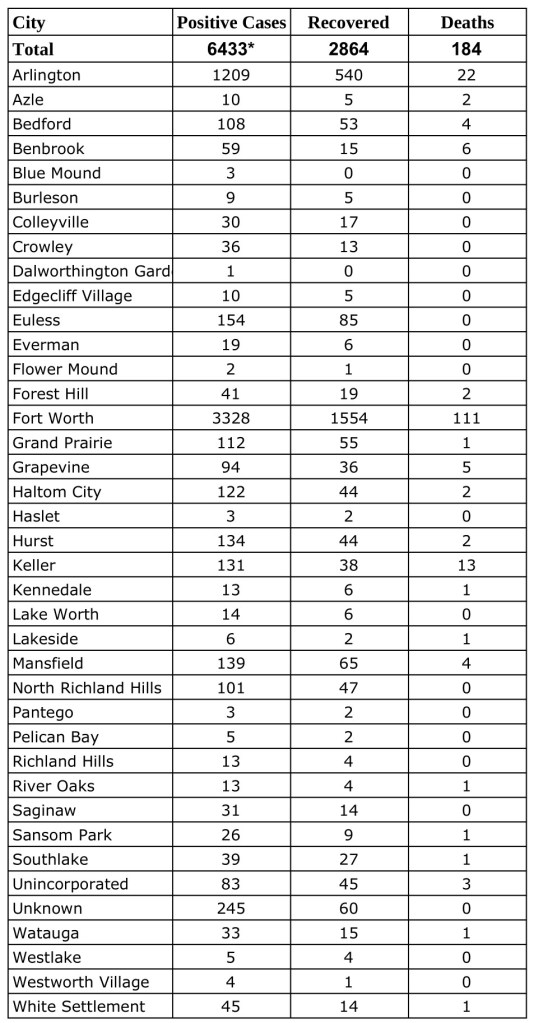
Data from Tarrant County Public Heath’s (TCPH) report of COVID-19 activity in Tarrant County, updated Tuesday, June 16, 2020.Find more COVID-19 information from TCPH here.
* These data are provisional and are subject to change at any time.
Deaths and recovered cases are included in total COVID-19 positive cases.
by Robert Bunata, MD – Publications Committee Interim Chair
I don’t consider myself to be a superstitious person, but when certain omens appear, I am not one to tempt fate. That’s what happened recently when I read a series of publications, two books and a book review, all pointing in the same direction, and suddenly became credulous, convinced mysterious forces were at work.
All three publications, in one way or another, discussed present-day marketing of pharmaceuticals. The first was Salman Rushdie’s Quichotte, a story based on Cervantes’ Don Quixote. The protagonist is a salesman for his cousin’s budding drug manufacturing company. They are both immigrants from India. The cousin got a “great idea” for selling his new powerful fentanyl nasal spray from reading a business card handed to him by an urchin in Mumbai that said on its front side, “Do you have a problem with alcoholism?” Turning the card over explained, “We can help. Call this number for liquor home delivery.” It’s all very clever, but deceptive, and, eventually, as we know from our own opioid epidemic, disastrous.
The second was a book review by David J. Elpern, MD. Out of curiosity I read the book itself, Ghost-Managed Medicine, Big Pharma’s Invisible Hands, by Sergio Sismondo. (Ghost-Managed Medicine is available for free online at http://www.matteringpress.org/books/ghostmanagedmedicine). The book tells of the author’s extensive investigation into several drug producing and drug marketing companies’ roles in influencing doctors’ diagnosing and prescribing. It describes how drug companies “ghost-manage the production of medical research, shepherd the key opinion leaders who disseminate the research as both authors and speakers and orchestrate the delivery of CME courses. In so doing, they position themselves to provide the information physicians rely on to make rational decisions about patient care.” These medical authors are prominent and often academic physicians with credentials in a given field who get paid or are otherwise compensated for adding their names as authors to papers even though they may not even read them, let alone participate in the research. They are also paid to speak at cost-free CME courses. Sismondo emphasized that such articles don’t mispresent information or lie. The questionable part was the “ghost” association of the author(s) with the articles to enhance credibility. (As a side note, I was especially disappointed to see members of our profession so susceptible to selling their reputations.) While Rushdie’s book was somewhat funny while being scary, this one was just plain scary because of the blatant perversions it reports.
The third was a review by Jack Coulehan, MD, of the book, Mind Fixers: Psychiatry’s Troubled Search for the Biology of Mental Illness, by Anne Harrington, PhD. Harrington, according to Coulehan, describes medical science’s effort to find chemical and/or physical causes for mental illnesses and their treatments. The creepy part of this book was a sentence discussing the efficacy of antidepressants which reads, “In an analysis of all clinical trials performed with six widely prescribed antidepressants—not just published studies, but those withheld from publication by pharmaceutical companies—it was found that the drug(s) outperformed placebo in only 47 percent of the studies.” (My italics.) Why did they withhold those studies from publication? One can only imagine. Another topic the article reported was the underutilization of lithium after the expensive antiepileptic drug, Depakote, was approved for bipolar disorder in 1995, despite the fact that lithium is at least as effective and much less expensive. Hence this is another book that records covert marketing efforts to guide medical choices.
These three pieces pretty much speak for themselves. I couldn’t help remembering when I was growing up and in medical school, I readily accepted that what I was told was true, that the therapies I was taught were the most appropriate, not the most profitable, and that lecturers taught without concern for compensation. Our country was still basking in the victory of WWII and we had a feeling of unity. We had confidence in our leaders and government institutions. We overlooked the little lies of Eisenhower and Kennedy as oddities, not defects in character. Then the discords of race relations and Vietnam took away our trust. We were forced learn a certain level of “civic skepticism” appropriate to a democratic society.
“It seems the level of skepticism is over our heads.”
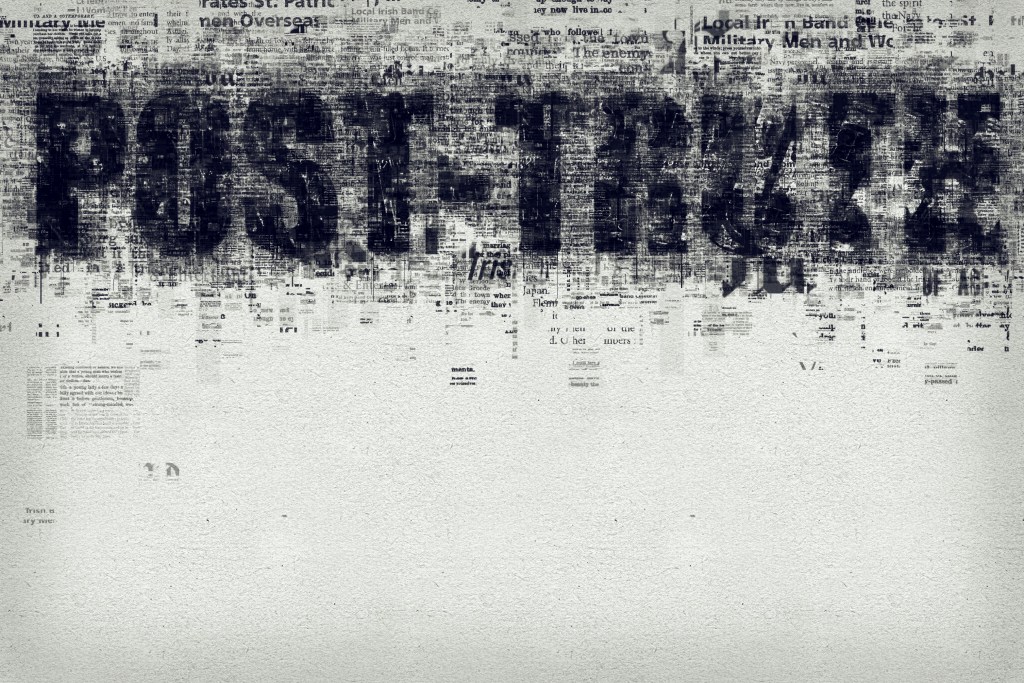
Now, it seems the level of skepticism is over our heads. Instead of everybody being entitled to their own “opinions but not their own facts” (to paraphrase Senator Daniel Patrick Moynihan), we have a continuous stream of “alternative facts,” ghost-writing, fake news, and post-truth. The main news source for many, social media, is rife with dishonest, emotion-provoking opinions posing and accepted as true. Some sites are outright dishonest; Wikipedia has a list of more than eighty fake-news websites, and even the most popular websites vary in their insistence on truth. For instance, in October 2019, Facebook, reportedly very influential in the 2016 election, made the controversial decision to exempt most political ads from fact-checking, while Twitter decided to ban political ads completely. While lying, cheating, and post-truth have also been around as long as man, they seem to be more wide-spread, becoming accepted as normal and main-stream. This may seem, at first glance, to be nothing to be concerned about, but it’s a blurring of reality, and eventually, as we know from the experience of Germany in the 1930s, can turn out to be disastrous.
Back to how this relates to medicine. In my literary meanderings I found this excerpt from a 1988 presidential address Robert J. Lefkowitz, MD, quoted by Douglas L. Mann, MD (https://www.ncbi.nlm.nih.gov/pmc/articles/PMC6115645/): in the article “Fake News, Alternative Facts, and Things That Just Are Not True. Can Science Survive the Post-Truth Era?”
The importance of honesty in research is not over the issue of truth vs. blatant falsehood that our integrity is most likely to be compromised. It is rather in the realm of a whole series of more subtle corruptions that integrity may be tested…. whereas lying involves falsity, bullshit involves fakery: it is essentially phony rather than false…In a sense, these bullshitters are even greater enemies of the truth than liars. At least the liar is guided by the truth, for to lie he must first define what he takes to be the truth. Not so the bullshitter. He pays no attention at all to the truth. Overindulgence in bullshit thus ultimately tends to corrupt the most fundamental aspect of the scientific process, the founding of conclusions on accurate and appropriate data.
So, what was the message I took away from these musings caused by my mysterious forces? I am reminded to be alert and not take anything for granted or at face value. I should check my sources, verify “facts,” ask questions, and be careful not to spread half-truths, post-truths, or lies myself. Most importantly, I must keep my own “confirmation bias” in check. We must all protect the reputation and integrity of our noble profession and not let the morals of business people, insurance executives, drug companies, and (especially) politicians, define the standards we live and practice by.
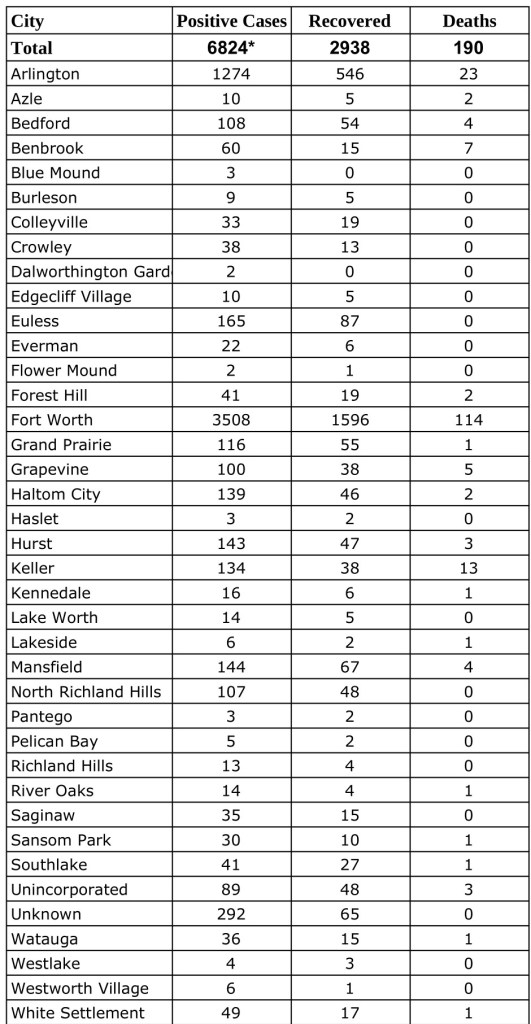
Data from Tarrant County Public Heath’s (TCPH) report of COVID-19 activity in Tarrant County, updated Thursday, June 11, 2020.Find more COVID-19 information from TCPH here.
* These data are provisional and are subject to change at any time.
Deaths and recovered cases are included in total COVID-19 positive cases.
Data from Tarrant County Public Heath’s (TCPH) report of COVID-19 activity in Tarrant County, updated Wednesday, June 10, 2020.Find more COVID-19 information from TCPH here.
* These data are provisional and are subject to change at any time.
Deaths and recovered cases are included in total COVID-19 positive cases.
Data from Tarrant County Public Heath’s (TCPH) report of COVID-19 activity in Tarrant County, updated Tuesday, June 9, 2020.Find more COVID-19 information from TCPH here.
* These data are provisional and are subject to change at any time.
Deaths and recovered cases are included in total COVID-19 positive cases.
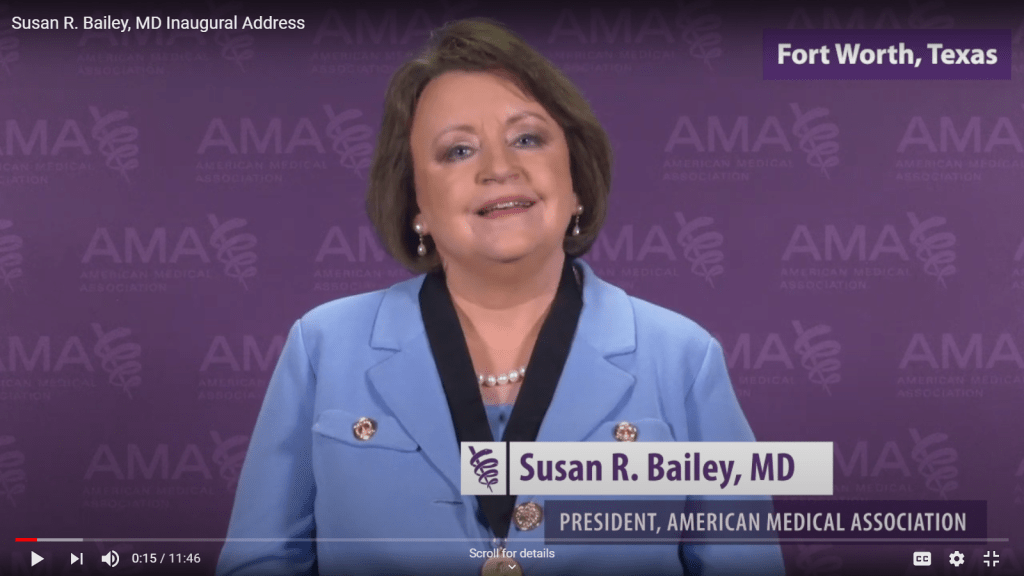
Susan Rudd Bailey, MD, is American physicians’ new leader in the battles against COVID-19 and outside interference in patient care. The Fort Worth allergist took the oath of office as president of the American Medical Association on Sunday, becoming the sixth Texas physician to lead the organization.
“After more than 30 years in a small, private practice, I’m a passionate defender of the independent physician and, like the AMA, I’m determined to remove all those obstacles that have come between us and our patients,” Dr. Bailey said in her online installation address, delivered from a Fort Worth video studio.
Dr. Bailey’s organized medicine resume includes stints as presidents of the Texas Medical Association and Tarrant County Medical Society as well as speaker of the TMA and AMA House of Delegates.
“It’s been a joy to watch her negotiate this path,” said Robert Rogers, MD, who has been Dr. Bailey’s partner in Fort Worth Allergy & Asthma Associates for more than 30 years. “I was 100% convinced that she would be president of the AMA. Watching her do this, I know that she had that as a goal. There was nothing in her that said there’s going to be a limit, a ceiling that she couldn’t break through.”
Dr. Bailey said she didn’t have her “eye on that prize” early in her career.
“At that point in time, there had never been a female president,” she said. But Richmond family physician Nancy Dickey, MD, winning the office in 1997 “made all the difference for me. That made it all real for me.”
Texas physician leaders say they are proud of their colleague’s accomplishment and very comfortable with her being the face of American medicine in these difficult times.
Data from Tarrant County Public Heath’s (TCPH) report of COVID-19 activity in Tarrant County, updated Monday, June 8, 2020.Find more COVID-19 information from TCPH here.
* These data are provisional and are subject to change at any time.
Deaths and recovered cases are included in total COVID-19 positive cases.
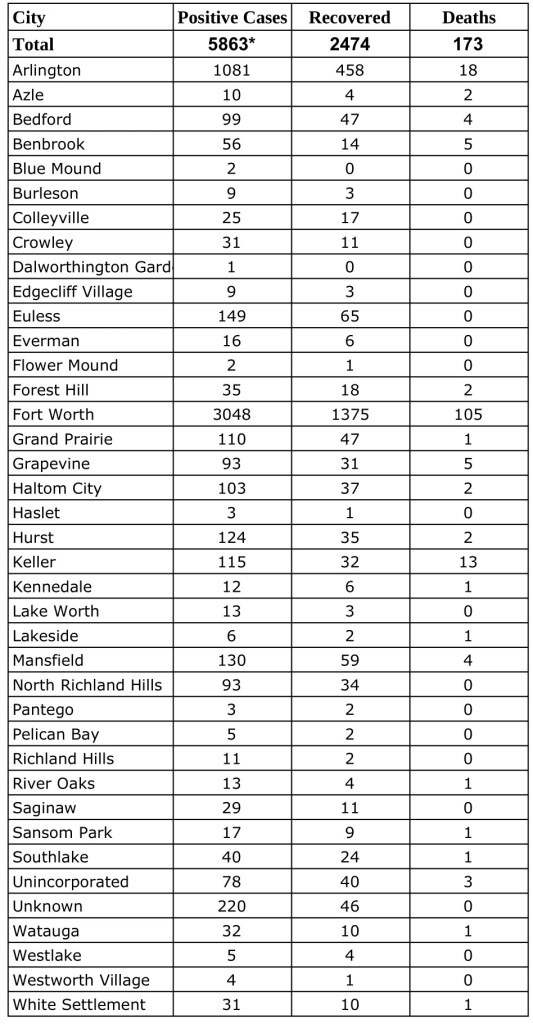
Data from Tarrant County Public Heath’s (TCPH) report of COVID-19 activity in Tarrant County, updated Thursday, June 4, 2020.Find more COVID-19 information from TCPH here.
* These data are provisional and are subject to change at any time.
Deaths and recovered cases are included in total COVID-19 positive cases.
With temperatures well into the 90s and a potential heat index of 100 degrees predicted by next week, Tarrant County Public Health reminds residents to take precautions to avoid heat-related illnesses. People should pay special attention to children, the elderly and pets.
An Ozone Action Day is also in effect today for the Dallas-Fort Worth area. Elevated ozone levels can mean poor air quality for sensitive groups.
“As the temperatures climb, it’s important to remember to check on elderly relatives, friends or neighbors for any signs of heat related illness,” said Tarrant County Public Health Director Vinny Taneja. “People 65 and older, infants and children up to age 4, and those with chronic medical conditions are more prone to heat stress,” he said.
Symptoms of heat stroke and exhaustion include a temperature over 103, dizziness, nausea, confusion and headache. If someone shows these signs, call 9-1-1 and move the person to a shaded area; place in a cool shower if they are alert; monitor body temperature and continue cooling efforts. Do not give the victim fluids to drink.
To avoid heat-related problems, Tarrant County Public Health recommends following these strategies:
Stay in an air-conditioned area during the hottest hours of the day
Wear light, loose-fitting clothing
Drink plenty of water (avoid alcohol and sugary drinks) and don’t wait until you are thirsty
Take cool showers
Never leave a child, elderly person, or pet unattended in a car
Keep pets cool
Avoid unnecessary work or activities outside during the hottest part of the day
Avoid unnecessary sun exposure and wear a wide-brim hat if you need to be in the sun
Avoid using the oven to cook
Residents should also be alert for heat advisories and emergencies. The National Weather Service declares a Heat Emergency when the heat index (temperature plus humidity) reaches 108 degrees on two or more consecutive days. A heat index of 108 is a potential health threat for all people, particularly those in high risk groups.


 Tarrant County Physician Online