Blog Feed

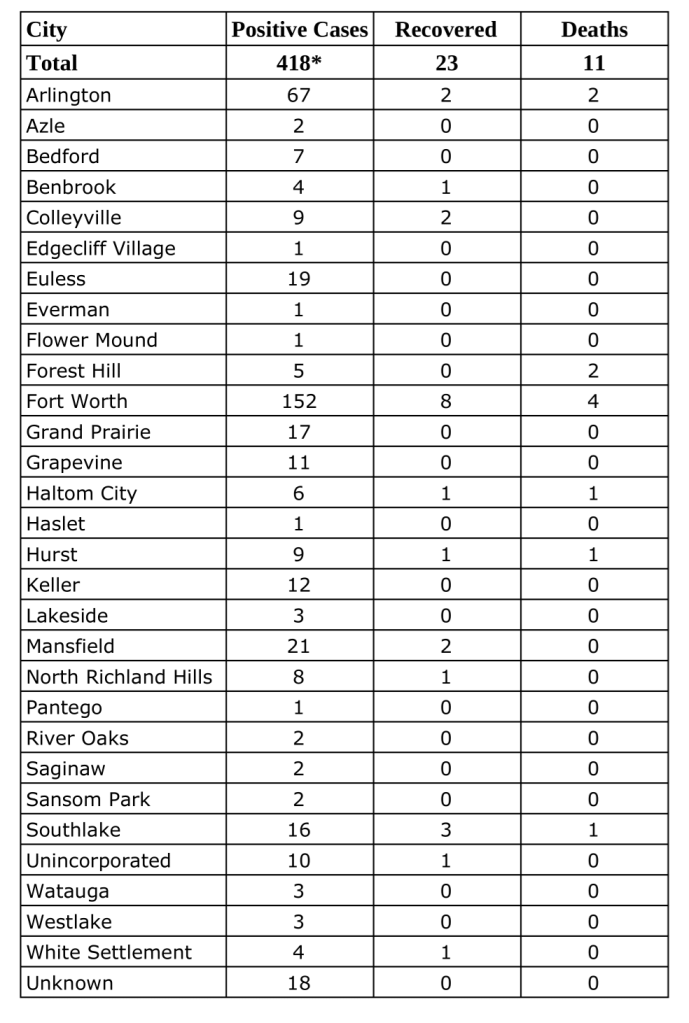
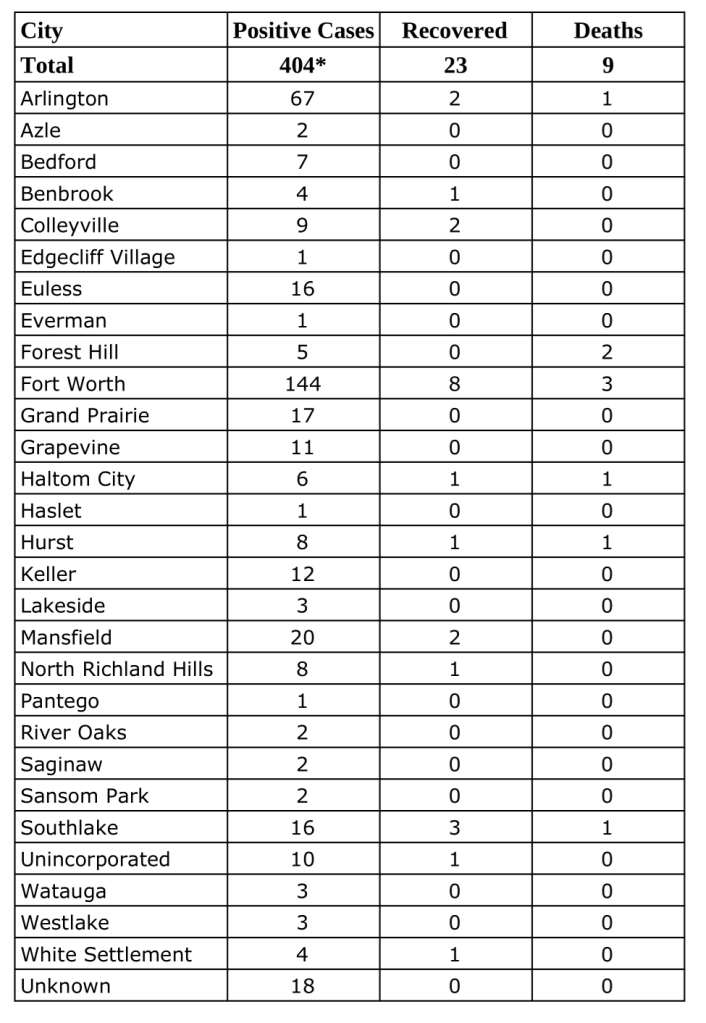
Tarrant County COVID-19 Activity – 3/31/20

COVID-19 Positive cases: 273*

COVID-19 related deaths: 1

Recovered COVID-19 cases: 8

Data from Tarrant County Public Heath’s (TCPH) report of COVID-19 activity in Tarrant County, updated Tuesday, March 31, 2020 at 1:15 p.m. Find more COVID-19 information from TCPH here.

* These data are provisional and are subject to change at any time.

Updated TMA White Paper Explains Non-Urgent Surgeries Rule

Worried, concerned, confused about the Texas Medical Board’s emergency rules on “non-urgent elective surgeries or procedures” during the COVID-19 crisis? What about the new FAQ the board issued over the weekend? You’re not alone.

Many Texas physicians have called the Texas Medical Association about the rules.

If you’re uncertain about what are considered non-urgent, elective surgeries and procedures – as well as what you or your practice will be required to report – TMA’s Office of the General Counsel produced this white paper to help you better understand the emergency rules.

In addition, the TMA COVID-19 Task Force has created a document that provides links to COVID-19 resources, including state and federal guidance as well as specialty societies that have published resource pages.

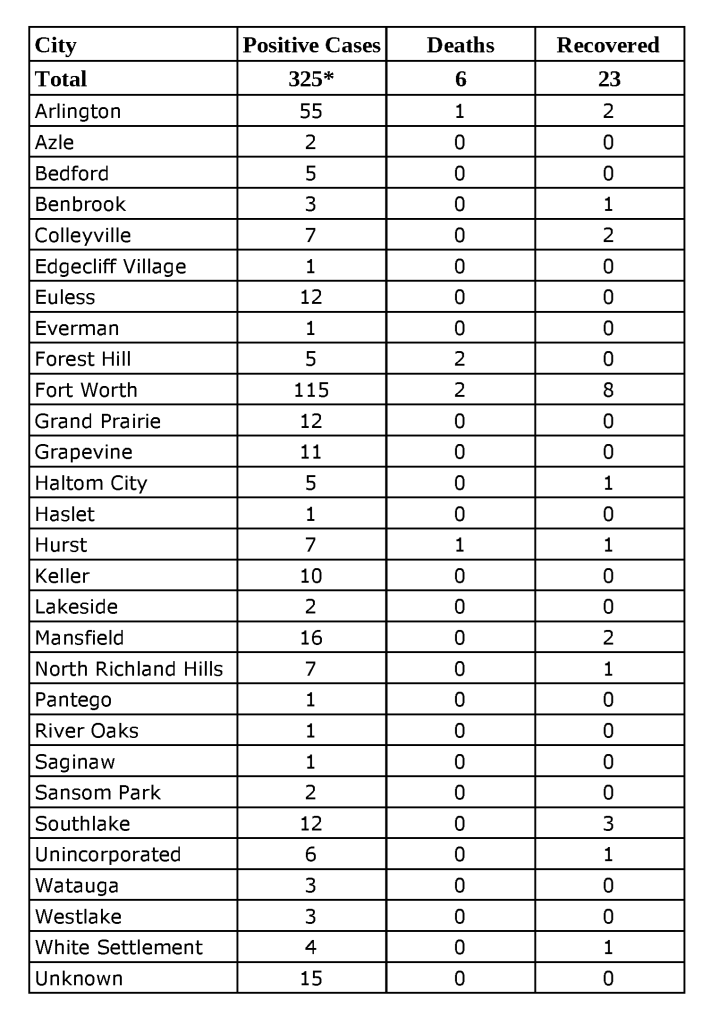
Tarrant County COVID-19 Activity – 3/30/20

COVID-19 Confirmed Cases: 155

COVID-19 Active Cases: 146

COVID-19 Provisional cases: 83

COVID-19 related deaths: 1      

Recovered COVID-19 cases: 8

Data from Tarrant County Public Heath’s (TCPH) report of COVID-19 activity in Tarrant County, updated Monday, March 30, 2020 at 1:15 p.m. Find more COVID-19 information from TCPH here.

AMA President-Elect Dr. Susan Bailey on PPE Shoratges and Social Distancing

Watch NBC5’s interview with TCMS member Dr. Susan Bailey, AMA’s president-elect, about PPE shortages, how they may impact our local community, and the importance of staying at home. Dr. Bailey is an allergist/immunologist practicing in Fort Worth, TX. This was originally posted on 3/25/20.

PPE Supply and Shortage FAQ Answered by TMA’s COVID-19 Task Force

One of the biggest obstacles physicians are facing in the COVID-19 pandemic is a lack of access to personal protective equipment (PPE). The TMA COVID-19 Task Force has worked to compile a list to answer the most common PPE questions. Read the PPE Supply and Shortage FAQ to find out more information, from conservation strategies to the best course of action if N95 respirators or face masks are not available.

Dr. Robert Rogers highlights the difference between spring allergies and coronavirus symptoms

By Dr. Robert Rogers

Originally published in the Star-Telegram. Find the original here.

If it weren’t for the coronavirus pandemic, health reporters in North Texas would be focused on allergies now, as we have entered the spring pollen season.

The beauty of the emerging leaves on the trees, the greening of grass and the appearance of flowers is accompanied by prodigious amounts of tree and grass pollen. Also, because many of us are spending more time at home and are looking for activities, people will be spending more time outside than usual, and thus be exposed to more pollen.

Cough is one of the most telling symptoms of COVID-19, and cough is also very common for those with allergies and asthma. So it’s more important than ever for those with allergies to keep their symptoms under control.

One of our patients said: “It’s a bad time to have allergies because every time you cough, someone looks at you scared!”

So, if you have allergies, how can you distinguish between allergy and COVID-19? First, although many call their allergies “hay fever”, allergy never causes a fever. Never.

If you have a dry cough and a fever, don’t blame your allergies. Talk with your doctor to see if you need to be evaluated for COVID-19.

The symptoms of allergy that are not commonly described in patients with COVID-19 include sneezing, itching of the eyes, ears, or nose, and nasal stuffiness. If there is no fever with these symptoms, they are likely due to seasonal allergies.

As mentioned, cough is common to both COVID-19 and allergy and/or asthma, so that complaint is a little trickier. Nasal allergies can trigger coughing due to postnasal drainage, and asthma causes coughing through irritation of the bronchial tubes. Again, if there is no fever, there is less concern about COVID-19.

People with mild-to-moderate nasal allergies can typically control their symptoms well by using safe, inexpensive medicines (non-sedating antihistamines and nasal cortisone sprays) that are available without a prescription. Those who have asthma will need help from a physician, as there are no effective asthma medicines in the over-the-counter market.

With stay-at-home orders in place, many people are hesitant to call their doctors because they are worried about going to a clinic where people might be sick. Many doctors now have the ability to do telemedicine visits through a smartphone, tablet, or computer. There is no need to suffer in silence – call for help!

I have been an allergist in Fort Worth for 36 years. It has never been this quiet in our office in the spring, and I suspect this is true for all allergists. If you are having trouble with your allergies, call your primary care physician or an allergist.

We are ready to help.

Dr. Robert Rogers is a Fort Worth allergist and former president of the Tarrant County Medical Society.

PHYSICIANS NEEDED FOR TASK FORCE

TCMS is organizing a Physician Task Force to supplement community hospitals at this critical time. We need your support – please join this effort on the front lines of the coronavirus pandemic.

If you are interested in volunteering, fill out this form and contact Brian Swift at (312) 330-4894 or bswift@tcms.org.

A Summary of the Stimulus Legislation

Late Wednesday night the Senate approved a massive $2 trillion stimulus and COVID-19 relief package.

Provisions of particular interest to physicians and their practices include the following:

  1. Creates a new loan product within the Small Business Administration for loans of up to $10 million to help cover payroll and overhead costs, with expanded loan forgiveness criteria. Physician practices with not more than 500 employees may qualify.
  2. $100 billion in direct financial support to hospitals, physician practices, and other health care providers under the Public Health and Social Services Emergency Fund. This support is for costs of treating COVID-19 patients as well as to ease the financial impact on those who lose revenue due reductions in other services as a result of the pandemic. Exact eligibility criteria and application process is not yet defined pending implementation.
  3. Suspension of the 2% Medicare sequester in May through December 2020.
  4. Limitations on liability for volunteer health care professionals during COVID-19 emergency response.
  5. A temporary waiver of the face-to-face visit requirement with home dialysis patients.
  6. Authority for the Secretary of HHS to waive telehealth coverage requirements for new patients during a national emergency. Previous legislation provided flexibility only for established patients seen within the past three years.
  7. Secretary will also allow for enhanced use of telehealth under Medicare for federally qualified health centers.

Also of interest, the “health extenders” package that was set to expire on May 22 has now been extended to November 30.

House passage is expected on Friday and the President is expected to sign the bill into law.

Design a site like this with WordPress.com
Get started