The Poison, the Clouds, and the Clearing: Mindfulness in Medicine

BY SETU SHIROYA, MS-II TCU , WITH NEHA SOOGOOR, MS-II TCU; EDITED BY JAYESH SHARMA, MS-II TCU

Breathe in. Breathe out.

It is my first day in the clinic. My heart is racing in my white coat that I have little confidence wearing. My anxiety skyrockets, as do my feelings of not belonging.

What if my attending doesn’t like me? What if I make a mistake? What if my patient starts crying? How do I do a lung auscultation again? What does losartan do?

I can’t remember. I can’t think.

Breathe in. Breathe out.

I have been studying the whole day, my career-defining board exam is in one week, my head is throbbing, my eyelids are drooping. I am clicking through flashcards but nothing sticks. The days are merging into one; someone asked me for the day of the week, and I came up blank.

Breathe in. Breathe out. Breathe in. Breathe out.

Only one year into medical school, and everything feels like a dream. I’ve made it so far, yet the future seems so daunting. I love my life but also fear it at the same time. I want to keep going. I’m excited, but I’m nervous. Where am I in my life? Do I even belong here? Am I the only one thinking this?

Breathe in. Breathe out.

I say it to myself over and over again—my thoughts have been spiraling for days. I need to breathe. I need to calm down.

Breathe in. Breathe out.

I do belong here. I’ve made it so far in this journey; the hard work, the endless hours were not in vain. There is so much more to go and I remind myself that I am excited. I just need to take it one step at a time.

Breathe in. Breathe out.

I am going to be present for patients. I will be a doctor. One step at a time.

Breathe in. Breathe out.

The rampaging thoughts settle, my mind clears, and I open my eyes.

It’s going to be okay.

The morning alarm rings, and my first thought is always the same: “Can I sleep for five more minutes and not think about the long day ahead?” I have stressful exams to take and sometimes dread the workload awaiting me. It feels like the only quiet time I get is in the morning, when I am drinking coffee, working out, or just embracing the quietness. I try to find time to relax, but burnout feels like it is always looming over my shoulder. However, mindfulness and meditation have helped me reorient myself and develop a healthy way to process these feelings.

What does it truly mean to be mindful? To me, mindfulness is staying grounded to what is in the present moment. It can be easy to think of the past or try to anticipate the future. However, the only inevitability we hold is this present moment. Not a second before, not a second after.

How can we practice this? Mindfulness comes in many forms; some find relief in running or weightlifting, making it a point to have a constant regimen at the gym. Others find it through meditation, focusing on breathing and relaxing the mind. These share one commonality: a mental space we create where we stop thinking about the past or trying to anticipate the future, focusing instead on what is present within and around us. There isn’t one answer to seeking mindfulness; the greatest difficulty lies in knowing where to begin.

As medical students and future doctors we are expected to quickly calm ourselves after these stressful moments and proceed. Sadhguru, a guru who is the founder of the Isha Foundation, states: “Fear, anger, resentment, and stress are poisons you create in your mind. If you take charge of your mind, you can create a chemistry of blissfulness”.1 It is especially easy in a hectic and high-paced environment or period of life to get lost in our thoughts about the stressors we experience. Our thoughts are like clouds. We can either let them pass, or we can dive into them. Taking control of our mind to let the clouds pass, helping our mind become still and focus on the present, is difficult.

This is where meditation techniques can help train our mind. Meditation techniques often involve bringing awareness to a single action or sound. For example, they can be used to bring awareness to your breathing or the repetition of a few words. One method I use is called “4-7- 8 breathing.” Close your eyes. Breathe in for four seconds through your nose. Hold your breath for seven seconds. Breathe out for eight seconds through your mouth. As you inhale, stay aware of how the air flows through your body, from the tip of your nose to your navel. As you exhale, follow the air out from your navel to your mouth. Repeat this about two to three times.

At TCU Burnett School of Medicine, our Meditation and Mindfulness Student Interest Group aims to educate medical students about techniques such as 4-7-8 breathing and help them stay engaged in healthy mindful practices to avoid burnout. Our goal is to cultivate a supportive student community dedicated to mindfulness, fostering connection through monthly meditation sessions, inspiring physician guest speakers, and meaningful community volunteering.

It is going to be okay.

My mother always told me, “Take it one step at a time, one day at a time.” As medical students, we’re often exposed to patients and situations that can take an emotional toll on our mental well-being; times such as witnessing a patient’s death or delivering a life-shattering diagnosis. Before we can process what we’ve witnessed, we’re often thrown back into a fast-paced environment without a moment to rest. In such a high intensity life, grounding ourselves with activities that bring comfort and ease becomes crucial to our mental well-being. My hope is that we future physicians can practice mindfulness early, so that we can be present for our patients. In turn, we can help our patients be mindful as we work together throughout our most difficult moments to maintain healthy behaviors.

References:

1. Sadhguru Quotes – Fear, anger, resentment, and stress are poisons you create. If you take charge, you can create a chemistry of blissfulness within yourself. Accessed February 13, 2025. https://isha.sadhguru.org/en/wisdom/quotes/date/december-06-2021

Introducing MATRIX: Medical Assessments and Tools for Inclusive Xperiences

By Kathryn Keaton

IN 2019, TEXAS HEALTH RESOURCES Foundation announced a new series of grant cycles: the Texas Health Community Impact grants. These grants are available to five regions, with specific focuses for each county based on their most recent Community Needs Assessment.

These two-year awards are made to local organizations that work collaboratively to serve specific zip codes and address health disparities and socioeconomic hardships in innovative ways. Past Tarrant projects funded include community gardens, mental health access, and culinary job training.

For the 2025–2026 grant cycle, the Foundation awarded $5 million to 18 projects across North Texas. Project Access Tarrant County is honored to be among these recipients for a total award of $385,662 over two years.

Partnering with Cornerstone Assistance Network (CAN) and Mission Arlington, the project will utilize enhanced technology, education, and a shared employee to affect radical change in the care of patients with diabetes and/or hypertension in five target zip codes: 76010, 76011, 76104, 76105, and 76119.

We are proud to introduce our project, MATRIX: Medical Assessments and Technology for Inclusive Xperiences.

The Project

Since PATC offers specialty medical and surgical care, our clinic partners are vital. Most patients come to PATC from a referral made by primary care, and those who do not are required, with PATC’s assistance, to establish a connection with primary care.

CAN and Mission Arlington are among PATC’s founding partners. Both clinics serve as medical homes. CAN serves mostly patients in Fort Worth (MATRIX target zip codes 76104, 76105, and 76119), and Mission Arlington serves mostly Arlington patients (MATRIX target zip codes 76010 and 76011). Combined, PATC, CAN, and Mission Arlington provide a spectrum of primary and specialty/surgical care.

Community Health Worker

The single biggest innovation with MATRIX is the addition of a Community Health Worker (CHW). And not just a CHW—but a shared CHW. Once this individual is hired, they will travel between PATC, CAN, and Mission Arlington, having “office hours” at each location. While some patients will meet with the CHW at the PATC office, most will have appointments at their primary care clinic—a place and location where they have an existing relationship and feel comfortable.

The CHW’s activities will be tailored to each patient. The CHW may assist with one-on-one diabetic or hypertension education, help with access to prescription assistance, arrange transportation to diabetic eye exams, or complete hospital paperwork for PATC surgeries. The cadence will vary, but each patient will have individual appointments with the CHW. In total, Cornerstone plans to serve 100 patients and Mission Arlington plans to serve 750 in this manner. CAN’s and Mission Arlington’s aim is that 65 percent of all patients with hypertension will have blood pressure readings below 140/90 and that 68 percent of all patients with diabetes will have an A1c below 9 by the end of the grant period.

Education

A recent Tarrant County Physician article briefly mentioned that a TCU medical student chose PATC as her site to complete her Scholarly Pursuits and Thesis (SPT) project.1,2 Alex Koehl, MPH, MS-I at TCU, brings her public health expertise to PATC in creating a series of classes pertaining to social determinants of health (SDOH) common to PATC patients.

The first class will occur in late March. This class will empower patients to ask questions to understand their disease and treatment and to speak up if they do not understand their instructions. Patients who are seen pro bono often feel that they do not have agency to advocate for themselves and ask questions, leading to confusion and misunderstandings that eventually cause non-compliance and a lack of resolution of their health condition. The MATRIX grant allows for meals and incentives, encouraging attendance. The series will be facilitated in both Fort Worth and Arlington. Future topics include how to open a bank account (sometimes required for hospital charity applications), how to read a prescription bottle, and how to navigate a patient portal.

Technology

Enhanced technology will answer some of the barriers we face with our patients. We recently received a separate grant that will cover the cost of CareMessage, a messaging platform for safety-net organizations to “increase access to care, improve clinical outcomes, and address social drivers of health.”3

CareMessage will allow PATC to schedule appointment reminders (that include the address with a Google map link!), respond in real-time to questions or concerns, and generally allow for texting instead of playing phone tag. In addition, CareMessage can automatically translate any message into one of dozens of languages, meaning that any PATC staff member can communicate with any patient regardless of language proficiency.

CareMessage will not replace PATC’s personal touch—all initial contact and important information will be relayed by telephone. But for simple reminders and questions where a yes- or-no response is needed, a phone call is generally not necessary.

While the messaging feature is an exciting progression in PATC’s day-to- day operations, CareMessage can go much deeper and is vital to MATRIX’s future success.

CareMessage has several preloaded educational text series. Stephen Pullman, MS-I at TCU, has also chosen PATC as his SPT site. Stephen is vetting existing diabetes and hypertension modules. In addition, as training progresses, Stephen is documenting ideas for future education modules that we can create. By the conclusion of his project, we will have multiple avenues for patient education on both preventative care and chronic conditions.

The survey element is also vital to Alex’s project. With CareMessage, patients will complete pre- and post-surveys for our SDOH classes, measuring the attendees’ level of understanding before and after the material that can be reported to the Texas Health Community Impact Grant project management team. We will also use this for participant feedback to improve future curricula.

As with all innovation, this project will have adaptations, enhancements, and changes over the course of the next two years; but we know that the future is bright. With the THR Foundation’s endorsement, the collaboration with two historic partners, and the opportunity for enhanced technology, by the end of this grant period, significant change and improvement will be affected. We look forward to keeping you updated as MATRIX continues to progress.

References:

  1. Kathryn Keaton, “Project Access Tarrant County: Growth in 2025,” Tarrant County Physician, January/ February 2025, 21–22.
  2. “Scholarly Pursuit and Thesis: Burnett School of Medicine at TCU: Fort Worth, Texas,” Burnett School of Medicine at TCU, June 17, 2024, https:// mdschool.tcu.edu/empathetic-scholar/ scholarly-pursuit-and-thesis/.
  3. “Patient Engagement for Improved Health Equity,” CareMessage, February 4, 2025, https://www.caremessage.org/.

ALLIED HEALTH SCHOLARSHIP PRESENTED TO 17 STUDENTS

The Tarrant County Scholarship Committee grants scholarships for allied health students.

Tarrant County Medical Society (TCMS) and TCMS Alliance Foundation’s Scholarship Committee awarded 17 estimable students a total of $36,250.

Every year, the Scholarship Committee meets to review Allied Health Scholarship applications. As the final selection process, the Committee interviewed finalists to learn more about each individual’s story and why they are pursuing a career in allied health. Its aim is to award qualifying students in financial need to aid them in their educational and professional careers.

“Making the road easier for even one person has many rewards, but to be able to provide scholarships to several people is beyond gratifying,” said TCMS Alliance Foundation President and Scholarship Committee member Debbie Massingill. “Many students come from non-medical backgrounds. You are giving them a ‘you’re doing great’ when many have heard ‘you can’t do that.’”

The Allied Health Scholarship Committee is comprised of TCMS physicians and Alliance members. Since 1972, the Committee has awarded allied health students to help aid their education. “The desire, dedication, and hard work of so many students who wish to become healthcare providers give me hope for the future of medicine,” said Massingill.

All applicants must attend colleges in Tarrant, Parker, or Johnson counties, such as Tarrant County Community (TCC), University of Texas at Arlington (UTA), Texas Christian University (TCU), Weatherford College, Southwestern Adventist University, Hill College, Tarleton State University, or Texas Wesleyan University.

2023 Allied Health Scholars:

Tolani Adebowale of Weatherford College; Victoria Alexander of Weatherford College; Makenzee Benson of TCU; Sarah Broder of TCU; Leah DeLeon of UTA; Peyton Elvington of Weatherford College; Carolina Flores of TCC; Megan Harmon of UTA; LaToya L. Jones of UTA; Ruby Le of TCC; Courtney Lemons of Weatherford College; Kayla Robinson of UTA; Alexandria Snider of UTA; Alexandra Sonsini-Hornick of TCU; Emily Tanner of Weatherford College; Erin Tanner of Weatherford College; Ashley Wheeler of TCU.

The Tarrant County Medical Society is a professional organization dedicated to improving the art and science of medicine for the residents of Tarrant County since 1903. TCMS serves over 4,000 physicians, residents, medical students, and Alliance members and is a component society of the Texas Medical Association. To learn more, visit here.

###

Media Contact:
Elizabeth Ramirez, Communications Coordinator;

eramirez@tcms.org / (817) 632-7519

Addressing Conscientious Objection in Healthcare

Insights from the 2023 Healthcare in a Civil Society Forum

by Liz Ramirez

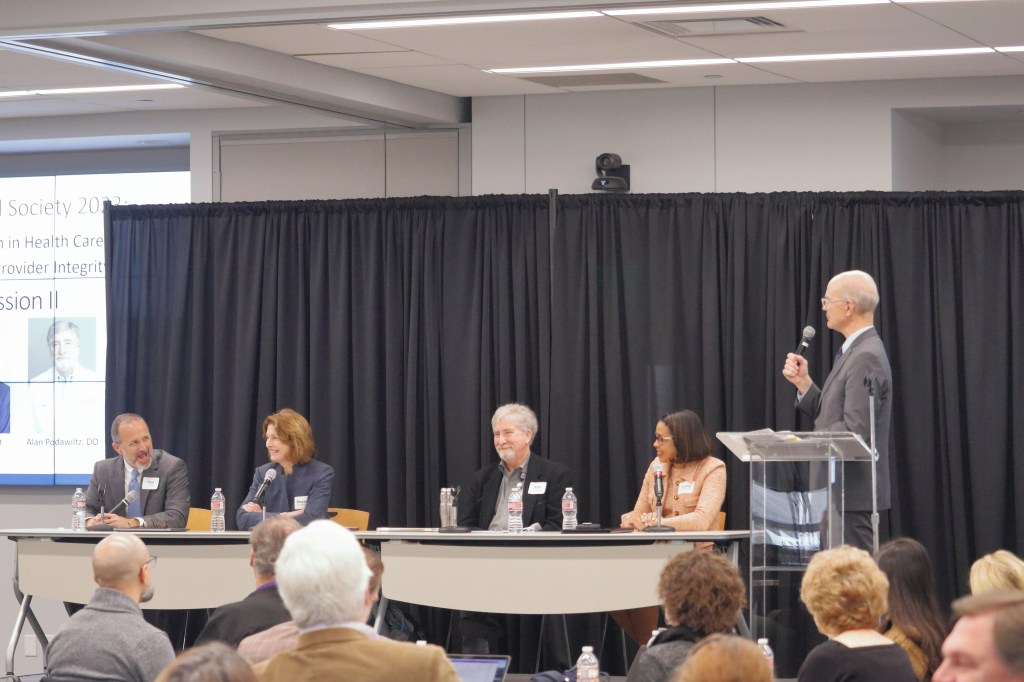
The Tarrant County Academy of Medicine Ethics Consortium, in partnership with Tarrant County Medical Society, hosted Healthcare in a Civil Society on Saturday, February 25, 2023. The annual forum’s central theme focused on “Conscientious Objections in Health Care: Patient Autonomy and Provider Integrity.” 

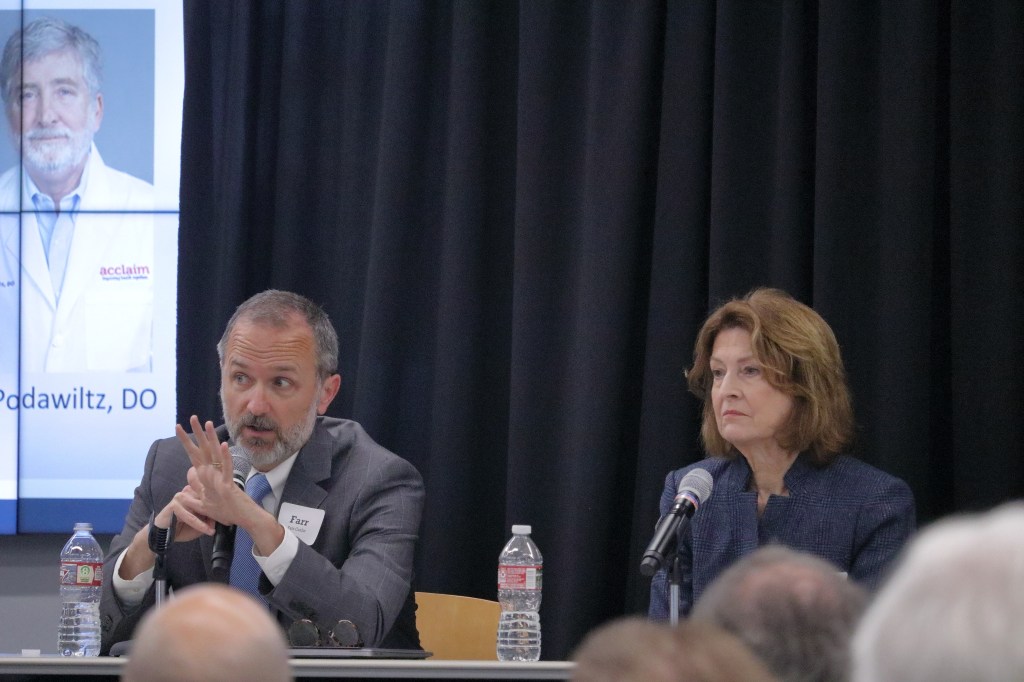
TCMS President Stuart Pickell, MD, joined Steve Brotherton, MD, as HCS moderator and welcomed their keynote speaker, Farr Curlin, MD, at the University of North Texas Health Science Center.  

“Dr. Curlin is an internationally known expert on physician conscience and conscientious objection,” said Dr. Pickell. “He is particularly concerned with the moral and spiritual dimensions of medical practice, the doctor-patient relationship, and the moral and professional formation of physicians. His areas of expertise are medicine, medical ethics, doctor-patient relationship, religion and medicine, and conscience.” 

On the panel, Dr. Curlin was accompanied by panelists Maxine M. Harrington, JD; Alan Podawiltz, DO; and UNTHSC President, Sylvia Trent-Adams, Ph.D., RN. In the discussion, Preston “Pete” Geren, JD, moderated a panel about educational topics like state intrusion into practice, the effect of providers performing unethical acts, and how medical educators can train students to recognize moral injury. 

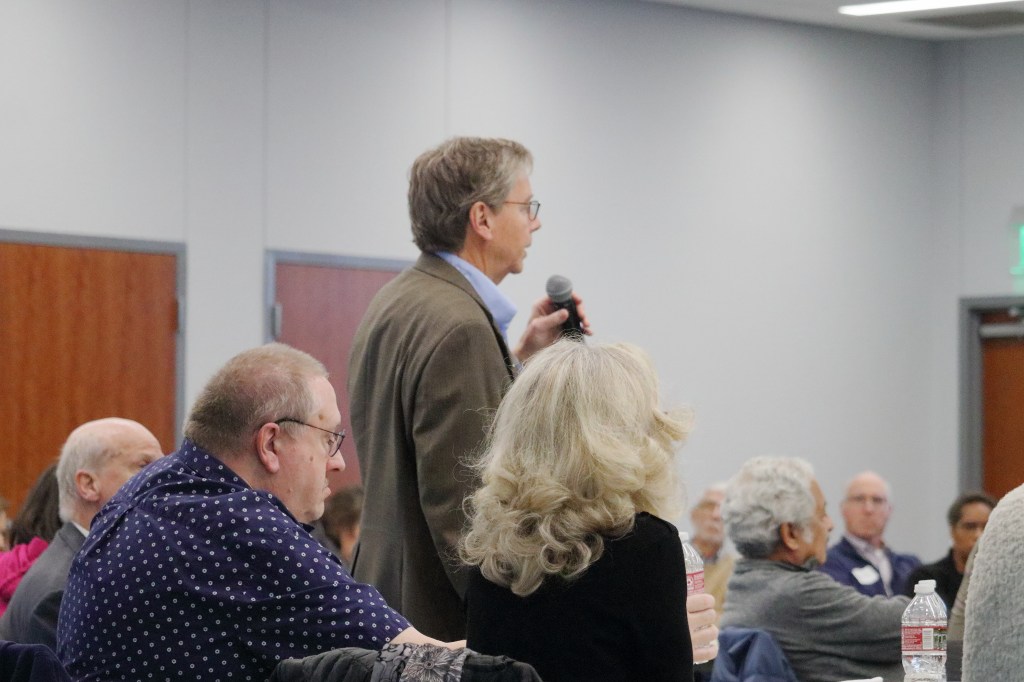
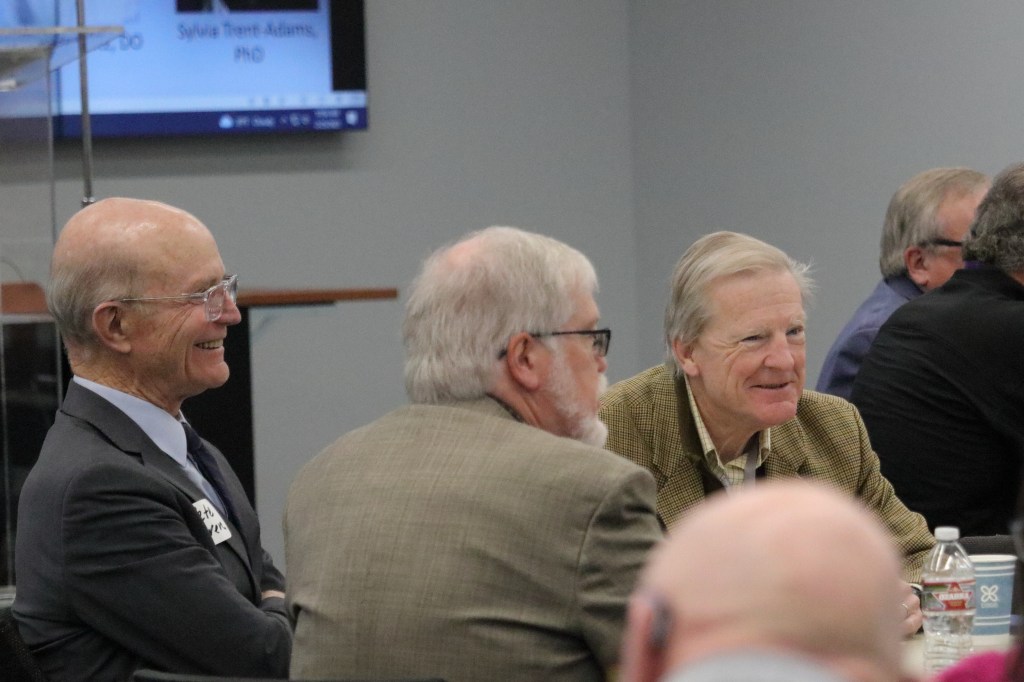
Participants had the opportunity to interact in small groups and prepare questions for the panelists during the breakout session, where panelists discussed the impact of government and institutional intrusion into medical practice, its effect on healthcare providers, and what providers can do to address it.  

“While this event targets medical professionals, anyone who has an interest in the doctor-patient relationship- how it has evolved, where it is heading and implications for the future of healthcare- will find this program helpful,” said Dr. Pickell.

The Tarrant County Academy of Medicine Ethics Consortium believes anyone in the community with an interest to improve healthcare can benefit from this program. The event wouldn’t be possible without the support of Blue Cross Blue Shield, Cook Children’s Medical Center, JPS Health Network, and the University of North Texas Health Science Center. 

Join Cook Children’s for Ask the Doc Webinar on Pregnancy Care

Join Cook Children’s Medical Center on November 1, 2022, 5:30 PM – 6:30 PM CT, for their upcoming Ask a Doc webinar: “Do No Harm: The Ethics, Myths & Business of Caring for Pregnant People.”

The event, which is led by the Texas Department of State Health Services – Oral Health Improvement Program and the Children’s Oral Health Coalition, is focused on education, combatting barriers to healthcare, and coordinating services.

A number of topics will be covered, including:

  • Explaining ethical dilemmas related to delaying treatment
  • Discussing the myths dentist have about treating pregnant people
  • Recognizing why timely treatment is good for business
  • Identifying and manage potential medical and dental risk

You can find out more about the event or register here.

5th Annual Ralph J. Anderson, MD Women’s Health Symposium

The 5th Annual Ralph J. Anderson, MD Women’s Health Symposium will showcase the advances made in women’s health care in both Tarrant and Dallas Counties. It was created to honor Dr. Anderson, who dedicated a large portion of his career to the education of health care professionals in the field of obstetrics and gynecology. For more than 20 years Dr. Anderson developed, moderated, and oversaw a yearly large educational symposium to ensure that practicing health care professionals continued their education to improve patient care and patient outcomes.

Registration

You can register for the symposium here.

Learning Objectives

Upon completion of this activity, learners will be able to:

  • Define two strategies to improve health outcomes of women in DFW metroplex;
  • Diagnose and define uncomplicated vaginitides using evidence-based methodology;
  • Define maternal morbidity and mortality related to Placenta Accreta Spectrum Disorder;
  • Describe the current burden of substance use disorders (SUD) women experience in the US; and
  • Identify key points of progress in our understanding of human trafficking and healthcare responses for readying its workforce.

Topics Covered

At the Women’s Health Symposium you will learn from distinguished leaders in the field of women’s health on such topics as:

  • Placenta Accreta
  • Advances in New Born Care & Breastfeeding
  • Palliative Medicine
  • Overactive Bladder
  • Fetal Surgery Innovations
  • Adolescent Health
  • Trafficking and Opioid Abuse

Price for Virtual Attendees

Registration fee: $120

Who Should Attend

Physicians, physician assistants, nurse practitioners, certified nurse midwives, nurses and social workers caring for women will all find something of practical value at the 2022 Women’s Health Symposium.

TCU names medical school to honor the late Anne Burnett Marion

Texas Christian University today announced that the School of Medicine will be named the Anne Burnett Marion School of Medicine in honor of the late Anne Burnett Marion’s lifetime of friendship and support and her extraordinary generosity to the TCU School of Medicine.

The estate of the late Anne Burnett Marion and The Burnett Foundation, a charitable foundation based in Fort Worth, have made a second $25 million gift to The Anne W. Marion Endowment in support of the TCU School of Medicine operations in perpetuity.

“During her lifetime, Anne Marion’s support of the university through her service as a trustee and her philanthropy played a vital role in strengthening TCU’s academic profile and reputation. Her investment of $50 million in our School of Medicine enhances her legacy and will have a momentous influence on TCU for the next 150 years,” TCU Chancellor Victor J. Boschini, Jr. said. “The history of TCU is beautifully intertwined with the Burnett family’s legacy. It is impossible to imagine where we would be without their generosity and longstanding loyalty. We are grateful to Anne’s daughter, philanthropist Windi Grimes, for the honor of establishing this tribute to

her mother, marking her indelible contributions to TCU and generations of physician leaders.”

The first gift ever made by The Burnett Foundation, formerly known as The Anne Burnett Tandy and Charles Tandy Foundation, was to TCU, an endowment in her mother Anne Burnett Tandy’s and Charles Tandy’s names. Marion gave to nearly every area of the university, culminating with her final gift of $25 million to TCU through The Burnett Foundation, among the most generous gifts in university history. It was a pivotal one for the TCU School of Medicine as it established The Anne W. Marion Endowment to support the students, faculty and programming of the school permanently.

“This level of generosity will create a lasting legacy through the many doctors who will go onto be physician leaders in their communities and in the field of health care, serving others and changing lives for the better for generations to come,” Boschini said. “We could not be more proud to have our School of Medicine bear her and her family’s great name forever.”

Anne Burnett Marion was a native of Fort Worth and was deeply committed to her community and supporting the future of medical education. Her family ties to the Fort Worth community date back nearly a century. They have a long history of supporting the priorities of the city and its institutions. The Burnett Foundation has been a generous patron of the city, investing significant resources to enhance the community in myriad ways. The foundation focuses on building capacity in organizations and people through the arts and humanities, education, community affairs and health and human services.

“Legacy and loyalty have always been Burnett family traits,” Windi Grimes said. “My grandmother’s first foundation gift was to TCU, and it seems fitting that my mother’s last foundation gift goes to support the University as well. My mother was inspired by the TCU School of Medicine, and we hope that the Anne Burnett Marion School of Medicine will provide a profound impact to all those it serves.”

The gifts that total $50 million for the School of Medicine strengthen TCU’s endowment and propel the university closer to its $1 billion goal for Lead On: A Campaign for TCU. This historic fund raising effort fuels the university’s strategic plan and positions TCU for even greater success in the future.

“The Anne W. Marion Endowment will provide funds to support our students, faculty and programming for the medical school and continue to fuel our mission of transforming health care by inspiring Empathetic Scholars ®,” said Stuart D. Flynn, M.D., the founding dean of the School of Medicine. “This generosity empowers us to continue recruiting and nurturing talented and diverse students who are shaping the future of medicine and health care in an abundance of ways. We continue to carry out the vision of creating physicians who are knowledgeable and compassionate care givers.”

The Anne Burnett Marion School of Medicine, which will be known as the Burnett School of Medicine, welcomed its first class of medical students in July 2019, and they will graduate in 2023. The Burnett School of Medicine’s fourth class began in July 2022 bringing the school to full enrollment.

TCU is also expanding the university’s footprint in Fort Worth into the Near Southside area and Medical District to open a new campus for the Burnett School of Medicine. The four-story, and approximately 100,000-square-foot medical education building will sit at the northeast corner of South Henderson and West Rosedale streets. It will be the academic hub for 240 medical students and hundreds of faculty and staff. Completion is planned for fall 2024, and additional facilities are part of the master plan.

TCU School of Medicine Announces the Tom and Joan Rogers Endowment Fund to Support Academic Excellence

By Maricar Estrella

Community leaders Tom and Joan Rogers have established a permanent endowment for the TCU School of Medicine to support the school’s innovative curriculum and the training of Empathetic Scholars®.

The Tom and Joan Rogers Endowment in Support of Academic Excellence for the School of Medicine will provide for the greatest needs and opportunities annually in medical education and physician training.

“I am incredibly grateful for this generous gift, which will empower current and future generations of innovative and talented students,” said Stuart D. Flynn, M.D.,  Dean of the TCU School of Medicine. “Two of the first people I met upon arriving in Fort Worth were Mrs. and Dr. Rogers and they welcomed me in such a gracious and warm fashion. Their generosity is emblematic of their character as they support our efforts to create physicians who are highly skilled and knowledgeable yet compassionate care givers. Our students are extremely fortunate to have Dr. Rogers, a luminary in caring for our children in Fort Worth, as a role model to emulate on the delivery of care with empathy, passion, and love.”

Tom Rogers, M.D., retired after a 50-year career as a pediatrician, has been referred to as “Fort Worth’s original Empathetic Scholar.” Mrs. Rogers is a longtime member of the TCU Board of Trustees. Their generous gift to create this endowment also supports Lead On: A Campaign for TCU, the university’s most ambitious philanthropic campaign in its nearly 150-year history.

Dr. and Mrs. Rogers, their daughter Kelly, and three grandchildren are TCU graduates.

“Supporting the School of Medicine is pretty much a ‘no-brainer’ for us,” the couple said. “So, when TCU helped establish the M.D. School, we were eager to support it in any way we could.”

“Getting acquainted with many of the faculty and staff and meeting some of the truly amazing students only increased our eagerness to be involved,” they said. “Texas is desperate for more doctors, and hopefully some of these graduates will also choose to stay in Fort Worth to practice. In establishing this endowed program fund for academic excellence, we are supporting medical education while investing in these deserving students through the tough years of becoming a doctor.”

HOW TO GIVE

Gifts of any size may be made to The Tom and Joan Rogers Endowment in Support of Academic Excellence for the School of Medicine by contacting University Advancement at 817-257-7800 or TCU Box 297044, Fort Worth, TX 76129.

TCU Medical Students get unique first hand experience with latest laparoscopic technology

By Prescotte Stokes III

Originally published by TCU School of Medicine on April 19, 2022. You can read the original article here.

TCU School of Medicine welcomed experts from Olympus, global leaders in the development of medical devices, onto their campus in early February to give medical students an immersive and hands-on experience using the latest laparoscopic surgery equipment.

Jim Cox, M.D., an assistant professor at TCU School of Medicine, helped organize the event with the help of the Gastrointestinal and Hepatology Student Interest Group (SIG).

“When I was in private practice I worked extensively with Olympus and I reached out to a former colleague and asked could you provide this training session for the students,” Dr. Cox said. “The thing with Gastroenterology is that much of what we do is colonoscopy or upper endoscopy. We have first, second- and third-year medical students here just to give them the opportunity to see if they’re interested in Gastroenterology.”

Before immersing themselves into the technology, about two dozen medical students joined Dr. Cox for a brief presentation in the simulation lab. He gave a brief overview of typical things the students might see during residency.

“Let’s say an ulcer or a polyp or colon cancer and how are we going to treat those things,” said Dr. Cox. “Are we going to remove them? Are we going to remove an inanimate object from the esophagus that someone inadvertently swallowed? We’re talking about both urgent and non-urgent procedures that gastroenterologists encounter every single day.”

The medical schools’ simulation lab had laparoscopy training monitors and tools provided by Ethicon. The training monitors allow the students to see simulated examples of a laparoscopy, which are small scars on the abdomen. Students can use the monitors attached to the machine to practice suturing and knot tying techniques that require basic hand-and-eye coordination.

“This requires more than just being able to coordinate your hands,” said Sujata Ojha, a third-year medical student and co-president of the Gastroenterology and Hepatology Student Interest Group (SIG) at TCU School of Medicine. “There’s visual spatial movement and being able to know where you are in space and being able to maneuver without impacting the patients’ internal organs.”

Dr. Cox added that most of today’s gastrointestinal surgeries are done using a laparoscope, which makes this training much more beneficial for medical students.

“Most gallbladder, appendix and other intraabdominal organ removals are done using a laparoscope,” Dr. Cox said. “They leave very tiny scars which may actually go away in a few years as opposed to having the patient needing a big scar that could possibly stay for a lifetime.”

Gastroenterologists are advancing more and more into the use of laparoscopic procedures. A recent 5-year patient study presented at the 2022 International Gastric Cancer Congress in March showed  laparoscopy surgery compared with an open gastrectomy surgery was found to produce better overall survival outcomes for patients, according to the Cancer Network.

Mallory Thompson, a third-year medical student and co-president of the GI and Hepatology SIG, was excited about the demonstrations at the medical school.

“Medical students aren’t exposed to these kinds of medical procedures during their clinical rotations this is more for medical resident training,” Thompson said. “It’s exciting that our medical school faculty like Dr. Cox and our student interest group are setting up these kinds of opportunities for us.”

TCU Medical Student Publishes Two Children’s Books

By Prescotte Stokes III

You can find the original article here.

During a short break from medical school during Summer 2021, Sereena Jivraj, a second-year medical student at the TCU School of Medicine, had a burning desire to create something.

She combined her love for science, medicine and children for something special. She made the most of her time by writing two children’s books entitled, “Connor and His Composting Adventures” and “Ella and Her Vaccine Soldiers.”

“I’ve had these ideas in the back of my mind for some time,” Jivraj said. “I’ve spent so much time around children whether that was tutoring or babysitting and I’ve always been reading children’s books for years and it just felt like I’ve been so involved with kids in the past that it would be cool to keep it going in the future.”

Sereena Jivraj, a second-year medical student at the TCU School of Medicine, holds her newly published children’s books entitled “Connor and His Composting Adventures” and “Ella and Her Vaccine Soldiers.”

In “Connor and His Composting Adventures,” Connor learns what the difference is between compost and regular trash. Throughout the course of the story Connor learns what everyday items can be composted and how to prevent trash from ending up in a landfill.

“The point is just to educate kids and even parents on what composting is,” Jivraj said. “A lot of people when you speak to them about it they’ve never heard of it. What I really wanted to do is be able to instill that knowledge from a young age. Hopefully that will make it easier to make changes in our society one day in the future.”

Her second children’s book called  “Ella and Her Vaccine Soldiers” is about young Ella’s visit to her doctor. Ella learns how important vaccines are and how they can turn into “mini soldiers” to help her body fight viruses and diseases.

“With COVID-19 around last few years and previously with flu shots, I can remember everyone being afraid to go to the doctor just because they knew a shot was coming,” Jivraj said. “I want kids’ fears to be diminished so they can have a healthy relationship with their doctors and not fear them because you’re really brave when you get these vaccinations. I don’t want this fear of vaccines to prevent you getting the help that you need.”

Writing the books was a process that helped Jivraj tackle some of her own issues with long form writing. She reached out to the medical school’s Compassionate Practice® team after she did some volunteer work gathering donations for homeless individuals in Fort Worth and felt compelled to pen a poem about her experience.

“I used it as a way to get out my emotions and help me decompress,” Jivraj said. “I went to the Compassionate Practice® team and that kind of gave me the confidence to do this because I always felt like writing was my weakness.”

She also talked to Samir Nangia, M.D., a Physician Development Coach at the medical school, about the idea of penning the children’s books. During their chats, Dr. Naniga said that her urged Jivraj not to put her ideas off and take some time during her break to pursue them.

“In some instances, through coaching we can help students become more efficient with their time management and help them discover what resources they need to make their dreams a reality,” Dr. Nangia said.  “However, in some instances all it takes is that motivation and emotional support.  Both of which were true in Sereena’s case.”

In addition to embracing her creativity, Jivraj said that she chose to author children’s books so the information would be easy to understand and accessible to all people.

“This is a book that you can read to your child in your belly or read to your newborn,” Jivraj said. “Because just exposing them to the vocabulary and to the words it helps create those processes in their brains so when they are exposed to it later on, they are not completely confused about it.”

Both books “Connor and His Composting Adventures” and “Ella and Her Vaccine Soldiers” are available in the Amazon Store as a download or paperback version. They are also available to download on Kindle.

Design a site like this with WordPress.com
Get started