By now you’ve probably treated a lot of COVID-19 patients, many of whom have recovered from the illness.
Although employees are not required by law to present a letter from a physician clearing them to return to work, many employers request one.
If your practice doesn’t already have such a letter, the Texas Medical Association has created one that you can customize for your practice.
The letter, which is available here, outlines guidance from the Centers for Disease Control and Prevention (CDC) on when employees who have exhibited symptoms or who have tested positive should return to work. It also explains a negative swab test is not required by law for employees to return to work.
The letter is one of several COVID-19-related documents TMA has created that you can customize for your practice’s and patients’ individual needs. Those resources as well as up-to-date news, information, and tips can be found on the TMA COVID-19 Resource Center.
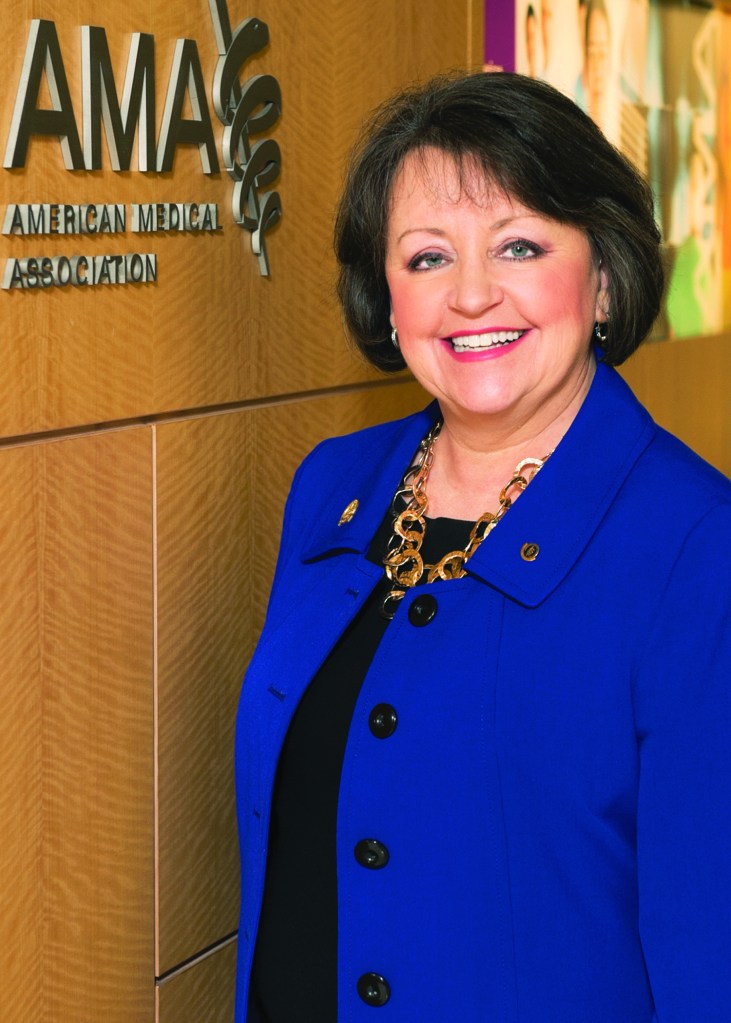
Dr. Susan Bailey, AMA President, presented this speech on June 7, 2020, when she was installed as the 2020-2021 president of the American Medical Association:
The inauguration of a new AMA president is typically a very formal, black-tie affair with great celebration and fanfare. In my case, my family and close friends were all excited and ready to fly to Chicago to celebrate with me.
I had a beautiful gown and Broadway entertainment and red velvet cake for dessert all picked out.
My grandson was going to look so adorable in his tux . . . just like his daddy and his uncle did at his age when I became president of the Tarrant County Medical Society.
I was planning one final bow with my predecessors, Drs. Patrice Harris and Barbara McAneny, capping our historic year with three consecutive women presidents.
But the coronavirus had other plans. And seemingly overnight, our world changed.
So here I stand, in a nearly empty studio, talking to you through a video screen.
And that’s okay. As physicians we understand better than anyone how a health emergency can disrupt even the most carefully thought out plans.
No matter the circumstance, I am grateful to address you for the first time as AMA president, and I am so honored to carry the mantle of leadership for this organization I have been proud to serve for 40 years.
On this journey to become AMA president, I’ve been asked who my heroes were growing up. We hear about heroes every day now, it seems.
But what IS a hero?
Who were my heroes?
I was never particularly into make-believe superheroes as a kid. It was real people in my life whom I most admired and emulated; the people who inspired me and pushed me to a life beyond anything I could have imagined for myself.
My heroes were my physicians.
They were my first heroes . . . and they’re still my heroes.
I had significant allergies and asthma as a little girl, and my allergists were a guiding light in our family. In fact, the McGovern Allergy Clinic in my hometown practically raised me, instilling in me a passion for medicine and teaching me the basics about working in a medical office—how to take a patient’s history, perform allergy testing . . . and how to give a damn good shot.
I grew up in the shadow of the Texas Medical Center in Houston, and many of my friends’ dads were physicians. At that time, in the 1960s, it was always the dads. Thankfully now, it’s moms too.
Although I rarely saw those physicians, I idolized them. After my father had double cardiac bypass surgery in the early ‘70s, one thing that sped his recovery was taking daily walks by the home of his surgeon, Dr. Jimmy Howell, in the hope that one day the doctor would see him and be proud of him.
One day he did see my dad, and he was indeed proud of him . . . and that kept daddy walking the rest of his life. Oh, how daddy—and our hero Dr. Howell—would be proud today.
What we’ve witnessed in this pandemic and what we know from history is that heroes are defined by their ability to adapt to a changing world, to follow a righteous cause, to overcome immense challenges, and to be changed by it forever.
The author Joseph Campbell discusses this in his book, Hero with a Thousand Faces, which describes the mythological hero’s journey in 12 stages, establishing the classic story line in everything from the original Star Wars trilogy and Harry Potter to The Wizard of Oz.
As Campbell describes it, a hero starts off in the ordinary, familiar world, but gets a call to adventure. Think of a humble farm boy on Tatooine getting the call from Obi Wan Kenobi to help save Princess Leia.
At first, our hero is reluctant, even fearful. But a supernatural force or mentor comes along and brings out the most in them. A threshold is crossed, and the adventure begins. Dorothy skips down the Yellow Brick Road.
On the way, our hero encounters challenges, finds allies, and makes enemies.
Eventually, our he or she arrives at the ultimate test. Harry Potter confronts Voldemort face to face. This is a dangerous place . . . a dark place . . . a place where survival is as important as the ultimate goal. There is a fight to the death.
Somehow, someway, the hero prevails, but the story is far from over. Going back to ordinary life is not easy, and there are many bumps in the road. But in the end, our hero emerges, transformed.
Luke is a Jedi Master. Dorothy returns to Kansas. Harry lives out his life as a benevolent wizard.
That’s the hero’s journey . . . and it’s been told a million times in a million different ways.
A hero’s journey is our journey . . . a physician’s journey.
You start off as a young student, maybe already in another career, but at some point you hear the call of medical school.
Somebody gives you a hand, maybe a teacher or a co-worker, and miraculously you’ve arrived as a first-year medical student. You feel like an imposter at first, and you wonder if you have made the biggest mistake of your life.
Through wit and resourcefulness, you figure out how to be successful. You don the white coat and you make lifelong friends, all the while confronting clinical challenges that you fear might break you.
At some point you confront the ultimate test. Maybe it’s having a relationship suffer because your priorities have changed. Maybe it’s not matching into the specialty or program you thought you wanted. Maybe it’s losing your first patient.
You’re in a dark place and it seems there is no way out. But you keep going.
You find your way out of the darkness and you emerge a better physician and a stronger person for having endured these trials. You realize that you are making a difference in people’s lives. You are saving lives.
You’re not the same person you were before you went to medical school. You are a physician . . . and you’re following the hero’s journey.
But here’s the thing – even heroes need allies on their sides. Luke needed R2D2. Harry Potter needed Hermione and Ron. Dorothy needed her ragtag crew.
There isn’t a single person I know who walks this journey alone.
My own allies are far too many to mention and thank in my limited time, but they include my husband Doug, who has been my greatest supporter and partner on this journey. They include my sons Michael and Stephen Wynn and Michael’s partner, Hannah Guel, my precious grandson Jackson, my sister Sally Rudd Ross, and her beautiful family.
They include my wonderful partners, Drs. Robert Rogers and Drew Beaty, my medical assistant Joyce Hayes, and all of their families, and my lifelong friends from Texas A&M University and the Disciples of Christ church.
And it of course includes my family in organized medicine; the Tarrant County Medical Society where I got my start, the Texas Medical Association, and my allergy and pediatric specialty societies the ACAAI, QuadAI, and the AAP. Special thanks to Dr. Melissa Garretson for your friendship, hard work, and dedication to help me make this journey possible.
It also includes my family at the AMA, and all of those colleagues, confidants and executives along the way who have mentored me and become dear friends. I have not named you all by name, but please know you are forever in my heart.
And like any hero’s journey, ours in medicine is simple:
Let doctors be doctors.
After more than 30 years in a small, private practice, I’m a passionate defender of the independent physician, and, like the AMA, I’m determined to remove all those obstacles that have come between us and our patients.
Insurer and government mandates. Decreasing payments and increasing demands. Burnout and physician suicide. And the coronavirus pandemic has made all of these problems more acute.
We need the power of the AMA on this journey.
I believe involvement in organized medicine is a professional obligation—taking good care of our patients requires much more from us than the time we spend with them in an exam room.
It requires advocacy at the highest levels to fight against the quagmire of regulation and for the support we need to sustain private practice during a pandemic that is threatening its very survival.
It requires us to confront insurance companies and all their familiar tricks that seem to raise insurance premiums year after year without spending a dime more on patient care.
At times I fear that our nation’s dysfunctional health system is held together only by the oath that we take when we graduate medical school . . . the pledge to always put the needs and interests of our patients first.
Whether you took the Hippocratic Oath or, as in my case, recited the Prayer of Maimonides, these words demonstrate our loyalty to public service, to the pursuit of science and knowledge.
These words bring purpose and meaning to our work, elevating it from a vocation to a profession.
We are on a new quest that none of us expected – living and working in a world that may be changed forever in an angry, divided nation that needs our leadership. But we need not fear the dark times on our journey.
We need only to lean on one another, to take care of each other, and to keep our eyes fixed on the horizon.
We will get through this pandemic.
We will continue to fight for our patients and for the practice of medicine.
This is our journey . . . and we will walk it together.
The third part of a three-part series about physician involvement in advocacy.
by Tilden L. Childs III, MD, TCMS President
My goodness! What a year this has been so far. I hope everyone has persevered to the best of their ability. The re-opening of our economy has begun, and much needs to be done to restore some sense of “normal” to our practices. Hopefully, we can also all start resuming some of the pleasant social activities to which we are accustomed, at least to some extent, in a safe and responsible way.
As we begin to re-focus and start looking forward to next year’s legislative session, I want to present the final article of my three-part series on participation in organized medicine, advocacy, and the legislative process. In this article, I want to give you a flavor of “where the rubber meets the road,” or, as some say, “see how the sausage is made.” In my first article, I discussed some of the options that you, acting either as an individual or through participation with your medical societies, have available, particularly at the state level. Now I would like to share with you some examples of how individuals in our community have participated in the legislative process in Texas.
However, before we get to that, I have a few thoughts for your consideration for the upcoming Texas legislative session (87R – 2021) beginning in January 2021. As you are aware, 2020 is an interim year during which issues are identified and discussed, policies are formulated, and bills are drafted in preparation for bill filing late in 2020 and early in 2021. Prior to the COVID-19 crisis, redistricting was considered to be the top issue. It now looks like this will be put on hold. The overriding issue, in my opinion at this time, will likely be the budget. Inherent in this will be the necessity for organized medicine to be on guard and be proactive in preventing/mitigating budgetary cuts that affect patient care and physician practice viability in Texas. This is something that everyone will have an opportunity to participate in. Although Texas has a large Economic Stabilization Fund (rainy day fund), it may not be sufficient to prevent budgetary cuts. Additionally, participation in the legislative process promises to be unique and challenging, given the current atmosphere of social distancing as we reopen society. Whether traditional legislative hearings and committee meetings and legislative assemblies will occur as they have in the past remains to be seen. For example, the Virginia House has been meeting outside on the grounds of the state Capitol beneath large white event tents. Good luck to Rep. Charlie Geren on figuring this out for Texas.
“Inherent in this will be the necessity for organized medicine to be on guard and be proactive.”
Assuming you have followed the processes I outlined in my first article regarding participation and advocacy, and that you now understand what a complicated and arduous process it can be to develop policy (as I described in my second article), you are now ready to take the next step. Being knowledgeable and informed on specific issues, plan to meet with your state representative and senator or their staffs during session, either one-on-one or as part of a group to discuss the pertinent bills pertaining to your issues. A good opportunity during session, as I discussed previously, is to go with your county medical society through the TMA First Tuesday’s program. Next, identify which members are on the House and Senate committee(s) that are likely to hear your bills of interest. To the extent possible, get to know these committee members and share your thoughts with them or their staffs, again either individually or through your group representation.
You then need to show up at the capitol to attend and participate in committee hearings. The Texas Legislature Online (TLO) website (https://www.capitol.state.tx.us/) has many uses, including providing notification of times and locations of the specific committee hearings and their agendas. Once onsite, register your position on your bill or bills of interest being considered in hearings that day. This is easy to do and is done just prior to the hearing. Consider providing testimony at committee hearings. This is done in the form of either written or oral testimony. To prepare for oral testimony, I have a homework assignment for you: I recommend that you review previously recorded testimony. The TLO website allows searches of the House and Senate committee meetings archives by date and committee, and I have included this information in the following examples. A notable one from the previous session (86R – 2019) was the contentious issue of balance billing. As Chair of the Council on Legislation, Dr. Jason Terk admirably represented the TMA in testimony before the Senate Business & Commerce Committee (B&C) on March 21, 2019, against SB 1264 as written. I highly recommend reviewing this recorded testimony online (search TLO Senate archives by date and committee or view at https://tlcsenate.granicus.com/MediaPlayer.php?view_id=45&clip_id=14013) beginning at time 2:08:25. This is an excellent example of now only how adversarial the process can be but also how important it is to be part of the process. An example of a more friendly encounter, particularly for a first-timer (both me and the lady who followed me), on a relatively non-contentious issue can be found by searching TLO House archives for the House Insurance Committee meeting on March 5, 2019 (or at https://tlchouse.granicus.com/MediaPlayer.php?view_id=44&clip_id=16400), beginning at time 1:35:43, where I testified on HB170 relating to mammography coverage. The TCMS and the TMA can provide further insight and assist you in preparing to testify as well. A number of Tarrant County physicians have testified over the years and this has been integral to the legislative successes achieved by the TMA.
In closing, I hope you have gained an in-depth understanding of the role we can and do play in the legislative process. Participate in your local, state, and national medical organizations. Inform yourself on the issues. Help formulate policy. Advocate for your position. Make your voice heard by being part of the legislative process through active participation at the Texas capitol, as I have described in this article. You can do it! You can make a difference in the future of Texas medicine.
“The mass of men lead lives of quiet desperation.” -Henry David Thoreau – Walden
by Tom Black, MD – Publications Committee
As I reflect upon the thousands of patients with whom I had contact during my general surgery residency training, one stands out as perhaps the most important, at least in the sense that she is the one from whom I learned the most profound lesson.
I can see Sara Hardin in my mind’s eye. She occupied bed space 15, the middle bed of the three just to the left of the 2nd floor nurses’ desk, facing south. Sara was 49 years old, but she appeared to be at least 70. She was thin and bent. Her wrinkled and leathery skin spoke of a life none of us could hope to understand, undoubtedly spent out of doors and working hard. Her teeth were gone and she either didn’t bother putting in her dentures or didn’t own any. Her unkempt short gray hair and the dirt under her nails contributed to her derelict appearance. Sara was admitted to the county hospital for evaluation of intestinal bleeding.
No one came to visit Sara, at least, no one that I was ever aware of. Whenever I saw her, she was generally napping or staring out the window. I don’t recall that she ever said a word to us as we rounded each morning and evening, but then again, I don’t recall ever saying much to her either.
Once, when I was a senior resident, a new second year resident was assigned to our surgical service. We had never worked with each other and I knew nothing of him aside from the expensive watch he wore. I always thought it was in poor taste, if not ill advised, to flaunt something of such value in front of so many people who themselves had so little. One day during rounds at Sara’s beside, this new resident concluded his introductory remarks with the words, “She’s your typical troll.” All present nodded knowingly.
“Troll” was Ben Taub Hospital parlance for a homeless individual, and the term carried with it, as one might imagine, a terribly negative connotation. It comes, I’m sure, from the Norwegian folktale of the ugly ogre who lived under the bridge that the Three Billy Goats Gruff had to cross. In Houston, as in many other cities, many homeless people live under the shelter of bridges and overpasses.
I am quite embarrassed now to admit that I neither said nor did anything at the time to set the young man straight regarding his opinion of someone of whose situation he was ignorant. But the label stuck in my mind, and it troubled me. In retrospect I can only hope that Sara either did not overhear that young man’s comment or did not understand his insinuation.
I suppose I had fallen, as do most students and residents, into the depersonalizing mindset of those who say, “the appendix in room five,” or “I admitted a head injury last night.” Most physicians-in-training are much more focused on the task of developing clinical acumen and less on humanity, but that’s a poor excuse. Nurses are often guilty, as they tend to report, “Four fifty-seven needs some pain medication.” HIPAA has greatly exacerbated the problem by disallowing the use of names in favor of initials or anonymous room numbers. But it’s a leap beyond depersonalization into cruelty to demean and denigrate another individual, particularly when he or she is in a debilitated condition and worse yet, when he or she is dependent upon you for assistance.
What right did I have to do anything other than to exhibit the utmost respect for everyone as unique individuals of worth, while administering to them the best possible care?
A day or two after the episode, I stopped by Sara’s bed. She was sleeping, which allowed me the opportunity to observe and to learn a bit about her. A book lay on the bedside table. It was a well-worn copy of the Bible. The bookmark and the pair of scratched and repaired eyeglasses nearby indicated that the book was read often and was of significance to her. A cross hanging next to her bed showed her personal devotion. Although she wore no jewelry, the proximal phalanx of her left ring finger was noticeably narrower than the same area of her other fingers, indicating that a ring had once held a longstanding position of importance there. Perhaps she had been recently widowed; who knew? And who even asked? I studied the lines on her face. They indicated that she had spent much more of her life smiling than frowning and spoke of happier and perhaps more secure days now past. Taped to the side of the bedside table, in such a manner as to be easily visible by her, but nearly invisible to casual visitors, was a simple crayon drawing with a crudely scrawled caption that read, “I love you Gramma.” Next to that was a small photograph of the type taken annually in public schools, of a little girl aged five or six years. I was even more ashamed of the callous attitude my colleague had displayed toward one of our fellow human beings and of myself for having remained silent.
I may have been as guilty as others of depersonalization, but never of cruelty, and having witnessed that appalling lack of compassion was a wakeup call for me to reassess my own values. I began to appreciate the people who passed through the hospital in a new light and as being more than “clinical material” who existed for my benefit. Each became an individual. Each old man was someone’s father, and if not father or grandfather, then at least someone’s son. Each elderly woman was someone’s daughter and, as in Sara’s case, likely to be loved by someone. There were experiences etched into the wrinkles of each of Sara’s hand that I could not even begin to understand. What right did I have to do anything other than to exhibit the utmost respect for everyone as unique individuals of worth, while administering to them the best possible care?
Several days later, in a different location but similar circumstance, I heard the term “troll” again used in a similarly insensitive manner. This time I was determined not to allow the opportunity to pass.
“Stop right there. Everyone remember from this moment on that the word you just used is not acceptable on this service, at least as long as I’m here.” I paused to collect my thoughts, although I had mentally rehearsed my comments many times.
I addressed the speaker. “When you applied to medical school, you were probably asked why you wanted to become a doctor, and you probably said ‘Because I want to help people.’ Well, either you meant it or you didn’t, but if you were honest and you do want to help others, start by treating everyone as a fellow human being. You wouldn’t appreciate someone speaking that way about your mother or grandmother.” There was some resentment after that over the reprimand, but I heard no more “troll” comments.
On the evening of the day Sara was discharged, the team assembled at the nurses’ station for rounds. “Dr. Black,” the charge nurse said. “This was left for you.” It was an orange mailing envelope with Sara’s name on it. Opening it, I pulled out a nice greeting card addressed to our team. I read the card aloud to the members present. “Dear Blue Surgery team. Thank you all so much for the kindness and care you gave to our mother and grandmother while she was recovering in the hospital.” I was gratified to see that the irony of the message had wounded a few egos.
A few months ago, an essay by medical student Sneha Sudanagunta appeared in this journal. In it, Ms. Sudanagunta concluded that medical schools must do a better job teaching what she called “humanism,” (an ambiguous word for which I suggest “compassion” may be a more apt term). While I applaud her passion for this important topic, it is disconcerting that Ms. Sudanagunta felt compelled at all to implore physicians to teach more compassion. My experience leads me to believe that her observations represent an exception rather than the rule among practicing physicians.
I suppose medical students and residents are much the same as they were forty years ago. Sometime between acceptance to medical school and the completion of medical training, one must resolve one’s personal standards regarding the treatment of others and the sanctity of human life. Of course, cruelty must be categorically opposed and compassion fostered just as strongly. While I am doubtful that compassion can be taught, per se, I am quite certain that it can be effectively modeled, and a receptive individual can be influenced to change his or her own behavior.
I am convinced that we are surrounded by compassionate physicians; their names are in the TCMS directory. It is who we are, or at least, who we want to be. Nevertheless, it is wise for us to recall from time to time the wisdom of the Dalai Lama: “Be kind whenever possible. It is always possible.” We need to show Ms. Sudanagunta that whatever she experienced was the exception, not the rule.
Join with Tarrant County Public Health (TCPH) in the fight against COVID-19 by volunteering as a contact tracer. As coronavirus numbers continue to rise in Texas, it is critical that we learn more about the virus and use preventative measures to avoid its continued spread. One of the best ways to do so is through contact tracing; by using this tried and true method to further understand how the virus is passing from individual to individual, we are learning information that empowers and protects out community.
“There are only a few tools available to suppress the spread of coronavirus,” says Fort Worth physician Robert Rogers, MD. “Contact tracing is one of the most important tools, particularly as we strive to get our new case numbers under control.”
TCPH is managing local contact tracing, but due to surging numbers in recent weeks, the information that needs to be gathered far outpaces what TCPH can manage with its current staff. The group is working on hiring additional staff members to meet the need but foresees a gap in manpower throughout the rest of July and August. Volunteers are stepping in to make the difference.
Retired physician Kendra Belfi, MD, wanted to help throughout the crisis, but she was limited because of her health. “I had given up my license a few years after I retired and am also in a high-risk group for COVID-19 because of my age and lung condition,” says Dr. Belfi. Volunteering as a contract tracer is a safe and effective way for her to help the community at this critical time. “I figure that whatever I do takes a little of the burden off the health department employees.”
It is important to know that you do not need to be a physician to volunteer. “I am only a first-year medical student, so in March, when the pandemic began, I felt helpless,” says Nathalie Scherer, a student from the TCU and UNTHSC School of Medicine. “I was listening to physician stories from around the country, and it felt frustrating that I was unable to do more to help out. Volunteering as a contact tracer has let me be involved in a meaningful way, given the skills I currently have. It’s gratifying to be able to help, even if it is something as simple as talking to people over the phone.”
Additional volunteers are needed, so if you are interested, contact Kathryn Narumiya at knarumiya@tcms.org for more information.
“I am not a specialist in emergency medicine, a hospitalist, or an intensivist, yet I wanted to use my medical training to help in the response to the pandemic,” says Dr. Rogers, who has been assisting with contact tracing since TCPH reached out for support from the community. “Volunteering as a contact tracer has provided that opportunity.”
The Texas Medical Association PPE Portal is your tool to inform state-managed warehouses how much personal protective equipment (PPE) your practice needs.
As long as you need PPE, use this link to the PPE Portal to refresh your data once per week per practice. These data inform distributors about how much PPE you currently have on hand and how much you use each day.
The PPE Portal is available only for licensed Texas physicians (and nursing homes and home health professionals) who are not hospital-based and who cannot obtain PPE through other channels. The PPE Portal is NOT an order form. Because of the limited supplies and uneven distribution of the PPE, there is no guarantee individual practices will get all – or even some – of what they need.
The data you submit to the TMA PPE Portal are sent to the state’s Hospital Preparedness Program (HPP) partners and Regional Advisory Councils (RACs). The state purchases PPE throughout the worldwide supply chain. The HPPs and RACs are responsible for distributing it. They ship PPE allocated for physicians within their regions to local county medical societies, who then distribute it to individual physician practices. The PPE you receive from the RAC or HPP through the TMA PPE Portal will be free.
A local county medical society or state warehouse will contact you when and if PPE is ready for you to pick up.
If you are not the person who keeps track of this information for your practice, please share this email (with your personal PPE Portal link above) with the staff member or other physician who will enter it for your practice. Please report PPE usage by all staff who regularly need it to interact with patients, including physicians, physician assistants, nurses, and support staff. Coordinate within your practice to make sure it submits only one response, even if your practice has multiple locations.
A few months ago, I was on airplane heading to a meeting. As we started taxiing toward the runway, safely fastened into my window seat on a full flight, I overheard a conversation in the row in front of me. The woman in the center seat was conversing with a gentleman in the aisle seat. It became apparent that he was a physician, and she asked him if he were a member of the AMA.
“The AMA?” he replied. “What’s the point?”
Since I was immobilized in my seat, I did not get the chance to answer his question (that he really didn’t want an answer to, anyway).
So, what is the point of being a member of the AMA?
The American Medical Association is the nation’s largest and most influential medical society in the U.S. and is a powerful ally of physicians and medical students. Our mission is “to promote the art and science of medicine and the betterment of public health.” AMA’s work across healthcare is organized in three ways:
Removing obstacles that interfere with patient care;
Driving the future of medicine by reimagining medical education, training, and lifelong learning, and by promoting innovation to tackle the biggest challenges in healthcare; and
Improving the health of the nation by leading the charge to prevent chronic disease and confront health crises.
The AMA has changed a great deal in the last decade – it is definitely no longer your granddaddy’s AMA! When I was elected AMA President-elect in June 2019, I joined President Patrice Harris, MD, and Past President Barbara McAneny, MD, as the first trio of women leaders the organization has ever had. The Board of Trustees of the AMA (BOT), who provides governance of the organization and carries out the will of the House of Delegates, is comprised of actively practicing physicians, a resident physician, and a medical student as well as a public member. Most of us are in private practice; some are in academia and some in large medical systems. We come from primary care and specialties. I have no idea what political party each belongs to. Texas has always been strongly represented on the BOT, and I am currently joined there by Russ Kridel, MD, a facial plastic surgeon from Houston.
AMA policy is set by the representative process of the House of Delegates (HOD), which meets twice a year to debate health policy ranging from medical ethics to economics to advocacy to education to science and public health. Half of the HOD, which now has more than 600 delegates, are from state medical societies and half are from specialty societies. Resolutions on health policy are brought from states or specialty societies, debated, and eventually voted on by the HOD.
Tarrant County has long had an active cadre of physicians and students who were active in the AMA. Currently, Gary Floyd, MD, serves on the AMA Council on Legislation, and Sealy Massingill, MD, is on the AMA Council on Long Range Planning and Development. I served on the AMA Council on Medical Education before I became Vice-Speaker. Steve Brotherton, MD, has recently served as Chair of the AMA Council on Ethical and Judicial Affairs. Other Tarrant County physicians serving on the TMA delegation to the AMA are Greg Fuller, MD, and Larry Reaves, MD. Ty Childs, MD, serves in the HOD as a delegate from the American College of Radiology, and Melissa Garretson, MD, serves in the American Academy of Pediatrics delegation. Our TCOM chapter has produced many student leaders, and I know our TCU and UNTHSC students will, as well.
I have believed since medical school at Texas A&M College of Medicine that being involved in organized medicine was a professional obligation and that taking the best care of my patients at the micro level also meant taking care of them at the macro level in Austin and Washington, DC. It’s hard to get health policy adopted on your own. Big changes require big groups of people working together, and the more diverse the groups, the better the policy.
The AMA has a robust Washington, DC, office with talented staffers who are constantly in touch with the three branches of government, HHS, CMS, and the CDC. When a legislator wants to know what doctors think, they call the AMA. When CMS needs help with emergency telemedicine rules, they call the AMA. The heroes of the White House COVID-19 Task Force, Dr. Deborah Birx, Surgeon General Jerome Adams (who was an AMA Delegate before he became Surgeon General), and Dr. Anthony Fauci are all AMA members, and all reach out to the AMA when they want physician involvement.
The AMA is deeply involved in medical education; they make up half of the LCME which accredits medical schools. They are active in the accreditation of residency training, CME, physician office laboratories, and the Joint Commission. They help appoint members of ABMS boards. They have worked on getting rid of Maintenance of Certification as we knew it, especially the high stakes exams and changing to a system more reflective of a physician’s practice needs (and more respectful of our time and money).
This year I will be sharing my travels around the U.S. and the world as AMA President with Tarrant County Physician and discussing the issues that are so vital to all of us. It will take the whole year to explain all the points of how important our AMA is, and I am eternally thankful for TCMS and TMA for supporting me throughout my career and helping me achieve this incredible honor.
The TCU and UNTHSC School of Medicine Physician Development Coaches (PDC) are offering TCMS physicians free coaching services. Many of you are on the front lines of the DFW warzone – facing resource challenges, complex decision-making, anxiety, fatigue, exhaustion and potential COVID-19 infection. Coaching can be a valuable, strengthening resource during many life phases, but especially in times of crisis, uncertainty, and complex decision-making. The PDCs are available during this pandemic and offer pro bono coaching services. Coaches who are available for you include: Debra Atkisson, Tom Deas, Candice Gamble, Raj Gandhi, Ken Hopper, Samir Nangia, Thuthuy Nguyen and Tony Zepeda. For more information or to schedule a coaching tele-appointment email your request to MDCOVIDCoaches@tcu.edu.
The Collin-Fannin, Dallas, Denton, Grayson, and Tarrant Medical Societies have partnered to form the North Texas Medical Society Coalition (NTMSC), one of the largest physician-led COVID-19 alliances in the southern United States. With over 11,500 members, the NTMSC will collectively advise and inform North Texas communities with scientifically based information.
Knowledge of COVID-19 and the optimal treatment approach is constantly evolving. The goal of this coalition is to provide a united voice for physicians in the North Texas region at this critical time. Doctors throughout North Texas are working on getting scientifically-based recommendations to the community on safe practices and managing healthcare. By banding together, NTMSC hopes to augment their reach to patients and to serve as a voice of clarity at a time when medical information is coming at an overwhelming pace, often leading to confusion.
North Texas infection rates have increased to more than 9,000 COVID-19 cases, while to date, Texas has 33,369 confirmed cases statewide.
“It is becoming increasingly difficult for the public to wade through a large amount of information coming rapidly from different sources and to determine what is accurate, what is important, and what is applicable to North Texas and individual families and businesses. Physicians are best positioned to use our knowledge and experience to provide recommendations that the public can trust,” states Dallas County Medical Society President-elect, Beth Kassanoff, MD.
As their first recommendation, NTMSC proposes a continuation of physical distancing practices. Texas leaders moved quickly to implement social distancing early on in the pandemic. Because of this, Texas avoided the catastrophic surge of COVID-19 as experienced in other states. NTMSC believes it is imperative that civic and business leaders, and the community as a whole, continue to practice physical distancing to avoid a resurgence of COVID-19. Failing to do so may result in COVID-19 infections at rates that require hospitalization, intensive care, and medical equipment that exceed our resources.
North Texas physicians understand that citizens live, work, and play throughout a large region and are working together with area healthcare partners, including hospitals, public health departments, and business leaders, advising on medical recommendations related to reopening business and social activities. Our physicians are following medical science, tracking public health data, and adhering to CDC guidelines for population testing, contact tracing, and treatment recommendations for COVID-19 and non-COVID patients.
About North Texas Medical Society Coalition:
The NTMSC represents more than 11,500 physicians in the communities of Collin-Fannin, Dallas, Tarrant, Denton, and Grayson counties. Founded in 2020, The NTMSC works with community healthcare partners including public health departments, hospitals, and business leaders, to advise on medical recommendations to serve the health care needs of the residents of North Texas.
Some North Texas physicians are about to receive desperately needed personal protective equipment (PPE) thanks to a partnership between the Texas Medical Association, the Tarrant County Medical Society, and the North Texas Regional Advisory Council (RAC).
The county medical society received a shipment of PPE from the RAC on Saturday that will be distributed to area physicians based on their practices’ needs, CEO Brian Swift said.
“This has been a team effort – everyone from the TMA, the RACs, and the doctors’ offices – to get these supplies where they need to go,” Mr. Swift said. “In North Texas, it’s been tough sledding for weeks, but it’s finally getting worked out.”
The collaboration, which began last week, is part of an effort to distribute PPE to the state’s community physicians, who have grown increasingly desperate for the protective equipment they need to care safely for patients.
Under the program, physicians indicate their PPE needs through an online portal created by TMA, which will forward that data regularly through eight designated Hospital Preparedness Programs (HPPs) and RACs. The RACS and HPPs will make the supplies available for county medical societies and other organizations to distribute.
That’s what happened Saturday, when Mr. Swift received word that the North Texas RAC in Arlington had PPE available for physicians in Tarrant County, as well as nearby Parker and Johnson counties.
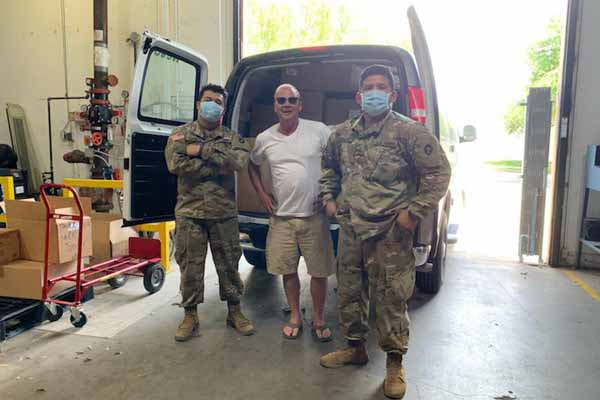
“I rented a U-Haul van, drove to Arlington and pulled up to the RAC,” Mr. Swift said. “There were two National Guard guys there who helped me load the PPE. I drove it back to our headquarters and returned the truck. It took about three hours total.”
The supplies include K95 masks, surgical masks, and face shields, which will be added to several thousand N95 and surgical masks that MedStar Ambulance service donated to the society a few weeks ago, Mr. Swift said.
Society officials have been contacting area physicians with instructions on when and how to pick up the PPE, he said.
“They’re just grateful, the staffs, the nurses, they’re excited to have it,” he said. “It’s great because we get to meet a bunch of new people.”
The portal is not a PPE order form. The amount and type of PPE in state warehouses varies each week. Submitting a form does not guarantee practices will receive supplies. Physicians whose data indicates a need for PPE will be placed on a distribution list to receive supplies as they become available.
To ensure each practice submits only one set of data to the PPE Portal, not all Texas physicians have received personalized login credentials. If you did not receive the credentials via email, check with your practice manager or the lead physician in your practice. Practices with multiple locations are considered a single practice. If it appears that no physician at your practice received the credentials, please contact the TMA Knowledge Center at (800) 880-7955 or by email.
Remember, you can find the latest news, resources, and government guidance on the coronavirus outbreak by visiting TMA’s COVID-19 Resource Center regularly.


 Tarrant County Physician Online