UNTHSC Medical Students COVID Vaccinate the Public

by Steve Martin, MD, City of Burleson PHA
Sarah Andrade, OMS-I

This article was originally published in the May/June issue of the Tarrant County Physician. You can read find the full magazine here.

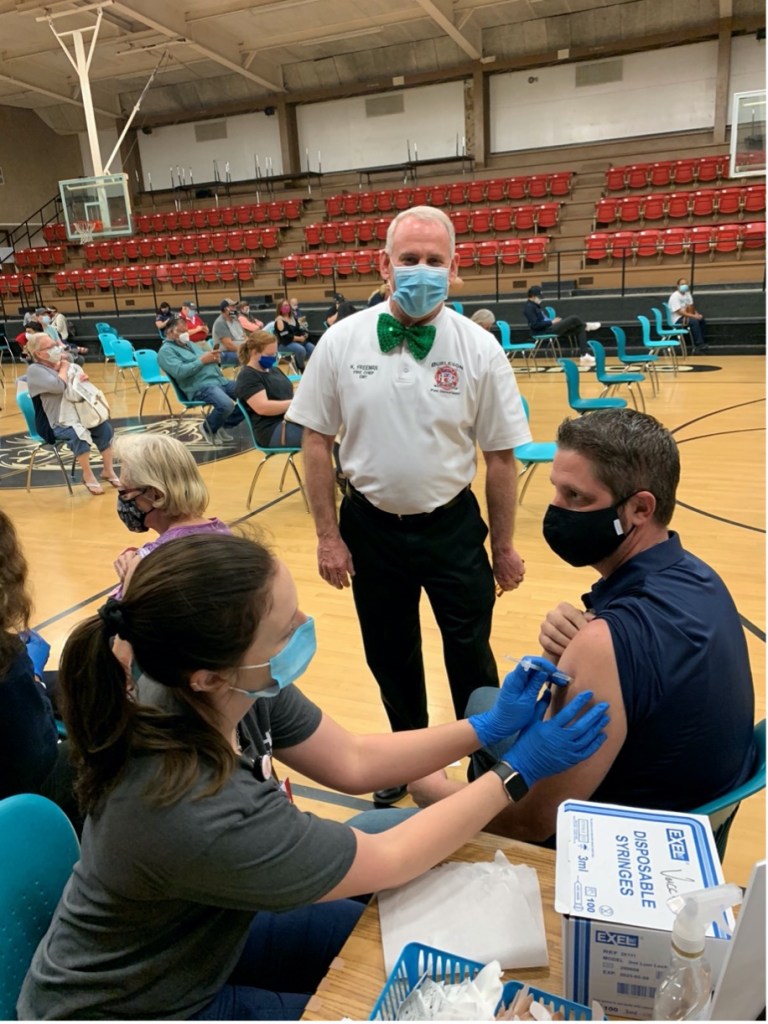
Pictured from left to right: Assistant Fire Chief Casey Davis; Melson Mesmin, OMS-II; SarahAndrade, OMS-I; Alexander Nguyen, OMS-II; Salma Omar, OMS-I; Fire Chief K.T. Freeman; Steve Martin, MD     Not pictured: Caleb Reagor, OMS-I and John Griswell, MD

To provide access to COVID-19 vaccines to citizens in our area, the City of Burleson’s Public Health Division established a Vaccination Clinic allowing large-scale vaccinations in a former High School basketball gymnasium called “The Pit” in the heart of Burleson.

Beginning with 100 doses per week of the COVID-19 Moderna vaccine in January of 2021, the clinic has since grown substantially. As of late April 2021, as many as 6,000 doses per week were being provided. This is due to a group effort put forth by the Burleson Fire Department chiefs and firefighters, the City of Burleson manager, mayor, and city council, the Burleson Police Department, Burleson librarians, Burleson Citizens on Patrol, Burleson ISD, THR Huguley nurses, and the City of Burleson Public Health Division. The clinic has vaccinated over 35,000 people since opening, recently averaging 2,000 inoculations per day when the vaccine is available.

Several of the area nursing and medical teaching institutions have expressed a desire to have their students gain the experience of COVID-19 inoculations and community volunteerism. With this in mind, they have begun sending their interested students to the Clinic to participate.

Medical students from the University of North Texas Health Science Center (UNTHSC) in Fort Worth, nursing students from the AdventHealth Nursing School in Keene, and EMT students from Tarrant County College have spent time learning to administer COVID-19 vaccines. They are overseen by active and retired RNs and physicians.

The social interaction with a multitude of extremely grateful vaccine recipients has been a truly rewarding opportunity. Below are specific personal experiences and statements made by volunteers:

“I will never forget the 45-year-old woman who sat in front of me to be vaccinated as she broke down in tears, crying uncontrollably, clutching a picture of her recently deceased husband, a COVID-19 victim.” 

-Donna Martin, RN

“I loved volunteering at the clinic because I get to share in the excitement and gratitude of the community members who are so excited to finally be getting immunized.” 

  -Caleb Reagor, OMS-I 

“Through the Burleson Vaccination Clinic, I administered vaccines to individuals from all walks of life who were impacted by COVID-19 in various ways. While many individuals were eager to help end the pandemic with their vaccination, there were individuals who were uneasy about the vaccine due to the side effects seen in social media and heard through word of mouth. After listening to the reasons for their reluctance, I kindly worked to defuse their anxiety and clarify their questions. Through these discussions, they were much more on board to get vaccinated. These interactions served as a reminder for why I chose to pursue Medicine, and I hope to continue guiding patients towards better health outcomes and improved quality of life as a physician.”

     -Kendrick Lim, OMS-II

“Volunteering at the City of Burleson Vaccination Clinic has been a very rewarding experience because I was able to serve the community and help distribute the vaccine that protects from a very deadly illness. As a future healthcare professional, preventative measures are an important aspect of public health and I am proud to be a part of this program as it continues to grow!”

     -Melson Mesmin, OMS-II

The students have approached this effort with great enthusiasm and interest and have been a big help in vaccinating a large number of persons efficiently. We are so very appreciative of their willingness to join us on this adventure. We hope that there will be many more opportunities in the months to come for our area students to participate at the Burleson COVID-19 Vaccination Clinic and assist in our community’s effort to slow down the pandemic and instill hope.

Medical student Kendrick Lim vaccinating a patient

Medical Student Ashley Broderick vaccinates apatient as Burleson Fire Chief K.T. Freeman looks on. 

Medical students from the Texas College of Osteopathic Medicine (Salma Omar, OMS-I; Melson Mesmin, OMS-II; and Alexander Nguyen, OMS-II) help administer COVID-19 vaccines to the public.
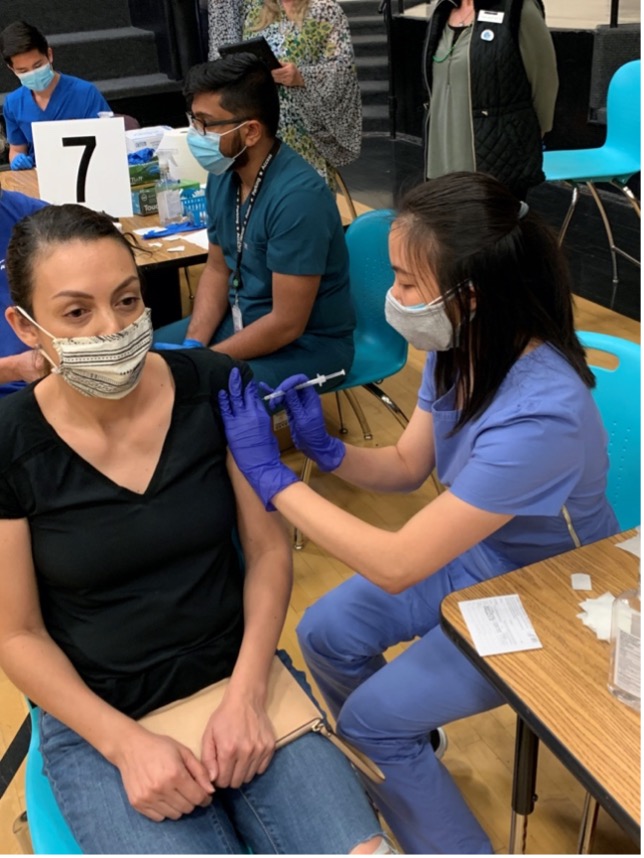
Medical student Maria Nguyen vaccinating a patient.
Drinking from the Fire Hydrant

by Chandler O’Leary, OMS-II

This article was originally published in the March/April issue of the Tarrant County Physician. You can read find the full magazine here.

Medical school has one primary goal: passing on humanity’s medical knowledge to a new generation. There are a few challenges to accomplishing this goal. First is a static problem, i.e., the sheer magnitude of information. Second is a dynamic problem, i.e., the rate of change of this information. Humankind’s medical knowledge is growing and being refined at an incredible rate. These forces are constantly at play in medical school, and they only become more obvious the deeper one’s understanding of a topic becomes. Learning more means absorbing all of the idiosyncrasies and all of the exceptions as well as confronting the burden of complexity. This is a problem that our species has been dealing with forever. Just take the ancient story of Adam and Eve; life was simple until they ate the apple and had to deal with the consequences of knowledge. 

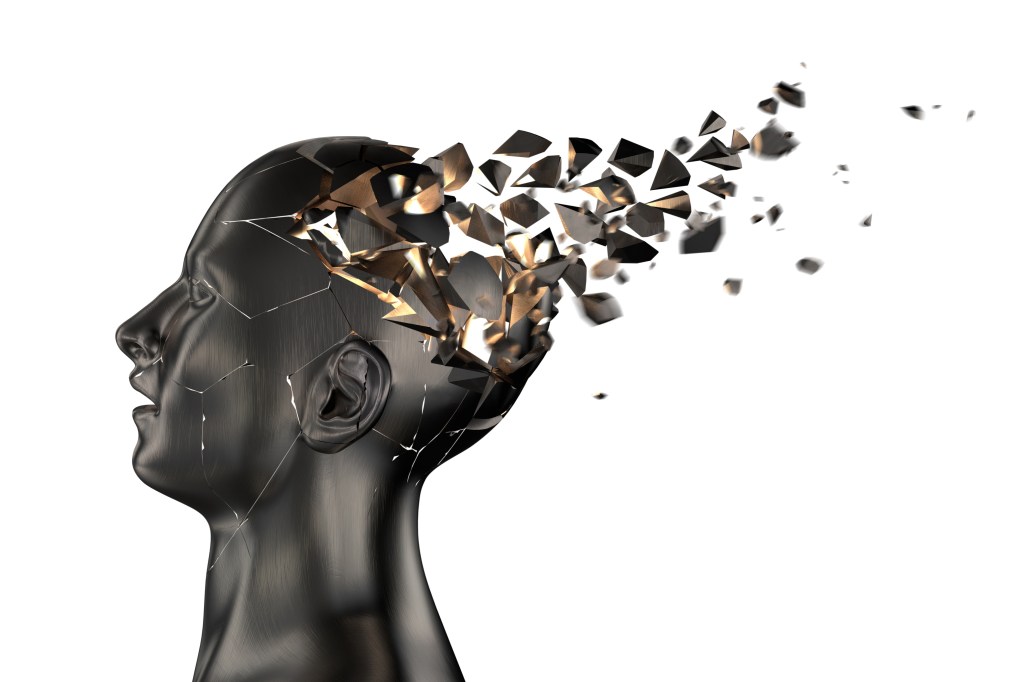
“Drinking from a fire hydrant” is the analogy often used to describe the intensity of learning in medical school. This is what medical students volunteer for beginning in year one, and it will continue until we retire. The best and only solution is old-fashioned hard work and careful thinking. This is the reality that you have to accept if you choose to be a doctor. Unfortunately, this same reality of drinking from a fire hydrant now applies to our whole society that is woefully unprepared for the flood of medical knowledge and information. 

Our society’s fire hydrant does not come in the form of a pathology textbook, but in the form of the Internet and social media. Everyone is bombarded with health content, and the mishandling or misinterpretation of this information has many potential problems. These can range from wasted patient resources to creating false expectations—they can even lead to physical harm. As doctors we become familiar with information overload and have the opportunity to develop strategies to handle it. We learn to be skeptical, research thoroughly, test our assumptions, and rely on experts. It is sometimes easy to assume the whole world has some of these strategies too, but this is obviously not the case. I don’t even need to give a specific example, just browse Twitter or Facebook for a few minutes and I am certain one will present itself. Ideally, everyone would have instant access to a healthcare worker to help them navigate the things they see online. This is currently impossible, so many patients will have to sort through the overload of truth and misinformation on their own. In light of this problem, I am reminded of a famous quote by a pillar of our profession:

“One of the first duties of the physician is to educate the masses”1

Sir William Osler.


I believe that we can benefit society by educating our patients about strategies to sort through medical information they find online. Strategies like having some skepticism toward this information, researching it through reputable sources, and trying to disprove something they see on social media before they believe it. Strategies that we have had the opportunity to develop through our medical education.

I am like most second-year medical students and I am probably too eager to share what I have learned with those around me. What has been surprising to me is that most of the health questions my friends and family ask or the incorrect assertions I hear are different from what I expected. For every time I get to explain how someone’s medication works, there are five times of disputing something someone saw on social media. I understand that not everyone has the benefit of medical school, but I fear that the massive amount of online health information has the potential to cause harm if people do not have basic strategies to handle it.

In closing, I will admit that the quote I used was not complete. The full quote says that “One of the first duties of the physician is to educate the masses not to take medicines.” I completely misrepresented the quote because it demonstrates how the simplest strategies can be used to check the validity of something you read. One Google search is all it takes to gather evidence that I was not being completely truthful with Dr. Osler’s claim. That being said, if Osler were alive today, I believe he would agree with the sentiment that “One of the first duties of the physician is to educate the masses not to believe everything they see online.”

1Osler, William, Robert Bennett Bean, and William B. Bean, Sir William Osler Aphorisms: from His Bedside Teachings and Writings, (New York: Schuman. 1950).

Design a site like this with WordPress.com
Get started