Project Access Tarrant County

Salud en Tus Manos:
Medication
Management

By Kathryn Keaton

This article was originally published in the September/October 2025 issue of  Tarrant County Physician.

On July 16, Project Access Tarrant County (PATC) held its second Salud en Tus Manos class. For those unfamiliar with it, Salud en Tus Manos (“Health in Your Hands”) is a new initiative under PATC that addresses the social drivers of health (SDOH) faced by many of our patients. These classes, provided through Texas Health Community Hope as part of our Community Impact Grant, are designed for patients with diabetes and/or hypertension who live in one of five priority ZIP codes: 76010, 76011, 76104, 76105, and 76119.

The July class, “Managing Your Medications,” guided participants through the entire prescription process—from the doctor’s visit where a medication is prescribed to understanding labels, following directions, and knowing how to request refills.

Why This Curriculum Matters
Medication adherence is a challenge nationwide, especially for chronic conditions like diabetes and hypertension. When compounded by SDOH such as language barriers, limited formal education, or financial insecurity, the consequences can be severe.

In fall of 2024, PATC saw this firsthand. A 39-year-old woman had waited more than a year for gynecological surgery. When she finally received a surgery date, her pre-op testing revealed dangerously uncontrolled diabetes. Records showed she had not returned to her primary care provider since her initial PATC referral, and she admitted she skipped follow-ups because she “felt fine.” Without those visits, she never received medication refills. Her surgery was canceled, delaying treatment another five months. Though she eventually had a successful procedure, her experience underscores the importance of consistent care and medication compliance—the very issues Salud en Tus Manos seeks to address.

Who We Reached
Our July participants were foreign born with a median age of 45. All had lived in the United States for at least 18 years. The highest level of formal education completed was eighth grade, with 75 percent of the attendees’ education taking place outside the United States. Every participant had hypertension, and half also managed diabetes. All reported attending medical appointments every three to six months.

While all participants felt “extremely confident” in understanding their medications, half believed they could take prescriptions however they wished as long as the medication was prescribed, and all believed they could not receive their medications in their preferred language.

Encouragingly, the post-survey showed significant improvement: 100 percent of participants correctly recognized the importance of taking medication exactly as prescribed.

Hands-On Learning
The class combined instruction with interactive activities. Participants identified warning labels, practiced interpreting dosage and timing instructions, and learned when and how to request refills—not only for their chronic condition medications but for all prescriptions.
Like our first class in March, participant satisfaction scores reflected both engagement and impact. The curriculum is clearly filling an important knowledge gap and helping patients feel more confident in managing their health.

Looking Ahead
Medication management is a crucial step toward improving long-term health outcomes, and Salud en Tus Manos is proving to be a meaningful resource for patients navigating barriers to care. With every class, PATC and its partners continue working toward healthier futures for our community.
Our first class, “How to Communicate with Your Doctor,” gave patients the tools to ask questions and advocate for themselves during medical visits. This September, we will be offering that class again—this time with two sessions, one in English and one in Spanish. The program will continue to grow. The next planned class, “Food as Medicine,” specifically requested by half of past Salud en Tus Manos attendees, will explore how nutrition choices can support patients in managing chronic conditions and improving their overall well-being. Together, these classes are building a foundation for healthier lives—one step, one conversation, and one patient at a time.

The Last Word

Lifestyle Modifications

By Hujefa Vora, MD, Publications Committee Chair

This article was originally published in the September/October 2025 issue of  Tarrant County Physician.

With your annual physical last week, we drew annual labs. We’ve got to discuss these results today. Your cholesterols need better control. Your total cholesterol is greater than 200 mg/dL, but to really understand these results, we’ve got to look at the breakdown. Your HDL, your “good” cholesterol, should be higher than 40 mg/dL. It looks like we have some work to do on this.

No, you don’t need to increase your cholesterol intake. To raise your HDL level, you need to increase your aerobic exercise. You need to make some lifestyle modifications. Your LDL, your “bad” cholesterol, is markedly elevated, and this is not a good thing. This combination of low HDL and high LDL can dramatically increase your risk for cardiovascular disease. I want to finish reviewing these lab reports, and then we will take a few minutes to circle back to this issue. Let’s see here. Your kidney and liver function tests are normal. Your fasting blood sugar is a little higher than expected. Your blood counts, red blood cells, white blood cells, platelets—all look good, which means your inner factory is working. The implication here is that your nutritional status is good. Your body has all of the raw materials it needs to produce all of these cell lines. Your thyroid appears to be functioning at normal levels. Finally, and most importantly, there is the matter of your glycosylated hemoglobin level. This has nothing to do with the blood counts and hemoglobin we reviewed earlier. It is actually also called hemoglobin A1c. This is a measure of your average blood sugar level over the past three months. And your A1c is just a tad on the higher side here. The World Health Organization defines diabetes as an A1c of 6.5 percent or greater. Your numbers landed in the prediabetes range. So now we’ve really got some more issues to talk about.

Alright, no time to panic. I want us to relax and really understand what it is we are talking about here. Prediabetes is like a warning shot. Your body is telling us that if we don’t take action in the here and now, then you are at significant risk of developing diabetes.

No, you are not diabetic. I understand that you feel fine, that you don’t feel diabetic. The thought I want to stress to you is that this is a preventative visit. Our goal is to prevent the complications of low HDL, high LDL, and borderline hemoglobin A1c. Those complications include heart attacks, strokes, kidney disease, vision disturbances, all ultimately negatively affecting your quality of life, possibly even your quantity of life.

No, these levels are not fatal, but if we let these things go long enough without addressing their root cause, the complications can be detrimental to your overall health. The most effective ways to lower your risk of developing diabetes when you are prediabetic are by losing weight, increasing physical activity, and eating a healthy, well-balanced diet. I don’t expect you to go out and run a marathon (although that would be amazing!) but rather just make some modest lifestyle modifications. If you are able to effectively make lifestyle modifications, then we may be able to avoid full-blown diabetes. We may not necessarily need to prescribe medications right off. Lifestyle modifications most certainly can help to decrease your risk of heart attacks and strokes.

Lifestyle modifications. That’s a buzzword that we talk about in our offices all the time. I’m going to give you some food for thought at this point. Lose excess weight. For people who are overweight, losing just 5 percent to 7 percent of your body weight can reduce your risk of developing type 2 diabetes by over 50 percent.1 Increase physical activity. The CDC recommends getting at least 150 minutes of moderate-intensity aerobic exercise per week.2 This can include activities like brisk walking, cycling, or water aerobics. Regular exercise helps your body use insulin more effectively. Combine cardio with strength training. Incorporating strength training for all major muscle groups at least two days a week further improves insulin sensitivity and glycemic control.2 Quit smoking. Smoking can increase insulin resistance, making it harder for your body to manage blood sugar. Get enough sleep. Poor sleep is linked to insulin resistance and weight gain. Aim for seven to nine hours of quality sleep per night. Manage stress. Chronic stress can increase blood sugar levels. Find healthy ways to cope, such as meditation, yoga, or deep breathing exercises.

Lifestyle modifications also include making dietary changes. Focus on whole foods. Emphasize a balanced diet rich in vegetables, fruits, whole grains, and lean proteins and low in saturated and trans fats. Choose high-fiber foods. Fiber-rich foods, such as vegetables, fruits, and whole grains, slow down digestion and prevent rapid blood sugar spikes. Limit refined carbohydrates, processed foods, and added sugars. Avoid or limit sugary drinks, processed foods, and refined carbohydrates like white bread and pasta, which can cause blood sugar levels to spike. Drink more water. Water is the best choice for hydration and helps to maintain healthy blood glucose levels.

In the American medical system, we don’t emphasize preventative medicine as much as we emphasize reactionary medicine. We are taught to take care of the problems, treat the complications of underlying symptom-free subclinical metabolic issues. As primary care physicians, our role is to work to prevent disease, keeping you healthy so as to avoid illness. Most of what I discuss with my patients in clinic was not given to me through books in medical school but rather acquired through years of experiential learning, caring for the healthy, and teaching them to avoid disease. Lifestyle modifications don’t always get into our medicine textbooks but they should. The point of my diatribe today? Make sure that all of you are going to see your primary care physicians. Make sure that you are taking care of your health, so that all of us can better understand and serve our patients. My name is Hujefa Vora, MD, and this is my Last Word.

References:

  1. “Diabetes Prevention: 5 Tips for Taking Control,” Mayo Clinic, March 12, 2025, https://www.mayoclinic.org/diseases-conditions/type-2-diabetes/in-depth/diabetes-prevention/art-20047639.
  2. U.S. Afsheen Syeda et al., “The Importance of Exercise for Glycemic Control in Type 2 Diabetes,” American Journal of Medicine Open 9 (June 2023): 100031, https://doi.org/10.1016/j.ajmo.2023.100031.

The Magic in Medicine

by Justin Choy, MS-III

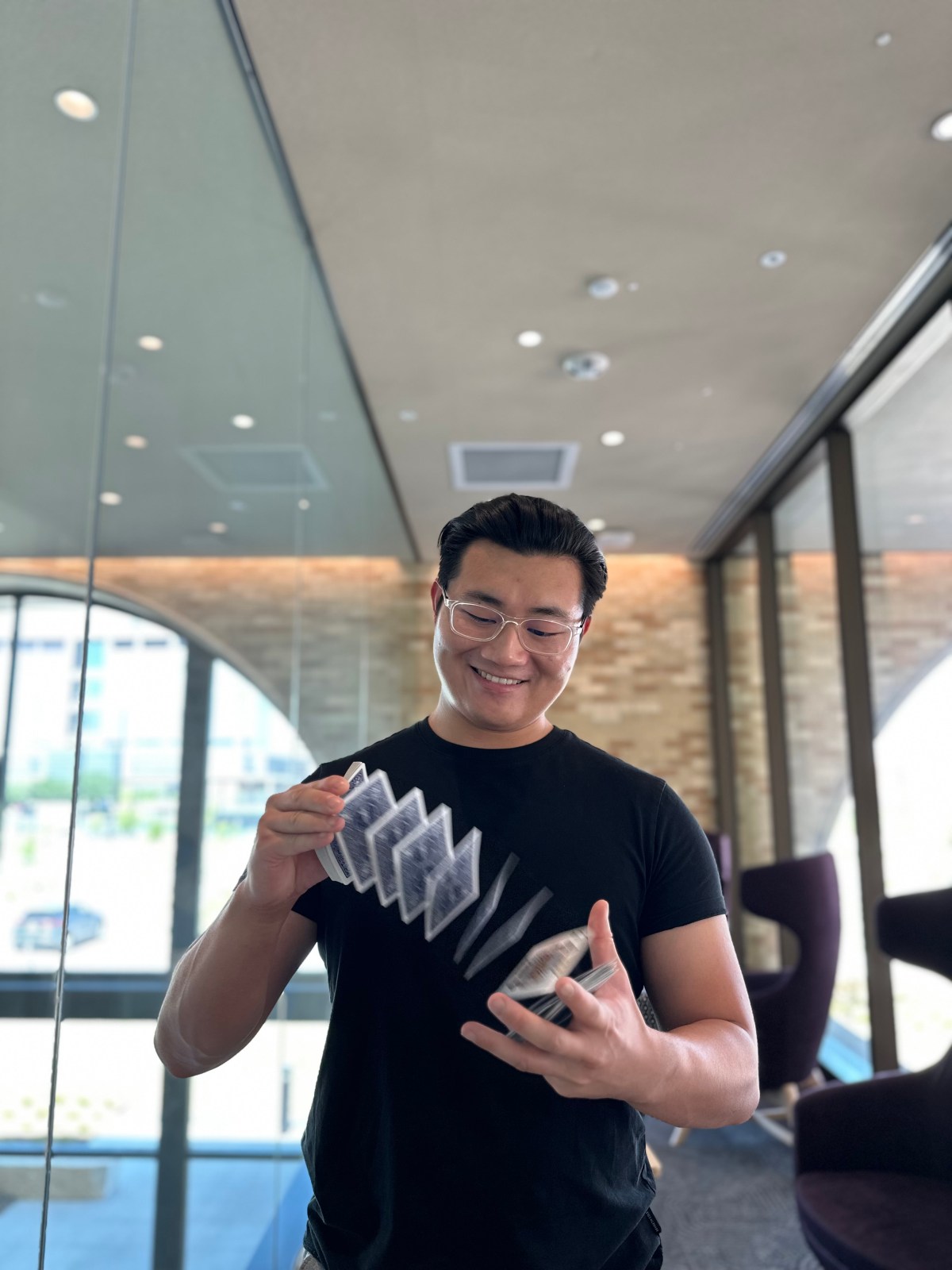
A five-year-old boy sat nervously on the exam table at Cook Children’s Neighborhood Health Center on McCart Avenue, his small hands gripping the crinkled paper as his wide eyes darted anxiously around the room. His mother murmured reassurances, but the unfamiliar setting left him frozen with apprehension. Noticing his unease, I reached into my pocket and pretended to pluck something from the air—only to reveal a bright, red sponge ball between my fingers. His eyes flickered with curiosity.

“Wait, where did that come from?” he whispered, his guarded expression beginning to soften.

As I continued, I gently tapped his ear and produced another sponge ball from its depths. His nervousness gave way to delight. A hesitant giggle escaped as he reached out to touch the impossible object. Weaving magic into the physical exam, I guided his gaze with each sleight of hand, subtly assessing his eye tracking and coordination. By the time I placed my stethoscope on his chest, his fear had vanished, replaced by eager anticipation for what trick might come next. In that moment, I saw how magic could do more than entertain—it could transform the clinical experience, turning fear into fascination and apprehension into engagement.

Bringing magic into pediatric care was never something I consciously planned. It began organically—during a clinical rotation, I encountered a young patient anxious about an upcoming procedure. Hoping to provide a distraction, I performed a simple card trick. To my surprise, her face lit up with delight, her fear momentarily replaced by curiosity and laughter. That single moment sparked a realization: magic could be more than just a hobby. It could be a tool for healing, a way to build trust, and a means of humanizing the hospital experience.

As my training progressed, I began incorporating magic into patient interactions regularly. I witnessed how it eased not only the children’s anxiety but also their parents’ worries. A simple trick could transform a tense clinical encounter into one of warmth and engagement, shifting the dynamic from apprehension to familiarity. This newfound approach allowed me to connect with families instantly, making medical visits less intimidating and more inviting.

Recognizing the profound impact of these moments, I sought out ways to bring magic to children in more meaningful ways. I started volunteering at the Dialysis Unit at Cook Children’s Hospital, performing tricks for kids as they received treatment. These sessions became transformative—not just for the children, but for me as well. I watched withdrawn patients brighten with curiosity, asking to see another trick, then another. Parents, often weary from the emotional toll of chronic illness, smiled as they watched their children experience moments of joy amidst their challenges.

Medicine is as much about connection as it is about science. Patients do not care how much we know until they know how much we care. A patient may not recall the specifics of a physical exam, the precise words a physician used, or even the exact diagnosis. But they will remember how they felt—whether they were comforted or dismissed, reassured or anxious. This is why, while medical knowledge and technical skill are essential, the ability to connect with patients on a human level is just as critical. A patient who feels at ease and trusts their provider is more likely to engage in their own care, leading to better outcomes. Just as a magician carefully crafts an experience that leaves a lasting impression, physicians must be intentional about creating clinical encounters that prioritize empathy, understanding, and connection. Whether it’s taking an extra moment to offer reassurance, explaining a procedure in a way that alleviates fear, or simply engaging with a patient on a personal level, these efforts make all the difference.

Magic serves as an unexpected yet powerful bridge in this dynamic. When a child sees a physician not merely as an authority figure but as someone who brings joy and wonder, the clinical setting becomes less intimidating. This principle extends beyond pediatrics into all areas of medicine.

As I continue my journey in medicine, I will carry these lessons forward, striving to cultivate human connection in every patient interaction. I encourage my fellow medical students and physicians to bring their passions into patient care—to find ways to forge deeper connections with patients. Whether through music, art, storytelling, or something as unexpected as magic, these personal touches can transform a hospital experience, offering comfort in moments of uncertainty. Medicine, after all, is about more than just curing illness—it is about nurturing hope, fostering connection, and proving that even in difficult times, moments of magic can still exist.

Reflections at the Conclusion of a Longitudinal Preceptorship

By Yun Tran, MD, MPH; Assistant Professor, Burnett School of Medicine at TCU; Staff Physician, Department of Family Medicine at JPS Health Network

On the last day of practice with the medical student whom I had been precepting for over two years, I couldn’t help but become emotional as I reflected on how the relatively new model of medical education called Longitudinal Integrated Clerkship (LIC) has reignited my passion for medicine.

Three years ago, I resigned from a primary care physician position in a large healthcare system. I was burned out and ready to give up medicine altogether. I enrolled in a Masters of Public Health program, thinking that I would transition away from direct patient care.

Then a phone call came just as I was in the midst of grappling with biostatistics and epidemiology. The chair of the family medicine department at TCU’s Burnett School of Medicine was looking for a course director for the first-year medical student clerkship. My name came across his desk because I had expressed interest in precepting a medical student when I was still working at the aforementioned healthcare system, which had an affiliation agreement with the new medical school. He saw that I was trained at the JPS Family Medicine residency and talked to the program director, who recommended me for the course director position.

Although I had years of experience teaching residents and medical students in the past, I had only a vague understanding of what the duty of a course director at this new medical school entailed. The medical school was two years old at the time and only provisionally accredited. However, with this position, I could see patients on a part-time basis at a county clinic. This would do beautifully while I worked on my MPH degree.

So I jumped in.

The learning curve that followed was steep and difficult, but it was also one of the most rewarding journeys I have taken in my life.

First, I had not considered fully the responsibility of crafting the course curriculum, which involved much more than simply sending students to clinics to learn from their preceptors. I was tasked to develop learning objectives, curate educational materials, and create written assignments to assess students’ learning. Fortunately, the course director before me had a curriculum that I could use as a blueprint to redesign and improve.

Second, the medical school has built based on an LIC, a concept that was foreign to me. In an LIC, throughout the first year, the students are paired with a primary care physician in the community. They go to clinic approximately every other week for a year to learn how to take a history, conduct a physical exam, and practice clinical reasoning, oral presentation, and documentation. The students concurrently take all of their other courses, including clinical skills with standardized patients. My job is to help prepare the students so that they can successfully transition into the second year, where they will have both inpatient and outpatient rotations in their eight core specialty clerkships that are longitudinal.1

Those were formidable challenges on their own, but the most intimidating prospect of my new position, in fact, was having to precept a medical student.

Recall that I was a burned-out and possibly somewhat cynical physician at the time. My fear was that I was going to discourage my student just as she started her first year of medical school. As much as I was unsatisfied with my career in medicine, I understood the need for developing the physician workforce and I still cared about people. I did not want my student to decide medicine was not for her after having me as her preceptor.

So with apprehension, I started this new phase of my career with my brand-new medical student, whose enthusiasm on her first day in the clinic motivated me to be on my best behavior. I took extra care to be a better listener when my patients talked, remembered to ask open-ended questions and wait for them to finish speaking without interruption, and summarized their problems and the plan of action while making sure that I had answered all their concerns. When my student asked me a question I was not too sure about, I acknowledged my ignorance and encouraged her to find the answer and teach me. One of her activities that day was to shadow a patient from their check-in to check-out to gain the patient’s perspective, and during her debriefing, she described how I had helped put the anxious patient at ease during the visit, and she hoped to learn to do the same.

Little did she know that her comment had put me at ease. I had not corrupted her view of medicine on her first day in the clinic. More importantly, I was not faking compassion with the patients. I truly relished being there for my patients and advising them to the best of my ability. I enjoyed the practice of medicine again!

Over the following year, my student grew to be someone who could conduct a full history and physical exam. She could also present her assessment and propose management plans. And by pending orders and having a useful chart note for me, she made me a more efficient clinician. I was also able to evaluate our course curriculum from the perspective of a preceptor. Being an MPH student at the same time also gave me a unique perspective about the needs of students, particularly adult learners. Both roles helped me tremendously as I worked to enhance the curriculum. The clinic itself also went through a transformation. At first, the nurses and medical assistants were inexperienced in navigating the intricacies of having a medical student who would be there long term, but they adapted and grew to value the partnership with the medical student as well.

When my student returned in her second year to complete her family medicine clerkship, she quickly grew to function at a sub-intern level. The patients appreciated having a medical student that they knew and frequently gave her compliments, which boosted her confidence in her ability to become an empathetic physician. I also benefited. As I witnessed my student’s development, her curiosity and eagerness to acquire knowledge, and her caring attitude, I was able to learn much more from her than information on the most up-to-date medicine that she obtained from concurrent clerkships. I also gained a sense of immense fulfillment, knowing that I had a part in putting forth into the world a physician who will be trustworthy, patient-centered, and always in pursuit of continuing education and self-improvement.

On my student’s last day with us, there was a Thanksgiving potluck at the clinic. As she was saying thanks to the staff members who had been her colleagues over the last couple of years, a surge of mixed emotions overcame me. My student would not return after that day, so there was sadness. There was also pride in how “grown up” she was. She was no longer green and unsure. Rather, she was confident, mature, responsible, while still compassionate, humble, and driven to explore and learn. Above all, there was gratitude. After two and a half years of having the privilege to serve as my student’s preceptor, not only had I not ruined her outlook on medicine, but I had also been gifted with a renewed commitment and a purposeful future.

There are many people for me to thank: My program director who recommended me; my chair, who trusted me to learn on the job and perform; and the senior leaders at the medical school, who guided me as they allowed me the freedom to put my vision of what a first-year clerkship could be into reality. I participated in the process that resulted in full accreditation of our avant-garde school, and I witnessed the construction of our school building near the historic grounds of what was once Fort Worth Medical College, the school that had graduated Dr. Frances Daisy Emery Allen, the first woman to complete medical school in Texas. I am thankful to be connected to this exciting part of Fort Worth history as our school is making history again with innovative and progressive initiatives in medical education.

I thank my medical student. She made me a better physician, a better educator, and a much better person altogether. As I have also completed my MPH degree at the same time as this transition, it feels as if I am being propelled into a new phase of my career while she begins the next step in hers. I am full of hope and optimism. I have no doubt I will feel sadness for each subsequent medical student when their time with me is concluded, but I also know that I will feel pride and gratitude over and over and that will serve as fuel for me to continue my work in healthcare.

Notes:

1. This experience changed my career and could also impact yours. Please reach out if you are interested in learning more. An LIC student in their second year may be in the pediatric clinic one morning, the psychiatry clinic in the afternoon, and the operating room the next day. For each core clerkship, they are paired with a preceptor, and they go to each clerkship every week for nearly a year. Hence, it is longitudinal, and the idea is that the student will integrate knowledge and skills from concurrent clerkships to make them better-rounded physicians, and they will not forget information like they might in block rotations. This is a curriculum design known as interleaving. Another component of LIC is for each student to have a panel of patients that they follow over many months to strengthen their ability to deliver empathetic, patient-centered care in addition to learning about disease progression over time. Patients often value these relationships with the medical students and feel more satisfied with the quality of their care.

My Journey to DREAM

by Jackson Tobler, OMS-I

When I first met Alex in high school, I never anticipated that we’d become life-long friends. Alex has an intellectual and developmental disability (IDD), and we met through Best Buddies—an organization that promotes inclusion and friendship for individuals with disabilities. Alex and I developed a good friendship in high school, and we still maintain it today. We talk on the phone each week, and he participates in my family’s March Madness bracket pool each year. He lives in a different state now, but I was recently able to fly out to visit him and his family. His face lit up when I surprised him at his door, and we enjoyed spending a few days together. I am grateful for my long-lasting friendship with Alex and that I have gotten to know him beyond his intellectual disability. Meeting Alex in high school is what first sparked my desire to serve the IDD community—a desire that grew during college and has continued into medical school.

As an undergraduate student, I expanded my involvement with the IDD community by becoming president of my university’s Best Buddies chapter. I got to connect students to community members with IDD and plan fun events celebrating inclusion. Some of our biggest events were a talent show, a bowling night, and a Halloween party. I was moved when one of the parents told me how much our program meant to her adult son with Down syndrome. She shared that her son sometimes felt lonely or excluded, but our events provided him a welcoming environment where he felt he could belong. This experience showed me the power of inclusion.

When I began medical school at TCOM, I was excited to discover the DREAM student organization. DREAM, which stands for Disability Rights, Education, and Advocacy in Medicine, has allowed me to merge my interest in the IDD community with my career in medicine. DREAM’s mission is to advocate for individuals with disabilities and to prepare future health professionals to care for their unique needs. I attended the first meeting and was inspired by the story of DREAM’s faculty advisor, Brandie Wiley. Brandie is the mother of three adopted children with disabilities. She shared some of the challenges that her children have faced when receiving healthcare, such as barriers in accessibility and communication. She also detailed the qualities she saw in the physicians who were best able to interact with her daughter. Hearing Brandie’s experiences strengthened my desire to advocate for patients with disabilities.

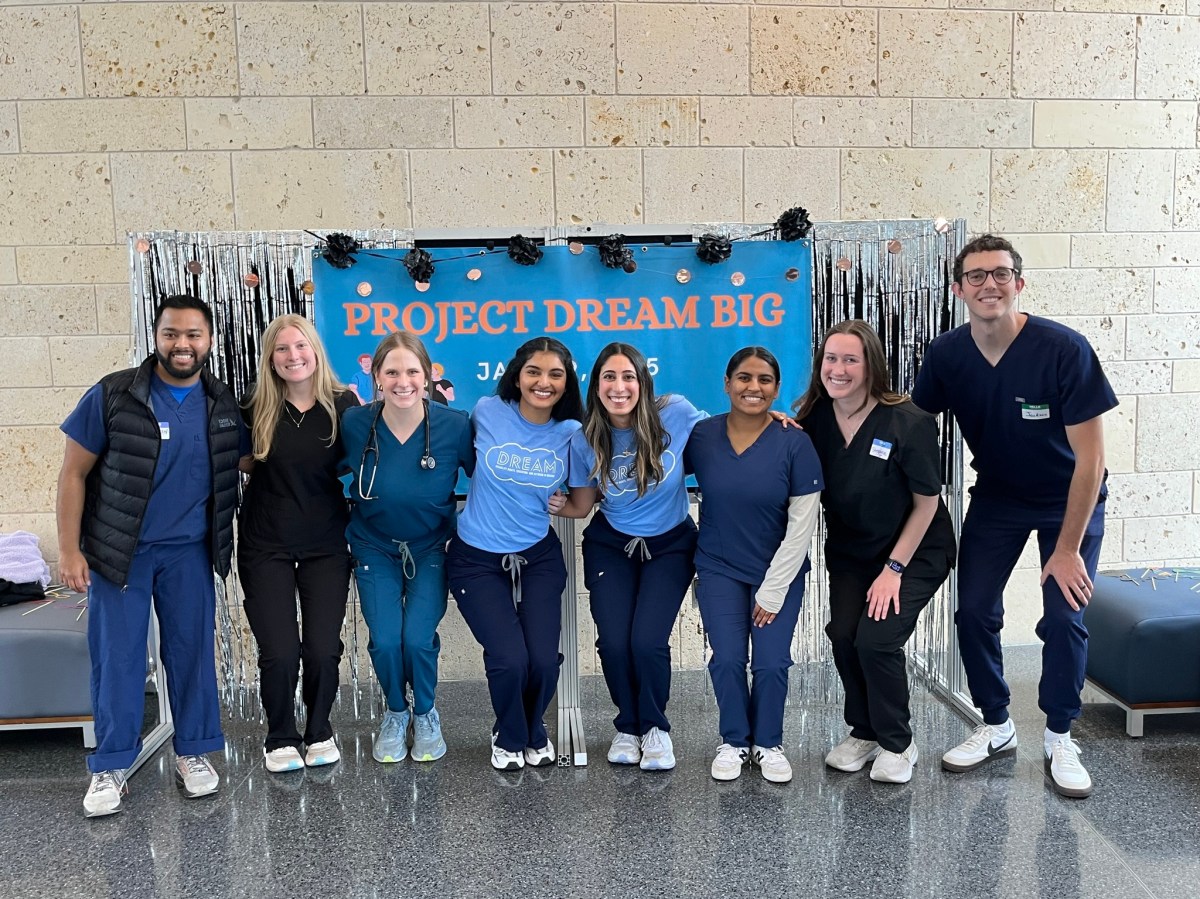
I became a first-year representative on DREAM’s leadership team, which we aptly call “the DREAM team.” We began planning DREAM’s main event of the year, Project Dream Big. In collaboration with Special Olympics Texas and the Fort Worth ISD Boulevard Heights School and Transition Center, we arranged to host over 50 individuals with intellectual disabilities on campus. We planned to pair them with medical student volunteers for an afternoon of games, crafts, physical exams, and a multi-specialty provider panel. The goal of the event was to help medical students learn inclusive healthcare principles and to help the individuals with IDD become more comfortable around medical professionals.

After months of planning, the event successfully came together. As the Special Olympics athletes arrived, it was rewarding to watch them mingle with the medical students and bond at the cornhole and coloring stations. When the physical exam portion began, the medical students were instructed by physician faculty on how to properly obtain consent from individuals with IDD. It was a valuable experience to practice our bedside manner and physical exam knowledge on a different demographic, one that we get little exposure to in the normal curriculum. Connecting with the individuals in both a casual and a clinical setting that day was impactful for everyone. This exposure is helping us become compassionate future physicians and equipping us with the tools to provide quality care for our friends with IDD.

From high school to medical school, advocating for individuals with intellectual disabilities has been a meaningful part of my journey. Each experience—from developing a friendship with Alex, to leading my college’s Best Buddies chapter, and now being involved with DREAM—has reinforced the importance of inclusion, empathy, and advocacy for individuals with IDD. Each step has influenced the kind of physician that I aspire to be. As I continue my medical training and involvement with DREAM, I look forward to more opportunities to help create a healthcare environment that is compassionate, inclusive, and equitable for people with intellectual and developmental disabilities.

The Cost of Providing Care:A Case for Support

By Kathryn Keaton

“Project Access Tarrant County has coordinated over $20 million in donated health services.”

I’ve written sentences like this countless times—I’m sure you’ve seen this or something like it from us and from various charitable agencies. Quantifying donated care isn’t an easy task, but it is necessary to share any nonprofit’s impact and, really, the “return on investment.” So how do we quantify this for our supporters and donors?

Well, let’s walk through a patient’s story together.

“Nancy” is a 44-year-old Hispanic female who was referred by Mission Arlington for a hernia repair. She is single and lives with family members. She has two minor children and works as a housekeeper. She needs a medical interpreter for her appointments and has her own transportation.

Once the patient has been entered, screened, and medically approved, the hard work begins. We aim to initiate the enrollment process as soon as medical director approval is granted. This is currently true for many specialties, but not all—and the availability can change at any moment.

Enrollment is hard—and as I often respond when asked what documentation is required, the unintentionally vague answer is, “It depends.” Part of working with our population means that not everyone has documents often assumed to be commonplace. Income is often hardest to document, especially with patients who may get paid in cash only, not have a tax return, or not even have a bank account. In addition, we must identify in advance at which hospital the patient will most likely have surgery—each hospital’s requirements are different, even within the same system.

This chart shows the cost of Nancy’s care through Project Access—the “real dollars” spent on her prescreening and enrollment processes and coordination of her medical care to completion. In Nancy’s case, the full administrative cost is $627. Since she had six appointments, this leads to an average cost of $105 per medical appointment.

Here’s where the magic happens!

PATC receives statements from each of the donating entities. The physicians, hospitals, anesthesia providers, and any others providing services all send insurance claim forms or some form of a “mock bill” so we can document the donated value for each service. The cost for Nancy’s care totaled over $25,000. This is not “real” money, but it shows the value of the care that $627 provided. That means that the return on investment for Nancy’s hernia repair is over 97 percent!

Currently, the Project Access website is housed in the TCAM section of the Tarrant County Medical Society website; however, in the coming weeks, Project Access Tarrant County is excited to launch its standalone website under “Tarrant County Academy of Medicine.” This in-house platform will have many benefits, including the following:

• Increased Donations: Streamlined online donation process and targeted campaigns

• Enhanced Visibility: PATC will have increased visibility

• Streamlining Daily Operations: PATC can use this website to inform patients about eligibility and include online forms

Most importantly, having a dedicated website will make showing our impact and patient stories easier than ever—and supporting PATC will be easier than ever.

We’ve been using the phrase, “$1,000 can save a life” lately—and this will be a focus of our new website. By showing real patient stories and the administrative cost of their donated medical services (an average of $1,000 per patient), we plan to enable you to follow along our patients’ journeys.

Stay tuned—we can’t wait to bring this vision to life!

TMA Poster Session: Shaping Research and Health Policy

Student Article

 by Naimah Sarwar, MS-IV

When medical students don their freshly starched white coats for their first days of medical school, they cross the bridge from being a patient to also becoming a clinician. This evolution, from one side of the doctor-patient relationship to the other, provides medical students a unique perspective. It is at this phase of our training that we arguably have the greatest ability to have clear insight into the nuances of the healthcare system. Armed with the textbook knowledge of how to recognize, diagnose, and treat our patients’ ailments, we have a front row seat to the struggles our patients have in accessing the care they need. We also become privy to the ever-growing challenges that physicians face in providing quality care to their patients while also caring for themselves. With fresh eyes, we witness the successes and failures of the healthcare system. This lens brings into focus much of the scholarly activity medical students engage in. Our curiosity and motivation to advocate for our patients drives us to ask questions, design research projects, and share our findings with others.

The poster session at the 2024 TexMed conference that took place in Dallas this year provided medical students the perfect venue to share such scholarly work with fellow attendees. Participants were required to submit an abstract outlining their projects that were then reviewed in a selection process. Once selected, presenters designed and submitted their posters for display in the gallery. Posters were judged by attendees of the conference for recognition with the “People’s Choice Award.” The gallery provided local students with an opportunity to present their work and featured several posters from the Anne Burnett Marion School of Medicine and Texas College of Osteopathic Medicine.

The works submitted covered a variety of topics, from advocacy and medical education to public health and the presentation of clinical cases. A team of students from the Burnett School of Medicine, including Carter Clatterbuck, MS-IV, and Peter Park, MS-IV, presented on the effects of the new Texas abortion legislation on medical school admission rates. They found that after the overturning of Roe v. Wade, there was a significant drop in female applicants to Texas medical schools. Many physicians stopped at the poster, surprised at how quickly health policy seems to have influenced the decisions of future students and reflected on the effects of certain health policies on their own specialties.

 As a first-time presenter at the conference this year, my poster outlined my project investigating patients who connected with specialty care through Project Access. Project Access connects underserved patients who do not have access to insurance to charity care, particularly specialists and surgical services. I wanted to investigate the utilization of these services in order to better understand gaps in access to care locally. The project was inspired by an interaction on my very first day of outpatient clinic, where an unfunded patient was struggling to connect with a specialist they needed. Through my work, I hope to identify where vulnerable patients that fall through the cracks end up seeking care and the burden that inaccessibility to care places on our health system.

During the poster session, I had conversations with physicians that broadened my understanding of the challenges different communities face. One physician from the Rio Grande Valley shared how his community had a shortage of specialists. Many of his patients were thus forced to present to the emergency department with complex diseases without the specialty care they needed. In another conversation, I spoke with a retired local rheumatologist about how many of his patients would lose their jobs due to complications of their conditions. When they lost their jobs, they lost their health insurance and, by extension, access to their immunotherapies. These stories raised so many questions about further areas for study, and I realized that there is no-one-size-fits all solution to the challenges we face in our different communities.

Our clinical experiences and patient narratives have the potential to become major drivers for shaping research and health policy. The TexMed poster session fostered dialogue and facilitated the exchange of ideas between students, physicians, researchers, and clinicians from across Texas with a shared passion for policy and advocacy work. The opportunity to share research findings and to use that research as a springboard for discussions on what our work means to our patients and our practice was immensely valuable.

TexMed 2024: Education Outside of the Classroom

Student Article

by Ashley Taylor, OMS-I

When I received an email from the Texas Medical Association inviting me and other medical students to the annual TexMed conference, my initial thought was that it might be fun to do something other than go to class and study that weekend. I had no idea what TexMed was all about or why I was invited as a first-year medical student, but the thought of a change of scenery was very appealing to me, so I decided to sign up. To my surprise, I was unable to convince any of my friends to attend with me. As more of an introverted individual, the idea of going alone was daunting, but I am beyond happy that I did.

The first night I arrived at TexMed, I attended the Medical Student Section Networking Event where I met dozens of students from around the state, including several from my own school with whom I had not previously had the opportunity to become acquainted. I also began to meet physicians from various parts of the state; each of them was surprisingly friendly, engaging, and eager to get to know me and answer my questions. I am not sure why I was under the impression that the title “networking event” implied that we would all be sitting at a formal table while I tried my best to remember all of my manners while struggling to make conversation with some highly accomplished physician who did not wish to speak to me, but my expectations could not have been more off the mark. I had not been there five minutes before Melissa Garretson, MD, from Cook Children’s Medical Center was offering me her phone number and agreeing to come speak at the next UNTHSC Pediatrics Club meeting that I was organizing. I was blown away by her willingness to help me, a student she had just met, and this feeling continued the rest of the evening as I met more and more physicians who were equally kind and eager to help me succeed. I quickly grew comfortable in this new setting and could not wait to return the next day.

Friday morning came around, and I took my seat with thousands of others in the expo hall for the Opening General Session. Harvey Castro, MD, gave us a presentation on the future of medicine involving AI and what this means for us as students and physicians. His talk was both fascinating and terrifying, but what I really gathered from that morning was the realization that medicine is constantly changing and that it is crucial for all of us to stay up to date on innovations and advancements in the field in order to provide the highest quality care to patients. Another key point that I took away from his lecture was that every person there has a purpose. I found it truly inspiring to look around the room at so many different faces, knowing that we all shared the same objective of learning how we can be the best physicians possible so that we can then provide our best to others.

When the morning’s opening events were complete and we were free to attend our meetings of choice, I headed to what I found to be the most entertaining part of the weekend: the reference committee meetings. Wanting to learn more about healthcare policy, I took a seat in the Science and Public Health committee meeting, per the suggestion of a physician I had just met at lunch, completely oblivious as to how it would work. A few minutes in, I began to understand why he had made this suggestion. I was completely enthralled by the debates unfolding before me, and, naively, I had not expected such current, controversial topics to be discussed. I did my best to absorb all of the information and opinions being presented while frantically googling terms I had never heard and taking notes on the key points that I wanted to use later as subjects for my own research. This meeting was easily the highlight of the conference for me as well as an invaluable learning experience. When I started medical school last summer, I thought the only thing I would ever need to care about again was learning science and doing research, but I now know that there is much, much more to practicing medicine.

My weekend at TexMed ended up being one of the most transformative educational experiences of my life. From meeting physicians of all ages and from all different fields to learning how TMA adopts policies and what they stand for as an organization, I gained more from the conference than I could have ever imagined. I understand now that practicing medicine involves more than scientific knowledge and empathy toward patients. In order to truly put patients’ best interests first, we, as current and future physicians, must be involved on a much larger scale outside of the hospital. It is our responsibility to stay up to date on ever-changing technological advancements, to form and maintain relationships with other physicians and healthcare workers so that we may work as a successful team, and to identify areas of healthcare that need improvement. We need to then introduce and adopt policies that will benefit our patients while also allowing us to effectively practice medicine. Who knew I could learn so much outside of the classroom?

Student Article: The Seeds that We are Growing

By Rebecca Zapatta, OMS-I

I watched as my mom got out of the car and walked towards the dumpster behind the 7-Eleven. My eight-year-old eyes widened as she approached an
elderly man who was trying to stay warm. She bent down, handed him a blanket, and then spent a few minutes talking with him. When she came back to the car, she turned to my brothers and me and said we were going home to get a few things. We came back 30 minutes later with food and some of my dad’s winter clothing, and this time we all got out of the car.

These were among the most formative moments of my childhood. Through my mom’s family organization, Operation Hope, we were able to serve those most in need in our community along the Texas-Mexico border. The mission was simple. As my mom put it, “Although we are aware that we can only do so much, it still makes a difference in our hearts and lives when we give someone that little bit of love and hope. I guess you can say that these are the seeds that we are growing.”

We provided clothing and supplies for women and children living in domestic abuse shelters, visited elderly people without family at our local nursing home, and did various donation drives for those experiencing homelessness. Being exposed to suffering at a young age permeated my personality and embedded a deep desire to help others. It eventually led to my passion for medicine and social justice.

Growing up in Laredo, Texas, an underserved community, further fueled my pursuit of this journey. Many in my hometown face obstacles in securing quality primary and specialty care. There is also a huge need for mental health and addiction services. According to the Texas Health Institute, overdose rates have doubled in the last two decades.1 Up until recently, there were no detox facilities and few halfway homes within the community.2 As of February 2024, there is only one new detox facility that serves a population of over 250,000 people.

These barriers have affected hundreds of families, including my own. When loved ones began struggling with substance
abuse and mental health disorders, I saw how detrimental hindrances to medical services can be. I also learned how my Latino culture introduced an additional hurdle to receiving care. For instance, the “machismo” belief often keeps men from seeking help and reinforces stigmas by associating mental illness as a weakness or character flaw.

The disparities in my hometown aren’t singular; they’re the reality for many people across the United States. The homeless community is perhaps the hardest hit of all. This population has higher rates of disease and a shorter life expectancy. They also experience increasing incidences of substance abuse and mental illness.

Additionally, the stigmatization of people experiencing homelessness exacerbates their conditions. The article “Tackling Health Disparities for People Who are
Homeless? Start with Social Determinants” discusses how many unhoused people have gone through traumatic life experiences that health services aren’t able to address.3 This leads to a delay in seeking help, with most people waiting until their conditions are severe.

This knowledge, along with my life experiences and journey in medicine, have led me to street medicine. It is at the intersection of health, disease, culture, and society, and it’s a path that is rooted in the values my mother instilled in me.

When I met Madison Stevens last July during orientation for our first year as medical students, we talked about our common interest in serving unsheltered people as future physicians. A few months later, along with Angelica Washington and Sydney Diep, who are also first year medical students at TCOM, we created the Street Medicine Student Coalition at UNTHSC.

Our goal is to make a meaningful impact in the unhoused community in Fort Worth by meeting people where they are. We are working on creating relationships with other organizations and health providers to set up street medicine rounds. While we develop that, we are holding donation drives and panel discussions and attending a street medicine conference in May 2024.

We hope that by addressing the unique needs and circumstances facing those that experience homelessness, we will be able to reduce the barriers to care and connect people with resources in the community.
As my mom said, there are limitations to our capabilities when it comes to serving others, but we do possess the ability to cultivate the seeds of compassion and social justice. By nurturing these seeds, we make a difference not only in our own garden, but in communities beyond Fort Worth.

Find out how you can get involved with the Street Medicine Student Coalition Share a Pair Shoe & Sock Drive.

References:

  1. “Texas Overdose Data to Action,” Texas DSHS, https://www.dshs.texas.gov/injury-prevention/texas-overdose-data-action. “City of Laredo 2022-2023 Community Health Needs Assessment,”
  2. Texas Health Institute, May 5, 2023, https://texashealthinstitute.org/wp-content/uploads/2020/12/05-31-2023-Laredo-CHNA.pdf.
  3. Stafford, Amanda and Lisa Wood, “Tackling Health Disparities for People Who Are Homeless? Start with Social Determinants,” International Journal of Environmental Research and Public Health 14, no. 12 (December 8, 2017): 1535, https://doi.org/10.3390/ijerph14121535.


The Importance of Men’s Health: Engaging Younger Men in Their Healthcare

By Andrew Y. Sun, M.D.  

Men’s Health is a critical field within urology that emphasizes the overall health and well-being of men. Our focus primarily lies on issues related to sexual function and fertility, as these concerns are often top of mind for younger men.

The Healthcare Gap for Men

From birth until around age 18, children regularly see a pediatrician. However, after this age, healthcare trajectories diverge significantly for men and women. Women continue to receive routine care from their OB/GYNs, including Pap smears and other essential check-ups. Unfortunately, men often do not seek regular medical care until something serious occurs, typically in their 40s and 50s. This delay means that from ages 18 to 50, men may silently accumulate health issues such as high blood pressure, high cholesterol, and diabetes. Often, these conditions manifest dramatically, like a heart attack, around age 50.

Engaging Men Early

Preventing these serious health issues requires engaging men in their healthcare sooner. Sexual dysfunction and fertility are significant concerns for younger men as they begin to start families. These issues can be leveraged to bring men into the healthcare system. Fortunately, erectile dysfunction, sperm parameters, and low testosterone levels are excellent indicators of overall health. We refer to them as the “check engine light” of the body. When these issues arise—such as erectile dysfunction, low testosterone, or poor sperm count—they often signal underlying health problems, including high blood pressure, high cholesterol, and diabetes.

The Role of Men’s Health Specialists

Addressing concerns about sexual function and fertility provides a gateway to broader health assessments and interventions. By engaging with men on these topics, we can diagnose and treat health issues early, potentially preventing severe comorbidities later in life. This proactive approach is why it’s critically important to reach out to younger men and involve them in their healthcare before it’s too late.

As a men’s health specialist focusing on sexual health, including testosterone replacement and treating sexual dysfunction, I am uniquely positioned to connect with this underserved population.

Recent Developments and Challenges

Recent studies during the COVID-19 pandemic revealed a high rate of erectile dysfunction, likely due to vascular damage caused by the virus. Additionally, there has been a surge in online pharmacies selling Viagra and Cialis, leading to increased use among younger men. However, these online telehealth services often do not screen for the underlying health issues causing these symptoms. Therefore, men’s health specialists play a crucial role as primary care providers for men, ensuring proper workups to address root causes rather than just treating symptoms like erectile dysfunction.

The Broader Health Picture

News articles have highlighted the decline in sperm parameters and testosterone levels over time. These trends reflect a general decline in overall health. Diet, exercise, and proper sleep are critical components of health that are often neglected in Western countries. Much of our counseling focuses on lifestyle measures to improve overall health and metabolism.

A Case in Point

Consider the story of a 41-year-old man who hadn’t seen a doctor since he was 18. He came to me complaining of new erectile dysfunction, which was affecting his self-esteem. A full diagnostic panel revealed he had a hemoglobin A1c of 14 and a blood glucose level of 388, indicating severe uncontrolled diabetes. He was unaware of the impact diabetes could have on his penile health, but this discovery motivated him to seek treatment. This case illustrates how issues with penile health can serve as a “check engine light,” prompting men to address their overall health. With a new primary care doctor, he is now on the path to better health.

Conclusion

Men’s Health is about more than just addressing immediate concerns; it’s about fostering a lifetime of well-being. By focusing on issues that matter to younger men, we can engage them in their healthcare earlier, providing opportunities for early diagnosis and intervention. This proactive approach can help prevent severe health issues later in life, leading to better health outcomes for men. Let’s prioritize men’s health and encourage men to take charge of their well-being today.

Design a site like this with WordPress.com
Get started