TCMS Gold-Headed Cane Nominations Open for 2023

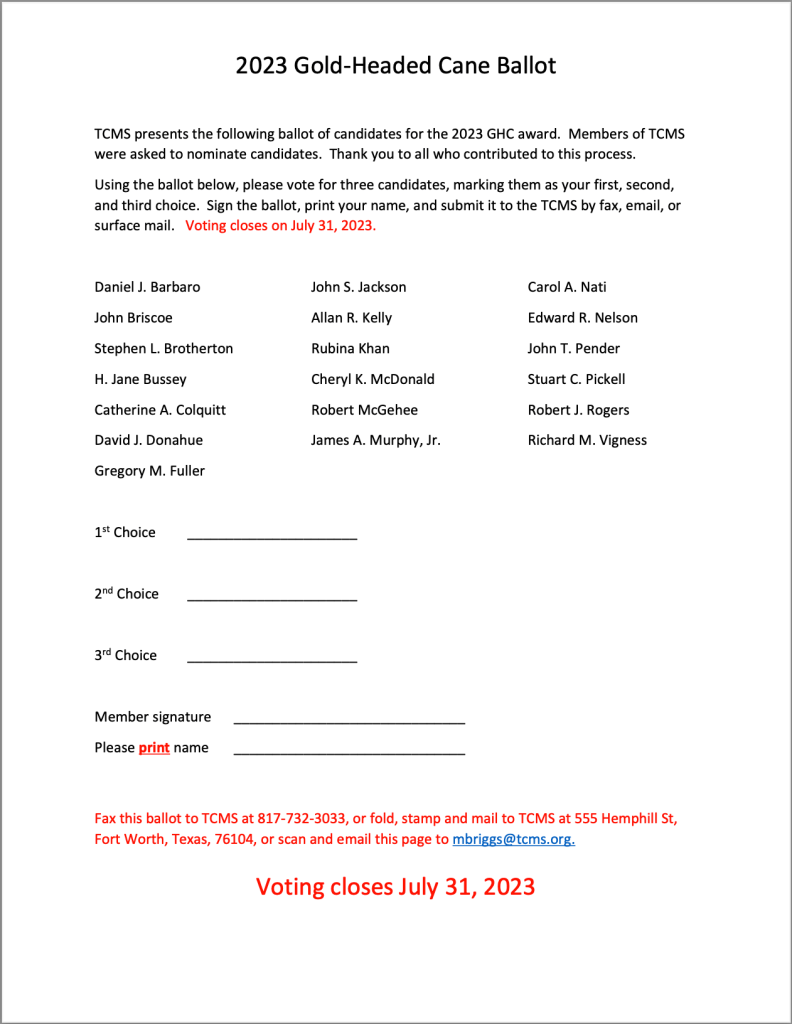
Physicians, nominations are now open for the 2023 Gold-Headed Cane Award, which is given annually to an outstanding TCMS member who has made a significant impact on our medical community.

To be eligible for the award, a nominee must be a current member of TCMS and have been a TCMS member for at least 15 years.

All current TCMS members have the opportunity to nominate one candidate for this award. You can make your nomination or learn more here.

All nominations must be received by July 31, 2023.

Physician Wellness

Tarrant County Physician Wellness Program: Addressing Burnout and Promoting Resiliency

by Casey Green, MD

THE TARRANT COUNTY MEDICAL SOCIETY IS launching a new wellness initiative available to medical society members and their families. We recognize the challenges associated with an ever-changing landscape in healthcare exacerbated by the COVID-19 pandemic that contribute to stress, burnout, and job dissatisfaction.

Modeled on the successful program at Travis County Medical Society, the Tarrant County Medical Society Wellness Program seeks to proactively address those among us who may be struggling. We have a mission to enhance the health of physicians, their families, and the communities in which we all live and work.

Physician burnout, the apparent catalyst to this situation, is considered a psychological response that may be experienced by doctors exposed to chronic situational stressors in the healthcare practice environment. It is often characterized by overwhelming exhaustion, feelings of cynicism and detachment from work, and a sense of ineffectiveness and lack of accomplishment.1

Physicians experiencing burnout, according to the medical literature, exhibit a wide array of signs, symptoms, and related conditions, including fatigue, loss of empathy, detachment, depression, and suicidal ideation. Nearly 25 percent of physicians surveyed last year were experiencing clinical depression. There were also significantly increased rates of depression among their family members.2

The most cited reasons for burnout include too many bureaucratic tasks, decreasing autonomy, increased work hours, and recent additional contributing factors related to COVID-19. Of those physicians experiencing burnout, more than half report it is strongly affecting their daily life and more than two thirds acknowledge impairments in relationships.2

Physicians often have to deal with difficult and tragic situations and losses. This continued exposure to human suffering can have a significant impact on mental and emotional wellbeing over time that often goes unrecognized.

Burnout is not always related to stressors arising in a work environment or to an individual’s character traits. Family issues, personal and professional relationships, financial pressures, insufficient work-life balance, or other external stressors may also contribute. Efforts aimed at the identification, treatment, or prevention of burnout must, therefore, approach the issue from a broad enough perspective to take all of these factors into account.

Too many physicians are reluctant to seek help for fear that they will be perceived as weak or unfit to practice medicine by their colleagues or employers, or because they assume that seeking such care may have a detrimental effect on their ability to renew or retain their state medical license.

The TCMS Wellness Program has developed relationships with community therapists who work with physicians or their family members to help them back on the path to wellness. These services will be confidential and paid for by this program for the first four sessions for any members or their families.

The goal of this new initiative is to provide information and resources to support physicians and their families in order to encourage and inspire each other to practice physical, mental, emotional, spiritual, and social wellness. The program is in its final formation steps, and we hope to meet these needs with workshops, mentorship, education, and other activities to promote healing, growth, and resiliency. We are excited about the future and will share more details as the program grows.

You can find more information about how to access the program at www.tcms.org/TMAiMis/Tarrant/Wellness or call 972-449-0762.

References

1. Maslach, C., Jackson, S.E. (1981). The Measurement of Experienced Burnout. Journal of Occupational Behavior, 2(2):99-113. See also, Maslach C, Jackson SE, Leiter MP. (1996). Maslach Burnout Inventory Manual. 3rded. and Maslach C, et al. (2001). Job Burnout. Annu Rev Psychol, 52:397–422

2. Kane L. ‘I Cry but No One Cares’: Physician Burnout & Depression Report 2023. Medscape. Published January 27, 2023. Available at: https://www.medscape.com/slideshow/2023-lifestyle-burnout-6016058.

TCMS Gold-Headed Cane

Nominations Open for 2023

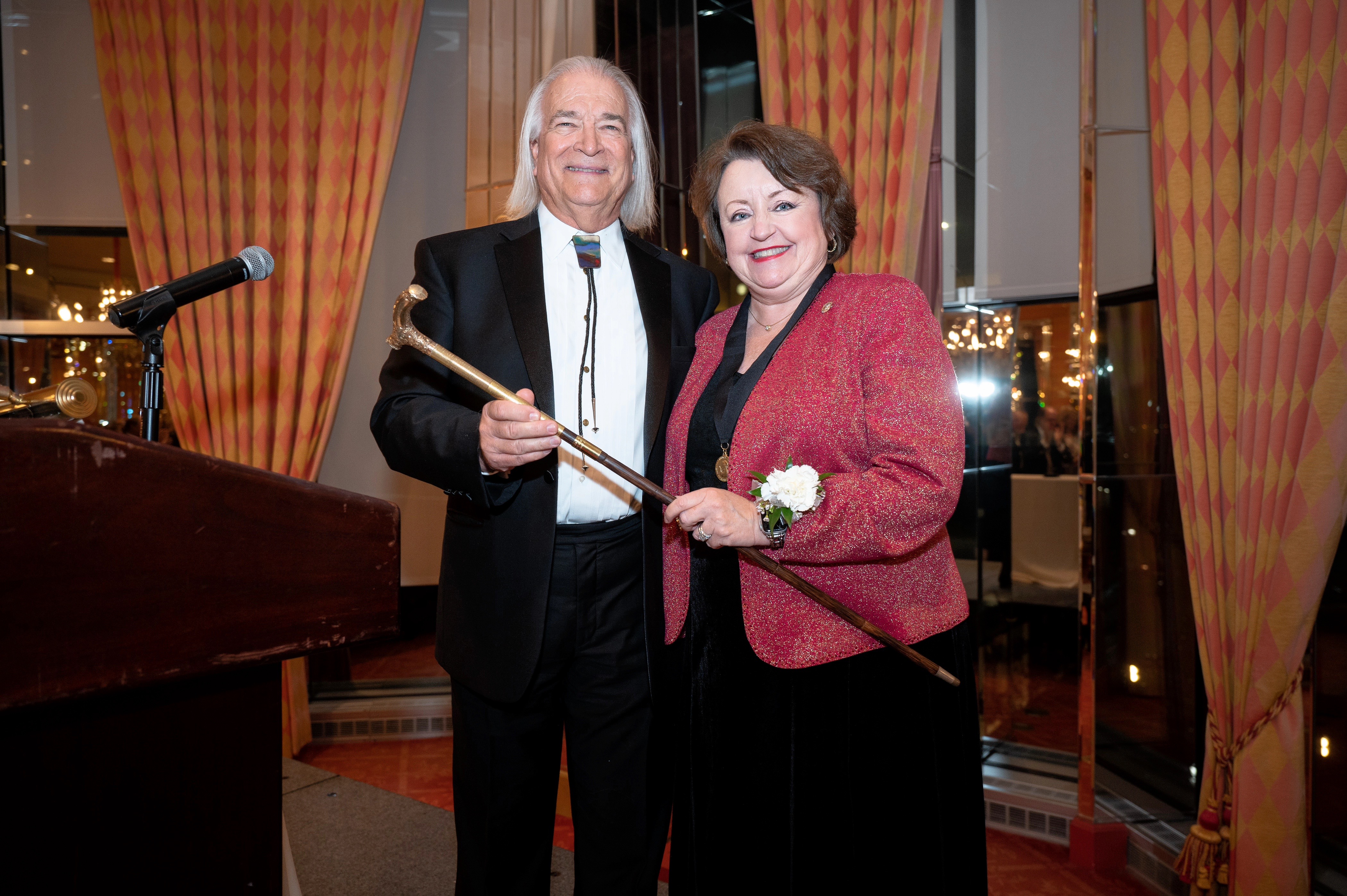
Gold-Headed Cane recipient, Dr. Gregory Phillips, and Dr. Susan Bailey at the 2022 Event.

Nominations for the 2023 Gold-Headed Cane Award, which is given annually to an outstanding TCMS member who has made a significant impact on our medical community, are now open.

A nominee must have been a TCMS member for at least 15 years and be a current TCMS member in order to be considered for the award. The list of members who are qualified is available here.

All current TCMS members are eligible to nominate one candidate for this award. You can submit a nomination or learn more about it here.

All nominations must be received by May 12, 2023.

PRESIDENT’S PARAGRAPH

by Stuart Pickell, MD, TCMS President

This article was originally published in the January/February 2023 issue of the Tarrant County Physician. You can read find the full magazine here.

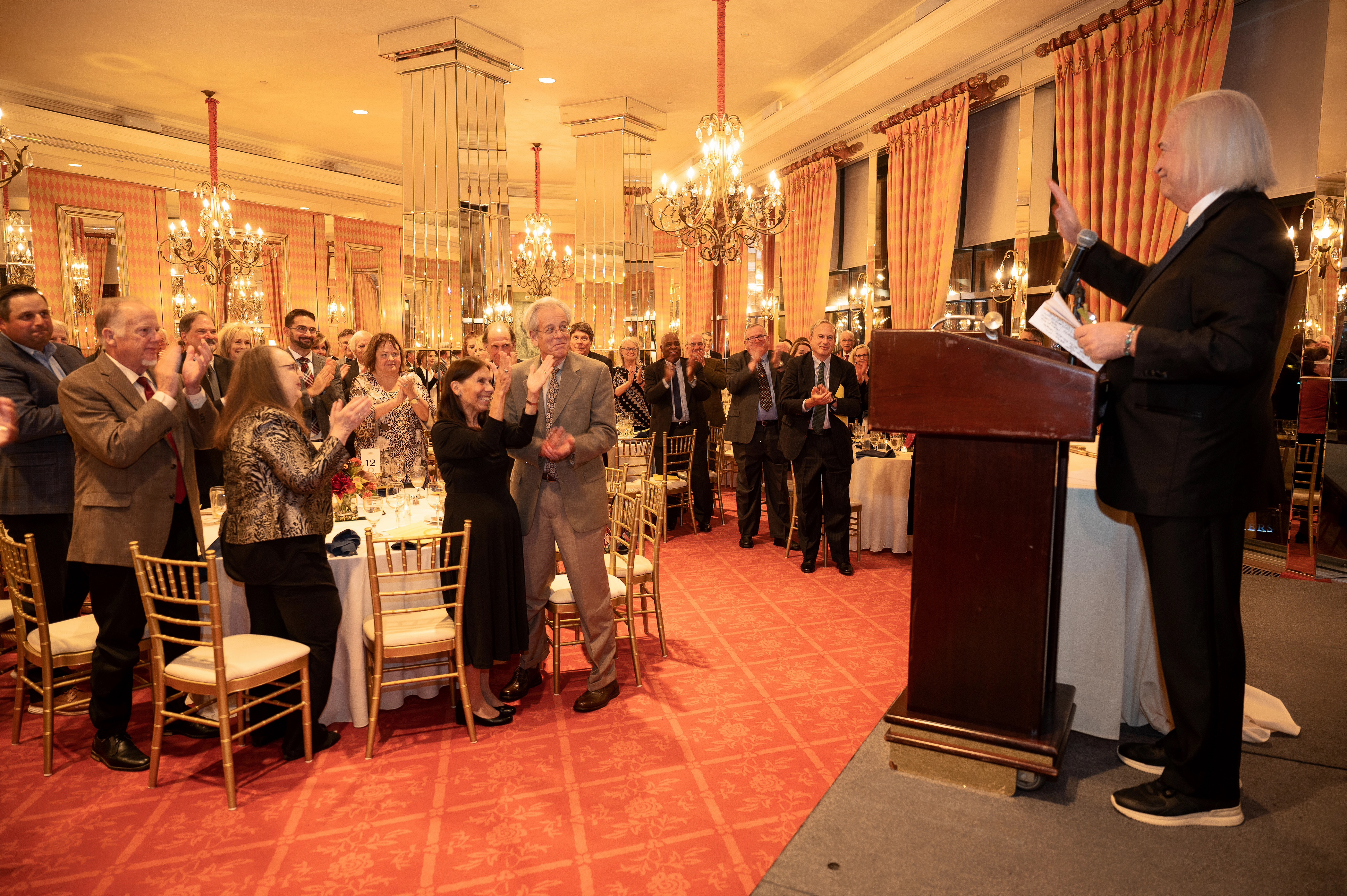
IT IS AN HONOR AND A PRIVILEGE TO serve as president of the Tarrant County Medical Society for 2023. I aspire to lead as ably as those who have preceded me and to move the ball forward on the many priorities we have as physicians and citizens of Tarrant County. To that end, I posed several questions at the installation event in November that I will follow up on this year, using this space as a launchpad for discussion. At the root of these questions is identity- our identity as physicians and leaders in our community.

For many physicians, and I know this is true for me, there is a sense that, like Harry Potter’s wand, we didn’t choose medicine- it chose us. We have a sense of “calling” to the profession, as if by something external to us or deep within us- either way, something so profound and unknowable that it may defy articulation.

The language of “calling” resonates with nem although for me it was problematic because I had two. When I was five years old, I told my family that when I grew up, I was going to be a minister, a doctor, and a fireman. I have done all three. Firefighting didn’t stick.

What did stick was ministry and medicine. I hoped it would be one or the other, but it never was. In college, I took classical greek and 400-level biology and chemistry courses and majored in history because I liked it. i sought advice from people I respected who were ministers and physicians and they all said the same thing: If you’ve ever thought about doing something besides ministry or medicine, do that instead. As my wife would say, “Hmmmm.”

Years later, and several years into a full-time ministry position, I told a parishioner about my dilemma. He also happened to be a therapist, which only reinforced my commitment to Calvinism. After patiently listening to me explain all the reasons why it wasn’t practical to do both, he looked at me and asked, “Why not?”

Hmmmm.

Ministry and medicine are similar. They are both vocations in the truest sense of the word, a word derived from the Latin vocare, which means “to call.” Both are professions to which the people in them tend to feel a sense of calling that compels and propels them to serve.

It makes sense that medicine, as a profession, would be hardwired toward serving others. After all, our calling first had to be validated by a medical school that saw in us what we saw in ourselves. We had to be chosen by someone else to become part of a tribe. Do you remember how you learned that you had been accepted to a medical school? I do. I got a letter. I think it’s fitting, however, that student admitted to TCU’s Anne Burnett School of Medicine literally get a call- by telephone- telling them the good news. And admissions committees seek candidates who have integrity and demonstrate empathy; people who are team players and servant leaders. This is and always has been at the core of our identity as physicians.

How we grow into that identity, and how our call to serve becomes manifest, will be as unique as each one of us. People who are called are called not just to be but to do- to apply their knowledge and expertise in a unique and meaningful way. In a way, physicians don’t have a career so much as a mission- which, at the risk of sounding pedantic, comes from the Latin word mitterre, which means “to send.” The English word is rooted in medieval Christianity, but today’s “mission” is more likely to describe the driving principles of an individual, or a business, or a non-profit group or a healthcare institution. it speaks to their identity, their raison dêtre. We are called, and we are sent, sent on a mission to serve the people in our charge- our patients- and the community in which we all live.

So, how are we doing? Are we fulfilling our mission? In many ways, we are doing quite well. We have excellent physicians in just about every specialty. We have fine institutions for adults and children and one of the best county health systems in the country. But we still have pressure points. How does the execution of our mission, individually and corporately, impact the larger community- not just us or our practices or our institutions but the people we have been called to serve?

Throughout the year I will use this space to explore this question, examining our individual and corporate roles and responsibilities as physicians in the hope that doing so will promote a constructive dialogue that furthers our mission to serve the larger community. Some of the pressure points I see and hope to explore include:

    • The inadequacy of Graduate Medical Education in Fort Worth, and especially at Cook Children’s Health System. The Cook Children’s Health System and its flagship hospital are among the finest in the country. It has excellent leadership and medical and support staff. But would the community not be better served if it leveraged this prestige and became an academic center as well, training physicians and pediatric specialists who, by the way, often practice near where they train?

    • Lack of access to the county healthcare system for undocumented county residents. Undocumented residents can receive emergency care at a reduced rate (which is often still too expensive for most) but are ineligible for the preventive care that might have averted the need for emergency services in the first place. Even Project Access can’t access county health facilities for use by our member physicians who are willing to donate their time and expertise to do necessary but non-emergent procedures.

    • Lack of physician input in the assessment, planning and implementation of strategies to address community healthcare needs and crises. Such planning should start with physicians, the people in the community who know the patients personally and who, because of these relationships, the patients trust to act in their best interest. COVID – a crisis made worse by its politicization – quickly devolved into divisive rhetoric that led to a profound mistrust of medical authorities, especially at the national level. Our member physicians voluntarily stepped into this nightmare. We partnered with neighboring county medical societies and aided the local health authorities with its media information operations, providing an honest assessment of available information to inform and educate physicians and the public. And yet, when it came to planning and implementation, the local authorities turned to non-clinical hospital leadership for input and direction.

Working together to address challenges and overcome obstacles is the center of our mission, a mission that emanates from a calling, a calling that forges our identity as physicians. What makes our calling and its ensuing mission so important, and our profession so rewarding, is the relationship we share with each patient – one that is founded on empathy, trust, and mutual respect. It’s the one thing that remains constant in the chaos, because when our patients don’t trust anyone else, they still trust us.

Our mission is not about us – it’s about our patients and our community. And if our mission is to improve their health and safety, we must be willing to take an honest look at ourselves, to understand where we have been, assess where we are, and anticipate where we are headed. And if we discover that our mission is no longer serving our patients or our community, we must have the courage to change it.

Organized medicine helps us identify challenges, assess the adequacy of our mission, and if needed, adjust it. I am honored to be a part of that process and look forward to continuing our conversation.
Student Article: Continuing the Passion for Science in Medicine

This article was originally published in the January/February 2023 issue of the Tarrant County Physician.

OFTEN ONE OF THE FIRST QUESTIONS I AM ASKED WHEN I mention that I am in medical school is, “How did you know you wanted to become a doctor?” Sometimes I scramble to find the most inspirational and motivating answer, as there were many reasons why I chose the career path that I did, However, at the core of every underlying reason was first, my love for science, and second, the desire to put that love into good use. Throughout my undergraduate years, I made sure to put scientific research at the forefront of my priorities. I took additional classes to help develop my skills as a researcher and participated in local symposiums whenever I could. Going into medical school, I kept research and the scientific process in mind as I learned about each body system. Given my medical education, I could delve further into the pathologies and the application of their respective treatments, and, if there were any developing treatments, I could keep an open mind about them and seek an opportunity to participate in the field research (if my busy school schedule let me). Thankfully, this past summer, my school presented the perfect chance to participate in the Pediatric Research Program (PRP) with Cook Children’s Hospital.

The PRP selects a group of second year medical students to take part in research “that aligns with their specialty interest.” There are also additional benefits such as being provided a mentor who guides you along the way and opportunities to present work at local/regional/national conferences. I chose neurology as y number one field of interest, so I was assigned a case study with a pediatric neurologist as my research mentor. I was excited and eager at the prospect of beginning work, especially since I had been assigned to Cook Children’s. The idea of being in an environment that was dedicated to helping children with challenging diseases brought a sense of fulfillment to my foundational goal of helping people heal.

Writing a case study was a novel experience, but I was fortunate to have a dedicated mentor who aided me through the process and helped me understand clinical information that my then year-one-medical-student mind could not comprehend. My mentor further allowed me to shadow her periodically throughout the summer, which was a nourishing experience to my medical education. I was able to interact with many pediatric patients who were affected by a variety of neurological disorders, especially congenital ones. This provided me with an appreciation for specialist physicians since they offer a great sense of hope and security to their patients- something I had associated more with primary care. What was even more admirable was my own mentor pursuing her research and developing case studies to help spread awareness of the pathologies that affect her patients.

Regarding my own project, I was able to learn more about the neurovascular complications of Marfan syndrome and the importance of considering it as a possible cause of stroke. I thoroughly enjoyed the process of gathering information and researching literature since it showed me how physicians from different parts of the country can come together and use their scientific nature to bring light to issues and possibly come to solutions. I look forward to working on more case studies and research projects as a medical student because it reaffirms my belief in using scientific methods and research to better the lives of patients and reach new heights in treatments.

Design a site like this with WordPress.com
Get started