TMA Pleased Court Strikes Down Steep Fee Hike and Batching Rules in NSA Cases

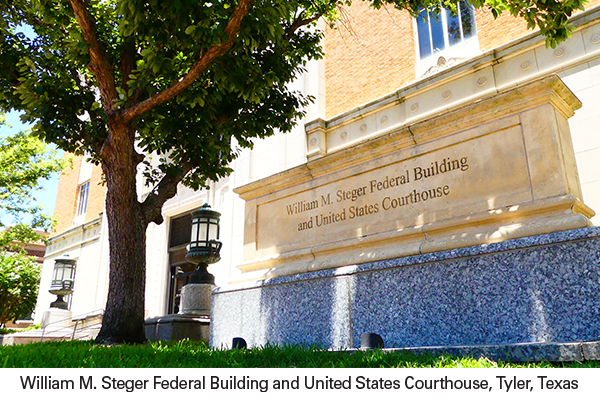
Statement by Rick W. Snyder II, MD, Texas Medical Association (TMA) president, in response to the ruling by the U.S. District Court for the Eastern District of Texas on TMA’s fourth No Surprises Act lawsuit. TMA challenged a 600% hike in administrative fees and batching rules used in arbitration cases governed by the federal law. TMA argued the case in the U.S. District Court for the Eastern District of Texas Tyler Division on April 19. TMA has filed four lawsuits against federal agencies related to rulemaking under the federal surprise-billing arbitration law pertaining to certain out-of-network care.

“We are pleased a federal court has once again agreed with the Texas Medical Association (TMA) in finding the federal agencies acted unlawfully when implementing provisions of the No Surprises Act (NSA). In TMA’s latest case, the court determined the federal agencies violated the notice and comment requirements of the Administrative Procedure Act when imposing 600% higher fees on physicians seeking arbitration in disputes with health insurers under the federal NSA. 

“The federal agencies set the initial administrative fee at $50, saying last October the fees would remain at that rate through this year. However, just two months later, the agencies announced the fee would jump to $350 beginning in January 2023. TMA believes this unfair steep jump in fees has dramatically curtailed many physicians’ ability to seek arbitration when a health plan offers insufficient payment for out-of-network care.

“Likewise, TMA is pleased the court decided, based on a lack of notice and comment, to invalidate certain rules narrowing the law’s provisions on ‘batching’ claims for arbitration. Congress authorized batching in the law to encourage efficiency and minimize costs in the independent dispute resolution process. It is vital the law be applied as Congress intended.

“While the court declined to provide deadline extensions and certain other requested relief, we remain pleased with the overall outcome. Yesterday’s decisions on batching rule provisions and administrative fees will aid in reducing barriers to physician access to the law’s arbitration process, which is vital to both patient access to care and practice viability.”

TMA filed this lawsuit in January 2023.

TMA’s first lawsuit challenging the No Surprises Act rules – filed in October 2021, and which TMA won at the federal district court level – alleged that in the interim final rules governing arbitrations between insurers and physicians, the agencies unlawfully required arbitrators to “rebuttably presume” the offer closest to the qualifying payment amount (QPA) was the appropriate out-of-network rate.

TMA filed its second lawsuit in September 2022 challenging the NSA’s August 2022 final rules published by the federal agencies, alleging the final rules unfairly advantage health insurers by requiring arbitrators to give outsized weight or consideration to the QPA. The court ruled in TMA’s favor on that case in January 2023. This lawsuit is currently being appealed by the federal government to the Fifth Circuit.

TMA filed its third NSA rules lawsuit in November 2022 challenging certain portions of the July 2021 interim final rules implementing the federal NSA. This lawsuit is pending a decision at the district court level.

TMA is the largest state medical society in the nation, representing more than 57,000 physician and medical student members. It is located in Austin and has 110 component county medical societies around the state. TMA’s key objective since 1853 is to improve the health of all Texans.

Scope, Insurance, Vaccine Battles Ramp Up in Session’s Final Weeks as Women’s Health Bills Progress

by Emma Freer

Originally published by Texas Medical Association on May 12, 2023.

With just 17 days until “sine die,” the adjournment of the regular state legislative session, the Texas Medical Association has been mounting a tough defense against problematic bills related to scope-of-practice expansion, insurance practices, and COVID-19 vaccine requirements. There’s good news, too, as several measures to expand access to women’s reproductive health care move through the legislative process, after years of physician advocacy. 

Scope creep containment 

Preventing scope creep is TMA’s top legislative priority this session. Although the association has successfully beat back several bad bills, one bill still stands out at this late stage for its potential to corrode established patient protections.  

Senate Bill 666 would restrict the Texas Medical Board’s (TMB’s) complaint process, weaken its disciplinary authority, and increase its operating costs. The legislation recently passed the Senate, so TMA lobbyists are focused on battling it in the House. 

Fortunately, TMA advocacy killed the only scope-related legislation to make it to the House floor: House Bill 2553 would have given patients direct access to a physical therapist without a physician referral for 20 business days, up from 15. This bill failed by a wide margin on May 8 in a huge win for medicine. 

Two other concerning scope measures are all but dead:  

  • House Bill 724 and its companion, Senate Bill 161, would prevent TMB from issuing cease-and-desist letters to nonphysicians practitioners who venture into the practice of medicine.  
  • House Bill 1767, would allow podiatrists to access hospital privileges, regardless of medical staff decision-making. 

Insurance update

In the insurance category, TMA is battling several pieces of problematic legislation that jeopardize patient safety and physician protections, including: 

  • Senate Bill 490 and its companion, House Bill 1973 would require patients be given an itemized billing statement before any payment is collected. TMA lobbyists fought for amendments removing individual physicians from this bill, which the House passed and with which the Senate must concur before it heads to Gov. Greg Abbott’s desk.  
  • House Bill 2414 would allow health plans to steer patients to physicians or other health professionals of their choosing, regardless of quality. The House Insurance Committee voted in favor of HB 2414, teeing up its May 2 passage out of the House and into the Senate.  
  • House Bill 3351would undo physician protections in health plans’ ranking and tiering programs. Following its May 9 passage in the House, the bill now lies with the Senate.   

Public health pushback

TMA continues to oppose two concerning public health bills that would have far-reaching consequences beyond the COVID-19 vaccine mandates they purport to legislate. 

  • Senate Bill 177 and its companion, House Bill 81, would redefine informed consent, putting employers, patients, and physicians at risk. Although TMA lobbyists kept HB 81 from the House floor, they remain concerned about SB 177, which passed the Senate and the House Public Health Committee. It’s now pending a hearing on the House floor. 
  • House Bill 44 would kick physicians out of Medicaid and the Children’s Health Insurance Program for having a “discriminatory” vaccination policy, such as requiring patients to be vaccinated against certain diseases. The Senate Health and Human Services Committee heard HB 44 on May 10, following its passage out of the House, but left it pending. 

TMA also is pushing legislation related to federal medical privacy rules, including Senate Bill 1467, which would modify sensitive medical test disclosures under the federal rules to protect patients.  

Dallas oncologist David Gerber, MD, testified on behalf of TMA in support of SB 1467 before the House Public Health Committee on May 8. He told lawmakers the bill would help prevent potentially traumatic situations, such as when one of his patients learned of a cancer diagnosis from an automatic patient portal notification while reading a bedtime story to a toddler.  

“We are not seeking to withhold important information from patients,” Dr. Gerber said. “Rather, we are seeking to deliver the information the best way we can.”  

SB 1467, having passed the Senate and the House Public Health Committee, was scheduled for a hearing on the House floor on May 12 as of this writing. 

Finally, Senate Bill 415 awaits Governor Abbott’s signature – its last step to becoming law – after passing both chambers. The bill builds on state rules regarding the number of human trafficking-related CME physicians must take.   

Women’s Health wins 

On the budget front, TMA lobbyists continue to work to preserve health care gains – including critical investments in women’s reproductive and pediatric health care – in the House version as the two chambers reconcile their competing bills

TMA, along with four state specialty societies and the Texas Public Health Coalition, recently sent a letter to the conference committee members tasked with this reconciliation process, reiterating its budget priorities. They include: 

  • Increasing Medicaid physician payments for women’s reproductive and certain pediatric services; 
  • Tripling rural hospital maternal health add-on payments from $500 to $1,500 to help preserve local access to these services;  
  • Expanding mobile women’s preventive health care clinics in rural and underserved communities; and 
  • Broadening eligibility for the Medicaid Breast and Cervical Cancer Program to 250% of the federal poverty level, up from 200%.  

TMA lobbyist Caitlin Flanders says these budget items are especially important in the wake of the June 2022 U.S. Supreme Court decision in Dobbs v. Jackson Women’s Health Organization regarding abortion. The decision triggered additional restrictions under state law and is expected to lead to an increase in pregnancies and young children. 

In other positive news, the Senate Health and Human Services Committee recently passed House Bill 916, which would require health plans to provide a 12-month supply of a covered prescription contraceptive drug, up from a 90-day supply. HB 916 passed the House in mid-April.  

The same Senate committee is expected to hear House Bill 12, which would extend continuous Medicaid coverage for postpartum women for 12 months, although as of this writing, a date hasn’t been set.  

Find all the testimonies by TMA physician advocates during the current session in TMA’s Advocacy Center

Feds to End COVID-19 Public Health Emergency in Mid-May

by Emma Freer

Originally published by Texas Medical Association on February 7, 2023.

After nearly three years and 11 extensions, the Biden administration recently announced the COVID-19 public health emergency (PHE) will finally expire May 11, fulfilling its commitment to give states at least 60 days’ notice of its expiration.

“If the PHE were suddenly terminated, it would sow confusion and chaos into this critical wind-down,” the Executive Office of the President wrote in a Jan. 30 statement.  

Still, the end of the PHE has significant consequences for Texas physicians and their patients.

The federal Families First Coronavirus Response Act temporarily increased federal Medicaid matching dollars by 6.2% for states that agreed to maintain Medicaid coverage for anyone enrolled in the program from March 2020 through the end of the PHE. 

That included Texas, where more than 2.5 million residents, predominantly postpartum women, and children, benefited from continuous Medicaid coverage. 

These matching dollars will phase out between April and December, according to a provision in the Consolidated Appropriations Act of 2023, a $1.7 trillion spending package that President Joe Biden signed into law on Dec. 29, 2022.  

To continue to receive these funds through the end of the year, states must comply with certain federal requirements, including agreeing not to terminate enrollment based on returned mail due to an incorrect address. 

In the meantime, state Medicaid officials have a plan for unwinding this coverage, but it requires redetermining millions of patients’ Medicaid eligibility in just eight months. The Texas Health and Human Services Commission (HHSC) will begin sending notices in March reminding patients to update their information.  

The Texas Medical Association has met regularly with HHSC over the past year to provide input on the state’s plan with the goal of achieving as smooth a transition as possible. Despite progress, such as streamlining the ways in which Medicaid patients can complete their eligibility applications, TMA remains very concerned about a looming coverage cliff. 

Fortunately, the end of the PHE coincides with some recent policy developments, including increased federal funding for navigators – community organizations that connect eligible consumers to federal marketplace health plans – and extended subsidies for the same plans. TMA experts say these changes could help some Texans who lose Medicaid coverage enroll in a different plan. 

The Consolidated Appropriations Act also makes permanent an option for states to provide 12 months of continuous Medicaid coverage to postpartum women. 

TMA would like to see the Texas Legislature take advantage of this option, one of the association’s top priorities this session. 

Moreover, the law requires states to provide 12 months of continuous Medicaid coverage to children, beginning Jan. 1, 2024. TMA is urging HHSC to align this provision with its redetermination process to minimize the burden on families and to prevent gaps in care.  

In addition, the Consolidated Appropriations Act extended certain pandemic-era telehealth flexibilities for Medicare patients through 2024, disentangling them from the status of the PHE. These flexibilities include: 

Waiving geographic site restrictions, which allow patients to access care from their homes; and 

Allowing physicians to use audio-only telehealth services.   

TMA and others in organized medicine recently wrote a letter to the Centers for Medicare & Medicaid Services (CMS), requesting the agency issue an interim final rule to align its telehealth policies and timeline (to expire 151 days after the end of the PHE) with those in the Consolidated Appropriations Act. Not doing so, they wrote, could create “an unintended barrier to vital health care services, as well as potential confusion” among clinicians and patients.  

Prior to the act’s passage, CMS made permanent the same telehealth flexibilities for Medicare patients accessing mental and behavioral health services as well as coverage of video-based mental health visits at federal qualified and rural health centers. 

Finally, the PHE’s end means physicians not using a HIPAA-compliant platform for telehealth will need to switch to one by May 12. 

Physicians can refer to CMS’ fact sheet regarding PHE waivers and flexibilities for more information.  

For more detailed coverage on how the end of the PHE will affect Texas physicians and patients, check out the January/February issue of Texas Medicine magazine.  

New TMA Lawsuit Challenges Big Fee Hike in “No Surprises Act” Arbitration

Fourth Lawsuit Disputes 600% Fee Hike Demanded of Doctors

The Texas Medical Association (TMA) is challenging a 600% hike in administrative fees for seeking federal dispute resolution in No Surprises Act (NSA) situations. TMA seeks relief by filing a fourth lawsuit in the U.S. District Court for the Eastern District of Texas.

This TMA lawsuit against federal agencies challenges a steep administrative fee hike that will strip many physicians and healthcare providers of the arbitration process that Congress enacted. TMA calls the fees “arbitrary and capricious,” contrary to the law, and in violation of notice and comment requirements.

The U.S. departments of Health and Human Services, Labor, and the Treasury, and the U.S. Office of Personnel Management collectively adopted interim final rules implementing the federal surprise-billing law. The rules include establishing the nonrefundable administrative fee all parties must pay to enter the federal independent dispute resolution (IDR) process in the event of a payment disagreement between an out-of-network physician or provider and a health plan in circumstances covered by the law. The situations could occur when emergency services are provided by a doctor or health care provider outside of the patient’s insurance network or when out-of-network services are provided at an in-network facility.

The federal agencies set the initial administrative fee at $50 and announced in October 2022 it would remain at $50 for 2023. Two months later the agencies announced a 600% hike in the fee to $350 beginning in January 2023, “due to supplemental data analysis and increasing expenditures in carrying out the Federal IDR process since the development of the prior 2023 guidance.”

The steep jump in fees will dramatically curtail many physicians’ ability to seek arbitration when a health plan offers insufficient payment for care.

“The problem is that many payment disputes in these cases amount to less than the fees physicians would have to pay to dispute the unfair payments,” said TMA President Gary W. Floyd, MD. “Why would doctors and providers pay the $350 nonrefundable administrative fee to arbitrate a $200 or so payment dispute with a health insurer? The fees deny physicians the ability to formally seek fair payment for taking care of our patients, and that’s just wrong.”

TMA argues the administrative fee hike is difficult for all physician specialties to bear, but especially those specialties that have more small-dollar claims, such as radiology.

The non-refundable administrative fee is in addition to the separate fee that each party must pay the IDR entity for its services, though that fee is refundable to the party that wins the arbitration dispute.

TMA also disputes the rules’ narrowing of the law’s provisions on “batching” claims for arbitration, which Congress authorized to encourage efficiency and minimize costs in the IDR process.

TMA’s first lawsuit – filed in 2021, and which TMA won at the district court level – alleged that in the interim final rules governing arbitrations between insurers and physicians, the agencies unlawfully required arbitrators to “rebuttably presume” the offer closest to the qualifying payment amount (QPA) was the appropriate out-of-network rate. TMA filed its second lawsuit in September 2022 challenging the NSA’s August 2022 final rules published by the federal agencies, alleging the final rules unfairly advantage health insurers by requiring arbitrators to give outsized weight or consideration to the QPA. The court’s ruling on that suit’s December 2022 hearing is anticipated at any time. TMA filed its third lawsuit in November 2022 challenging certain portions of the July 2021 interim final rules implementing the federal NSA. No hearing date has been set for that case, which challenges certain parts of the rules that artificially deflate the QPA.

TMA is the largest state medical society in the nation, representing more than 57,000 physician and medical student members. It is located in Austin and has 110 component county medical societies around the state. TMA’s key objective since 1853 is to improve the health of all Texans.
New TMA Task Force on Alternative Payment Models Charts a Path Toward Value-Based Care

By Emma Freer

Originally published by Texas Medical Association on January 11, 2023.

The shift from fee-for-service to value-based care is underway, with public and private payers introducing myriad new payment models in recent years. But many physicians find the variety of plans overwhelming, and the investments necessary to support them challenging.

To help clear these hurdles, the Texas Medical Association Board of Trustees approved last May the formation of a Task Force on Alternative Payment Models (APMs). Over the next two years, its diverse membership – which spans specialties, experience levels, practice types, and geographic regions – is charged with reviewing value-based care trends, prioritizing members’ needs, and serving as a touchstone of APM policy and activity.  

Norman Chenven, MD, founding CEO of Austin Regional Clinic (ARC) and co-chair of the task force, commends TMA for convening the group. He brings with him more than four decades of experience working with APMs, dating back to health maintenance organizations in the early 1980s.  

“It’s great for TMA to develop resources for physicians adapting to the inevitable challenges of these changing payment models,” he said.  

Under a value-based care model, physicians and other healthcare professionals are paid based on the quality of patient outcomes rather than the quantity of services provided.  

The Centers for Medicare & Medicaid Services (CMS) has a stated goal of transitioning all Medicare patients to value-based care arrangements by 2030. In the meantime, it continues to test initiatives such as the Enhancing Oncology Model and the Bundled Payments for Care Improvement Advanced Model. CMS also continues to address various issues, such as how to incentivize collaboration between primary care physicians and specialists. 

David Fleeger, MD, a colon and rectal surgeon in Austin, co-chair of the task force, and past president of TMA, says he expects private payers to follow CMS’ example.  

Although value-based models have grown more common, uptake remains slow. In a 2020 survey, the Deloitte Center for Health Solutions found 97% of physician respondents still relied mostly on fee-for-service payments, with roughly a third drawing a portion of their compensation from value-based payments. Moreover, less than a quarter received incentive payments of more than 5%. 

Kim Harmon, TMA’s associate vice president of innovative practice models, says value-based care can prove daunting because of its breadth of applications, from public and private payers to every kind of physician practice. It’s also difficult to identify which physicians participate in value-based arrangements because payers aren’t required to share such information.  

With these challenges in mind, the task force hopes to empower Texas physicians to implement value-based care by offering support and sharing institutional knowledge from early adopters. 

Dr. Chenven, for instance, can speak to the start-up costs that come with participating in value-based models. At ARC, his multispecialty group, these included investments in staff and information technology to ensure patients received preventive care and kept up with chronic care.  

“No individual office or small office is going to have those resources,” he said. “There has to be collaboration across [physicians] in the community.”  

The task force also can push CMS and private payers to develop APMs that are more accessible to a wider range of specialties and practice types, Dr. Fleeger says.  

“We need to make sure that whatever gets done raises all boats,” he said.  

The task force next meets later this month, when it will begin identifying and prioritizing TMA member physicians’ needs for education and other resources related to APMs. 

Dr. Chenven says this is a critical first step to demonstrate the value in value-based care to physicians.  

“It represents a huge culture change. It’s a change in the business model of medicine, and change is always hard,” he said. “So, you need thoughtful preparation to make it go smoothly.” 

Federal District Court to Hear TMA “No Surprises Act” Rules Lawsuit

Certain surprise billing law final rules unlawfully harm physicians and patients 

Originally published by Texas Medical Association on December 19, 2022.

On Tuesday, Dec. 20, 2022 the U.S. District Court for the Eastern District of Texas will hear arguments in the Texas Medical Association’s (TMA’s) second lawsuit challenging certain portions of the Aug. 26, 2022, final rules implementing the federal No Surprises Act (NSA). District Judge Jeremy D. Kernodle will preside. This hearing addresses the second of three TMA lawsuits against federal agencies related to rulemaking under the surprise-billing arbitration law.

At issue are the rules affecting how payment disputes are resolved in certain situations in which a patient receives care from a physician or provider who is out of the patient’s insurance plan’s network. The payment disputes occur between health insurers and physicians or providers; patients are not affected or included. TMA is arguing that the challenged provisions of the final rule deprive physicians and providers of the arbitration process the law intended.

“We are, once again, asking for the law to be followed as Congress intended, and for the challenged provisions to be invalidated. There should be a level playing field for physicians and health care providers in payment disputes after they’ve cared for patients,” said TMA President Gary W. Floyd, MD.

TMA’s concern is over a final rule published by the U.S. departments of Health and Human Services, Labor, and the Treasury. In both its Oct. 28, 2021, lawsuit and the lawsuit being heard Tuesday, TMA alleges that the agencies – when implementing the federal surprise billing independent dispute resolution processes – adopted rules that conflict with the law and skew results in favor of insurers. TMA believes these rules are skewed to the detriment of both physicians and the patients they serve. TMA seeks to promote patient access to quality care and guard against health insurer business practices that give patients fewer choices of affordable in-network physicians and threaten the sustainability of physician practices.

“The final rules unfairly advantage insurers by requiring arbitrators to give outsized weight or consideration to an opaque, insurer-calculated amount – called the qualifying payment amount – when choosing between an insurer’s offer and a physician’s offer in a payment dispute,” Dr. Floyd said. “This is unfair to physicians, providers, and the patients we care for, so we had to seek fairness.” The qualifying payment amount (QPA) is an amount that is supposed to be the median in-network rate under the law but is deflated based upon the federal agencies’ methodology.

TMA’s first lawsuit – which the association won at the district court level – alleged that in the rules governing federal arbitrations between insurers and physicians, the federal agencies unlawfully required arbitrators to “rebuttably presume” the bid closest to the QPA was the appropriate out-of-network rate. TMA argued requiring arbitrators to heavily weight figures created by insurance plans provided them an unfair advantage.

Despite the district court’s initial ruling, TMA is arguing the agencies now have doubled down by issuing a new final rule that replaces the earlier presumption with a new set of requirements that give health insurers the same advantage. 

Each of the challenged requirements in the federal agencies’ final rule unlawfully tie arbitrators’ hands and place an unmistakable “thumb on the scale for the [health plans’ QPA],” the complaint states, even though the law does not call the QPA the “primary” or “most important” factor, nor does it diminish the importance of any other factors in the law. The final rules, for example, require arbitrators to “first consider” the QPA.

TMA filed its third NSA-related lawsuit in November, challenging certain portions of the law’s July 2021 interim final rules. That TMA lawsuit focuses on four ways in which the rule unfairly deflates QPAs. TMA contends portions of the rule skew negotiations in favor of health insurers so strongly that health insurers will force physicians out of insurance networks and physicians will face significant practice viability challenges, struggling to keep their doors open in the wake of the pandemic.

As for Tuesday’s federal hearing, “TMA was hopeful the federal agencies would write final rules fair to everyone, especially after the federal district court ruled the agencies’ previously challenged rules were not lawful,” Dr. Floyd said. “Unfortunately, the federal agencies returned with a plan tipping scales in health plans’ favor.”

 (Dial-in information to listen to the Dec. 20 court hearing: (571) 353-2301; meeting ID: 158301863#.)

TMA is the largest state medical society in the nation, representing more than 56,000 physician and medical student members. It is located in Austin and has 110 component county medical societies around the state. TMA’s key objective since 1853 is to improve the health of all Texans.

Texas Physicians Warn: Don’t Let Accidental Overdose Ruin Your Holidays (and Your Life)

Originally published by Texas Medical Association on December 13, 2022.

The holidays are a time of joy and celebration for many, but they could turn tragic if someone takes one pill they should not. Substance misuse – especially unwittingly taking street drugs that contain fentanyl – can destroy a life. 

“The use of mind-altering substances is always more prevalent during the holidays. Unfortunately, this holiday season the risks of death are much higher because so many pills contain illegally manufactured fentanyl (IMF),” said CM Schade, MD, member of the Texas Medical Association (TMA) and past president of the Texas Pain Society (TPS). A very small amount of IMF is deadly, and people taking drugs laced with IMF are completely unaware that the pill they are consuming could kill them.

As uncomfortable a subject as it might be to address, Dr. Schade urges parents to discuss this with teenagers and young adults at home on the holiday school break. He also suggests adults heed this advice, too.

“If you got a pill from a friend or bought it off the street and it has IMF in it, it could seriously harm or kill you. If it was in the medicine cabinet but not prescribed to you, it could seriously harm or kill you as well,” said Dr. Schade. “Don’t take a chance on these; it’s just not worth it.”

Dr. Schade has some tips for Texans to stay safe:

  • Don’t take pills containing opioids unless prescribed to you by a physician for a health issue like chronic or severe pain relief. The U.S. Drug Enforcement Administration warns that six out of 10 fake pills contain lethal doses of fentanyl. It is very difficult to tell counterfeit drugs from legitimate ones, so the danger is very real that someone may consume a pill that could be deadly.
  • During gatherings with loved ones, it is important to be vigilant with prescription medication. Lock up your medication. You don’t want anyone taking your prescription drugs knowingly or unknowingly.
  • If someone is struggling with opioid use disorder and is at risk of an overdose, be proactive and have the opioid antidote naloxone available in case of emergency. In Texas, naloxone is available at most pharmacies under a standing order from a physician.

Additionally, physicians point to resources for young people who might consider turning to drugs because of depression and anxiety, as well as resources for people who need help with substance use disorder and behavioral health needs.

Throughout the year, TMA and TPS physicians have been raising awareness about the dangers of illegally manufactured fentanyl. In September, Dr. Schade testified before the Texas House Committee on Public Health presenting new legislative solutions to address the problem. Among other recommendations, TMA and TPS advocated for relaxing opioid prescribing guidelines so patients with chronic pain get the help they need and don’t turn to street drugs, making naloxone available over the counter, and legalizing fentanyl testing strips so someone could test whether a pill has IMF in it.

“Whether someone unwittingly took a bad pill for recreational use, or to sleep better, or because they feel depressed, or for whatever reason, it’s simply a bad decision to take something off the streets or not prescribed to you,” Dr. Schade said. “The result could be tragic anytime, but even worse during the holidays.”

TMA is the largest state medical society in the nation, representing more than 56,000 physicians and medical student members. It is located in Austin and has 110 component county medical societies around the state. TMA’s key objective since 1853 is to improve the health of all Texans.

TPS is a 501c6 nonprofit organization that represents over 350 pain specialists in Texas. It is the largest state pain society in the nation.

TMA Seeks to Protect Patients’ Access to Care in New “No Surprises Act” Rules Lawsuit

Amid concerns about threats to patients’ access to physicians’ care, the Texas Medical Association (TMA) has filed a new lawsuit in the U.S. District Court for the Eastern District of Texas, challenging certain portions of the July 2021 interim final rules implementing the federal No Surprises Act (NSA).

This is the third lawsuit TMA has filed against federal agencies related to rulemaking under the law.

In its latest lawsuit, TMA is challenging certain parts of the rules that artificially deflate the “qualifying payment amount” or “QPA.” The QPA is an insurer-calculated amount that arbitrators are required to consider, among other factors, when deciding between the physician’s and the health insurer’s offer as the appropriate out-of-network rate in federal arbitrations. Under the law, the QPA is generally supposed to be the median in-network rate for the service provided by a physician in the same or similar specialty in the relevant geographic area. The challenging parts of the rule set forth a methodology for calculating QPAs that conflicts with how the NSA requires insurers to calculate QPAs. The lawsuit also challenges the lack of transparency around QPA calculations.

“TMA is concerned that these provisions unfairly disadvantage physicians in payment disputes with health insurers and will ultimately rob patients of access to physicians’ care,” said TMA President Gary W. Floyd, MD. “Calculating QPAs the way the agencies have required means that physicians have the scales tipped against them from the outset of negotiations. Shrouding these calculations in secrecy further disadvantages physicians, by preventing them from raising errors in QPA calculations to the agencies.”

TMA contends the challenged provisions of the rule skew negotiations in favor of health insurers so strongly that health insurers will force physicians out of insurance networks and physicians will face significant practice viability challenges, struggling to keep their doors open in the wake of the pandemic.

TMA’s lawsuit focuses on four ways in which the rule unfairly deflates the QPA. Those are that the rule:

  • Permits insurers to include “ghost rates” in their QPA calculations, which are contract rates with physicians and providers who don’t actually provide the health service in question. This unfairly lowers QPAs as there is little motivation for physicians or providers to negotiate rates for services they do not actually provide. For example, some of these “ghost rates” are $1, which clearly would not be reflective of market rates or the cost of providing care.
  • Permits insurers to include rates of physicians who are not in the same or similar specialty as the physicians involved in the payment dispute.
  • Requires insurers to use an amount other than the total payment in calculating a QPA when a contracted rate includes “risk sharing, bonus, or penalty, and other incentive-based and retrospective payments or payment adjustments.”
  • Permits self-insured group health plans to allow their third-party administrators to determine the QPA for the plan sponsor by calculating the median contracted rate using the contracted rates recognized by all self-insured group health plans administered by the third-party administrator. This allows self-insured plans to essentially opt into a lower QPA for payment disputes with physicians.

Physicians argue this unfair process is compounded by the opaque nature of QPA calculations and the heavy weighting of the QPA provided by the federal agencies’ final rules, the latter of which is the subject of a separate legal challenge by TMA.

“This all adds up to rigging the arbitrations against doctors in favor of health insurance companies, and to patients’ detriment,” said Dr. Floyd. “It’s setting up a race to the bottom, which will leave patients scrambling to get the care they need.”

TMA filed its second lawsuit in September challenging the law’s Aug. 26, 2022, final rules published by the U.S. Department of Health and Human Services, Labor, and the Treasury. In the September lawsuit, TMA alleges the final rules unfairly advantage health insurers by requiring arbitrators to give outsized weight or consideration to the QPA. The hearing on that lawsuit is scheduled for Dec. 20 in Tyler, Texas.

TMA’s first lawsuit – filed in 2021 – alleged that in the interim final rules governing arbitrations between insurers and physicians, the agencies unlawfully required arbitrators to “rebuttably presume” the offer closest to the QPA was the appropriate out-of-network rate. TMA won at the district court level, arguing that requiring arbitrators to heavily weigh figures created by insurance plans conflicted with the law and provided health insurers with an unfair advantage not intended by Congress. The federal government declined to pursue its appeal of this court loss.

TMA is the largest state medical society in the nation, representing more than 56,000 physicians and medical student members. It is located in Austin and has 110 component county medical societies around the state. TMA’s key objective since 1853 is to improve the health of all Texans.

Preview Your MIPS Performance Data Before It Goes Public

Originally published by Texas Medical Association on November 30, 2022.

Physicians participating in Medicare’s 2021 Quality Payment Program (QPP) have until Dec. 20 to preview their performance ratings before they are made publicly available in 2023.   

The Centers for Medicare & Medicaid Services (CMS) publicly reports QPP performance information for physicians, clinicians, groups, and accountable care organizations (ACOs) on Medicare Care Compare and in the Provider Data Catalog (PDC). (The performance information was previously reported on Physician Compare profile pages and in the Physician Compare Downloadable Database.)  

Physicians and groups can see their Merit-Based Incentive Payment System (MIPS) and Qualified Clinical Data Registry quality measures; MIPS promoting interoperability measures and attestations; MIPS improvement activities attestations; and final scores plus those in the four individual reporting categories (quality, promoting interoperability, improvement activities, and cost). The information is later displayed on Care Compare and in the PDC using star ratings, percent scores, and checkmarks.   

CMS notes the 2021 performance data planned for public reporting in 2023 “will be added to Care Compare and/or the PDC after all targeted reviews are completed. If you have an open targeted review request, you’ll still be able to preview your 2021 QPP performance information.”  

ACO-level data, however, is not available for viewing via the QPP site during the preview period, the agency said: “MIPS-eligible clinicians who participate in Medicare Shared Savings Program ACOs can preview their performance information in their 2021 MIPS Performance Feedback. Shared Savings Program ACOs can also review quality performance information in their previously provided 2021 Quality Performance Reports.”  

Check out your scores via the Doctors and Clinicians Preview section of the QPP website. CMS also provides several resources to guide you.  

The preview period opened on Nov. 21 and will close on Dec. 20 at 7 pm CT. 

(2022, Nov. 30) Preview Your MIPS Performance Data Before It Goes Public. TMA Publications.

TMA President: Expanding Broadband Access Will Help Patients

Texas Medical Association (TMA) President Diana L. Fite, MD, addressed the Texas Governor’s Broadband Development Council’s recommendations to create a state broadband plan and develop a funding program to support broadband expansion to unserved areas in Texas.


“TMA supports the Texas Governor’s Broadband Development Council’s call for funding and focused planning, prioritizing this initiative that ultimately could help improve the health of all Texans. 

“Our vast state needs sufficient broadband infrastructure to serve the millions of Texans living in the thousands of square miles of rural area currently without sufficient internet access. Texas physicians know this means not only are those patients likely miles away from a physician and health care but also they’re likely disconnected from telemedicine, a particularly important tool during a pandemic.”

TMA is the largest state medical society in the nation, representing more than 53,000 physician and medical student members. It is located in Austin and has 110 component county medical societies around the state. TMA’s key objective since 1853 is to improve the health of all Texans.

Design a site like this with WordPress.com
Get started