TMA’s annual Fall Conference will be held this weekend in Austin, TX! Register now to join the event, where you will have the opportunity to network with other physician, conduct TMA business, and go to CMEs and lectures centered around top healthcare issues and interests.
Parking Information: Daily self-parking is $12.00 for attendees and hotel guests. Guests not staying overnight can pick up a voucher at the TMA registration desk. Overnight valet parking is $38 plus tax, no in/out privileges.
Agenda
FRIDAY, SEPTEMBER 16
7:30am – 7:30pm Registration Hours
1:00 – 5:00pm Exhibits, Lost Pines Ballroom Foyer
Many boards, councils, and committees hold business meetings in conjunction with Fall Conference.
SATURDAY, SEPTEMBER 17
6:30 – 12:30am Registration Hours
7:00-noon Exhibit Hours
7:30-8:30am Dawn Duster, Lost Pines Ballroom 57:30-8:30 am Networking Breakfast and Exhibits, Lost Pines Ballroom Foyer9-11:45 am General Session, Lost Pines Ballroom 5 9-9:30 am Welcome and TMA Update
9:30-10:30 am Take Charge of Your Career: Harness the Power of Negotiation (CME)
10:30-10:45 am Break and Exhibits
10:45-11:45 am Legislative Panel (CME) Hear from our physician legislators with a recap of the 87th Legislative Session and what to expect from the special session next month.
This article was originally published in the July/August 2022 issue of the Tarrant County Physician. You can read find the full magazine here.
Texas is suffering a healthcare crisis from a lackof practicing physicians. This fact is even graver in rural communities, where the nearest hospital might be a couple of hours away. It is time that we take medical care closer to these vulnerable patients, and that is where mobile healthcare clinics can offer an efficient solution.
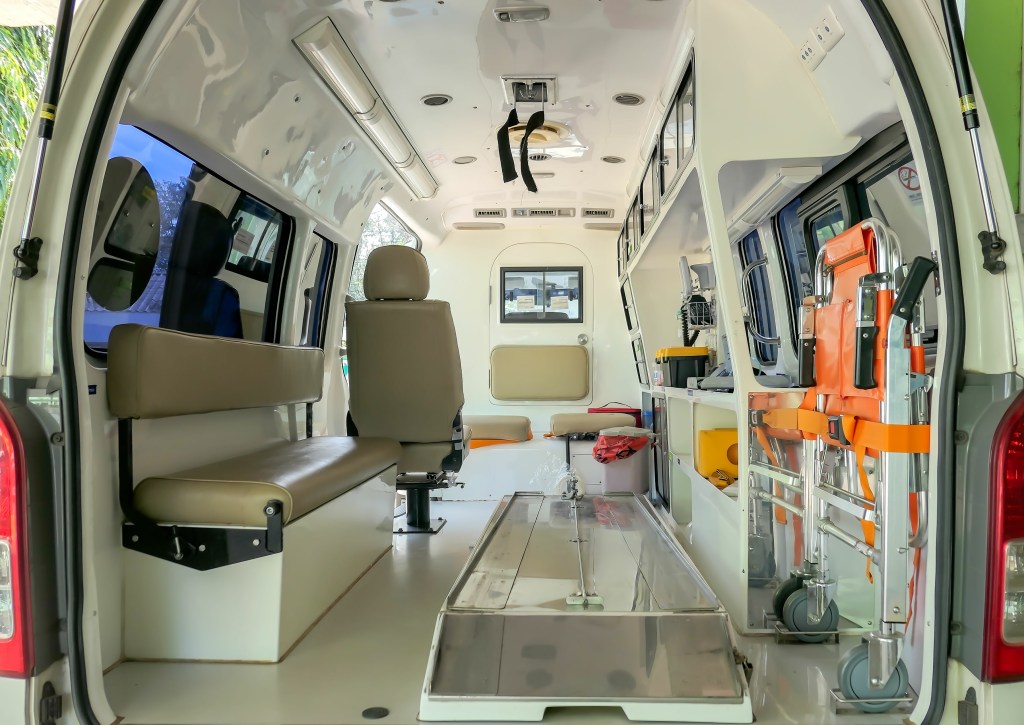
As a first-year medical student at the Texas College of Osteopathic medicine, I was fortunate enough to serve with the Pediatric Mobile Clinic at the Health Science Center. To picture this mobile clinic, you must imagine a bus or RV that has been transformed into a fully functional pediatric clinic. It might seem like there would not be much space in the mobile unit, but it is fully equipped to perform many medical services. The unit carries out vaccination drives, full screen wellness check-ups, sports physicals, and much more. It is a small glimpse into the future of medicine.
Looking back at my very first day serving as a student doctor, I did not know the extent of what the pediatric mobile clinic could do. My first patient came in and presented with learning difficulties, café au lait spots, and some vision problems. It was an enormous surprise to find myself examining a possible case of neurofibromatosis, a rare disease that we had covered just a few days prior. I left that day thinking about how this child would not have been able to receive care or be referred to a specialist if the Pediatric Mobile Clinic had not shown up at his school. I felt grateful and fortunate to have been there to serve the children of our Fort Worth community.
It was not until I had a chance to serve in this mobile unit that I realized that this concept was a great solution for Texas’ rural communities. Mobile clinics bring medical services to areas that are hours away from major cities with large medical centers. These clinics are easily adaptable and can be transformed to house many different kinds of practices. They operate much like a regular clinic; patients can look up when the mobile clinic will be near them and then schedule appointments online. Primary care practices can take full advantage of transforming and adapting the mobile units to serve a specific patient population.
For example, mobile clinics can directly help many underserved communities by being closer to patients, which saves time and transportation costs that can often be barriers to seeking treatment. Mobile health clinics do require an initial capital expense for institutions and hospitals. However, they bring in enough revenue to cover their own costs, they draw patients into the sphere of the base clinic or the hospital, and they help keep our community healthier.
I did not expect to feel so strongly about the concept of mobile healthcare clinics when I first set foot onto that crowded bus, but it is impossible not to recognize how efficient it is to have mobile clinics at our major schools and hospital institutions, as well as in rural communities. These mobile clinics should be part of our vision for the future of healthcare. It is time to advocate for more mobile clinics on our Fort Worth roads!
“Julia” was always worried – having a hernia so severe that it’s challenging to even walk does that to you. As is so often the case, the impact extended far beyond the pain she experienced daily – it cost the 40-year-old her freedom, her job, and her joy.
Before she was suffering with the inguinal and umbilical hernia, she worked alongside her husband of 18 years to clean apartments. It was a good job that allowed them to take care of their three children. But when she had to stop working, it put a financial strain on the family. So much so that instead of enjoying their summer vacation, Julia’s children wanted to work alongside their father.
“They always wanted to help,” she says. “Which was sad to see because they were not spending their time like normal kids would.”
Getting help was difficult, though. Julia and her husband did not have medical insurance and paying for surgery out of pocket was impossible. She was stuck, and the impact was more than physical and financial.
“My mood was always negative – I was always angry or frustrated because I was in pain,” Julia says. “I was also worried that we would lose our house and worried about my illness. I had to start being extra careful with what I did – I was always worried something would happen to me.”
As these problems continued to build, Julia realized she needed to do something. She went to Mission Arlington to see if they could help her. The doctor who saw her realized that Julia needed surgery, so they took the next step toward getting her the help she desperately needed – they referred her to Project Access.
She was enrolled in the program and connected to Dr. Mohamad Saad, a Project Access volunteer, who agreed that she needed surgical intervention. He performed the hernia repair surgery at Texas Health Arlington Memorial Hospital, and anesthesia was provided by USAP – Arlington Division.
Since having the surgery, Julia’s life has turned around. She can now “walk freely” – because she is entirely without pain. And just as she was impacted physically, the emotional healing has changed her life. Her mood is uplifted, and she is able to look at her children and their future with hope rather than fear.
Julia is grateful for Dr. Saad for providing this critical service for her, but her appreciation for him goes beyond that. “He is a very good doctor – very kind . . . He is also very funny; he was always making me laugh and making me feel better.”
Looking back at where her life was before the surgery, and the healing she has since experienced, Julia is grateful for everyone who participated in her care.
“I can’t express with words how thankful I am for everyone and their help,” she says. “God bless you all for all the of the hard work that you all put in to help me.”
This article was originally published in the July/August 2022 issue of the Tarrant County Physician. You can read find the full magazine here.
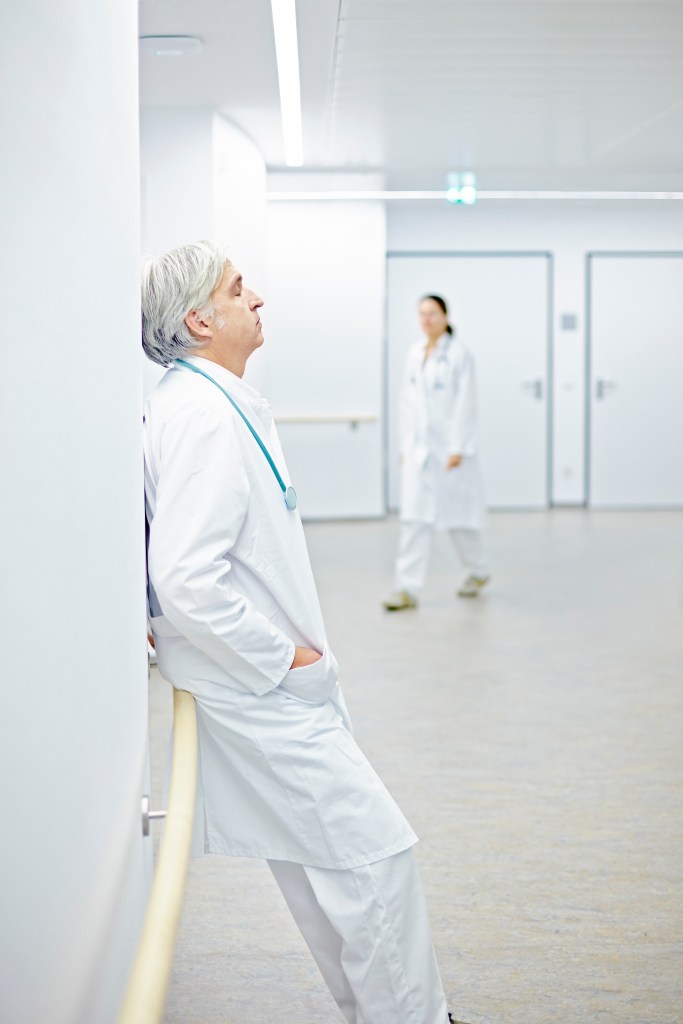
Burnout is not a new term for physicians. In fact, prior to the pandemic, an online survey conducted by the American Medical Association in January 2020 found that there was an overall physician burnout rate of 46 percent.1 Unfortunately, the pandemic has exacerbated burnout for physicians due to a multitude of unprecedented factors. Burnout can be defined by three main symptoms: exhaustion, depersonalization, and lack of efficacy.2 Physicians may exhibit harmful behaviors as coping methods in response to burnout, so it is important to acknowledge behavioral health as it addresses how individuals’ daily habits and actions impact their mental and physical health. As two medical students, we founded Behaviors Supporting Mental Health (BSMH) to raise awareness surrounding behavioral health for all individuals. For our current campaign, we are focusing on physicians’ response to burnout. Through BSMH, we hope to provide resources for physicians to address their behavioral health and reduce or prevent burnout.
Continuous refinement of our daily habits, actions, and behaviors leads to better mental and physical health.
First, though, we want to acknowledge the prevalence of burnout and what factors are contributing to this phenomenon. According to research conducted by the Agency for Healthcare Research and Quality, the cause of physician burnout is multifactorial.3 The study found that some of the main causes of physician burnout are tied to physicians having to balance family responsibilities, work under time pressure, deal with a chaotic work environment, have a low control of pace, and implement electronic health records.3 Unfortunately, physician burnout has been linked to consequences such as lower quality of patient satisfaction and care, physician alcohol and drug abuse, and even physician suicide.2 Therefore, addressing physician burnout and combatting unhealthy behaviors are critical for physicians themselves as well as for the patients they serve.
The activities physicians partake in can impact their risk for burnout, so assessment of one’s behavioral health is important regardless of current mental health. Several coping strategies, such as making an action plan, taking a time out, or having discussions with colleagues, have been correlated with a lower frequency of emotional exhaustion in physicians.4 On the other hand, keeping stress to oneself has been associated with a greater frequency of emotional exhaustion.4 After making note of behaviors and identifying their purpose, one can decide whether these actions should be eliminated, continued, or supplemented.5 Changing behaviors, however, is easier said than done. Since useful coping skills are not “one size fits all,” BSMH aims to provide resources that help physicians build a toolkit of ways to improve their behavioral health. For example, the app Provider Resilience, designed by the Defense Health Agency, functions as a method to keep physicians motivated and hold them accountable in their behavioral health.6 The QR code shown is a link to the BSMH website (https://tinyurl.com/bsmhproject), which includes further resources tailored to prevent or relieve burnout in physicians. Our contact information can also be found here for anyone with questions or a desire to collaborate.
Continuous refinement of our daily habits, actions, and behaviors leads to better mental and physical health. Regardless of the extent of a physician’s burnout, addressing behavioral health is always a necessity. Intentional actions impact one’s identity as a physician and any other role they have outside the clinic. Transitioning one’s behavioral health from passive to intentional can improve one’s ability to balance familial responsibilities, work under pressure, and deal with a chaotic work environment.2 This puts physicians in control of their behaviors and decreases their risk for substance abuse and suicide while improving the quality of patient care.7,8 Meaningful reflection and continuous behavioral health improvement creates a healthier mindset that allows physicians to better care for their patients and themselves.
4. Lemaire JB, Wallace JE. Not all coping strategies are created equal: a mixed methods study exploring physicians’ self reported coping strategies. BMC Health Serv Res. 2010;10:208. Published 2010 Jul 14. doi:10.1186/1472-6963-10-208
5. Hem, Marit Helene, et al. “The Significance of Ethics Reflection Groups in Mental Health Care: A FOCUS Group Study among Health Care Professionals.” BMC Medical Ethics, vol. 19, no. 1, 2018, https://doi.org/10.1186/s12910-018-0297-y.
6. Provider Resilience. Version 2.0.1. National Center for Telehealth & Technology. 2021.
8. Panagioti M, Geraghty K, Johnson J, et al. Association Between Physician Burnout and Patient Safety, Professionalism, and Patient Satisfaction: A Systematic Review and Meta-analysis. JAMA Intern Med. 2018;178(10):1317–1331. doi:10.1001/jamainternmed.2018.3713
By Catherine Colquitt, MD, Tarrant County Public Health Medical Director
This article was originally published in the July/August 2022 issue of the Tarrant County Physician. You can read find the full magazine here.
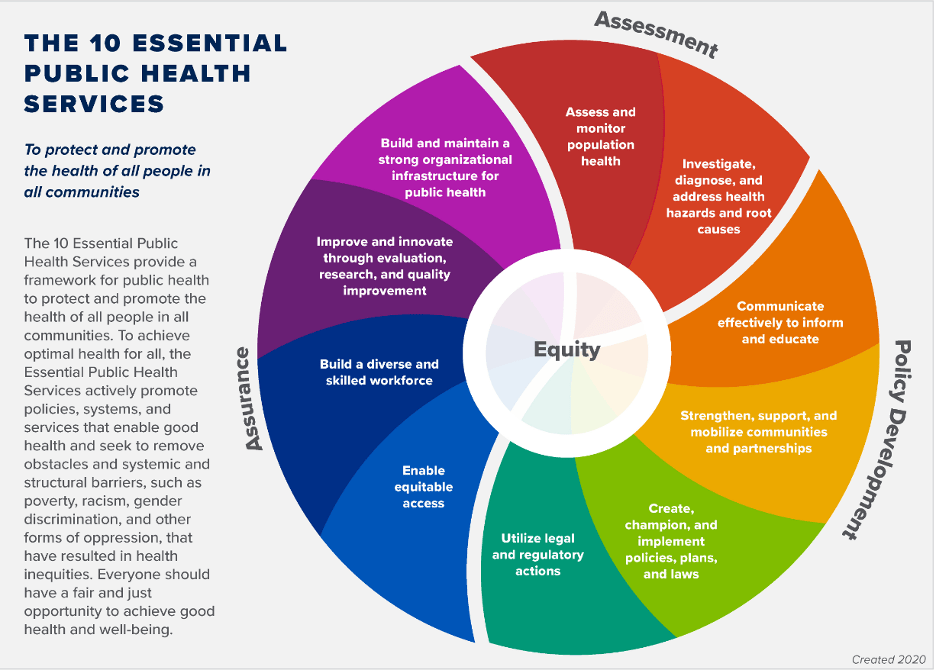
In 1994, the Public Health National Center for Innovations and the de Beaumont Foundation collaborated with partners to establish the Essential Public Health Services (EPHS), and on September 9, 2020, the first updated version of the original EPHS was released.1,2 As we celebrate a much-needed decrease in COVID-19 cases and deaths, it seems timely to review the updated EPHS, take stock, and plan for the future.
First, here is the 2020 version of our EPHS:
Analysis of our public health response to COVID-19 reveals successes and shortcomings. The successes include scaling up to investigate COVID-19 cases, clusters, and contacts in real time, even when hundreds of cases were occurring daily, and ramping up, with our partners, to administer 2,995,204 doses of vaccines in Tarrant County since the first vaccine allocations became available in December 2020.3 As a result, 85.87 percent of Tarrant County residents 65 years or older and 61.37 percent of Tarrant County residents aged five years through 64 years are now fully vaccinated.4 We have also worked effectively with state and local agencies, municipalities and other partner entities to vaccinate staff and vulnerable people in congregate settings. Alongside all of this, we have expanded our communications apparatus to keep our county residents informed of changing COVID-19 guidance, vaccine and testing availability, and to bridge language, cultural, and other social and systemic barriers that have prevented some in our community from accessing COVID-19 related care.
But we have much to do. Many in our county still experience barriers to health care access and are confused by widely circulated myths about COVID-19 infection, control measures, and vaccination. While current COVID-19 infections, hospitalizations, deaths and outbreaks are falling, we and our partners are working to provide accurate and culturally sensitive messaging to residents in North Texas who may have felt excluded from access to COVID-19 related care and information thus far. Tarrant County Public Health is embedding mobile healthcare in communities in need; it is a move based on advice from community leaders and aided by precision mapping and real-time syndromic surveillance.
Challenges to COVID-19 response include differences in approach to the pandemic among local, state, and federal entities. There have also been disparities in not only healthcare access, but also public transportation services to facilitate travel to sites for COVID-19 vaccination, testing, and treatment. An addition, access disparities between rural and urban North Texas communities and language, cultural, and religious barriers to COVID-19 related care have further complicated the situation.
Building a more diverse public health workforce and collecting detailed community needs assessments with guidance from respected community leaders and partners are important steps toward improvement. Using innovative strategies for our outreach efforts will help tremendously in the development of verifiably successful measures to make our community safer during the next COVID-19 surge, and during the next public health challenge – like maybe monkeypox!
References
1. Harrell, JA, Baker, EL. The essential services of public health. Leadership Public Health. 1994; 3(3): 27-30
2. Revised 10 Essential Public Health Services, launched virtually by the de Beaumont Foundation and Public Health National Center for innovations on 9/9/2020. Available at http://www.cdc.gov. Background information of steps leading to the revision of guidance available at http://www.PHNCI.org
3. Texas COVID-19 Vaccine Tracker (by county)
4. Texas Department of State Health Services COVID-19 Dashboard
TCMS physicians, do you want to expand your network of colleagues? Then be sure to join us for our Referral Night & Card Swap!
The event, which will take place at TCMS on August 25, will give you the chance to mingle and then participate in a speed dating-style card swap. We hope you join us – it is a great opportunity to build connections with other doctors throughout Tarrant County.
Dinner will be provided, so be sure to RSVPto Melody Briggs by Friday, August 19. Details are included below.
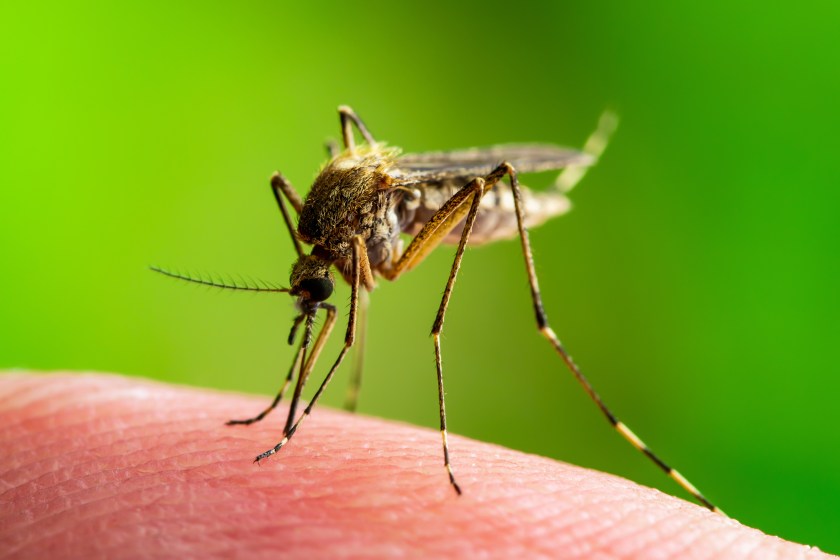
Tarrant County Public Health (TCPH) confirms the first human case of West Nile Virus (WNV) for the 2022 season. The first positive mosquito pool was reported in May 2022.
The individual involved resides in northwest Tarrant County. The person presented the mild form of the disease which is often referred to as WNV fever. Symptoms include headache, fever, muscle and joint aches, nausea, and fatigue. People typically recover on their own, although symptoms may last for several weeks. It was reported that the individual had outdoor activities within the incubation period. There have been no WNV-positive mosquito pools in the associated area. Additional details are not being released to protect the identity of the patient.
To date, TCPH has found a total of 7 WNV-positive mosquito pools within Tarrant County. Monitoring for the virus in mosquito pools is ongoing throughout the season (April through mid-November). Local cities and Tarrant County for unincorporated areas may perform mosquito treatment as needed.
TCPH reminds residents to take measures to safeguard against the WNV. Residents should dump standing water on their property, use repellent, and whenever possible, dress in long pants and long sleeves.
MORE ABOUT MOSQUITOES:
Mosquitoes need water to breed. They don’t lay their eggs in the air or on the ground, so dump ALL standing water.
Infected mosquitoes transmit WNV to people after feeding on infected birds.
Birds don’t transmit WNV to people. Mosquitos do.
Larvicides are products used to eliminate mosquitoes before they become adults.
Apply larvicides directly to water sources that hold mosquito larvae.
For more information about West Nile Virus visit the Be Mosquito Free webpage.
TMA’s annual Fall Conference will be here before we know it! Register now to join the event, where you will have the opportunity to network with other physician, conduct TMA business, and go to CMEs and lectures centered around top healthcare issues and interests.
Parking Information: Daily self-parking is $12.00 for attendees and hotel guests. Guests not staying overnight can pick up a voucher at the TMA registration desk. Overnight valet parking is $38 plus tax, no in/out privileges.
Agenda
Friday, September 16
7:30am – 7:30pm Registration Hours
1:00 – 5:00pm Exhibits, Lost Pines Ballroom Foyer
Many boards, councils, and committees hold business meetings in conjunction with Fall Conference.
Saturday, September 17
6:30 – 12:30am Registration Hours
7:00-noon Exhibit Hours
7:30-8:30am Dawn Duster, Lost Pines Ballroom 57:30-8:30 am Networking Breakfast and Exhibits, Lost Pines Ballroom Foyer9-11:45 am General Session, Lost Pines Ballroom 5 9-9:30 am Welcome and TMA Update
9:30-10:30 am Take Charge of Your Career: Harness the Power of Negotiation (CME)
10:30-10:45 am Break and Exhibits
10:45-11:45 am Legislative Panel (CME) Hear from our physician legislators with a recap of the 87th Legislative Session and what to expect from the special session next month.
This article was originally published in the July/August 2022 issue of the Tarrant County Physician. You can read find the full magazine here.
Physicians, dust off your instruments—Fort Worth’s first medical orchestra is looking for healthcare workers who have a dual passion for music and medicine.
The group, which is being organized by retired physical therapist and flautist Susan Fain, is expected to begin rehearsing this fall. While the details are still being ironed out, Susan says that everything is falling into place.
“We are collaborating and negotiating for a space, conductors, and music,” she says. “And it looks really good.”
Susan, who holds doctoral degrees in both physical therapy and flute performance, was first inspired about 10 years ago when she heard the Doctors Orchestral Society of New York. She soon discovered there were over 30 such orchestras throughout the U.S., and she saw it as the perfect opportunity to marry her passions.
“In medicine you’re helping people, and in music, you really are helping people,” she says. “You’re helping yourself, learning to create, and all of that discipline is across both professions.”
She believes this could be a step toward work-life balance for those who love sharing music with others but have set their instruments aside due to lack of opportunity. Now, she is ready to create that opportunity, and she is thrilled to do so in a city that is rife with a passion for the arts.
Susan, whose career was divided between practicing physical therapy, pursuing music, and raising her five children, has played flute in both civic and professional orchestras. And her experience organizing events and groups is extensive, ranging from planning classical concerts to putting together a small orchestra (where she served as the conductor!). Now, retired from physical therapy and ready to devote herself fully to her love of music, she is thrilled to start this next endeavor.
“I want to be like Esther – ‘You might have been born for such a time as this,’” Susan says. “To bring the two halves of my life together and make them both count.”
It seems she isn’t the only one that feels that way. As the word spreads there has been a lot of interest; so far, 10 instrumentalists have committed to the orchestra, and more have expressed a desire to get involved.
Ultimately, Susan’s goal is to form a full orchestra that will perform a handful of concerts each year to raise support for local charities. She believes it will enrich the community and be a chance to cut through much of the noise created by the constant challenges in the practice of medicine.
“Performing is like creating an oasis for the audience,” she says. “This is a moment where you can forget the outside world, and all the things going on in society that we struggle with, and we can sit for a moment and just stop and reflect on truth and beauty. That, to me, is what it’s all about.”
For more information about the Fort Worth Medical Orchestra, contact Susan Fain at sdfain1@gmail.com or 405-830-2107.
Tarrant County Public Health Back-to-School Immunization clinics kick off on August 1, 2022. The clinics will be offering all recommended immunizations.
If available, parents and individuals should bring their vaccination records. The cost of vaccines for children 0-18 years of age is $8 per shot and Adult Safety Net vaccines for those 19 years and older with no insurance is $15 per shot. Only cash, check, CHIP, or Medicaid will be accepted. Families with private insurance should contact their primary physician to obtain their immunizations.
During the Back-to-School Immunization clinics, COVID-19 vaccines at our brick-and-mortar locations and our weekly pop-up vaccine clinics are postponed to focus on ensuring students receive their immunizations before taking on a new school year. COVID-19 vaccines will be available at no charge at the Back-to-School clinics for persons aged 6 months and older who are interested in receiving them. Our six TCPH brick-and-mortar clinics will resume all vaccine operations on August 29, 2022, and pop-up COVID-19 vaccine clinics will resume in September.
Please see the Back-to-School Immunization clinic locations below:
Arlington Athletic Center August 1-13 M-F: 9 a.m. – 6 p.m. Saturday: 9 a.m.- 2 p.m.
Additional information on the Back-to-School Immunization Clinics can be found on our website or by calling the Tarrant County Public Health information line, 817-248-6299, Monday – Friday 8 a.m. to 6 p.m.




 Tarrant County Physician Online