Blog Feed

It’s Not Okay

President’s Paragraph

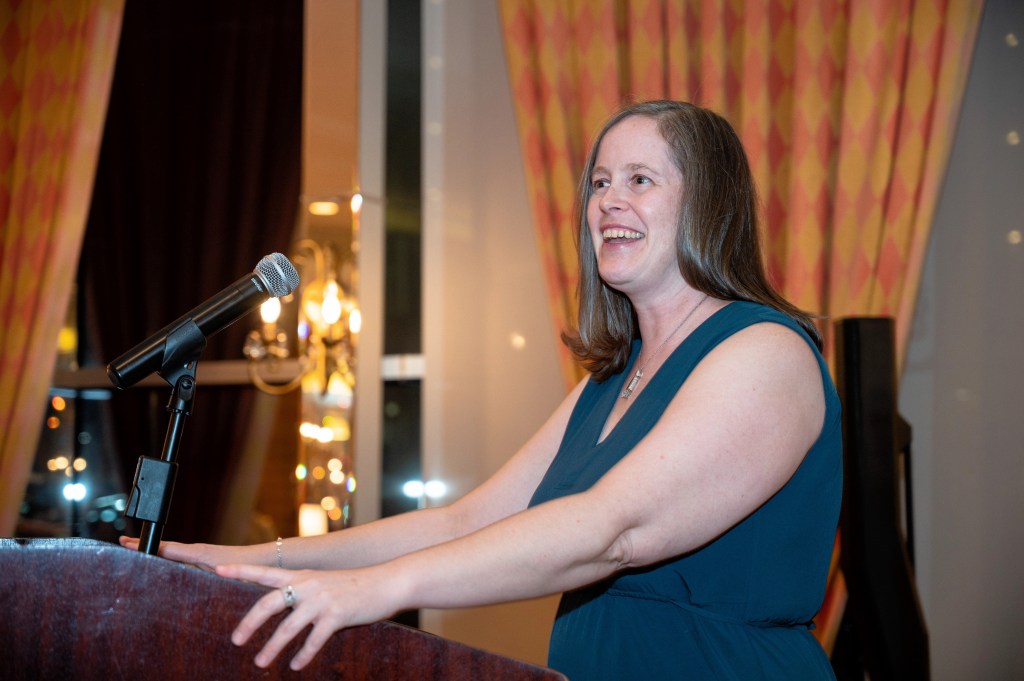
by Shanna Combs, MD, TCMS President

This article was originally published in the September/October 2022 issue of the Tarrant County Physician. You can read find the full magazine here.

On June 23, 2022, the Tarrant County medical community lost an amazing physician, who died by suicide.  He was a remarkable person whose work touched so many lives—he was always willing to help others.  He is greatly missed by all who knew him.     

Unfortunately, physician suicide has become an all-too-common occurrence in the United States.  

• Approximately 300–400 physicians die by suicide each year in the U.S.

• Among male physicians, the suicide rate is 1.41 times higher than the general male population.  

• Among female physicians, it is even more pronounced at 2.27 times higher than the general female population.1  

As terrible as this sounds, there is hope.  Physicians who are proactive about their mental health are able to take better care of their patients as well as have more resilience in the face of stress.  However, this is not so easy to accomplish.

There is already a stigma associated with mental health, and it is made even worse for physicians due to the concern of needing to report a diagnosis to our medical boards, licensing organizations, as well as to credentialing offices in the hospitals and health systems we work in.  We as physicians also have difficulty taking care of ourselves in general, let alone when it comes to mental health, as we are the healers and must be perfect.  

The truth is, being a physician is hard.  We train for many years to be able to do the work that we do.  We often share our war stories about medical school and residency, but when it comes to the deeper struggles we have, we tend to keep those to ourselves.  We push them down and hide behind a smile (or a mask) and continue to pretend that everything is okay.  

But it’s not okay.

We as a profession need to start taking care of ourselves and looking out for our colleagues.  It is okay to tell someone when you are struggling and to seek out help when you need it.  A psychiatrist friend puts it best—“Everyone needs a therapist.  I have one.”  At some point we all learned the physiology of the human body, and of the brain specifically. Sometimes that brain needs a little extra help from chemistry, and that is okay as well.  If you have a thyroid problem, you do not put up a fight about taking a thyroid pill. The same goes when our brain chemistry needs a little help.  We also need to reach out to one another, to check in and see if our colleagues are really doing okay and if they need any help or support.  It’s okay to not be okay, but we need to recognize this and seek out the help we so desperately need, and to help our colleagues obtain the help that they need.

We also need to work from an advocacy standpoint so that physicians can seek the help that they need without the fear of needing to report their illness.  All other aspects of medicine and healthcare are taken care of in a private manner between a physician and a patient.  Why should mental health be any different?  Until this changes, no number of wellness programs, resilience building, etc., will be able to fix the problem.  

I encourage everyone to seek help when needed and to reach out to our colleagues, partners, and friends.  We have worked tirelessly to get to the point we can practice medicine, and those around you want you to stay here.

References
1John Matheson, “Physician Suicide.”  American College of Emergency Physicians. Accessed August 3, 2022. 

https://www.acep.org/life-as-a-physician/wellness/wellness/wellness-week-articles/physician-suicide/#:~:text=Each%20year%20in%20the%20U.S.,times%20more%20often%20than%20females

Mental Health Resources

National Suicide Prevention Lifeline
1-800-273-TALK (8255)
Available 24/7

Crisis Text Line
Text TALK to 741-741
Available 24/7

Physician Support Line
1 (888) 409-0141
Open seven days a week,
7:00am – 12:00am CST
Psychiatrists helping their U.S. physician colleagues and medical students navigate the many intersections of our personal and professional lives. Free and confidential. No appointment necessary.

Emotional PPE Project
emotionalppe.org
The Project connects healthcare workers in need with licensed mental health professionals who can help.

Join Cook Children’s for Ask the Doc Webinar on Pregnancy Care

Join Cook Children’s Medical Center on November 1, 2022, 5:30 PM – 6:30 PM CT, for their upcoming Ask a Doc webinar: “Do No Harm: The Ethics, Myths & Business of Caring for Pregnant People.”

The event, which is led by the Texas Department of State Health Services – Oral Health Improvement Program and the Children’s Oral Health Coalition, is focused on education, combatting barriers to healthcare, and coordinating services.

A number of topics will be covered, including:

  • Explaining ethical dilemmas related to delaying treatment
  • Discussing the myths dentist have about treating pregnant people
  • Recognizing why timely treatment is good for business
  • Identifying and manage potential medical and dental risk

You can find out more about the event or register here.

Physicians Urge Texans to Safely Return Unused Prescription Medication

Saturday is National Prescription Drug Take Back Day

Have unused, unneeded prescription drugs at home? Turn them in now, physicians say.

Texas doctors recommend people with unused or expired prescription drugs at home dispose of them safely this weekend, so they are not accidently consumed.

As the state grapples with a sharp increase in opioid overdose deaths, the U.S. Drug Enforcement Administration is organizing its biannual prescription drug Take Back Day on Saturday, Oct. 29. Prescription drugs can be returned anonymously at pop up locations across the state. Syringes or illegal drugs cannot be taken.

Returning unused medication is an important step to prevent misuse of prescription medication, especially opioids.

“The overwhelming majority of people who suffer from opioid addiction got started by getting opioids from friends and family,” said C.M. Schade, MD, a Texas Medical Association (TMA) physician leader and past president of the Texas Pain Society (TPS). “Their opioid addiction was not caused by taking opioids that were prescribed to them.”

According to the 2020 National Survey on Drug Use and Health, more than 9 million people aged 12 and above misused prescription pain relievers like hydrocodone, oxycodone, morphine, and prescription fentanyl.

Dr. Schade warns that consuming medication not meant for you can be life threatening. “Taking opioids that are not prescribed to you is especially dangerous because in the opioid-naïve patient it causes breathing problems that can cause brain damage and even death.”

Dr. Schade also said giving your prescription medication to others is both illegal and harmful. “You will be intentionally or unintentionally enabling dysfunctional behavior, which is not only unhealthy but oftentimes leads to addiction and/or death.”

While Dr. Schade noted illegal drugs – especially those laced with fentanyl – are largely to blame for the opioid epidemic, safely disposing of prescription medication is one way to prevent an overdose from occurring.

“The drug take-back program, while important, only removes one source of drugs that people who are addicted can use to get a drug to satisfy their addiction,” he said. “What is needed is a comprehensive program to engage these people in the health care system so that they will get medical care such as counseling and medication-assisted treatment.”

TMA and TPS physicians have been raising awareness about the dangers of street drugs. Dr. Schade testified before the Texas House Committee on Public Health last month and offered lawmakers several recommendations to curb deaths from illegal opioids including making naloxone – a medicine that reverses overdose – available over the counter without a prescription.

Free pop-up medical, vision and dental clinic coming to Dallas in December

HSC & Remote Area Medical have partnered again to bring free care to those who are underserved and uninsured.

The University of North Texas Health Science Center at Fort Worth and Remote Area Medical – RAM® — a nonprofit provider of pop-up clinics that delivers free quality dental, vision and medical care to those in need — are bringing the free clinic to Dallas on Dec. 3 and 4.

After a successful clinic in North Fort Worth last year, the organizations decided to partner again and bring the clinic to Dallas, allowing them to serve a larger population in an accessible location.

Services offered at RAM will include dental cleanings, fillings, extractions and X-rays; eye exams, glaucoma testing and eyeglasses prescriptions with glasses made on site; women’s health exams; and general medical exams. RAM services are on a first-come, first-served basis, free of charge, and no ID is required. A clinic of this magnitude is not possible without the help of volunteers — both medical and general.

“With the help of 329 volunteers, last year’s clinic transformed the lives of more than 400 people,” said Jessica Rangel, HSC executive vice president of health systems. “We are anticipating needing more volunteers this year. This is a unique opportunity to serve for everyone. Whether you’re a physician assistant, dentist or community member, there is a role for you at RAM.”

This year’s event will be held at the Kay Bailey Hutchison Convention Center, 650 S. Griffin St., in Dallas.

“It is critical that we show our neighbors and friends we care and are there to support them,” HSC President Sylvia Trent-Adams said. “Our collaboration with RAM provides us with the opportunity to make a positive impact in our community.”

For more information about RAM’s pop-up clinics, to donate or to volunteer, visit www.ramusa.org or www.unthsc.edu/ram, email Katy Heesch at Katy.Heesch@unthsc.edu or call 817-735-2000. 

My First Practice Experience

by Robert Bunata, MD

This article was originally published in the September/October 2022 issue of the Tarrant County Physician. You can read find the full magazine here.

The first time I saw and treated patients in a private practice setting, other than moonlighting in an ER or at the Cook County jail, was in 1968 when my dad, a general practitioner, had a heart attack as he entered Oak Park Hospital to make rounds on a freezing January day.  He checked himself into the ER, ordered an EKG, and later called me from the ICU to ask if I could cover his office appointments once or twice a week.  My mother, who knew all of his patients, called and rescheduled appointments for the evenings when I was free from my third-year orthopedic resident responsibilities.  

I dressed in a suit and tie, removed the blood stains from my shoes, and carefully combed my hair. Not the usual resident attire; I had to look dignified to fulfill this responsibility.  The first night, elderly Mrs. Novak came for her office visit with a simple request for cough syrup, adding a weak, pitiful “cough, cough.”  I wrote a script which she promptly handed back, “No, no. that’s not the right one,” she admonished. “The one with the silver label, the one your dad gives me. I think the name is, oh, I don’t remember. I wrote it down so there’d be no mistake.”  Knowing exactly what she was seeking, she handed me the note.  I looked up the medicine’s name in the PDR (an old-fashioned, remarkably thick and heavy red book with Bible thin pages listing every known medicine in three separate indexes in a way only Sherlock or an egghead could understand).  Carefully perusing the ingredients, I saw: 15% alcohol.  Over the next few weeks, I got several more requests for medicinal nightcaps.       

The second evening a patient reported, “I’ve got my usual sinus infection again, and I need the treatment your dad does. It’s the only thing that works.”  I nodded knowingly and said, “Just a minute while I get some extra supplies.”  My dad shared this office, a converted residential apartment, with a friend who was a dentist.  My dad’s part was the dining room and kitchen, while Ed drilled teeth in the bedroom and made crowns in a closet. They were like two peas in a pod.  I stepped into Ed’s closet and, despite my dad still being in the ICU and after much hesitation, called the Oak Park Hospital where a dedicated nun answered, “Okay, I can let you talk to him this time, but we can’t make a habit of it.” Hah, little did she know.      

I got carefully worded instructions as to what “the treatment” was. After wrapping a generous wad of cotton on an applicator, I soaked it in epinephrine and then in cocaine (standard office formulary at that time).  Next was the hard part, a part my dad had extensively practiced but I had never conceived of doing.  I put on the doctor’s head mirror, the kind you used to see doctors wear in cigarette commercials, and sat facing the patient, who was in a chair in front of a bare lightbulb.  I tried to look professional and adept at peeking through the hole in the center of the mirror while focusing on the patient’s nose, but I blinded him with the concentrated glare.  Since my retina-burned patient squeezed his eyes shut and couldn’t see my incompetence, I felt comfortable peeking around the mirror’s edge.  I jammed and twirled the cotton swab quickly into one nostril, then the other, pausing to wipe away the tears, his and mine.  Seeing no blood, I surmised I hadn’t done much damage.  After a burst of sneezing and snorting, the patient said, “Thanks, doc, that’s a whole lot better already,” as he blew more stuff out than I cared to look at.  

My dad’s carefully worded instructions included, “I usually charge ten dollars, but his wife recently fractured her ankle, and they have more medical bills than they can afford. So charge him three dollars total.” The instructions didn’t end there. “I know what you’re thinking so listen, I decided long ago that for my peace of mind I would maintain my independence.  I choose to run my business as I see fit, believing that if I take care of my patients, they will take care of me. They’re our neighbors, not cash registers.” 

Okay, lesson received.  But the execution turned out to be the tricky part.  He came ready to pay more, so he handed me a twenty-dollar bill.  Oh goodness, the change must be seventeen.  I, too, had come prepared: five- and ten-dollar bills together in my right side suitcoat pocket, and a roll of ones on the left.  Being a bank teller couldn’t be that hard—after all, I went to medical school.  I took his twenty with my left hand and reached into my right suitcoat pocket for the carefully divided packet of larger bills.  I set the twenty on the desk so I could select one five and one ten from the bundle, and put the rest back in the right pocket, while retrieving the one-dollar bills from the left pocket.  Holding the fifteen dollars pinched between my little finger and palm, I tried to count two singles, but when they stuck together, I dropped the whole wad of ones on the floor.  Scrambling like a pigeon chasing crumbs was ultimately undignified regardless of how impeccably I was dressed.     

Then came Mrs. Smith.  Mrs. Smith’s young daughter had a skin condition (my worst subject was dermatology, which in my mind is akin to sorcery), and Mrs. Smith wanted the cream my dad had prescribed last time.  Once again, I had no idea what she was talking about.  I searched and searched for Mrs. Smith’s record and found nothing on her, her husband, or their daughter. In fact, there was only one Smith in the entire file; it was a most uncommon name in that neighborhood.  I gave up and called the same dedicated nun, who reluctantly turned the phone over to my dad.  “Where is Mrs. Smith’s chart? She wants the cream for her daughter’s rash,” I asked.   My dad chuckled, then said, “Look on the chart labeled ‘Prochaska.’ Lillian Prochaska is Lorain Smith’s mother, and all the family’s records are on one chart.”  Even Mrs. Smith’s husband and daughter? It almost blew my mind.  I recovered the Prochaska family “chart,” three five by eight index cards stapled together, a system from the 1930s when he built his private practice.  Definitely not an EMR.  It took two seconds to find the magic formula.  Not only was the problem solved, but I gained a deeper understanding of the nature of my dad’s private practice.

Twelve years later, my parents went to the Art Institute on a Sunday in January. When they came home my dad shoveled the drive free of snow so he could make rounds the next day, but the next morning he didn’t wake up.  Dr. Bobby Wroten waited in the All Saints doctors’ lounge until I finished my case, then told me my dad had died.  I took the last plane that landed that afternoon before O’Hare was closed due to a gigantic snowstorm, and then caught the last cab home.  Three days later O’Hare had just reopened, and outside the funeral home across the street from my dad’s office, the plowed snow was piled six feet high on the sides of every street, including down the middle of busy Cermak Avenue; the sidewalks were barely passable, and it was 26 degrees.  Once upon a time, an acquaintance had insisted that the number of people who came to a funeral depended on the weather.  The line of people who came to bid my dad farewell filled the funeral home and stretched outside more than a block long. The viewing lasted past closing, well into the night.  

That was my first experience with my dad’s “family practice” and medicine in the sixties.    

TCPH Announces COVID-19 Vaccine Clinics for the Week of October 8

Tarrant County Public Health hosts numerous pop-up COVID-19 clinics across Tarrant County each week in partnership with public and private organizations listed below. Each site has the Moderna and Pfizer vaccines and at times the Johnson & Johnson. Children five and older are eligible for the vaccination. Parents need to bring proof of the child’s age and their own ID for the vaccination. Booster vaccinations are available at all of the vaccination locations.

  
TCPH would like to bring a COVID-19 vaccination clinic to businesses, churches and organizations in the community who are interested in hosting a pop-up clinic. It’s easy and free to host a clinic.
 
In addition to the vaccination opportunities below, the cities of Arlington, Fort Worth, Mansfield, North Richland Hills, Hurst, and Tarrant County College have also added opportunities for vaccinations. To find a local vaccine site, the County created a vaccine finder page: VaxUpTC website.

Pop-Up COVID-19 locations:

Coral Rehabilitation of Arlington
Monday, Oct.10: 12 p.m. to 4 p.m.
1112  Gibbins Road
Arlington, TX 76011

Cityview Nursing and Rehabilitation 
Wednesday, Oct.12: 9 a.m. to 1 p.m.
5801 Bryant Irvin Rd.
Benbrook,  TX 76132

Grace Metroplex
Wednesday, Oct. 12: 10 a.m. to 1 p.m.
1310 South Collard St.  
Fort Worth, TX 76105

Haltom City Public Library
Friday, Oct. 14: 11 a.m. to 3 p.m.
4809 Haltom Road  
Haltom City, TX 76117

City of Arlington
Friday, Oct. 14: 10 a.m. to 4 p.m.
2800 S Center St.  
Arlington, TX 76014

Tarrant County Public Health CIinics:

Northwest Public Health Center
Monday to Friday: 8 a.m. to 12 p.m. and 1 to 5 p.m.
3800 Adam Grubb Road
Lake Worth, TX 76135

Bagsby-Williams Health Center
Monday to Friday: 8 a.m. to 12 p.m. and 1 to 5 p.m.
3212 Miller Ave.
Fort Worth, TX 76119

Southeast Public Health Center
Monday to Friday: 9 a.m. to 12 p.m. and 1 to 6 p.m.
536 W Randol Mill
Arlington TX, 76011

Main Public Health Center
Monday to Friday: 8 a.m. to 12 p.m. and 1 to 6 p.m.
1101 S. Main Street
Fort Worth, TX 76104

Southwest Public Health Center
Monday to Friday: 8 a.m. to 12 p.m. and 1 to 5 p.m.
6551 Granbury Road
Fort Worth, TX 76133

Watauga Public Health Center
Monday to Friday: 8 a.m. to 12 p.m. and 1 to 5 p.m.
6601 Watauga Road
Watauga, TX 76148

For more information go to coronavirus.tarrantcounty.com or call the Tarrant County Public Health information line, 817-248-6299, Monday – Friday 8 a.m. to 6 p.m.

October Walk with a Doc Tomorrow

Join our local chapter of Walk with a Doc tomorrow for a fun morning walking, talking about health, and meeting people in our community.

Here is what you need to know about the event:

• It will take place on October 8, 2022

• The hour-long event will begin at 8:30am

• Walkers will start at LVTRise – 8201 Calmont Ave., Fort Worth, TX 76116 For more information, call Kate Russell, OMS-III, at 903-316-9392, or email her at KatherineRussell@my.unthsc.edu.

COVID-19 Vaccine Clinics for the Week of September 24

Tarrant County Public Health hosts numerous pop-up COVID-19 clinics across Tarrant County each week in partnership with public and private organizations listed below. Each site has the Moderna and Pfizer vaccines, and some will also have the Johnson & Johnson. Children five and older are eligible for the vaccination. Parents need to bring proof of the child’s age and their own ID for the vaccination. Booster vaccinations are available at all of the vaccination locations.

  
TCPH would like to bring a COVID-19 vaccination clinic to businesses, churches and organizations in the community who are interested in hosting a pop-up clinic. It’s easy and free to host a clinic.
 
In addition to the vaccination opportunities below, the cities of Arlington, Fort Worth, Mansfield, North Richland Hills, Hurst, and Tarrant County College have also added opportunities for vaccinations. To find a local vaccine site, the County created a vaccine finder page: VaxUpTC website.

Pop-Up COVID-19 locations:

Grand Lodge
Saturday, Sep. 24: 10 a.m. to 2 p.m.
3433 Martin Luther King Jr Freeway
Fort Worth, TX 76119

Foundation Communities  
Tuesday, Sep. 27: 12 p.m. to 4 p.m.
2020 South Cooper St.
Arlington, TX 76013

Tandy Village Assisted Living  
Wednesday, Sep. 28: 11 a.m. to 1 p.m.
2601 Tandy Ave.  
Fort Worth, TX 76103

Aging Well Expo  
Thursday, Sep. 29: 9 a.m. to 2 p.m.
1200 Ballpark Way
Arlington, TX 76011

Tarrant County Public Health CIinics:

Northwest Public Health Center
Monday to Friday: 8 a.m. to 12 p.m. and 1 to 5 p.m.
3800 Adam Grubb Road
Lake Worth, TX 76135

Bagsby-Williams Health Center
Monday to Friday: 8 a.m. to 12 p.m. and 1 to 5 p.m.
3212 Miller Ave.
Fort Worth, TX 76119

Southeast Public Health Center
Monday to Friday: 9 a.m. to 12 p.m. and 1 to 6 p.m.
536 W Randol Mill
Arlington TX, 76011

Main Public Health Center
Monday to Friday: 8 a.m. to 12 p.m. and 1 to 6 p.m.
1101 S. Main Street
Fort Worth, TX 76104

Southwest Public Health Center
Monday to Friday: 8 a.m. to 12 p.m. and 1 to 5 p.m.
6551 Granbury Road
Fort Worth, TX 76133

Watauga Public Health Center
Monday to Friday: 8 a.m. to 12 p.m. and 1 to 5 p.m.
6601 Watauga Road
Watauga, TX 76148

For more information go to coronavirus.tarrantcounty.com or call the Tarrant County Public Health information line, 817-248-6299, Monday – Friday 8 a.m. to 6 p.m.

The Last Word – Life Lessons

by Hujefa Vora, MD, Publications Committee Chair

From the Achieves: This Last Word was originally published in the September 2017 issue of the Tarrant County Physician and has been edited for clarity. You can read find the full reprint along with the rest of the content from the July/August 2022 publication here.

He was an amazing businessman.  His acumen, combined with an ability to take the required risks, helped him to build an automobile repair empire.  His smile was infectious.  With it, he instilled a fierce sense of loyalty in his employees and business partners.  And his words.  His Texan twang was musical and fierce.  He could cut a deal in seconds with a “Howdy Y’all” and then a “Sign here . . .”  That’s how he won the heart of his high school sweetheart.  He danced with her from the prom, where he was the King, all the way to the white-washed wedding chapel.  They had four children, each one more beloved than the previous, each with that same smile.  When he first came to me, I could see what they all loved in him.  Despite always being short on time, I would spend the extra few minutes just to laugh at his latest story.  I would adjust his blood pressure medication.  Somewhere along the way, I added a statin.  He did not smoke, and he had no family history.  He was doing well, and so that’s why the stroke came so unexpectedly.  Four years ago, the conditions changed.  The stroke took the entire right side of his body.  He couldn’t walk.  He couldn’t use his right hand and arm.  He was immediately wheelchair-bound.  That was not the worst of it, though.  The worst was when we found out that he had lost his voice.

The stroke hit his speech centers.  He developed an expressive aphasia.  He could understand everything that was said, but he could no longer utter a word.  The damage to Broca’s area was irreparable. His physicians concurred with this assessment.  Perhaps we thought his life was over, or at least the life he had built.  His wife’s love for him was stronger than that, though.  It was stronger than the assault on his brain and body.  She kept him in his business.  She kept him in the game.  She would take him to physical therapy to strengthen his resolve.  She took him to speech therapy and learned his language.  She brought back his smile.

She took him to work every day.  She was his voice in the meetings.  He would smile and grunt, and his empire did not crumble.  Physically, he was weak, but as a partnership, she and her husband held strong.  I remained amazed by all of this whenever I saw them in clinic.  Here was a strong man brought to his knees by a stroke that should have ended him, but instead, he flourished.  He flourished because he had a partner that stood by his side always.  Even as we did not, she understood his every unintelligible utterance, his body language, and above all else, his smile.

I am given the honor of seeing them periodically in the office.  He has had a hospitalization here and there, and she remains his constant companion.  She is his advocate.  She is his voice.  Despite everything we think we know about medical science, she has proven that he is unbreakable.

I often wonder about the intricacies of their relationship.  I wonder at his wife’s ability to understand him.  Most of all, I marvel at their resilience.  Despite overwhelmingly insurmountable odds, they have survived.

Most of all, I marvel at their resilience.  Despite overwhelmingly insurmountable odds, they have survived.

There are so many life lessons I have learned from my patients over the years.  I want to bring only one of these to all of you.  Together, we are stronger.  Despite any of our individual weaknesses, we can always give a voice to one another.  This becomes especially true in our partnerships and relationships outside of our practices.  I am a dinosaur on an island.  I am a solo internist.  How do I ensure that my voice is heard?  I can promise you that the people in Austin and Washington think they know what it is I need and I want.  They think they know what we are saying.  They think that they can fix medicine.  Meanwhile, we think that they are listening to us.  We believe that our intelligence and our charisma will carry the day.  This is in fact our greatest strength and our greatest weakness.  We know we have the answers on how to fix healthcare.  I know this to be a fact.  My fellow physicians, I have heard all of you loud and clear over the past several months.  I have had amazing conversations.  I have gained so much insight into my own difficulties in medical practice, and I have come to a better understanding of so many of the difficulties many of you face in your day to day.  Some of these discussions have led to even deeper insights . . . But there is the rub.  How will we get to action?  Action requires us to understand our greatest weakness.  We help others all day long, and even though we think we have all of the answers, we are unable to really express them.  We too have a form of Broca’s aphasia.  I would assert that we need a partnership to make absolutely certain our voice is heard.  I believe the partner that binds us all together is the Tarrant County Medical Society, in conjunction with the Texas Medical Association.  Many of you have expressed your inability to completely agree with this.  We don’t always agree with our partners 100 percent of the time.  (Don’t tell my wife this!)  Moreover, we need a partner and an advocate that speaks our language and understands us.

Maybe I’m just preaching to the choir.  In the end, we will all need to continue to work together, not individually . . . We must come together and make sure that our voice is heard loud and clear . . . They will hear us.  Kumbaya.  My name is Hujefa Vora, and this is our Last Word.

Design a site like this with WordPress.com
Get started