Introducing MATRIX: Medical Assessments and Tools for Inclusive Xperiences

By Kathryn Keaton

IN 2019, TEXAS HEALTH RESOURCES Foundation announced a new series of grant cycles: the Texas Health Community Impact grants. These grants are available to five regions, with specific focuses for each county based on their most recent Community Needs Assessment.

These two-year awards are made to local organizations that work collaboratively to serve specific zip codes and address health disparities and socioeconomic hardships in innovative ways. Past Tarrant projects funded include community gardens, mental health access, and culinary job training.

For the 2025–2026 grant cycle, the Foundation awarded $5 million to 18 projects across North Texas. Project Access Tarrant County is honored to be among these recipients for a total award of $385,662 over two years.

Partnering with Cornerstone Assistance Network (CAN) and Mission Arlington, the project will utilize enhanced technology, education, and a shared employee to affect radical change in the care of patients with diabetes and/or hypertension in five target zip codes: 76010, 76011, 76104, 76105, and 76119.

We are proud to introduce our project, MATRIX: Medical Assessments and Technology for Inclusive Xperiences.

The Project

Since PATC offers specialty medical and surgical care, our clinic partners are vital. Most patients come to PATC from a referral made by primary care, and those who do not are required, with PATC’s assistance, to establish a connection with primary care.

CAN and Mission Arlington are among PATC’s founding partners. Both clinics serve as medical homes. CAN serves mostly patients in Fort Worth (MATRIX target zip codes 76104, 76105, and 76119), and Mission Arlington serves mostly Arlington patients (MATRIX target zip codes 76010 and 76011). Combined, PATC, CAN, and Mission Arlington provide a spectrum of primary and specialty/surgical care.

Community Health Worker

The single biggest innovation with MATRIX is the addition of a Community Health Worker (CHW). And not just a CHW—but a shared CHW. Once this individual is hired, they will travel between PATC, CAN, and Mission Arlington, having “office hours” at each location. While some patients will meet with the CHW at the PATC office, most will have appointments at their primary care clinic—a place and location where they have an existing relationship and feel comfortable.

The CHW’s activities will be tailored to each patient. The CHW may assist with one-on-one diabetic or hypertension education, help with access to prescription assistance, arrange transportation to diabetic eye exams, or complete hospital paperwork for PATC surgeries. The cadence will vary, but each patient will have individual appointments with the CHW. In total, Cornerstone plans to serve 100 patients and Mission Arlington plans to serve 750 in this manner. CAN’s and Mission Arlington’s aim is that 65 percent of all patients with hypertension will have blood pressure readings below 140/90 and that 68 percent of all patients with diabetes will have an A1c below 9 by the end of the grant period.

Education

A recent Tarrant County Physician article briefly mentioned that a TCU medical student chose PATC as her site to complete her Scholarly Pursuits and Thesis (SPT) project.1,2 Alex Koehl, MPH, MS-I at TCU, brings her public health expertise to PATC in creating a series of classes pertaining to social determinants of health (SDOH) common to PATC patients.

The first class will occur in late March. This class will empower patients to ask questions to understand their disease and treatment and to speak up if they do not understand their instructions. Patients who are seen pro bono often feel that they do not have agency to advocate for themselves and ask questions, leading to confusion and misunderstandings that eventually cause non-compliance and a lack of resolution of their health condition. The MATRIX grant allows for meals and incentives, encouraging attendance. The series will be facilitated in both Fort Worth and Arlington. Future topics include how to open a bank account (sometimes required for hospital charity applications), how to read a prescription bottle, and how to navigate a patient portal.

Technology

Enhanced technology will answer some of the barriers we face with our patients. We recently received a separate grant that will cover the cost of CareMessage, a messaging platform for safety-net organizations to “increase access to care, improve clinical outcomes, and address social drivers of health.”3

CareMessage will allow PATC to schedule appointment reminders (that include the address with a Google map link!), respond in real-time to questions or concerns, and generally allow for texting instead of playing phone tag. In addition, CareMessage can automatically translate any message into one of dozens of languages, meaning that any PATC staff member can communicate with any patient regardless of language proficiency.

CareMessage will not replace PATC’s personal touch—all initial contact and important information will be relayed by telephone. But for simple reminders and questions where a yes- or-no response is needed, a phone call is generally not necessary.

While the messaging feature is an exciting progression in PATC’s day-to- day operations, CareMessage can go much deeper and is vital to MATRIX’s future success.

CareMessage has several preloaded educational text series. Stephen Pullman, MS-I at TCU, has also chosen PATC as his SPT site. Stephen is vetting existing diabetes and hypertension modules. In addition, as training progresses, Stephen is documenting ideas for future education modules that we can create. By the conclusion of his project, we will have multiple avenues for patient education on both preventative care and chronic conditions.

The survey element is also vital to Alex’s project. With CareMessage, patients will complete pre- and post-surveys for our SDOH classes, measuring the attendees’ level of understanding before and after the material that can be reported to the Texas Health Community Impact Grant project management team. We will also use this for participant feedback to improve future curricula.

As with all innovation, this project will have adaptations, enhancements, and changes over the course of the next two years; but we know that the future is bright. With the THR Foundation’s endorsement, the collaboration with two historic partners, and the opportunity for enhanced technology, by the end of this grant period, significant change and improvement will be affected. We look forward to keeping you updated as MATRIX continues to progress.

References:

  1. Kathryn Keaton, “Project Access Tarrant County: Growth in 2025,” Tarrant County Physician, January/ February 2025, 21–22.
  2. “Scholarly Pursuit and Thesis: Burnett School of Medicine at TCU: Fort Worth, Texas,” Burnett School of Medicine at TCU, June 17, 2024, https:// mdschool.tcu.edu/empathetic-scholar/ scholarly-pursuit-and-thesis/.
  3. “Patient Engagement for Improved Health Equity,” CareMessage, February 4, 2025, https://www.caremessage.org/.

Parents, Act Now: Pneumococcal Vaccines Protect Kids From Dangerous Diseases

Physicians highlight vaccine importance for kids under 2 years old

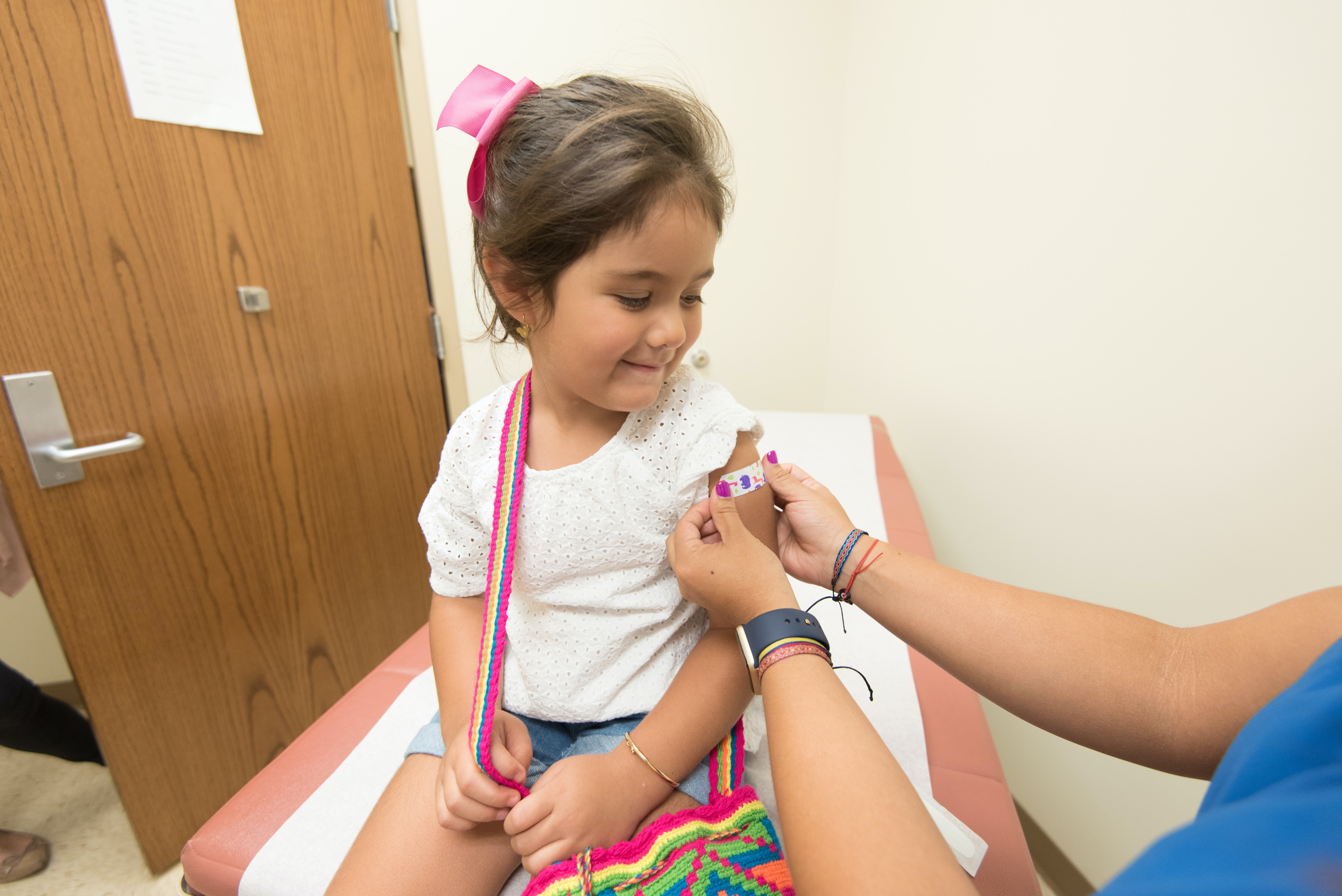
Texas physicians have a message for parents getting ready to send their kids to daycare or school – make sure your children are up to date on their pneumococcal vaccine. The vaccine prevents infectious diseases that spread easily through a cough or sneeze in crowded settings. 

“It is important for infants to be immunized at a young age, typically 2, 4, 6, and 15 months of age, especially before daycare entry,” said Valerie Smith, MD, who is a pediatrician and chair of the Texas Medical Association (TMA) Council on Science and Public Health. She said very young children and older adults are most at risk for pneumococcus.

Many people, including young children, have pneumococcal bacteria in their nose or throat. The bacteria can cause noninvasive diseases like ear infections, but in some cases, it can develop into dangerous invasive diseases like meningitis. 

“Physicians worry about pneumococcus because it can cause invasive disease spreading to the lungs, the blood stream, or the lining of the brain, which can lead to severe, life-threatening illnesses,” Dr. Smith said.

According to the Centers for Disease Control and Prevention, when someone is affected by an invasive disease, germs invade parts of the body that are normally germ-free. 

In Texas, nearly 2,000 invasive pneumococcal disease cases are reported each year.

TMA created a public awareness campaign, Vaccines Defend What Matters, reminding Texans to get their children’s vaccinations updated and to get the flu shot this fall.

“The new school year is an exciting time, but in addition to new clothes and school supplies, it is an important time for families to make sure their children are healthy and protected from vaccine preventable diseases,” Dr. Smith said. She recommends parents contact their primary care physician’s office for more information and guidance about the pneumococcal vaccine, as well as other vaccines children need for school.

TMA is the largest state medical society in the nation, representing more than 57,000 physician and medical student members. It is located in Austin and has 110 component county medical societies around the state. TMA’s key objective since 1853 is to improve the health of all Texans. 

Tarrant County Public Health: Health Advisory Alert

An original message by Tarrant County Public Health announced on June 9, 2023.

Tarrant County Public Health (TCPH) is issuing this Health Alert Network (HAN) Health Advisory to notify clinicians about a confirmed measles case in a Hood County resident in a Tarrant County Hospital. TCPH has worked closely with the facility to identify exposure to some patients and staff that occurred before measles was suspected. All exposed people have been contacted and advised to watch for signs and symptoms through June 22nd. TCPH collaborated with the facility and Texas Department of State Health Services (DSHS), to investigate and respond to this measles case and exposures.

Below is a forwarded HAN from DSHS with background information about the current measles case, information on measles and the importance of early recognition, diagnosis, and appropriate treatment. TCPH recommends that clinicians be on the alert for cases of measles that meet the case definition.

Due to the highly contagious nature of this disease, additional cases may occur. We advise clinicians to follow the recommendations below and report any suspected cases immediately to Tarrant County Public Health’s 24-hour reporting line at (817)321-5350, preferably while the patient is present.

Background

A young child who is a resident of Hood County was recently diagnosed with measles. The child had no history of travel to an area where measles is spreading and no known exposure to a person with measles. The child has been treated and is recovering.

This is the first confirmed case of measles in Texas since travel-related outbreaks in 2019, which led to 23 cases. Completion of the two-dose series of the measles vaccine is highly effective at preventing measles, however even vaccinated people may occasionally become infected.

Measles is a highly contagious respiratory illness. The virus is transmitted by direct contact with infectious droplets or by airborne spread when an infected person breathes, coughs, or sneezes. Measles virus can remain infectious in the air for up to two hours after an infected person leaves an area. The illness usually starts a week or two after someone is exposed with symptoms like a high fever, cough, runny nose and red, watery eyes. A few days later, the telltale rash breaks out as flat, red spots on the face and then spreads down the neck and trunk to the rest of the body. A person is contagious about four days before the rash appears to four days after. People with measles should stay home from work or school during that period.

The best way to prevent getting sick is to be immunized with two doses of the measles- containing vaccine, which is primarily administered as the combination of measles-mumps- rubella (MMR) vaccine. DSHS and the Centers for Disease Control and Prevention recommend children receive one dose at 12 to 15 months of age and another at 4 to 6 years. Children too young to be vaccinated or who have only had one dose of vaccine are more likely to get infected and more likely to have severe complications if they do get sick.

Recommendations For Health Care Professionals:

Healthcare providers should consider measles in patients presenting with the following symptoms, particularly those who have traveled abroad or had contact with known measles cases:

• Fever ≥101°F (38.3°C) AND
• Generalized maculopapular rash lasting ≥3 days AND Rash begins at the hairline/scalp and progresses down the body
• Cough, runny nose, conjunctivitis OR Koplik spots (bluish-white specks or a red-rose background appearing on the buccal and labial mucosa usually opposite the molars)

Immediately report any suspected cases of measles to Tarrant County Public Health at our 24 hour hotline (817)321-5350) (dshs.texas.gov/idcu/investigation/conditions/contacts). If possible, please report while the patient is present to facilitate testing and the public health investigation, including follow-up of potential exposures.

Infection Control Precautions

  • Airborne precautious should be followed to reduce possible exposures in healthcare settings.
  • In urgent/emergency healthcare settings, suspected cases should be masked with a surgical mask and triaged quickly from waiting areas into a room with a closed door, airborne isolation precautions recommended. In other outpatient settings, suspected cases should be scheduled at the end of the day, if possible. Healthcare workers caring for patients suspected of having measles should use airborne infection control precautions. (www.cdc.gov/hicpac/2007IP/2007isolationPrecautions.html)
  • Since measles is so highly transmissible and can spread in health care settings, people who work in places like a doctor’s office or emergency room should have evidence of measles immunity to prevent any potential outbreak. (https://www.cdc.gov/vaccines/pubs/surv-manual/chpt07- measles.html#f21).

Diagnostic Testing

  • Testing for measles should be done for all suspected cases of measles at the time of the initial medical visit:
  • Measles PCR and serology (IgM and IgG) testing is available at both the Texas DSHS Laboratory in Austin and at commercial laboratories.
  • The Texas DSHS Laboratory can perform PCR testing on throat swabs (preferred) or nasopharyngeal swabs placed in viral transport media and serology on serum specimens.
  • DSHS strongly encourages providers to submit PCR specimens to the DSHS Laboratory because genotyping will be performed on positive PCR specimens, which can be helpful during outbreaks.
  • Providers should work with their local health department or DSHS regional office to coordinate testing at the DSHS laboratory to ensure specimens are submitted correctly and meet testing requirements.
  • Unless coordinated in advance, specimens may only be received during normal business hours Monday through Friday.

Recommendations for Public Health:

Control and Prevention Measures

  • Measles vaccination may prevent disease in exposed people if given within 72 hours of exposure. People 6 months and older who have not been fully vaccinated would be eligible for vaccination under those circumstances. It may provide some long-term protection but should be followed with a second vaccination at least one month later. Immune globulin (IG) may be indicated for some people but should not be used to control an outbreak.
  • Pregnant women, people with severe immunosuppression, and anyone with a previous anaphylactic reaction to a vaccine component should not get a measles vaccine.

Controlling Outbreaks in Group Settings

  • People with confirmed or suspected measles should stay home from school, work, and other group settings until after the fourth day of rash onset.
  • During an outbreak, people without documented immunity from vaccination or previous measles infection should be isolated from anyone with measles to protect those without immunity and control the outbreak. Additional information on school exclusion and readmission can be found at dshs.texas.gov/idps- home/school-communicable-disease-chart

Recommendations for the Public

If you think you have measles or have been exposed to someone with measles, isolate yourself from others and call your healthcare provider before arriving to be tested so they can prepare for your arrival without exposing other people to the virus. Measles is extremely contagious and can cause life-threatening illness to anyone who is not protected against the virus.

DEA Proposed Rules Address Telehealth Prescribing Post PHE

by Sean Price

Originally published by Texas Medical Association on March 8, 2023.

Physicians found new flexibility in prescribing controlled substances via telemedicine during the COVID-19 pandemic.

Now that the public health emergency is ending, the Drug Enforcement Administration (DEA) has proposed new rules for prescribers it says could preserve some of those flexibilities “with appropriate safeguards.”

Among other things, the new rules – if finalized – would allow physicians and health care professionals to prescribe, without a face-to-face visit, a 30-day supply of Schedule III and Schedule IV non-narcotic controlled drugs, after which an in-person follow-up would be needed for any refill. This class of drugs is the least likely to result in drug abuse, according to DEA. The proposal also would allow for prescribing a 30-day supply of buprenorphine to treat opioid use disorder without an in-person evaluation or referral.

“Improved access to mental health and substance use disorder services through expanded telemedicine flexibilities will save lives,” Department of Health and Human Services Secretary Xavier Becerra said in the announcement. “We still have millions of Americans, particularly those living in rural communities, who face difficulties accessing a doctor or health care provider in person.”

The agency emphasized that the rules do not affect telehealth services that do not involve controlled substance prescriptions. The Texas Medical Association is reviewing how the proposed regulations could interact with other federal and state regulations, says Shannon Vogel, TMA’s associate vice president of health information technology.

DEA has released summaries for both healthcare professionals and patients explaining how the proposed rules would affect prescription practices.

“This is a very good thing that they’re doing and a necessary thing” for access to care, said Mesquite pain management specialist C.M. Schade, MD, a former president of the Texas Pain Society.

Before the pandemic, physicians were limited in their telemedicine prescribing ability by the Ryan Haight Online Pharmacy Consumer Protection Act of 2008, he says. The act requires physicians to conduct at least one in-person medical evaluation of the patient before prescribing a controlled substance by means of the “internet,” which is defined to include telehealth.

“COVID did great things for telehealth, and one of them was breaking through the Ryan Haight Act,” Dr. Schade said.

Some policymakers and behavioral health advocates have expressed concern, however, that patients who need continuous medication therapy may have challenges obtaining an in-person visit within 30 days.

The rules were proposed on Feb. 24 and public comments are due on March 31. The agency has no set timeline for publishing the rules, though it is likely that will come before the PHE ends on May 11.

Physicians with questions and comments about the DEA changes or relevant state regulations can contact Ms. Vogel.

Linda Siy, MD, named Texas Family Physician of the Year

Linda Siy, MD, of Fort Worth, Texas, has been awarded the highest honor among Texas family doctors by the Texas Academy of Family Physicians. She was named the 2022 Texas Family Physician of the Year during TAFP’s Annual Session and Primary Care Summit in Grapevine on Oct. 29. Each year, patients and physicians nominate extraordinary family physicians throughout Texas who symbolize excellence and dedication in family medicine. A panel of TAFP members chooses one as the family physician of the year.

“It truly is an honor to join the ranks of those who have received this distinction, and I’m very humbled to be considered with those distinguished colleagues who previously were Family Physicians of the Year,” Siy said as she accepted the award.

Siy has been a family physician for over 30 years, and currently practices at John Peter Smith Health Network at the Northeast Medical Home in Tarrant County, a practice she’s been a part of since 1995. She is also faculty at the University of Texas Southwestern School of Medicine, the University of North Texas Health Science Center/Texas College of Osteopathic Medicine, and the Texas Christian University Burnett School of Medicine.

Throughout her years in organized medicine, Siy has served on many committees and councils for both TAFP and the American Academy and has been president of the TAFP Foundation since 2017. She serves on the Acclaim Multispecialty Group’s Physician Board of Directors, and previously served as president of the Tarrant County Medical Society and TAFP’s Tarrant County chapter.

Siy has spent her career in medicine treating her loyal and multi-generational families of patients, many of whom are underserved, suffer from housing and food insecurity, and struggle with mental health and substance abuse. Many of her nominators mentioned her willingness to speak up and ask the questions others are too afraid to ask, as well as her dedication to teaching the next generation of family physicians.

“I think what’s kept me in the game for so long at the place where I work now are those rewarding relationships with your patients, with your staff, with your colleagues,” Siy said of her career in family medicine. “It’s really not a job. It’s a calling.”

Free pop-up medical, vision and dental clinic coming to Dallas in December

HSC & Remote Area Medical have partnered again to bring free care to those who are underserved and uninsured.

The University of North Texas Health Science Center at Fort Worth and Remote Area Medical – RAM® — a nonprofit provider of pop-up clinics that delivers free quality dental, vision and medical care to those in need — are bringing the free clinic to Dallas on Dec. 3 and 4.

After a successful clinic in North Fort Worth last year, the organizations decided to partner again and bring the clinic to Dallas, allowing them to serve a larger population in an accessible location.

Services offered at RAM will include dental cleanings, fillings, extractions and X-rays; eye exams, glaucoma testing and eyeglasses prescriptions with glasses made on site; women’s health exams; and general medical exams. RAM services are on a first-come, first-served basis, free of charge, and no ID is required. A clinic of this magnitude is not possible without the help of volunteers — both medical and general.

“With the help of 329 volunteers, last year’s clinic transformed the lives of more than 400 people,” said Jessica Rangel, HSC executive vice president of health systems. “We are anticipating needing more volunteers this year. This is a unique opportunity to serve for everyone. Whether you’re a physician assistant, dentist or community member, there is a role for you at RAM.”

This year’s event will be held at the Kay Bailey Hutchison Convention Center, 650 S. Griffin St., in Dallas.

“It is critical that we show our neighbors and friends we care and are there to support them,” HSC President Sylvia Trent-Adams said. “Our collaboration with RAM provides us with the opportunity to make a positive impact in our community.”

For more information about RAM’s pop-up clinics, to donate or to volunteer, visit www.ramusa.org or www.unthsc.edu/ram, email Katy Heesch at Katy.Heesch@unthsc.edu or call 817-735-2000. 

October Walk with a Doc Tomorrow

Join our local chapter of Walk with a Doc tomorrow for a fun morning walking, talking about health, and meeting people in our community.

Here is what you need to know about the event:

• It will take place on October 8, 2022

• The hour-long event will begin at 8:30am

• Walkers will start at LVTRise – 8201 Calmont Ave., Fort Worth, TX 76116 For more information, call Kate Russell, OMS-III, at 903-316-9392, or email her at KatherineRussell@my.unthsc.edu.

CALL FOR MUSICAL PHYSICIANS: Join Fort Worth’s First Medical Orchestra

by Allison Howard

This article was originally published in the July/August 2022 issue of the Tarrant County Physician. You can read find the full magazine here.

Physicians, dust off your instruments—Fort Worth’s first medical orchestra is looking for healthcare workers who have a dual passion for music and medicine.

The group, which is being organized by retired physical therapist and flautist Susan Fain, is expected to begin rehearsing this fall.  While the details are still being ironed out, Susan says that everything is falling into place.

“We are collaborating and negotiating for a space, conductors, and music,” she says.  “And it looks really good.”

Susan, who holds doctoral degrees in both physical therapy and flute performance, was first inspired about 10 years ago when she heard the Doctors Orchestral Society of New York. She soon discovered there were over 30 such orchestras throughout the U.S., and she saw it as the perfect opportunity to marry her passions.

“In medicine you’re helping people, and in music, you really are helping people,” she says. “You’re helping yourself, learning to create, and all of that discipline is across both professions.”

She believes this could be a step toward work-life balance for those who love sharing music with others but have set their instruments aside due to lack of opportunity. Now, she is ready to create that opportunity, and she is thrilled to do so in a city that is rife with a passion for the arts.

Susan, whose career was divided between practicing physical therapy, pursuing music, and raising her five children, has played flute in both civic and professional orchestras. And her experience organizing events and groups is extensive, ranging from planning classical concerts to putting together a small orchestra (where she served as the conductor!). Now, retired from physical therapy and ready to devote herself fully to her love of music, she is thrilled to start this next endeavor.  

“I want to be like Esther – ‘You might have been born for such a time as this,’” Susan says. “To bring the two halves of my life together and make them both count.”

It seems she isn’t the only one that feels that way. As the word spreads there has been a lot of interest; so far, 10 instrumentalists have committed to the orchestra, and more have expressed a desire to get involved. 

Ultimately, Susan’s goal is to form a full orchestra that will perform a handful of concerts each year to raise support for local charities. She believes it will enrich the community and be a chance to cut through much of the noise created by the constant challenges in the practice of medicine.

“Performing is like creating an oasis for the audience,” she says. “This is a moment where you can forget the outside world, and all the things going on in society that we struggle with, and we can sit for a moment and just stop and reflect on truth and beauty. That, to me, is what it’s all about.”

For more information about the Fort Worth Medical Orchestra, contact Susan Fain at sdfain1@gmail.com or 405-830-2107. 

Fort Worth OB/GYN: More parents seeking birth control for young patients

TCMS President Dr. Shanna Combs spoke with Andrea Lucia of CBSDFW about the rising rates of birth control requests in light of the recent Supreme Court ruling. Here is an excerpt:

Politics is not something Doctor Shanna Combs brings up with patients.

Increasingly, though, it is something they bring up with her.

“It was a little disconcerting at first in September when I started having parents be like, ‘So… Senate Bill 8,'” she said chuckling.

Dr. Combs is an OBGYN who specializes in treating children and adolescents. She’s long prescribed birth control to help manage their periods.

“It can make them lighter. It can make them less painful and, you know, basically make life livable if you have really bad periods,” she said.

You can find the full interview here.

TCU Medical Student Receives Award for Advocacy Work with AMA

By Prescotte Stokes III

Published by TCU School of Medicine on May 17, 2022. You can find the original here.

 TCU School of Medicine student Anand Singh received the New Member Outstanding Involvement Award in AMA-MSS Region 3 by the American Medical Association – Medical Student Section.

In his role as the Co-Advocacy Chair of AMA-MSS Region 3 that includes medical schools in Arkansas, Kansas, Louisiana, Mississippi, Oklahoma and Texas, the first-year medical student has helped organize nationwide campaigns for the organization.

“I was extremely honored to receive this award alongside other incredible leaders in AMA-MSS Region 3,” Singh said. “Receiving this award inspires me to continue growing my involvement in the AMA-MSS and be an advocate for medical students, physicians, and patients.”

Singh has been a part of the MSS Region 3 Resolution Review Committee, the Logistics and Resources committee for the AMA-MSS N-21 Conference and the Committee on Legislation and Advocacy (COLA) since 2021. He was also one of the authors on four different resolutions presented at the AMA N-21 Conference held in November 2021.

“Through the Texas Medical Association (TMA)-MSS, I was part of the Ad-Hoc Committee to review resolutions for TexMed 2022 and I was primary author for one resolution and helped draft two other resolutions,” Singh said.

Singh is the current AMA delegate for the TCU School of Medicine. During National Advocacy week in October 2021, he helped organize a “Call Your Rep” event as well as social events to increase AMA engagement at the medical school. He also attends monthly Tarrant County Medical Society meetings to provide updates about the medical school, the AMA-MSS and TMA-MSS chapters he’s involved in.

“It really gives me the opportunity to connect and build relationships with local physicians in Fort Worth and all across North Texas,” said Singh. “I believe that there is power in a collective voice and organized medicine provides medical students and physicians the opportunity to advocate for change on a local, regional, and national level. This motivates me to work harder and give back by mentoring other students to find their voice through the AMA-MSS on healthcare advocacy topics they are passionate about.”

Design a site like this with WordPress.com
Get started