TMA Pleased Court Strikes Down Steep Fee Hike and Batching Rules in NSA Cases

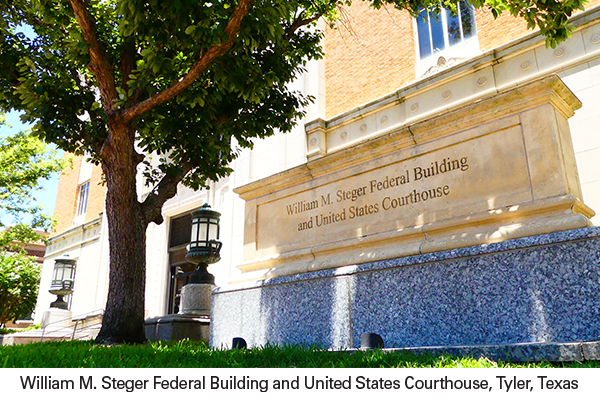
Statement by Rick W. Snyder II, MD, Texas Medical Association (TMA) president, in response to the ruling by the U.S. District Court for the Eastern District of Texas on TMA’s fourth No Surprises Act lawsuit. TMA challenged a 600% hike in administrative fees and batching rules used in arbitration cases governed by the federal law. TMA argued the case in the U.S. District Court for the Eastern District of Texas Tyler Division on April 19. TMA has filed four lawsuits against federal agencies related to rulemaking under the federal surprise-billing arbitration law pertaining to certain out-of-network care.

“We are pleased a federal court has once again agreed with the Texas Medical Association (TMA) in finding the federal agencies acted unlawfully when implementing provisions of the No Surprises Act (NSA). In TMA’s latest case, the court determined the federal agencies violated the notice and comment requirements of the Administrative Procedure Act when imposing 600% higher fees on physicians seeking arbitration in disputes with health insurers under the federal NSA. 

“The federal agencies set the initial administrative fee at $50, saying last October the fees would remain at that rate through this year. However, just two months later, the agencies announced the fee would jump to $350 beginning in January 2023. TMA believes this unfair steep jump in fees has dramatically curtailed many physicians’ ability to seek arbitration when a health plan offers insufficient payment for out-of-network care.

“Likewise, TMA is pleased the court decided, based on a lack of notice and comment, to invalidate certain rules narrowing the law’s provisions on ‘batching’ claims for arbitration. Congress authorized batching in the law to encourage efficiency and minimize costs in the independent dispute resolution process. It is vital the law be applied as Congress intended.

“While the court declined to provide deadline extensions and certain other requested relief, we remain pleased with the overall outcome. Yesterday’s decisions on batching rule provisions and administrative fees will aid in reducing barriers to physician access to the law’s arbitration process, which is vital to both patient access to care and practice viability.”

TMA filed this lawsuit in January 2023.

TMA’s first lawsuit challenging the No Surprises Act rules – filed in October 2021, and which TMA won at the federal district court level – alleged that in the interim final rules governing arbitrations between insurers and physicians, the agencies unlawfully required arbitrators to “rebuttably presume” the offer closest to the qualifying payment amount (QPA) was the appropriate out-of-network rate.

TMA filed its second lawsuit in September 2022 challenging the NSA’s August 2022 final rules published by the federal agencies, alleging the final rules unfairly advantage health insurers by requiring arbitrators to give outsized weight or consideration to the QPA. The court ruled in TMA’s favor on that case in January 2023. This lawsuit is currently being appealed by the federal government to the Fifth Circuit.

TMA filed its third NSA rules lawsuit in November 2022 challenging certain portions of the July 2021 interim final rules implementing the federal NSA. This lawsuit is pending a decision at the district court level.

TMA is the largest state medical society in the nation, representing more than 57,000 physician and medical student members. It is located in Austin and has 110 component county medical societies around the state. TMA’s key objective since 1853 is to improve the health of all Texans.

Parents, Act Now: Pneumococcal Vaccines Protect Kids From Dangerous Diseases

Physicians highlight vaccine importance for kids under 2 years old

Texas physicians have a message for parents getting ready to send their kids to daycare or school – make sure your children are up to date on their pneumococcal vaccine. The vaccine prevents infectious diseases that spread easily through a cough or sneeze in crowded settings. 

“It is important for infants to be immunized at a young age, typically 2, 4, 6, and 15 months of age, especially before daycare entry,” said Valerie Smith, MD, who is a pediatrician and chair of the Texas Medical Association (TMA) Council on Science and Public Health. She said very young children and older adults are most at risk for pneumococcus.

Many people, including young children, have pneumococcal bacteria in their nose or throat. The bacteria can cause noninvasive diseases like ear infections, but in some cases, it can develop into dangerous invasive diseases like meningitis. 

“Physicians worry about pneumococcus because it can cause invasive disease spreading to the lungs, the blood stream, or the lining of the brain, which can lead to severe, life-threatening illnesses,” Dr. Smith said.

According to the Centers for Disease Control and Prevention, when someone is affected by an invasive disease, germs invade parts of the body that are normally germ-free. 

In Texas, nearly 2,000 invasive pneumococcal disease cases are reported each year.

TMA created a public awareness campaign, Vaccines Defend What Matters, reminding Texans to get their children’s vaccinations updated and to get the flu shot this fall.

“The new school year is an exciting time, but in addition to new clothes and school supplies, it is an important time for families to make sure their children are healthy and protected from vaccine preventable diseases,” Dr. Smith said. She recommends parents contact their primary care physician’s office for more information and guidance about the pneumococcal vaccine, as well as other vaccines children need for school.

TMA is the largest state medical society in the nation, representing more than 57,000 physician and medical student members. It is located in Austin and has 110 component county medical societies around the state. TMA’s key objective since 1853 is to improve the health of all Texans. 

Keep Patients Prepared with Good Medical Recordkeeping

by Hannah Wisterman

Originally published by Texas Medical Association on July 25, 2023.

Hurricane season in the Atlantic Ocean opened June 1 and typically runs through November, and Texas physicians and patients alike may be bracing for the possibility of property damage and displacement. 

With electronic health records (EHRs) proliferating, it’s never been easier for a patient to take agency over their own health care by having access to their documentation. Physicians and medical staff can help by aiding patients in accessing their patient portal and knowing what information to find there, and quickly. 

“It is wise for every person to have their own medical information, including a current list of any medications they are taking,” said Gary W. Floyd, MD, immediate past president of the Texas Medical Association. “Such information can be very helpful, if not critical, if the patient is displaced due to a natural disaster or public health emergency.” 

As part of regular emergency preparations, use TMA’s flyer to encourage patients to log in to your practice’s online patient portal to download and save or print their medical records summary. The flyer is customizable to include your practice’s web address for portal access.   

Patients are urged to compile and save current information on their:  

  • Medications and vaccinations;  
  • Allergies;  
  • Recent diagnoses and treatments; and 
  • A primary physician contact. 

This information is important when a patient sees any new physician but is especially useful in times of crisis. 

“What happens when a disaster happens, and [patients] get displaced? Or they get in a traffic accident on a highway – who would know their information?” asked Sunny Wong, MD, a gastroenterologist and internist in Laredo and a member of TMA’s Committee on Health Information Technology. “[Patients] ought to have access to the record.” 

Physicians who use a web-based EHR can rest assured that even if their practice is damaged by disaster, sensitive health information will remain safe. EHR vendors use networks of redundant servers to protect data if a hub goes down, says Shannon Vogel, TMA’s associate vice president of health information technology.  

TMA surveys indicate most Texas doctors (89%) have electronic medical records; physicians who do not use a web-based EHR should have policies to back up and access medical records offsite.   

The Office of the National Coordinator’s Information Blocking Final Rule requires that patients be given immediate access to their electronic health information, structured and/or unstructured, at no cost. 

TMA staff also remind physicians that their role in medical recordkeeping continues even after a patient is out of their care or a physician has made a career change, such as moving or retirement. For instance, even when records are accounted for, physicians have a duty to inform any patient whose record they have that the practice is closing, explains TMA’s whitepaper on medical record maintenance, which details other requirements and exceptions. 

For more information on good medical recordkeeping practices, visit TMA’s Medical Records page

Scope, Insurance, Vaccine Battles Ramp Up in Session’s Final Weeks as Women’s Health Bills Progress

by Emma Freer

Originally published by Texas Medical Association on May 12, 2023.

With just 17 days until “sine die,” the adjournment of the regular state legislative session, the Texas Medical Association has been mounting a tough defense against problematic bills related to scope-of-practice expansion, insurance practices, and COVID-19 vaccine requirements. There’s good news, too, as several measures to expand access to women’s reproductive health care move through the legislative process, after years of physician advocacy. 

Scope creep containment 

Preventing scope creep is TMA’s top legislative priority this session. Although the association has successfully beat back several bad bills, one bill still stands out at this late stage for its potential to corrode established patient protections.  

Senate Bill 666 would restrict the Texas Medical Board’s (TMB’s) complaint process, weaken its disciplinary authority, and increase its operating costs. The legislation recently passed the Senate, so TMA lobbyists are focused on battling it in the House. 

Fortunately, TMA advocacy killed the only scope-related legislation to make it to the House floor: House Bill 2553 would have given patients direct access to a physical therapist without a physician referral for 20 business days, up from 15. This bill failed by a wide margin on May 8 in a huge win for medicine. 

Two other concerning scope measures are all but dead:  

  • House Bill 724 and its companion, Senate Bill 161, would prevent TMB from issuing cease-and-desist letters to nonphysicians practitioners who venture into the practice of medicine.  
  • House Bill 1767, would allow podiatrists to access hospital privileges, regardless of medical staff decision-making. 

Insurance update

In the insurance category, TMA is battling several pieces of problematic legislation that jeopardize patient safety and physician protections, including: 

  • Senate Bill 490 and its companion, House Bill 1973 would require patients be given an itemized billing statement before any payment is collected. TMA lobbyists fought for amendments removing individual physicians from this bill, which the House passed and with which the Senate must concur before it heads to Gov. Greg Abbott’s desk.  
  • House Bill 2414 would allow health plans to steer patients to physicians or other health professionals of their choosing, regardless of quality. The House Insurance Committee voted in favor of HB 2414, teeing up its May 2 passage out of the House and into the Senate.  
  • House Bill 3351would undo physician protections in health plans’ ranking and tiering programs. Following its May 9 passage in the House, the bill now lies with the Senate.   

Public health pushback

TMA continues to oppose two concerning public health bills that would have far-reaching consequences beyond the COVID-19 vaccine mandates they purport to legislate. 

  • Senate Bill 177 and its companion, House Bill 81, would redefine informed consent, putting employers, patients, and physicians at risk. Although TMA lobbyists kept HB 81 from the House floor, they remain concerned about SB 177, which passed the Senate and the House Public Health Committee. It’s now pending a hearing on the House floor. 
  • House Bill 44 would kick physicians out of Medicaid and the Children’s Health Insurance Program for having a “discriminatory” vaccination policy, such as requiring patients to be vaccinated against certain diseases. The Senate Health and Human Services Committee heard HB 44 on May 10, following its passage out of the House, but left it pending. 

TMA also is pushing legislation related to federal medical privacy rules, including Senate Bill 1467, which would modify sensitive medical test disclosures under the federal rules to protect patients.  

Dallas oncologist David Gerber, MD, testified on behalf of TMA in support of SB 1467 before the House Public Health Committee on May 8. He told lawmakers the bill would help prevent potentially traumatic situations, such as when one of his patients learned of a cancer diagnosis from an automatic patient portal notification while reading a bedtime story to a toddler.  

“We are not seeking to withhold important information from patients,” Dr. Gerber said. “Rather, we are seeking to deliver the information the best way we can.”  

SB 1467, having passed the Senate and the House Public Health Committee, was scheduled for a hearing on the House floor on May 12 as of this writing. 

Finally, Senate Bill 415 awaits Governor Abbott’s signature – its last step to becoming law – after passing both chambers. The bill builds on state rules regarding the number of human trafficking-related CME physicians must take.   

Women’s Health wins 

On the budget front, TMA lobbyists continue to work to preserve health care gains – including critical investments in women’s reproductive and pediatric health care – in the House version as the two chambers reconcile their competing bills

TMA, along with four state specialty societies and the Texas Public Health Coalition, recently sent a letter to the conference committee members tasked with this reconciliation process, reiterating its budget priorities. They include: 

  • Increasing Medicaid physician payments for women’s reproductive and certain pediatric services; 
  • Tripling rural hospital maternal health add-on payments from $500 to $1,500 to help preserve local access to these services;  
  • Expanding mobile women’s preventive health care clinics in rural and underserved communities; and 
  • Broadening eligibility for the Medicaid Breast and Cervical Cancer Program to 250% of the federal poverty level, up from 200%.  

TMA lobbyist Caitlin Flanders says these budget items are especially important in the wake of the June 2022 U.S. Supreme Court decision in Dobbs v. Jackson Women’s Health Organization regarding abortion. The decision triggered additional restrictions under state law and is expected to lead to an increase in pregnancies and young children. 

In other positive news, the Senate Health and Human Services Committee recently passed House Bill 916, which would require health plans to provide a 12-month supply of a covered prescription contraceptive drug, up from a 90-day supply. HB 916 passed the House in mid-April.  

The same Senate committee is expected to hear House Bill 12, which would extend continuous Medicaid coverage for postpartum women for 12 months, although as of this writing, a date hasn’t been set.  

Find all the testimonies by TMA physician advocates during the current session in TMA’s Advocacy Center

DEA Proposed Rules Address Telehealth Prescribing Post PHE

by Sean Price

Originally published by Texas Medical Association on March 8, 2023.

Physicians found new flexibility in prescribing controlled substances via telemedicine during the COVID-19 pandemic.

Now that the public health emergency is ending, the Drug Enforcement Administration (DEA) has proposed new rules for prescribers it says could preserve some of those flexibilities “with appropriate safeguards.”

Among other things, the new rules – if finalized – would allow physicians and health care professionals to prescribe, without a face-to-face visit, a 30-day supply of Schedule III and Schedule IV non-narcotic controlled drugs, after which an in-person follow-up would be needed for any refill. This class of drugs is the least likely to result in drug abuse, according to DEA. The proposal also would allow for prescribing a 30-day supply of buprenorphine to treat opioid use disorder without an in-person evaluation or referral.

“Improved access to mental health and substance use disorder services through expanded telemedicine flexibilities will save lives,” Department of Health and Human Services Secretary Xavier Becerra said in the announcement. “We still have millions of Americans, particularly those living in rural communities, who face difficulties accessing a doctor or health care provider in person.”

The agency emphasized that the rules do not affect telehealth services that do not involve controlled substance prescriptions. The Texas Medical Association is reviewing how the proposed regulations could interact with other federal and state regulations, says Shannon Vogel, TMA’s associate vice president of health information technology.

DEA has released summaries for both healthcare professionals and patients explaining how the proposed rules would affect prescription practices.

“This is a very good thing that they’re doing and a necessary thing” for access to care, said Mesquite pain management specialist C.M. Schade, MD, a former president of the Texas Pain Society.

Before the pandemic, physicians were limited in their telemedicine prescribing ability by the Ryan Haight Online Pharmacy Consumer Protection Act of 2008, he says. The act requires physicians to conduct at least one in-person medical evaluation of the patient before prescribing a controlled substance by means of the “internet,” which is defined to include telehealth.

“COVID did great things for telehealth, and one of them was breaking through the Ryan Haight Act,” Dr. Schade said.

Some policymakers and behavioral health advocates have expressed concern, however, that patients who need continuous medication therapy may have challenges obtaining an in-person visit within 30 days.

The rules were proposed on Feb. 24 and public comments are due on March 31. The agency has no set timeline for publishing the rules, though it is likely that will come before the PHE ends on May 11.

Physicians with questions and comments about the DEA changes or relevant state regulations can contact Ms. Vogel.

TMA Pleased by U.S. District Court Ruling Granting Summary Judgment Motion

Court Agrees With Physicians’ Argument 
in Federal No Surprises Act Rule Case

Statement by Gary W. Floyd, MD, Texas Medical Association (TMA) president, in response to the U.S. District Court for the Eastern District of Texas ruling on TMA’s motion for summary judgment in its lawsuit opposing certain components of federal regulatory agencies’ final rules regarding dispute resolution under the No Surprises Act. TMA argued the case in the U.S. District Court in December, addressing the second of four TMA lawsuits against federal agencies related to rulemaking under the surprise-billing arbitration law.

“TMA is pleased the court granted its motion for summary judgment in its lawsuit challenging certain components of the federal agencies’ final rules relating to the federal independent dispute resolution (IDR) process under the No Surprises Act. This is an important next step after TMA successfully challenged an interim final rule that similarly skewed the IDR process in health plans’ favor.

“This decision is a major victory for patients and physicians. It also is a reminder that federal agencies must adopt regulations in accordance with the law.

“The decision will promote patients’ access to quality care when they need it most and help guard against health insurer business practices that give patients fewer choices of affordable in-network physicians and threaten the sustainability of physician practices.”

TMA is the largest state medical society in the nation, representing more than 57,000 physician and medical student members. It is located in Austin and has 110 component county medical societies around the state. TMA’s key objective since 1853 is to improve the health of all Texans.

Feds to End COVID-19 Public Health Emergency in Mid-May

by Emma Freer

Originally published by Texas Medical Association on February 7, 2023.

After nearly three years and 11 extensions, the Biden administration recently announced the COVID-19 public health emergency (PHE) will finally expire May 11, fulfilling its commitment to give states at least 60 days’ notice of its expiration.

“If the PHE were suddenly terminated, it would sow confusion and chaos into this critical wind-down,” the Executive Office of the President wrote in a Jan. 30 statement.  

Still, the end of the PHE has significant consequences for Texas physicians and their patients.

The federal Families First Coronavirus Response Act temporarily increased federal Medicaid matching dollars by 6.2% for states that agreed to maintain Medicaid coverage for anyone enrolled in the program from March 2020 through the end of the PHE. 

That included Texas, where more than 2.5 million residents, predominantly postpartum women, and children, benefited from continuous Medicaid coverage. 

These matching dollars will phase out between April and December, according to a provision in the Consolidated Appropriations Act of 2023, a $1.7 trillion spending package that President Joe Biden signed into law on Dec. 29, 2022.  

To continue to receive these funds through the end of the year, states must comply with certain federal requirements, including agreeing not to terminate enrollment based on returned mail due to an incorrect address. 

In the meantime, state Medicaid officials have a plan for unwinding this coverage, but it requires redetermining millions of patients’ Medicaid eligibility in just eight months. The Texas Health and Human Services Commission (HHSC) will begin sending notices in March reminding patients to update their information.  

The Texas Medical Association has met regularly with HHSC over the past year to provide input on the state’s plan with the goal of achieving as smooth a transition as possible. Despite progress, such as streamlining the ways in which Medicaid patients can complete their eligibility applications, TMA remains very concerned about a looming coverage cliff. 

Fortunately, the end of the PHE coincides with some recent policy developments, including increased federal funding for navigators – community organizations that connect eligible consumers to federal marketplace health plans – and extended subsidies for the same plans. TMA experts say these changes could help some Texans who lose Medicaid coverage enroll in a different plan. 

The Consolidated Appropriations Act also makes permanent an option for states to provide 12 months of continuous Medicaid coverage to postpartum women. 

TMA would like to see the Texas Legislature take advantage of this option, one of the association’s top priorities this session. 

Moreover, the law requires states to provide 12 months of continuous Medicaid coverage to children, beginning Jan. 1, 2024. TMA is urging HHSC to align this provision with its redetermination process to minimize the burden on families and to prevent gaps in care.  

In addition, the Consolidated Appropriations Act extended certain pandemic-era telehealth flexibilities for Medicare patients through 2024, disentangling them from the status of the PHE. These flexibilities include: 

Waiving geographic site restrictions, which allow patients to access care from their homes; and 

Allowing physicians to use audio-only telehealth services.   

TMA and others in organized medicine recently wrote a letter to the Centers for Medicare & Medicaid Services (CMS), requesting the agency issue an interim final rule to align its telehealth policies and timeline (to expire 151 days after the end of the PHE) with those in the Consolidated Appropriations Act. Not doing so, they wrote, could create “an unintended barrier to vital health care services, as well as potential confusion” among clinicians and patients.  

Prior to the act’s passage, CMS made permanent the same telehealth flexibilities for Medicare patients accessing mental and behavioral health services as well as coverage of video-based mental health visits at federal qualified and rural health centers. 

Finally, the PHE’s end means physicians not using a HIPAA-compliant platform for telehealth will need to switch to one by May 12. 

Physicians can refer to CMS’ fact sheet regarding PHE waivers and flexibilities for more information.  

For more detailed coverage on how the end of the PHE will affect Texas physicians and patients, check out the January/February issue of Texas Medicine magazine.  

New TMA Lawsuit Challenges Big Fee Hike in “No Surprises Act” Arbitration

Fourth Lawsuit Disputes 600% Fee Hike Demanded of Doctors

The Texas Medical Association (TMA) is challenging a 600% hike in administrative fees for seeking federal dispute resolution in No Surprises Act (NSA) situations. TMA seeks relief by filing a fourth lawsuit in the U.S. District Court for the Eastern District of Texas.

This TMA lawsuit against federal agencies challenges a steep administrative fee hike that will strip many physicians and healthcare providers of the arbitration process that Congress enacted. TMA calls the fees “arbitrary and capricious,” contrary to the law, and in violation of notice and comment requirements.

The U.S. departments of Health and Human Services, Labor, and the Treasury, and the U.S. Office of Personnel Management collectively adopted interim final rules implementing the federal surprise-billing law. The rules include establishing the nonrefundable administrative fee all parties must pay to enter the federal independent dispute resolution (IDR) process in the event of a payment disagreement between an out-of-network physician or provider and a health plan in circumstances covered by the law. The situations could occur when emergency services are provided by a doctor or health care provider outside of the patient’s insurance network or when out-of-network services are provided at an in-network facility.

The federal agencies set the initial administrative fee at $50 and announced in October 2022 it would remain at $50 for 2023. Two months later the agencies announced a 600% hike in the fee to $350 beginning in January 2023, “due to supplemental data analysis and increasing expenditures in carrying out the Federal IDR process since the development of the prior 2023 guidance.”

The steep jump in fees will dramatically curtail many physicians’ ability to seek arbitration when a health plan offers insufficient payment for care.

“The problem is that many payment disputes in these cases amount to less than the fees physicians would have to pay to dispute the unfair payments,” said TMA President Gary W. Floyd, MD. “Why would doctors and providers pay the $350 nonrefundable administrative fee to arbitrate a $200 or so payment dispute with a health insurer? The fees deny physicians the ability to formally seek fair payment for taking care of our patients, and that’s just wrong.”

TMA argues the administrative fee hike is difficult for all physician specialties to bear, but especially those specialties that have more small-dollar claims, such as radiology.

The non-refundable administrative fee is in addition to the separate fee that each party must pay the IDR entity for its services, though that fee is refundable to the party that wins the arbitration dispute.

TMA also disputes the rules’ narrowing of the law’s provisions on “batching” claims for arbitration, which Congress authorized to encourage efficiency and minimize costs in the IDR process.

TMA’s first lawsuit – filed in 2021, and which TMA won at the district court level – alleged that in the interim final rules governing arbitrations between insurers and physicians, the agencies unlawfully required arbitrators to “rebuttably presume” the offer closest to the qualifying payment amount (QPA) was the appropriate out-of-network rate. TMA filed its second lawsuit in September 2022 challenging the NSA’s August 2022 final rules published by the federal agencies, alleging the final rules unfairly advantage health insurers by requiring arbitrators to give outsized weight or consideration to the QPA. The court’s ruling on that suit’s December 2022 hearing is anticipated at any time. TMA filed its third lawsuit in November 2022 challenging certain portions of the July 2021 interim final rules implementing the federal NSA. No hearing date has been set for that case, which challenges certain parts of the rules that artificially deflate the QPA.

TMA is the largest state medical society in the nation, representing more than 57,000 physician and medical student members. It is located in Austin and has 110 component county medical societies around the state. TMA’s key objective since 1853 is to improve the health of all Texans.

New TMA Task Force on Alternative Payment Models Charts a Path Toward Value-Based Care

By Emma Freer

Originally published by Texas Medical Association on January 11, 2023.

The shift from fee-for-service to value-based care is underway, with public and private payers introducing myriad new payment models in recent years. But many physicians find the variety of plans overwhelming, and the investments necessary to support them challenging.

To help clear these hurdles, the Texas Medical Association Board of Trustees approved last May the formation of a Task Force on Alternative Payment Models (APMs). Over the next two years, its diverse membership – which spans specialties, experience levels, practice types, and geographic regions – is charged with reviewing value-based care trends, prioritizing members’ needs, and serving as a touchstone of APM policy and activity.  

Norman Chenven, MD, founding CEO of Austin Regional Clinic (ARC) and co-chair of the task force, commends TMA for convening the group. He brings with him more than four decades of experience working with APMs, dating back to health maintenance organizations in the early 1980s.  

“It’s great for TMA to develop resources for physicians adapting to the inevitable challenges of these changing payment models,” he said.  

Under a value-based care model, physicians and other healthcare professionals are paid based on the quality of patient outcomes rather than the quantity of services provided.  

The Centers for Medicare & Medicaid Services (CMS) has a stated goal of transitioning all Medicare patients to value-based care arrangements by 2030. In the meantime, it continues to test initiatives such as the Enhancing Oncology Model and the Bundled Payments for Care Improvement Advanced Model. CMS also continues to address various issues, such as how to incentivize collaboration between primary care physicians and specialists. 

David Fleeger, MD, a colon and rectal surgeon in Austin, co-chair of the task force, and past president of TMA, says he expects private payers to follow CMS’ example.  

Although value-based models have grown more common, uptake remains slow. In a 2020 survey, the Deloitte Center for Health Solutions found 97% of physician respondents still relied mostly on fee-for-service payments, with roughly a third drawing a portion of their compensation from value-based payments. Moreover, less than a quarter received incentive payments of more than 5%. 

Kim Harmon, TMA’s associate vice president of innovative practice models, says value-based care can prove daunting because of its breadth of applications, from public and private payers to every kind of physician practice. It’s also difficult to identify which physicians participate in value-based arrangements because payers aren’t required to share such information.  

With these challenges in mind, the task force hopes to empower Texas physicians to implement value-based care by offering support and sharing institutional knowledge from early adopters. 

Dr. Chenven, for instance, can speak to the start-up costs that come with participating in value-based models. At ARC, his multispecialty group, these included investments in staff and information technology to ensure patients received preventive care and kept up with chronic care.  

“No individual office or small office is going to have those resources,” he said. “There has to be collaboration across [physicians] in the community.”  

The task force also can push CMS and private payers to develop APMs that are more accessible to a wider range of specialties and practice types, Dr. Fleeger says.  

“We need to make sure that whatever gets done raises all boats,” he said.  

The task force next meets later this month, when it will begin identifying and prioritizing TMA member physicians’ needs for education and other resources related to APMs. 

Dr. Chenven says this is a critical first step to demonstrate the value in value-based care to physicians.  

“It represents a huge culture change. It’s a change in the business model of medicine, and change is always hard,” he said. “So, you need thoughtful preparation to make it go smoothly.” 

Federal District Court to Hear TMA “No Surprises Act” Rules Lawsuit

Certain surprise billing law final rules unlawfully harm physicians and patients 

Originally published by Texas Medical Association on December 19, 2022.

On Tuesday, Dec. 20, 2022 the U.S. District Court for the Eastern District of Texas will hear arguments in the Texas Medical Association’s (TMA’s) second lawsuit challenging certain portions of the Aug. 26, 2022, final rules implementing the federal No Surprises Act (NSA). District Judge Jeremy D. Kernodle will preside. This hearing addresses the second of three TMA lawsuits against federal agencies related to rulemaking under the surprise-billing arbitration law.

At issue are the rules affecting how payment disputes are resolved in certain situations in which a patient receives care from a physician or provider who is out of the patient’s insurance plan’s network. The payment disputes occur between health insurers and physicians or providers; patients are not affected or included. TMA is arguing that the challenged provisions of the final rule deprive physicians and providers of the arbitration process the law intended.

“We are, once again, asking for the law to be followed as Congress intended, and for the challenged provisions to be invalidated. There should be a level playing field for physicians and health care providers in payment disputes after they’ve cared for patients,” said TMA President Gary W. Floyd, MD.

TMA’s concern is over a final rule published by the U.S. departments of Health and Human Services, Labor, and the Treasury. In both its Oct. 28, 2021, lawsuit and the lawsuit being heard Tuesday, TMA alleges that the agencies – when implementing the federal surprise billing independent dispute resolution processes – adopted rules that conflict with the law and skew results in favor of insurers. TMA believes these rules are skewed to the detriment of both physicians and the patients they serve. TMA seeks to promote patient access to quality care and guard against health insurer business practices that give patients fewer choices of affordable in-network physicians and threaten the sustainability of physician practices.

“The final rules unfairly advantage insurers by requiring arbitrators to give outsized weight or consideration to an opaque, insurer-calculated amount – called the qualifying payment amount – when choosing between an insurer’s offer and a physician’s offer in a payment dispute,” Dr. Floyd said. “This is unfair to physicians, providers, and the patients we care for, so we had to seek fairness.” The qualifying payment amount (QPA) is an amount that is supposed to be the median in-network rate under the law but is deflated based upon the federal agencies’ methodology.

TMA’s first lawsuit – which the association won at the district court level – alleged that in the rules governing federal arbitrations between insurers and physicians, the federal agencies unlawfully required arbitrators to “rebuttably presume” the bid closest to the QPA was the appropriate out-of-network rate. TMA argued requiring arbitrators to heavily weight figures created by insurance plans provided them an unfair advantage.

Despite the district court’s initial ruling, TMA is arguing the agencies now have doubled down by issuing a new final rule that replaces the earlier presumption with a new set of requirements that give health insurers the same advantage. 

Each of the challenged requirements in the federal agencies’ final rule unlawfully tie arbitrators’ hands and place an unmistakable “thumb on the scale for the [health plans’ QPA],” the complaint states, even though the law does not call the QPA the “primary” or “most important” factor, nor does it diminish the importance of any other factors in the law. The final rules, for example, require arbitrators to “first consider” the QPA.

TMA filed its third NSA-related lawsuit in November, challenging certain portions of the law’s July 2021 interim final rules. That TMA lawsuit focuses on four ways in which the rule unfairly deflates QPAs. TMA contends portions of the rule skew negotiations in favor of health insurers so strongly that health insurers will force physicians out of insurance networks and physicians will face significant practice viability challenges, struggling to keep their doors open in the wake of the pandemic.

As for Tuesday’s federal hearing, “TMA was hopeful the federal agencies would write final rules fair to everyone, especially after the federal district court ruled the agencies’ previously challenged rules were not lawful,” Dr. Floyd said. “Unfortunately, the federal agencies returned with a plan tipping scales in health plans’ favor.”

 (Dial-in information to listen to the Dec. 20 court hearing: (571) 353-2301; meeting ID: 158301863#.)

TMA is the largest state medical society in the nation, representing more than 56,000 physician and medical student members. It is located in Austin and has 110 component county medical societies around the state. TMA’s key objective since 1853 is to improve the health of all Texans.
Design a site like this with WordPress.com
Get started