Mask Protections & COVID-19 Transmission

Are you using the best mask to limit your exposure to the coronavirus?

As the number of COVID-19 cases continue to rise in North Texas, the importance of protective measures also increases.

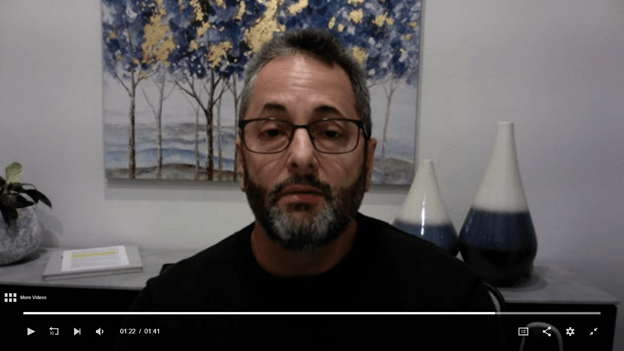
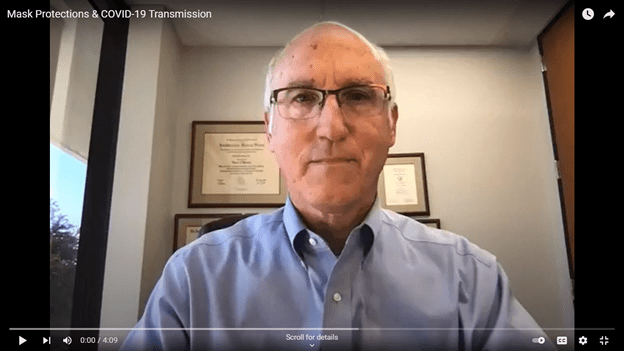
In the below North Texas Medical Society Coalition video, Fort Worth physician Dr. Robert Rogers, who is also part of the Tarrant County Medical Society, explains the different levels of protection provided by cloth, surgical, and KN95 masks, and how those differences impact his own decisions.

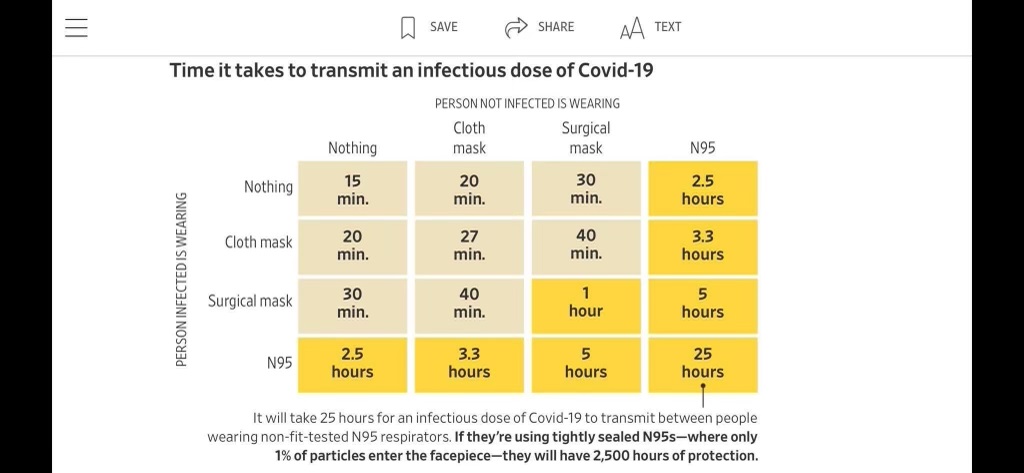
For more information on the transmission rates/mask types Dr. Rogers mentions in the video, please refer to the below chart:

From the Archives

Physician Frustrations: Who will be our future?

By Shanna Combs, MD

This piece was originally published by TMA on Blogged Arteries, a forum for physician opinion and commentary, on February 28, 2018.

shannacombs

I spoke with a young woman recently who is working on her application to medical school. She had the same excitement and nervousness regarding the application process that I had when I began my journey into medicine. Unfortunately, I was disheartened to find out that she had spoken to many physicians who had tried to talk her out of going to medical school and pursuing her dream of becoming a physician. 

I chuckled with her saying I had experienced the same thing. Unfortunately, she was even starting to question her desire to be a physician.

What happened to our field? Why are those of us in practice frequently found telling prospective students not to join our path and seek another one with better pay, better work-life balance, and more appreciation? 

Are there frustrations with the health care system, insurance, and electronic health records? Yes. 

Do we work long hours with minimal acknowledgment of our dedication? Yes. 

Do our years of study and practice get dismissed for the more vaunted Dr. Google? Yes. 

Do we sometimes forget why we even became a doctor? Yes. 

Do we also have the privilege to help patients through some of the most exciting as well as difficult times in their lives? Yes.

I find it an honor to be a physician. Do I deal with all the above concerns mentioned? Yes. 

What happened to our field? Why are those of us in practice frequently found telling prospective students not to join our path and seek another one with better pay, better work-life balance, and more appreciation? 

However, when a patient says thank you for my support during a difficult diagnosis, or I see the tears of joy on the face of a new mom as I hand her her baby for the first time, I remember why I became a doctor.

You can read the full article here.

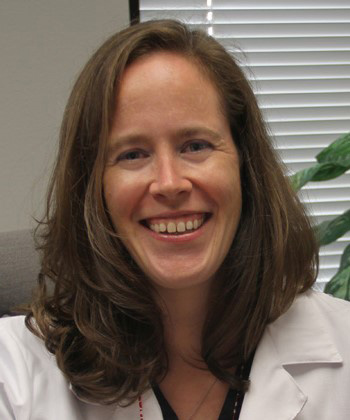
Shanna Combs, MD, is an obstetrician/gynecologist practicing in Fort Worth. Currently, she is serving as the 2022 president of the Tarrant County Medical Society.

The President’s Paragraph

Casualties of War

by Angela Self, MD

This piece was originally published in the November/December 2021 issue of the Tarrant County Physician. You can read find the full magazine here.

The church bus let me off in front of the house. It must have been after a Wednesday evening service because it was dark. I started to walk toward the house when I heard “Angela, Angela.” It was my mom quietly calling to me from her car across the street, my little sister and brother in tow. I did not know at that moment that my dad was inside the house wreaking who knows what kind of havoc. My parents had been separated for a couple of years after my mom had all she could take of his drunken rages and unthinkable actions. One time we returned home to this very house in Oak Cliff, Texas, to find all of our windows broken out and a note on the kitchen wall (held there by a large butcher knife). 

Let me back up for a minute. My dad was a brilliant man who had a heart of compassion and was an excellent teacher and patriot – when he was sober. The problem was that we rarely saw him sober in my early years. The thing about kids and their parents is, no matter how messed up a parent is, the trauma of losing them is greater than the pain endured by any disease or affliction they bring with their presence. For several years I would ask my mom if “Daddy” knew where we were and if he had called. I was sure that he just couldn’t find us. This feeling only got worse when we moved out of state. My mom met another man, and I knew he was there to stay when she told me that she was pregnant. That was one of the saddest days I can remember. I did not even know what abortion was at the time, but my mom could not afford to travel to California to get one (the year was 1973). I would not see or hear from my biological dad again until I was 19 years old. 

One thing I knew was that I could not let my new little brother grow up without a dad. The pain of that loss was all I could bear as a child and I could not let another child, my brother, suffer in that way. So I kept quiet in the midst of abuse for years. I knew that I had to because mom would leave, and she would not be able to support us without him. I also knew my little brother would be as devastated as I was when I lost my dad. Yes, my stepdad was also an alcoholic. Both of these men have passed, my dad at 53 years of age and my stepfather at 69. I was at my stepfather’s bedside after the stroke that was likely a result of years of alcohol and tobacco use. He and my mother had divorced years earlier, thank God. I had forgiven everything and kept in touch, hoping he would find the same self-forgiveness and peace that I had found at 19 — you see, he also grew up as a child of abuse. 

My mom was a little checked out (okay, a lot checked out) during the “Vegas years.” Though my stepdad was able to do a lot of construction work to support us, my mom struggled with a different addiction. My mom, who has likely never really been drunk or high, was a gambling addict. What does an abusive stepdad do when he wants the freedom to abuse his step kids? He tells his gambling addict wife to go to the casino and even gives her money for the little adventure. As soon as I was old enough to physically get out of the house, I would run away, stay out all night, miss school. My mom would ask me for years to come why I just spun off the rails at about 15 years old. She was concerned about my behavior and sent me to stay with my aunt in New York one summer and then for a semester in 9th grade. I met a boy there; he was cute. Right after I graduated from high school, I continued staying out all night. Mom told me that if I stayed out all night one more time, I could pack my bags and take them with me. I took Mom up on that offer, probably that day. I bought a bus ticket to New York (at 17) and informed the cute boy that I was coming to stay with him. 

I worked as a dental assistant to help us pay the bills; there weren’t many as we mainly lived with his parents. Sadly, he also struggled with some issues that hit a button with me and led me out of the relationship ten years after I met him. I am grateful for all that I learned from his family; I did not really know what family was supposed to look like until I spent time with his. They were wonderful people who taught me things I had not learned at “home.” Do not misunderstand, my mom loved all of her kids very much, but she was dealing with her own childhood and adult struggles which took the focus off of anything other than keeping us physically safe (which would only happen while we were in her sight). Now I was an adult, out on my own, volunteering with my ambulance corps, working as a surgical dental assistant, going to college – just in a very unhealthy relationship. But what was a healthy relationship? It would be years before I knew, if I actually do know. We will leave my relationship struggles between me and my very capable counselor. Let’s get back to the casualties of war. 

The pain of that loss was all I could bear as a child and I could not let another child, my brother, suffer in that way. So I kept quiet in the midst of abuse for years.

My mom and stepdad moved back to Texas. It’s funny how unsustainable it is when you tell your husband that you’re making the mortgage payment and you’re really putting it in the slot machines. It doesn’t work well with car payments either. They had an opportunity to buy a small home on a pretty lake near Caldwell, Texas. It was the town where we had gone to visit my grandparents when I was a kid. Things were seemingly okay with my mom, stepdad, and youngest sibling, my half-brother. Then things got rocky between my mom and stepdad, and my little brother dealt with the breakup by running with a crowd that was likely not the best. By the time he approached his teen years he had dropped out of high school and had started having kids. I remember his first daughter being born when I was in med school. He and his girlfriend began having problems and drugs entered the picture. At some point one of those drugs was meth. My mom has spent so many years trying to make up for the years lost with her oldest three kids by being a doting mom to her youngest and to his kids. At present my brother still struggles with meth. His oldest daughter, who ran track and got many awards before graduating from Caldwell High School, is now an addict who might not be alive as I write this. I really do not know. I am not allowed to mention my youngest brother to my other family members (except Mom) as we have all lived too many years waiting for that phone call from the police, hospital, or morgue. 

You can take so much and then you just check out due to helplessness in the situation. We have all been casualties of addiction of various sorts, yet we fight on. My sister is a very good nurse and has been the best mom to her college student daughter. My sister does not drink or dabble with any of the substances that wrecked our family. My brother (the clean one) has a sheep farm, is a carpenter, a loving husband and father, and has also kept his house clean from any of the things that wrecked our lives. I am here writing this article, hoping my mom will not be too hurt as she is doing the best she can to try to save the life of her granddaughter this week. Literally, doing whatever she can to get her arrested so that she will not die in a drug house (weighing about 100 pounds, covered in sores, mind almost gone, and threatening to “fix herself” in her own way). Oh, don’t worry about the resources available – my niece has already been visited by the police and MHMR this week. There is nothing they can do. 

The thing about meth is that it does not take its victims all at once; it slowly makes them and everyone in their lives casualties every single day. I wish I could give a hotline or support group info, but the only thing that I can do is pray. And I do, we do, pray. We have all come to terms with what addiction has done to our lives. We have made peace with the actions of others and regret how our own actions have hurt those around us, but we continue on in the midst of a bad dream and find joy in any area that life offers. As you go out today, remember that there is not a specific background that defines a physician, or an individual. Often, we assume that doctors only come from privileged environments, but many of us have a different story. Yet, I am the sum total of what a physician is, and so are you. We are changed, we are impacted, but we are not defined by our pasts. You never know who around you is a fellow casualty of war, doing their very best to enjoy one day at a time. God bless you all – it has been my honor to serve as your president. 

Returning to School in the Midst of the Rising Omicron Variant

Pediatrician Dr. Jason Terk recommends making careful choices as we begin a new school year while the Omicron COVID-19 variant rises in North Texas.

“Make sure you make your choices wisely about who you are gathering with,” he said. “And make sure you are gathering in safe ways.”

For more information, see the below video from WFAA:

Read WFAA’s full update on North Texas schools here.

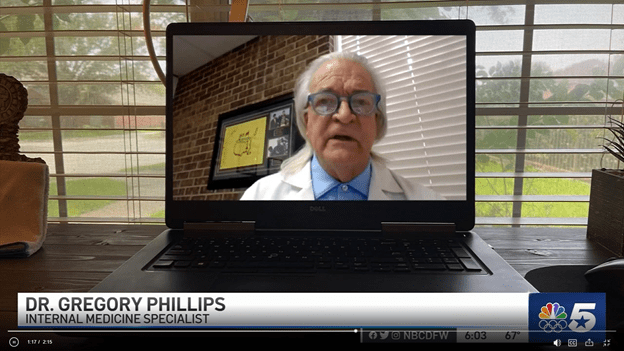
Dr. Gregory Phillips on Safe Practices with Rising COVID Numbers

Have questions about socializing in light of the rising COVID numbers that have impacted holiday plans for many, including several local restaurants who had to temporarily close their doors? Check out Fort Worth physician Dr. Gregory Phillips’ interview with Lili Zheng of NBC5 to see what he has to say on the topic:

You can read the full article here.

The Last Word – Share Your Story

by Hujefa Vora, MD

A note from our committee meeting seemed to resonate with me. One of our editors asked the group to describe the tone of this edition of the Physician. They were asked to clarify the rhetorical question. The point made was that this edition of the magazine read more like a collection of biographies than a medical journal.  Are we physicians compiling and writing a medical journal?  For over a decade now, I have worked with this committee to help produce this magazine.  I don’t know if I’ve ever really thought of it like I do perhaps the New England Journal of Medicine or JAMA.  Such magazines are usually filled with double-blinded studies, research into this and that, and critical analyses of the science of the day.  Our journal seems a bit different.

The President’s Paragraph tells of a rocky childhood and challenges overcome. In reading this, we are reminded that as physicians, we all have stories that define not only who we are personally, but also the lives we lead professionally. We are not automatons or angels with all the answers. We are humans who aspire to be more for the betterment of all of humanity.  We are not brilliant white sheets flowing in the wind.  Rather, we are tapestries with amazing, intricate stories.  The beauty of these tapestries is reflected in the practice of our trade.  Because of our own complexities, our patients connect with us, and so bonded we weave the physician-patient relationship.  Through the experiences of our own pain, we are able to relieve their pain, alleviate their suffering, and embrace our collective humanity.

The student article also speaks to fighting through stigmas and strife to achieve a goal, an almost unattainable dream. Humble beginnings define the immigrant and minority community biographies. The idea that a poor student from a third world country with nothing more than the shirt on his or her back could somehow immigrate to this country and then in a generation that individual’s progeny are successful professionals and entrepreneurs, physicians even. This idea would sound impossible back in their homelands.  Like our student though, many physicians have lived through this dream. We were told that the obstacles were insurmountable. We may not have been recognized as being able to be something more than our station, our family’s station. We may have been told that we don’t belong.  We may not have had the means to support ourselves and our families.  And yet, we endeavored to persevere.  Some students may have been discounted.  Despite this, we fight on.  We work harder.  Become stronger, wiser.  We work so that we can achieve this solitary goal of the betterment of the lives of our patients.

The feature article speaks to our connections. They are not always palpable, but they remain very real. For some of us, the physician-patient relationship comes easy. We are able to effortlessly bond with our patients.  We acknowledge our collective humanity, forging solid connections.  The relationships we have with our families and our friends often remain more evasive.  And so when these relationships cross into our professional lives, we often celebrate them.  The article celebrates the human connection, the love and respect we have for our fellow man, and then the love we have for our friends and family.  Every day in our practices, we celebrate the physician-patient relationship.  Inevitably, we celebrate our patients and the love we have for them.  Many of us agree that medicine is an art, not a pure science.  We weave our tapestries together with our patients.  We often speak of professional distance, but this really does not apply well to medicine.  We often cross our patients with loved ones, and vice versa.  We take care of our patients just as we would our own families and flesh and blood, to the point that our patients often become our family in their own right.

 We take care of our patients just as we would our own families and flesh and blood, to the point that our patients often become our family in their own right.

These are the issues which are woven into this month’s edition of the Tarrant County Physician.  If you read back, you will readily recall that these are the issues that are found throughout every edition of the journal of the Tarrant County Medical Society.  In every sense, the articles that are published for your perusal are our collective biographies.  They are the words of our TCMS Family.  These are the stories of the physicians of Tarrant County.  We have always asked our membership to contribute to the magazine, and we have never been disappointed.  All of you have beautiful tapestries to share with all of us.  I continue to encourage you to share your stories with our committee.  After all, in answering the initial question, this is not a medical journal.  We always appreciate and publish any scientific contributions by our member physicians and will continue to look forward to doing so.  If you have any articles or studies or research that you have done which you would like us to consider publishing, please send them in.  And if you think your story, your biography, your words can be shared, then please send these in as well.  The Tarrant County Physician is a direct reflection of our membership.  All of us have amazing, interesting, intricate, and beautiful stories.  Every time you read my own articles, I share my own biography with you.  I hope that y’all will continue to share your stories with me and all of us in your TCMS Family (you can do so by sending them to editor@tcms.org).  My name is Hujefa Vora, and this is Our Last Word.

The Power of Sight

A Project Access Tarrant County Patient Story

By Elizabeth Bowers

Katie reading to her children

More than anything, “Katie” wanted to see her children clearly again.

“My eyes were always irritated and red and would burn,” she said. “I would think to myself, ‘What are my children going to do if I cannot see?’”

Without medical insurance or the financial means to seek help for her condition, Katie was at a loss. And to make matters worse, her condition worsened during the COVID-19 pandemic, making it even more difficult for her to find assistance.

“We were going through a hard time,” she said. “I did not think receiving the care was going to be possible. I knew I was going to have to stay like that because we could not afford it.”

Kate was also worried about her children. During remote learning, she wasn’t able to see the computer monitor well enough to help her four young children with their schooling.

“My 13-year-old daughter was very scared about getting my condition in the future,” she said. “She would ask me, ‘Am I going to get what you have?’ I would reassure her that she would be okay and not get it, but I did not want her to worry.”

Katie sought care at Community Eye Clinic. The optometrists there diagnosed Katie with bilateral pterygia that had encroached on her eye so severely that a cornea specialist was required to save Katie’s sight. They referred Katie to Project Access and she was connected to Patricia Ple-Plakon, MD, of Cornea Consultants of Texas. Dr. Ple-Plakon agreed that Katie required surgery.

“Dr. Ple-Plakon gave me her full attention,” Katie remembered. “She was so nice and helpful. I tell all of my friends and family that they need a doctor like her. She told me she was going to do everything possible so that I would be okay.”

Dr. Ple-Plakon performed the surgery at Arlington Day Surgery Center, and the impact on Katie quickly became evident.

“I was very nervous, but the nurses made me feel safe and secure,” she said. “I was not in as much pain as I thought it was going to be. I noticed the difference in my eyesight a couple days after my surgery. I feel so much better now. I feel comfortable driving now. I do not have any more problems.”

Post surgery, Katie has been able to do many of the things she missed because of her blurry vision – such as reading to her kids. “My case worker, Diana, was so kind in helping me through the process,” Katie said. “I would like Dr. Ple-Plakon to know that I really appreciate all her help. She is my angel. I would also like to thank Project Access. I hope they continue helping people who truly need help. They can really change a person’s world.”

UNT HSC and Empower Fort Worth Partner on Survey for Professionals Serving Their Community

The Lifestyle Health Sciences graduate students at The University of North Texas Health Science Center have collaborated with Empower Fort Worth to create a survey that explores how to better meet the needs of helping professionals who serve our community through their work. This includes first responders, healthcare professionals, therapists, lawyers, and clergy.

If you work in any of these roles, please consider taking this short (5 minute), anonymous survey. You can do so here.

The goal of this survey is to identify the services and resources needed to best support the personal wellbeing of helping professionals and address their risk of experiencing burn-out or struggling with their mental health.  

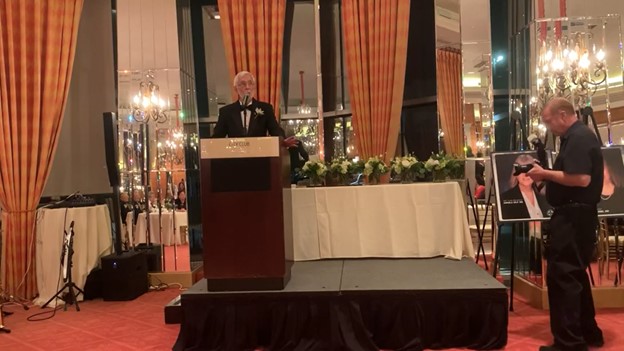
Watch TCMS’s 2021 Gold-Headed Cane and Installation Ceremony

Were unable to join us on December 9 for the Gold-Headed Cane and Installation ceremony? Click below to watch a recording of the event, which honored:

Teresa Godbey, MD – 2020 Gold-Headed Cane Award Recipient

Angela Self, MD – 2021 TCMS President

Susan Rudd Bailey, MD – 2021 Gold-Headed Cane Award Recipient

Shanna Combs, MD – 2022 TCMS President

Your Last Word

by Tom Black, MD – Publications Committee

This piece was originally published in the November/December 2020 issue of the Tarrant County Physician. You can read find the full magazine here.

“I can only wait for the final amnesia, the one that can erase an entire life.”
—Luis Buñuel

There is little doubt that my wife will outlive me, likely by decades. Her father lived to the age of 100, and we celebrated her mother’s 101st birthday last month. There is no substitute for good genes. Her father’s memory remained sharp until he laid down one afternoon for a nap and didn’t awaken. He had been quite a baseball enthusiast as a young man—his grandsons loved to hear him tell about the time he met Babe Ruth. In his final years, he avidly watched any and every sport on television and knew every player and their current statistics in several of the major sports. His wife, however, has followed the more familiar scenario of progressive dementia with increasingly poor short-term memory over the past three years. At this moment, she is sitting across the room from me, and she just asked for the third time in five minutes what the temperature is outside. It is sad for me to see this happening to one of the three most wonderful women I know.

I am all too familiar with dementia from my own father’s last few years. He had been a brilliant chemical engineer and remains one of the most accomplished people I have ever known. It was painful to witness his decline. I once watched him read and reread a typed letter on a well-worn piece of paper. Each time he did so, his smile faded and his eyes filled with tears before he sadly put the letter down. Within a few moments he had regained his usual happy demeanor and was about his business until he noticed the letter lying where he had placed it. He picked it back up and reread it with the same sad results. After observing this cycle several times, I peeked at the letter and saw that it was from his primary care physician. It read, “Dear Mr. Black, you have been diagnosed with dementia . . . . .” I disposed of that letter very quickly, and my father never realized it was gone. His memory loss progressed inexorably from short-term to include even long-term during his final year, resulting in a peaceful but oblivious state of total amnesia. It was no longer possible to pursue a meaningful relationship with him because we shared no common ground and could discuss only the environment around us at that moment. We could no longer revel in family memories. He recognized no photographs and could not even recall personal food preferences. Toward the end, we visited him—not for his sake, for we realized our visit would have no significance to him after we left—but for our sake, because it would be of significance to us. 

In his 1985 book, The Man Who Mistook His Wife for a Hat,  the late neurologist, Dr. Oliver Sacks, recounted the story of “The Lost Mariner.” Jimmie G. had developed amnesia due to Korsakoff syndrome. He could remember nothing of his life since the end of World War II, including all events that had taken place more than a few minutes earlier. He believed it still to be 1945, and although he behaved as a normal 19-year-old, Jimmie was, in reality, nearly 50. He was completely incapable of accomplishing anything noteworthy because he could not build one memory upon another to form a progressive narrative. His life had been frozen in time, in 1945. It was a living death.

Is there a better explanation of what makes life meaningful than Memory? Without memory, life cannot possibly be more than a moment-to-moment existence. In his memoirs, the film director, Luis Buñuel, wrote, “You have to begin to lose your memory, if only in bits and pieces, to realize that memory is what makes our lives. Life without memory is no life at all. Our memory is our coherence, our reason, our feeling, even our action. Without it, we are nothing. I can only wait for the final amnesia, the one that can erase an entire life.”  

“Generations from now, their descendants will know about them, but they won’t know them.” 

I am noticing that my forgetfulness is slowly increasing. Doorways have become amnestic devices; as I pass though one into the next room, I find I have suddenly forgotten the reason I came. I am on the hunt for ways to stave off memory loss.

Which brings me finally to the point of this essay. 

The movable printing press was invented in China around 1040 AD using porcelain type, but Gutenberg had the immense advantage of an alphabetic language when he introduced the metal movable-type printing press in Europe around 1450. Suddenly information could be much more easily recorded than ever before, and the past could now be remembered by means other than oral or hand-written accounts. Within 50 years, over 9 million books had been printed, accelerating the dissemination of ideas in the early Renaissance. What defines the Modern Age if not the ability to more thoroughly record and recall past actions and discoveries? And how much greater of an invention is digital storage, which can “remember” and make instantly available entire libraries of information. 

My father lived out west, and I was able to visit him about three times a year. At the time we celebrated his 90th birthday, my mother had recently passed away, and my father had plenty of free time. I asked him if he would do me a big favor, and he agreed. Knowing he had led a very interesting and eventful life, I asked him if he would please write his autobiography so his children, grandchildren, and future descendants could always know what a great man they had as an ancestor. He agreed to have at least one chapter completed by each time I visited, and while I was there, I typed what had he had written into his computer. After the 16th chapter, he declared that he was done. I had the book printed and bound, along with the diary that my mother had kept the last two decades of her life, and each of their living descendants received a copy. This book has become a priceless remembrance of two noteworthy lives, more meaningful to me than to my children, because I knew both of my parents so well that I seem to hear them speaking the words as I read them. For the next several years, my father spent much of his time reading and rereading his autobiography, reliving in his mind, I am sure, the halcyon days of his youth and productive adult life that he would otherwise have been slowly forgetting. 

About that time, I was talking with a friend and former college roommate. His 100-year-old father, a former physician, was living with my friend and his wife at the time, and I asked my friend what his father was doing with his time. “Oh,” he replied, “most of the time he just sits and reads the autobiography he wrote 10 years ago.” With the brain, as with a digital storage device, sometimes a hard copy is helpful to have on hand for when the primary device begins to fail.

Although a written autobiography won’t assure you of immortality in an eternal sense, it will give you an opportunity to achieve immortality in this life and assure that the memory of your existence will long outlast you. Begin writing it now while your experiences are fresh in your mind; small bits of your personal history may be eroding away even as you are reading this. It was labor intensive for my father to write the words by hand and then to type them into the word processor. It is so much easier these days with recording devices everywhere; my iPhone will even transcribe voice-to-text while I am driving, and I can edit later. I can’t imagine the process getting any easier than that, since thought-to-text technology, to my knowledge, is not just around the corner. 

Throughout their last years, my wife and I interviewed her aged parents. We quizzed them about what life was like as they were growing up during the ‘20s and the years of the Great Depression. We learned of their lives as newlyweds during World War II and as they raised their children during the mid-twentieth century. We added to what we already knew of them as empty nesters. We compiled our notes into biographies of them before and after they became a couple. A century from now my father-in-law’s descendants might still read about him growing up in a town with no paved roads and few automobiles, about his visit with Babe Ruth and his stint in the Army during WWII. They will read about his wife’s parents, who were immigrants from the Ukraine; her reputation as the best golfing, bowling, and tennis partner in the area; and how she and her future husband met on a blind date. But it just isn’t the same as my parents’ accounts; they are altogether too brief for such long and noteworthy lives. Most importantly, they lack a personal touch. I don’t hear their voices when I read their second-hand stories. Generations from now, their descendants will know about them, but they won’t know them. Don’t allow that to happen to you. For a future reader to hear your voice rather than that of your biographer, you must write your story yourself. It is your opportunity to have The Last Word.

 1Oliver Sacks, The Man Who Mistook His Wife for a Hat, [New York: Simon & Schuster, 1970]

2Luis Buñuel, My Last Breath, [London: Virgin Books, 1983], p. 4-5.
Create your own website, free on WordPress.com.Create your own website.
Start free