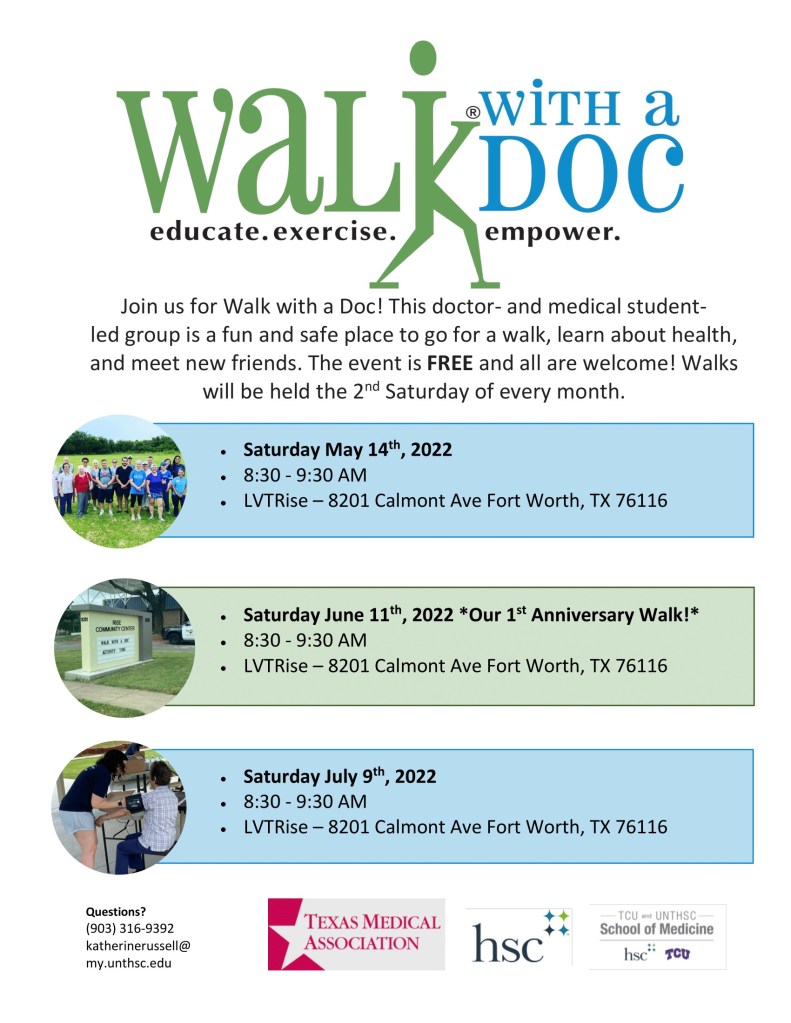
WHAT: Fort Worth residents of all ages are encouraged to lace up their walking shoes and join medical students and faculty from Texas College of Osteopathic Medicine for Fort Worth’s first anniversary Walk with a Future Doc (WWAFD) Texas event.
WHEN: Saturday, June 11, at 8:30 am (recurring monthly every second Saturday)
WHERE: LVTRise – 8201 Calmont Ave Fort Worth, Texas 76116 (Meet at the outdoor area behind the facility)
WHO: Dr. Maria Crompton, medical students, and any community members interested in participating
WHY: Walking is one of the simplest, best things people can do to live a long, high-quality life. WWAFD makes it easy by providing the time, place, motivation (a brief health information talk), and fellow participants for a fun walking experience.
TheWalk with a Future Doc concept is simple: Physicians and medical stduents organize walks in their communities and invite their patients, their patients’ families, and community members to join them. Walkers will enjoy a refreshing and invigorating walk with Dr. Crompton and other health care professionals, who will provide support to participants and answer questions during the walk.Walk with a Doc Texas is overseen by a national nonprofit organization to get people active and healthy, and is backed by the Texas Medical Association (TMA) in Texas.
This is a FREE program, and preregistration is not required. Information about future walks will be announced on this chapter’s Walk with a Doc website.
Walk with a Doc is a nonprofit organization whose mission is to inspire communities through movement and conversation with physician-led walking groups. Walk with a Doc was started in 2005 by David Sabgir, MD, a board-certified cardiologist in Columbus, Ohio. To learn more, visit theWalk with a Doc website.
“Rebecca” wasn’t looking for a miracle – she just needed to see a gynecologist. The 47-year-old mother of three was suffering from abnormal uterine bleeding. Her problem eventually became so severe that she had to quit her full-time job as a phone salesperson because she was drained emotionally and physically.
“I suffered a lot,” Rebecca says. “I was in a very dark place . . . I could not even drive because I was not well in all aspects of my life.”
But in spite of her clear need, between her financial limitations and immigration status, Rebecca was faced with a resounding chorus of “Nos” as she struggling to find the help that could turn her life around.
“I was crying all of the time because I could not find anyone to help me,” she says. “I was having constant bleeding that would last months. All I wanted was help and to be treated like a human.”
Eventually, she was able to receive mental health support through Health Services of North Texas. Through this program she was connected to a psychiatrist who began helping Rebecca manage her anxiety and depression. They also referred her to Project Access.
Dr. Carolyn Quist, a Project Access volunteer, agreed to take Rebecca’s case. After finding numerous cysts on both of Rebecca’s ovaries, she determined that they needed to be removed. She performed the surgery at Baylor Surgicare in Fort Worth, and anesthesia was provided by U.S. Anesthesia Partners.
“She took really good care of me, and she always asked how I was doing emotionally, which I believe she did not have to do, but she still asked,” says Rebecca of Dr. Quist. “She is not only an amazing doctor, but she is also a wonderful person. She explained everything to me thoroughly and patiently. I will never be able to repay all of the help she has given me.”
Currently, Rebecca is still gaining strength as her body heals, but her overall health is much improved. She has hope for the future, and gratitude for those who said “Yes” to her when she needed it most.
“Project Access is an awesome team, and I will always be thankful for their help,” she says. “Knowing that they offer help for people like me makes me so happy.”
By Catherine Colquitt, Tarrant County Public Health Medical Director
This article was originally published in the May/June 2022 issue of the Tarrant County Physician. You can read find the full magazine here.
Tarrant County Public Health (TCPH), with its long history of providing vaccinations and testing in response to outbreaks and exposures, is rapidly expanding mobile operations to meet more testing, vaccination, treatment, screening, surveillance, contact tracing, and risk reduction education needs in our rapidly growing county.
TCPH staff and leadership have learned much during the COVID-19 response about taking services “local.” We have benefitted greatly from working with such partners as county, regional, state, and federal government agencies, as well as first responders, municipalities, the Tarrant County Medical Society, school districts, colleges and universities, primary and secondary private schools, preschools, childcare facilities, places of worship, and municipal and state emergency management and preparedness experts.
Responding to the need for mobile services with COVID-19 has reshaped healthcare delivery and has redefined preventive risk reduction and early/expedited treatment strategies for communicable diseases. It may also help us to move closer to the health equity we wish to achieve in our county and beyond. The COVID-19 pandemic has exposed disparities in access to vaccines, testing, accurate COVID-19 information, and expert advice regarding COVID-19 risk reduction strategies (masking, social distancing, practicing cough and hand hygiene, self-isolating when ill, quarantining after COVID-19 exposure, and vaccination).
As of March 24, 2022, some 2,894,773 COVID-19 vaccinations have been administered in Tarrant County, with 1,338,110 people (66.24 percent of eligible Tarrant County residents) having received one dose, and 1,179,080 people (58.37 percent of eligible Tarrant County residents) being considered fully vaccinated with one Johnson and Johnson vaccine or two doses of mRNA vaccines.1
Essential clinical services offered by TCPH include immunizations; HIV testing, prevention, and treatment; STD screening and treatment; tuberculosis treatment; screening and contact investigations; drug treatment for latent tuberculosis infection; travel medicine clinics for advice; and vaccinations essential for safe international travel. We believe that a hybrid approach to the delivery of these services is vital to addressing health equity and access issues that could otherwise interfere with our objective of safeguarding the public’s health. We continue to operate our brick and mortar clinics across the county, but we must be nimble to serve communities which can’t easily access services in our fixed locations. We have a highly visible VaxMobile (an articulated city bus provided by our Fort Worth Transportation Authority partners), and we have purchased five mobile immunization trailers customized for the purpose. We have also purchased a 26-foot-long mobile van in which we can see clients for education, testing, and treatment.
We are ready, willing, and coming soon to your neighborhood. Remember, “Public Health is Where You Are”!
Physicians from JPS Health Network are offering free sports physicals for Fort Worth ISD student athletes on Saturday, May 21.
Fifty JPS physicians, including seven Sports Medicine Program fellows, Sports Medicine Program faculty members, and physicians in the Family Medicine Residency Program, will perform the exams. A comprehensive sports physical exam is required for Fort Worth ISD students to participate in athletics in the new school year. The free event is a convenient opportunity for students to get a checkup.
Also volunteering their time are more than 30 others, including JPS nurses, EMTs, and students from Texas College of Osteopathic Medicine, who will take vital signs. Other JPS team members have been enlisted to direct the students to various stations.
“We want to be involved in our community. We want kids to be able to participate in sports because it provides so many positives for our youth today,” said Sports Medicine Fellowship Program Director Michele Kirk, MD.
The mass physicals event has not taken place since 2019 due to the COVID-19 pandemic. Kirk noted that at past events JPS physicians have identified serious health problems in some teens while checking students’ readiness for sports. Athletes are referred to the appropriate physician providers for further evaluation and treatment in these situations.
JPS Sports Medicine physicians serve as team physicians for many high schools in Fort Worth ISD and Arlington ISD as well as being the team physicians for Texas Christian University, Texas Wesleyan University, and Southwest Assemblies of God University. They specialize in preventing, diagnosing, and treating injuries related to athletics and physical activities. To find out more about the JPS Sports Medicine program, visit jpshealthnet.org/get-care/services/orthopaedics.
Physical examination and medical history forms must be completed and signed by a parent or legal guardian by Wednesday, May 18. All FWISD athletes wanting to participate must go through their school and athletic trainer. Parents will not be allowed to bring their children in for the physicals themselves.
This article was originally published in the May/June 2022 issue of the Tarrant County Physician. You can read find the full magazine here.
“Cranial nerves two through twelve intact. Sensation is absent to light touch in right C5 and C6. Strength five out of five in bilateral upper and lower extremities. Bilateral hyperreflexia noted in patellar reflexes. No gait abnormalities,” I recite to my neurology preceptor. I quickly tap my right foot in nervous anticipation of disseminating the physical examination findings and their implications to the patient.
Context is everything. One year ago, abnormal neurological findings on an Objective Structured Clinical Examination (OSCE) would excite me. It was a free space to explore various pathologies in depth without fear of harming the patient. But this is not an OSCE. Gone are the days when hired actors pretended to be patients with medical cases. This is the real world with patients experiencing debilitating symptoms presenting to clinics. Now, abnormalities are not just an opportunity to see topics I learned in class or in a textbook last year come to life. Rather, abnormal physical exam findings in the real world can have devastating effects on individuals’ lives and on their overall wellbeing.
Informing patients about abnormal findings that warrant further imaging is not an easy task. I take a deep breath and knock on the door. I calmly deliver the news that his neck pain, hyperreflexia, as well as his numbness and pain in the middle and pinky fingers necessitates an MRI of the cervical spine for evaluation of possible cervical degenerative disc disease.
“So, I won’t know if I have that disease until I get the MRI?” asks the patient.
“Yes, that’s correct. Imaging is a tool we can use to confirm our clinical findings,” I reply.
The patient’s body starts to reflect the stress he feels from this information. Sweat beads form on his forehead. His brows furrow. His lips quiver.
“But it won’t be until a couple of weeks that I can get the MRI and have the results back,” he worriedly says.
I sense his uncertainty, and I spend twenty extra minutes with him. I calmly explain that it is normal to feel anxious about the unknown. I further explain that imaging is a helpful tool we can use to confirm our clinical findings. I reassure him that physical exam findings and imaging results together will allow us to formulate an efficacious treatment plan to fulfill his goal of improving his symptoms.
Our job as healthcare professionals transcends purely applying medical knowledge to real-life settings. The quality of the medical information we give patients is valuable only if it is delivered in an understandable manner that takes into consideration how that information affects their daily lives. If the pathology is prioritized over the patient, medical care will not suffer, but the patient will. Given that our primary duty is to ensure the wellbeing of patients, patient encounters are more fruitful when extra time is spent explaining the importance and relevance of the information. It takes years to fully master medical topics for medical students who spend all day studying and are constantly immersed in the material. It is not a fair expectation to assume that patients will recognize the significance of and be able to apply health recommendations without a clear and thorough explanation by the caregiver. Patients are real people, and this recent encounter reminded me that entering medical settings is a vulnerable situation that requires physicians to acknowledge their experiences with care and compassion.
Antonio Igbokidi, a second-year medical student at TCU School of Medicine, brings Black men together to discuss mental health at a Fort Worth barbershop.
“It’s all about figuring out ways to get men of color to have raw, vulnerable and organic conversations about mental health,” Igbokidi said. “Figuring out how to destigmatize and demystify mental health.”
Dr. Dixon is a psychiatrist with his own private practice in Fort Worth. He helped guide the discussion among the two dozen of men that came to the barbershop.
“It’s always fun to be in the classroom but to see one of my students actually out in the community doing some amazing work connecting people is amazing,” Dr. Dixon said.
For two hours, Igbokidi and Dr. Dixon, led the discussion where the participants talked freely about issues among Black men, young and old, in their community. The group shared their thoughts on crime, love, relationships, fatherhood, jobs and more.
“As a psychiatrist I’ve heard a lot in my day,” Dr. Dixon said. “But today was really poignant because it came from Black men and people who look like me. I’m really glad that they were felt safe enough to be in this space and share and that they trusted me with that honesty.”
Igbokidi also collaborated with the Black Heart Association to offer free screening for cardiovascular disease for anyone attending the session. Michael and Tara Robinson, co-founders of the Black Heart Association, were happy to be a part of something to help ease the hearts and minds of Black men.
“Everything flows through the heart whether it be mental or emotional,” Michael said. “As African American men we’re raised in a culture where we’re taught to be strong. Even as young boys there’s not a space for us to have safe conversations and be vulnerable.”
The men were able to get their glucose levels, cholesterol, blood pressure and risk of heart disease checked. The Black Heart Association has a mobile heart center where they go to barbershops, and other places, around Tarrant and Dallas Counties and offer free screenings for heart disease.
“We know that mental health plays a part in heart disease so this event was like the perfect marriage between what we do and what Toni is doing,” Tara said.
Igbokidi plans to continue the mental health sessions with his next stop being in the historic Stop 6 neighborhood in Fort Worth.
“I’ll have these same conversations whether or not they are larger or smaller,” Igbokidi said. “Just being able to have these conversations is going to bring healing. It’s going to bring understanding and it’s going to allow the communities to become stronger.”
The federal government is trying to standardize data sharing so electronic health records (EHRs) across the country can all speak the same language. The Texas Medical Association is telling the government to keep working on it.
TMA submitted comments on the draft of version 3 of the United States Core Data for Interoperability (USCDI), which aims to establish data-sharing standards “for nationwide, interoperable health information exchange.” USCDI updates come from the Office of the National Coordinator for Health Information Technology (ONC), which released the version 3 draft in January. The first version of USCDI became part of certain EHR certification criteria.
In an April 27 letter to ONC, TMA offered several suggestions on how to improve the proposed new version, including:
Assign “applicable vocabulary standards” to any data elements added to the USCDI so there’s an established way to refer to those data across EHRs. “Adding nonstandard elements will result in an enormous amount of vendor and end-user work that will simply create nonstandard data that are difficult to transfer. It also will create an excessive amount of rework in the future once applicable vocabulary standards are set for these data elements,” TMA said in the letter.
Test EHR vendors and users to ensure a smooth transfer of data from previous USCDI versions 1 and 2. TMA told ONC it is hearing from physicians already frustrated “because of the manual manipulation of data received [from EHRs] that places additional burden on practice staff who are already stretched thin.” Information that a physician receives from a hospital, TMA said, “is not always in a human-readable format or is so limited as to be not useful or actionable.”
In fact, then-TMA President E. Linda Villarreal, MD, and Ogechika Alozie, MD, chair of TMA’s Committee on Health Information Technology, urged ONC to delay finalizing and requiring the new USCDI version “until EHR vendors prove their users are able to functionally use USCDI versions 1 and 2 and that all data elements” are streamlined.
“Patricia” has one main goal in life: to love and provide for her three young children. But when the single mother suffered from a painful umbilical hernia, it caused so much physical stress on her body that she was unable to work. And though she still trudged through family activities, the pain made her emotionally distant. Everything important to her was being compromised, and she worried about their future – especially that of her seven-year-old, who has special needs.
“The pain was bearable in the beginning, but as time went on it was getting worse, and my belly button was sticking out,” Patricia says. “I fortunately did not have to go to the ED, but I did resort to pain medication for relief.”
She knew continually taking pain medicine was not a good long-term option, so Patricia went to Mission Arlington for treatment, thinking she might have ovarian cysts. Instead, she found out about the hernia and that she would need surgery. In that moment, she was overwhelmed by fear.
“I did not have the money,” she says. “And who would take care of my kids? How would they be provided for? A lot of thoughts came racing through my mind.”
Then Patricia was connected to Project Access, and everything began to change. She realized she wouldn’t face the financial avalanche of paying for a surgery she couldn’t afford, and she was going to finally get help for the pain that was holding back every part of her life.
Now as Patricia heals from the hernia repair, she tries to put the impact into words.
“The surgery was done perfectly,” she says. “I don’t have any pain anymore, and when I have my menstrual cycle, it is normal. It is no longer heavy or overbearing. I can do anything now; I feel amazing!”
She thanks God for using the doctors and Project Access to provide much-needed care and prays that all who helped continue to be rewarded for their service. “I will always be grateful for everything Dr. Saad has done,” Patricia says. “I am so thankful for the support I received since day one and for guiding me through the process. I would not be where I am now without PATC.”
This article was originally published in the March/April 2022 issue of the Tarrant County Physician. You can read find the full magazine here.
Two roads diverged in a yellow wood, And sorry I could not travel both And be one traveler, long I stood And looked down one as far as I could To where it bent in the undergrowth;
We all had a choice. We graduated from medical school and then picked a residency along the way. We knew that this choice had to be lasting. That was a lot of pressure for those of us who think too deeply or gaze off too far toward the horizon. And yet, the decision was made, none of us grasping the fact that an even bigger decision lay ahead of us just around the bend, past the undergrowth.
Then took the other, as just as fair, And having perhaps the better claim, Because it was grassy and wanted wear; Though as for that the passing there Had worn them really about the same,
What did we do next? Some chose academics, though that was a minority. An even smaller minority chose private practice. And many chose to join the world of corporate medicine, working for hospitals or insurance conglomerates or large multispecialty groups. That may be three roads, not two, but you get the gist.
And both that morning equally lay In leaves no step had trodden black. Oh, I kept the first for another day! Yet knowing how way leads on to way, I doubted if I should ever come back.
At the time, all of these choices looked to be equal. It felt right, though, that I would start my own business, put out my shingle, a welcome mat of sorts, try my luck, and let the cards fall as they may. And fall they did. For 20 years, I have run a business, something I was never trained to do. I have built a successful practice (knock on wood), successful not because I’ve made a lot of money, something solo primary care physicians rarely do anymore, but because my staff and I have helped a lot of people live better, fuller lives. Above all else do no harm, but that really means do the best for your patients, their families, our friends, and all of us.
I shall be telling this with a sigh Somewhere ages and ages hence: Two roads diverged in a wood, and I— I took the one less traveled by, And that has made all the difference.
But now, it is so much easier to look back and ponder a new choice. With the advent of quality measures, ever-changing metrics where the finish line is constantly moving, with the dissolution of the fee-for-service system, it has become infinitely harder to run a small practice. To oversimplify, we don’t always know where or when revenue will come in, and the variability increases with the fact that we never know how much we will be paid for the work we do. And when my patients remind me that I’m not doing it for the money, I also remember that without the incoming stream of revenue, I would not have a practice that does so much good for my people, my friends, my patients. Perhaps as I continue to walk this chosen path, I will cross a stream or two, get tangled in the brush, maybe even trip, fall, and get back up again. No matter what, as all of us who are in small practices are apt to do, I continue forward, not knowing what lies ahead. Perhaps I will come to another place where two roads diverge in the woods, and I will have to choose again. For now, I bow to one of the Greats, and let Robert Frost have The Last Word.
This article was originally published in the May/June 2022 issue of the Tarrant County Physician.
Photo credit: Texas Medical Association
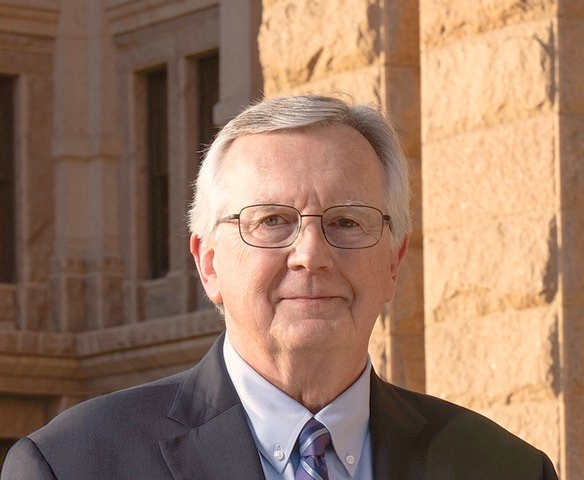
On April 30, 2022, longtime TCMS member and past president Dr. Gary Floyd was installed as TMA’s 2022/2023 president. A pediatrician who has practiced in Tarrant County for over 40 years, Dr. Floyd sat down with the Tarrant County Physician to talk about everything the led him to this point, and what he anticipates for this next year as he takes the helm of one of the largest medical associations in the country.
Q So Dr. Floyd, what would you say, in your opinion, is the best thing about being a doctor?
A You know, I think the best part or the most amazing part to me is that people, and in my case families, trust you enough to take care of their children. And for adult docs, those patients trust them enough to take care of them. I have always just stood in awe of that. The second part for me has been the collegiality, and that has come both in the workplace and through organized medicine. I have over the years made many acquaintances, many friends, and that’s just not replaceable.
Q Speaking of the physicians you’ve worked with, how do you think organized medicine – TMA specifically or any of the multiple organizations you’ve worked with over the years – impacts both physicians and patients?
A I think organized medicine gives us a collective voice for the issues that plague all of us. We can usually come to common consensus, and it gives us a large body of people, a large number of physicians, who will speak out for our issues. And instead of just one person crying in the wilderness alone, you go representing fifty-six thousand members of TMA. People start listening in.
Q That makes a lot of sense. So, on advocacy: what do you think are some of the most important ways that advocacy has impacted the practice of medicine? I know there’s a pretty long laundry list.
A There’s a long list, yes. I think for Texas physicians one of our biggest achievements or wins was our liability reform that occurred back in 2003, almost 20 years ago. Thanks to work with the public and literally grassroots in the office in talking to patients, this went before the public in a proposition for a constitutional amendment and passed. So hats off, not only to the physicians who worked so hard on that but to the public who understood the need to bring in more physicians to Texas.
I think you’d also have to hallmark [that TMA] sued CMS and won in the district court in Tyler and now we’re waiting for their appeal. This had to do with the No Surprise Billing act. Congress got it right in their wording and had a very fair independent dispute resolution process. But in writing, CMS’s rules initially came out very much in favor of insurance companies and detrimental to physicians. So that’s why Texas sued and won. It’ll be interesting to see how this will pan out, and whether the federal government will appeal to a higher court. But we’re ready for that battle. It’s an expensive battle, but it’s well worth fighting for physicians and for patients.
Q You’ve talked about some issues that are clearly important to you. Focusing on your leadership roles: a lot of physicians are involved in organized medicine but only so many choose to actually get involved on the leadership level, which allows you to really participate in creating change. What inspired you to do so?
A I think every leadership position I’ve ever run for or been elected to, it’s been because others have asked me to do it, so I think it’s been because of the relationships that have been built with colleagues as we went through our normal course of work. Showing up to those meetings and participating in committees. And with respect to TMA, not only committees but councils; apparently people agreed with some of the things that were important to me and with the way that I could express that, and those were the folks that asked me to serve in various positions with TMA. And my wife says it’s because I can’t put my hand down and haven’t learned how to say “no!”
Q Looking back at some of your leadership roles between TCMS, TMA, AMA, and the different organizations you’ve been with, what have been some of the highlights along the way?
A I’ve had the incredible privilege to serve as president of Tarrant County Medical Society, now president-elect for the TMA. I’ve been very honored to serve as president for Texas Pediatric Society and president of the Texas chapter of the American Academy of Pediatrics. One of my most fun jobs was when I got to chair the TMA Council on Legislation. That was really a fun time – there was a lot of interaction at the capital, and I’m looking forward to that as president next year since it’ll be a legislative year starting in January.
But perhaps one of the most challenging positions was serving as chair of our TMA Board of Trustees during the pandemic when we had to become an emergency disaster board. Thanks to the great teamwork by all members of our Board, we got through it and managed to take care of the TMA business that needed handling.
Q Going back to the legislative session, what are some of your overarching goals for that? And what are some of the things you hope to accomplish during your presidency?
A My agenda is mainly just serving my fellow physicians in the best way I can. You know, I think we’ve really taken it on the chin with COVID. For two years there have been challenges from appropriate equipment shortages to a lot of garbage on the internet that has been very misleading. So my main goal for this year is for us as physicians to reclaim trust, to try to unify better, to try to communicate better, and try to find the common issues that we need to stress and push that really impact our patients. Also, to protect the autonomy of the patient-physician relationship however we can so physicians can address issues comfortably without either [patients or physicians] fearing interference from any of those other entities, be it government, be it insurance, be it hospital – whatever.
Q That concern is definitely a top issue. So what would you tell someone who is right at the beginning of their career, or the beginning of their involvement with organized medicine?
A For any physician just starting it’s really important for them to know who they are, so they have to have a support base. And for me that starts with faith, with my faith in the Lord. For them it may be something else, I don’t know, but I think that has really helped ground me. The other part of that is my family; they keep you grounded, and they keep it real. And then joining in with colleagues. Being not just a participant or a member but being and getting involved in organized medicine.
There’s a lot to be done. We have a lot of committees and councils that are doing excellent work and it’s finding what’s important to you and making the time. You literally have to make the time to get involved. You sacrifice some family time and time working in your practice. So you have to be aware of that; you have to plan. But I just can’t encourage people enough, to know how rewarding and how worthwhile it is to make that time to join with your other colleagues and be involved in organized medicine and join the leadership team.
Q So looking at this next year, it’s a very exciting time for you. You’ve had a great career; you got to help a lot of people in both practice and in organized medicine, but now you’re starting something new. Do you have anything you’d like the physicians of Tarrant County to keep in mind this next year?
A One thing I would say, not only to the Tarrant County physicians but those throughout the state, is to stick to issues. State opinions about issues, but insulting public officials is never going to get us anywhere, not even into compromised territory. Call me, call [TCMS CEO] Brian Swift, get it off your chest. But don’t put it out on social media; it rarely achieves anything.
For the folks in Tarrant County, I know practice and family and faith life are demanding, but I am an example that you can do organized medicine with all of that. I would encourage you to show up. Just come. The biggest part of getting involved is showing up. We are always looking for people to serve on committees and councils. I didn’t do anything special; I don’t have any special knowledge. The experiences I’ve gained are because I’ve shown up. It’s important to be involved now, because the practice of medicine is being challenged in many ways, and it is your chance to make a difference for your practice and your patients. So show up; you’ll be glad you did.
In our next issue, you will again hear from Dr. Floyd as he reports on his experience as TMA president and highlights TMA’s top priorities.


 Tarrant County Physician Online