Blog Feed

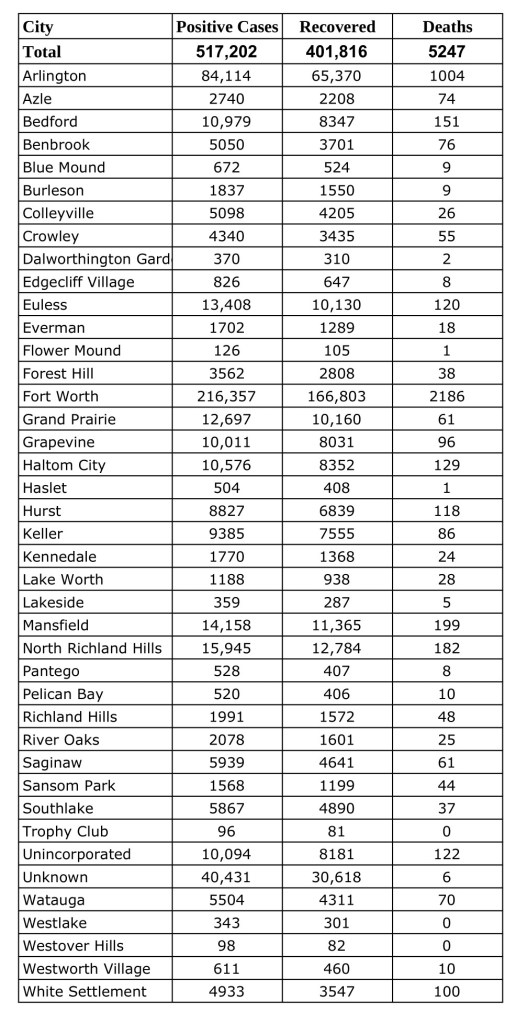
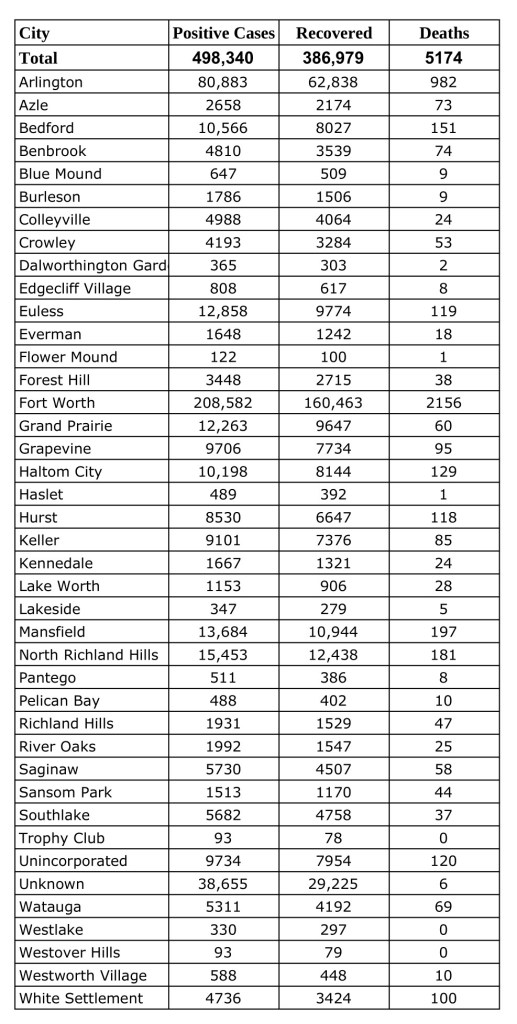
Tarrant County COVID-19 Activity – 01/25/22

COVID-19 Positive cases: 498,340

COVID-19 related deaths: 5174

Recovered COVID-19 cases: 386,979

Data from Tarrant County Public Heath’s (TCPH) report of COVID-19 activity in Tarrant County updated Tuesday, January 25, 2o22. Find more COVID-19 information from TCPH here.

*These data are provisional and are subject to change at any time.

Deaths and recovered cases are included in total COVID-19 positive cases.

PAC-ing a Punch for Medicine: Involvement in TEXPAC Lays Foundation for Legislative Victories

By Joey Berlin

Published by the Texas Medical Association  for the January 2022 issue of Texas Medicine. Read the original article here.

Well before he became an internist in Temple, Jimmy Widmer, MD, witnessed firsthand the significance of political activism as a high school student in 2003 when medicine-friendly lawmakers in the Texas Legislature passed House Bill 4 – the sweeping medical liability reforms that stopped the frivolous lawsuits, obscene liability premiums, and a physician exodus that were destroying the practice of medicine in the state. 

He has relatives in medicine, so Dr. Widmer’s parents knew what sham lawsuits and their ripple effects were doing to the state’s physician community, and they did their part to help. 

“We were the only house on the street with a ‘4’ sign,” Dr. Widmer recalled. “I remember that to this day.” 

Now that he’s at the helm of TEXPAC, the Texas Medical Association’s political arm, Dr. Widmer urges his TMA colleagues to join the effort to unify medicine’s voice in politics. 

TEXPAC leaders say victories like HB 4 happen because of grassroots, physician-driven efforts to elect friends of medicine to office. The same goes for more recent major victories like the new law that allows physicians to earn exemptions from insurers’ prior authorization requirements, or the overwhelmingly successful stands against nonphysicians’ attempts to practice medicine. 

TEXPAC helps generate those victories with a dogged, systematic evaluation of candidates who have the profession’s best interests at heart, endorsing and funding the ones who demonstrate their medical mettle. It’s the Party of Medicine, not of Democrats or Republicans; a candidate’s stances on TMA’s top issues, and the impressions of TEXPAC physicians in a candidate’s district, are what carry the most sway. 

Even in what he describes as a caustic modern political landscape, Dr. Widmer says staying on the sidelines isn’t an option, with medicine under attack from every direction. 

“No longer can we afford as physicians to have the mentality that, ‘I’m just gonna go to my office, practice, and [then] go home.’ There’s too much at stake,” he said. “There are too many people trying to do what we have gone to school and trained years to do. We have to stand up for that, and we have to get active and get involved.” 

Members’ role 

The annual financial contribution required of a TEXPAC member – while an important piece of the puzzle – is just one aspect of what the organization needs from its participants, says TEXPAC Executive Director Christine Mojezati. 

Physicians who join TEXPAC have the flexibility to make their membership as involved as they want or are able. That can just mean paying your dues, but TEXPAC asks its doctors to do more to fully help medicine’s cause. Some of the most important activities a TEXPAC member can engage in are: 

• Participating in your county medical society, including taking part in its legislative committee and/or candidate evaluation process. 

• Getting to know the legislators in your district or area, such as by visiting them in their local office, calling them for a conversation, or taking them to coffee or lunch. Doing so gives physicians a chance to relate stories about their practice and how certain policies are affecting their day-to-day life and their patients. 

• Responding to TMA Action Alerts, which mobilize members to contact lawmakers on particular issues or legislation of urgent importance. 

“Financial contributions not only gain us access but also give us a seat at the table,” Ms. Mojezati said. “But there’s nothing like the personal stories of a physician about how they cared for their patient, or why a certain bill or law would affect how they would care for their patient.” 

An entry point to getting acquainted with your local elected officials is participating in TMA’s monthly First Tuesdays at the Capitol lobbying events during regular sessions of the Texas Legislature, says Fort Worth allergist-immunologist Robert Rogers, MD, a past chair of TEXPAC. First Tuesdays – which went virtual in 2021 because of the COVID-19 pandemic – allows physicians face time with legislators, an avenue for cultivating the relationships that lead to receptive ears. 

“It is really meaningful for our elected representatives and senators to actually know us – to be able to recognize you by name when they see you in the Capitol or in their local office,” Dr. Rogers said. “That doesn’t mean we always get everything we want. But it’s much easier to have a discussion about issues with the people that you’ve already developed a relationship with.” 

Those conversations – and other vital TEXPAC activities – aren’t merely confined to the four-plus months when the legislature meets every odd-numbered year. In fact, much of the work comes during the interim period between sessions, when TEXPAC makes itself available as a resource both to legislators and to candidates running in even-numbered years. The interim, Ms. Mojezati explains, is when legislation is written, refined, and prefiled, and when there’s time for stakeholder meetings. 

“TEXPAC provides all the background information that any of us would need to be able to go in and discuss issues that are important” in conversations with lawmakers, Dr. Rogers added. “It’s really helpful to do that during the interim, because [lawmakers] have a lot more time to meet with us and discuss things.” 

Finding medicine’s friends 

If one impediment to joining TEXPAC is believing that your voice won’t be heard in an organization of thousands of members, think again.  

In evaluating candidates for an endorsement, TEXPAC’s focus is highly localized, says Sara Austin, MD, an Austin neurologist and chair of TEXPAC’s Candidate Evaluation Committee. That means when you provide input on whom medicine should support in your district, you and your community colleagues won’t be drowned out by thousands of others hundreds of miles away. 

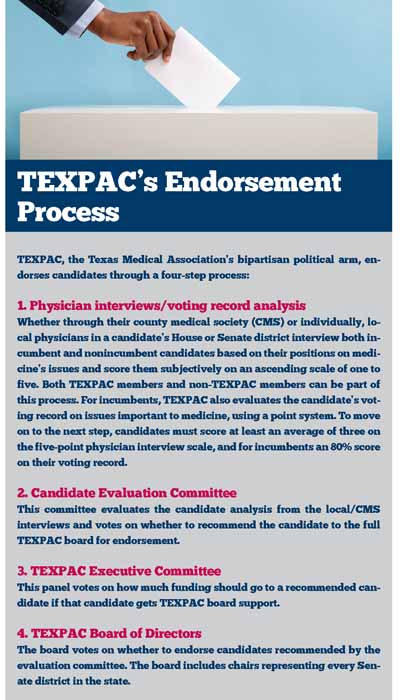
For incumbents running to keep their seat, eligibility for TEXPAC endorsement comes down to meeting two criteria: an objective analysis of their voting record and a subjective score based on the candidates’ meetings and interactions with local physicians, both TEXPAC members and nonmember physicians. (See “TEXPAC’s Endorsement Process,” this page.) 

Jan-Feb_22_TM_Cover_Texpac_Sidebar

TEXPAC evaluates candidates on a point system based on how they voted on key bills most important to medicine’s agenda: Voting with medicine on a particular bill is worth one point; not doing so is worth zero. Candidates lose points if they filed or signed onto an antimedicine measure, such as a bill that would dangerously expand other practitioners’ scope of practice or seeking to raise the medical liability damages cap. An 80% score on that point system allows for a possible endorsement. 

The subjective portion consists of physicians – with the help of detailed TEXPAC candidate briefing documents – interacting with candidates and grading them on a scale of one to five, the higher the better. Averaging a score of three is required for consideration for an endorsement. 

The “80 and three” rule is a weed-out process for incumbents. Candidates who pass both of those tests and earn local physicians’ recommendation for an endorsement must then pass muster with the Candidate Evaluation Committee, which sends its recommendations to the full TEXPAC board for approval. 

For new candidates with no voting record to evaluate, the interviews and interactions with local physicians and county medical societies largely determine which aspiring officeholders make it to the Candidate Evaluation Committee. Incumbents also need to prove they’re willing to sit down and listen to their district’s doctors. 

“There are some incumbents who never vote with the House of Medicine, so we definitely don’t endorse those people,” Dr. Austin said. “[We also] try to find out from the local physicians if that [legislator] was available or accessible [to meet]. That’s important.” 

For state Sen. Charles Schwertner, MD (R-Georgetown), TEXPAC was “instrumental in helping me understand the lay of the land” when he first ran for a House of Representatives seat in 2010 as a “very green” candidate. TEXPAC also was instrumental in helping him obtain early financing and in fundraising efforts. He launched his run with local support from the Williamson County Medical Society. 

“That’s what TEXPAC is all about: making sure that the individuals that are friends of medicine have the amount of resources necessary to get their campaign message out, and then hopefully win election and be able to serve,” Senator Schwertner said. 

TEXPAC endorsements also involve a degree of pragmatism, Dr. Rogers adds. In addition to a candidate’s promedicine stance, the Party of Medicine considers his or her likelihood to win.  

“We have a couple of major objectives in the candidate process. One is to try to help elect people that are naturally inclined to support what we do, if there’s a competitive race,” he said. “We also know that there are a lot of races that are not competitive at all, and who’s going to get elected is very clear. And we need to have influence with people that are actually going to be in the building making decisions. That means that we might endorse the candidate that isn’t apparently very helpful to TMA, but that really could be helpful on a specific issue.” 

Sometimes, Dr. Rogers added, one helpful vote on one specific bill “can happen from somebody that isn’t a natural friend.” 

If you’re a TEXPAC member whose candidate did not earn endorsement, the organization’s Physicians For program offers another way to support your preferred candidate by connecting TEXPAC doctors with other physicians in their House or Senate district to rally around their preferred candidate. 

The program “has proven to be very successful,” said Ms. Mojezati, TEXPAC’s executive director. “Not only has it helped candidates be victorious in races but it also helps because [in] any situation where TEXPAC either did not endorse them or didn’t make any endorsement, we now have physician relationships with that candidate. We never want to not have friends in the Capitol.” 

TEXPAC has maintained success rates of 95% or greater with its endorsements during recent election cycles. For instance, during the 2020 state primary elections and a handful of ensuing runoffs – which usually involve most of Texas’ most competitive races – TEXPAC made more than 130 endorsements, and 98% of those candidates won and moved on to the general election. In the November 2020 general election, 97% of TEXPAC-endorsed candidates won their sought office.

Overcoming apathy 

TEXPAC acknowledges physicians’ reluctance to get involved in politics: “It’s a highly charged arena right now,” notes Dr. Widmer, TEXPAC’s chair.  

And there’s a level of apathy, Dr. Rogers adds; physicians just want to do their jobs. 

But much progress has happened on TEXPAC’s watch, from tort reform in 2003 to the 2021 legislation allowing physicians to earn a “gold card” out of the prior authorization process.  

Back during the days of tort reform, long before jumping into politics, Senator Schwertner was a young physician taking part in the first-ever First Tuesdays in 2003. HB 4’s success that year was the product of a unified approach between physicians and business interests, and that unity and having “as many allies to the House of Medicine” as possible are key to legislative success, he said.  

More recently, he noted, TEXPAC has been vital in bolstering TMA’s fight against scope-of-practice bills and “the onerous profitmaking and tactics of insurance companies,” such as narrow networks. 

“Medicine is a highly regulated, government-controlled, and actually government-funded profession. As such, it is vital to those individuals from just a … professional standpoint to be involved,” Senator Schwertner said. “If you’re not being an active participant, and voting and helping choose candidates … that share your ideals, then someone else is doing it for you. And you’re going to live under the laws that those other individuals pass.” 

Casting aside the repulsion of modern red-versus-blue politics – and doing what’s best for patients and the practice of medicine – is important to medicine’s success, Dr. Widmer adds. 

“If we keep that as the focus of what we’re doing with TEXPAC, then we will be stronger for it. We will have a more cohesive, hopefully larger body, and we’ll be able to make a bigger impact.” 

Navigating Blindly

Kristian Falcon, OMS-III

This article was originally published in the November/December issue of the Tarrant County Physician. You can read find the full magazine here.

“Si se puede!” (Yes, you can). . .

. . . is what I have been told throughout my life by my parents and by my entire familia. Being the first ever in my family to go into the medical field is a commonality that many Hispanic students share. My father emigrated from Mexico at the age of 18 and had to delay attending university to first learn English. My mother immigrated here at the age of 26, after already holding a teaching license and an equivalent master’s degree in Mexico. She had to redo her education after first learning English to regain her teaching license in the U.S. 

Learning English at the same time as my mother was no easy feat. She taught me my vowels and how to read while we taught her proper syntax and English grammar. When it came time to apply to college, how was I supposed to ask my parents to revise my application essays since when growing up, I was the one who edited and revised their emails and text messages?

When I began college, my father asked me, “What are you going to do with a degree in biology?” to which I responded, “Be a scientist.” He wasn’t asking because he didn’t believe in me; he was asking because he truly didn’t know what I could do with such a degree, and to be 100 percent honest, I didn’t either. Becoming a doctor was not a thought I had before; I fell into this path through getting involved with my passion to serve others and my interest in science. Once I realized that I pictured my future self as being a physician, my family grew concerned about the difficult path I would face. They suggested alternative careers, knowing that no one from our family had ever gone down this path before and that many who try, fail. 

Maybe I was naïve and didn’t do the proper research on what a career as a physician entailed, but without any guidance, I faced only my short-term goals, one at a time. What I didn’t realize was that becoming a doctor involved much more than just meeting specific checkboxes. It required immense dedication, time, and sacrifice. 

At times, I questioned if I even belonged in medical school. During my application process I was told, “You only interviewed there because you’re Hispanic and speak Spanish,” or “You’re lucky you’re underrepresented in medicine; you’ll get accepted anywhere.” I was continually discredited of my merits and accomplishments because of my ethnicity, even though I had years of volunteering, research, and experiences in the medical field as an EMT, and had not only a bachelor’s but also a master’s degree. Upon entering medical school there were less than 20 Hispanic medical students in my class of 220. Hispanic students make up only 15 percent of the student population of all the health professional colleges combined in the health science center I attend, while in Texas, the Hispanic population comprises roughly 40 percent of the state’s population. 

Lacking representation and not having mentors who had faced similar paths, I struggled to fit in and find my place. While many of my colleagues had family and friends that were doctors, I grew up not knowing a single person in this field besides my own doctor. I faced obstacles because I had to find resources on my own to help me accomplish my goals. Every medical experience, preceptorship, or shadowing opportunity was one I went out and found on my own; I didn’t have the luxury of growing up with those opportunities around me. I carved my own path.  

Within the first month of my third year, I was reminded of the importance of having Hispanic representation in the medical field. I attended to many patients who were Hispanic and spoke only Spanish. While medical translators are vital and do an amazing job of communicating adequately with a patient when there is a language barrier, being able to communicate directly and relate to a patient forms a bond unlike another. Conversations with a translator can sometimes be procedural and very formal; being able to communicate freely in one’s own language allows for a more human interaction and a better understanding between a provider and a patient. 

It is the moment when I see a patient become more animated and more comfortable that I remember why I chose this career and that I bring more representation to this field. I remember why I chose to be the first in my family to carve this path, and why I choose to be involved in leadership and advocacy so that many others like me can take this path a little less blindly. While I still have over a year left until I graduate and become a physician, my message to those who seek this path is, “Si se puede!”

Join TMA’s Virtual Winter Conference on Jan. 28 & 29

Register to participate in the 2022 TMA Winter Conference with your physician colleagues on January 28 and 29. The conference has transitioned to a fully virtual event due to the surge of COVID-19 cases.

Virtual Conference Schedule


Friday, Jan. 28

TMA virtual business meetings take place throughout the day; you can find the complete schedule here. There are no in-person events scheduled.

  • On-demand, inside the virtual platform:
    • TMA Foundation Grants and Donor Recognition – videos
    • Vaccines Defend What Matters – public health initiative
    • Turn It Off Today – public health initiative
  • Expo Hall Hours – 11am – 2pm
    Virtual exhibits and one-on-one appointments with exhibitors are available.
    • 11am – Noon – “Hidden Icon Search” game; winner will recieve a 1-year subscription to the Headspace App.


Saturday, Jan. 29

TMA virtual business meetings continue; you can find the complete schedule here. CME sessions are available via livestream.

  • Live stream, inside the virtual platform: 
    • 9-9:10 am – Opening Remarks
      E. Linda Villarreal, MD, President, TMA
    • 9:10-9:30 am – AMA Awards Recognition
    • 9:30-10:15 am – COVID-19 Update with DSHS (CME)
    • 10:15-11 am – Ask the Expert: Employee Vaccinations (CME)
      Sheri Williams, TMA and Laura Goodson, JD
    • 11 am-Noon – Extra Life: A Short History of Living Longer
  • Expo Hall Hours – 8am – 1pm
    Virtual exhibits and one-on-one appointments with exhibitors are available.
    • 8am – 1pm – “Word Scramble” game; prizes will be awarded to winners.

The Dimming of the Shining City

By Jason Terk, MD

Published by KevinMD.com on October 20, 2021. You can read the original article here.

In March 1630, John Winthrop delivered the treatise “A Model of Christian Charity” at Holyrood Church in Southampton, England, prior to leading the first settlers of the Massachusetts Bay colony on their to journey to the New World. In his address, he referred to the new community they would found as a city upon a hill with the eyes of all people upon them. This reference to a portion of Jesus’ Sermon on the Mount underscored the importance of committing the colonists to brotherly love and unity, setting the needs of others and the community above one’s own needs.

I first heard this reference to a shining city on a hill at the moment of my political awakening and at the close of Ronald Reagan’s presidency in his farewell address in January 1989:

I’ve spoken of the shining city all my political life, but I don’t know if I ever quite communicated what I saw when I said it. But in my mind, it was a tall, proud city built on rocks stronger than oceans, wind-swept, God-blessed, and teeming with people of all kinds living in harmony and peace; a city with free ports that hummed with commerce and creativity. And if there had to be city walls, the walls had doors, and the doors were open to anyone with the will and the heart to get here. That’s how I saw it and see it still.

I was never much a fan of Reagan but did recognize his desire to lead all of us as a nation of different people who had unique talents to share and whose commonality of purpose exceeded partisan divisions. I also recognized that this vision was as aspirational as the source that inspired it. North stars have their role if only we faithfully chart our course by them.

As Reagan’s farewell words washed over me, I looked ahead at my immediate future and recalled my recent past. I would graduate from college a few months later and start medical school. I had just completed an idyllic nine months of study in Hamilton, New Zealand, an experience that still influences me today. I witnessed a nation of diverse people that cared about each other meaningfully. The Kiwi culture is exemplified in their national sport, rugby, emphasizing the team over the individual.

That promise of the shining city seemed more tangible as we witnessed the close of the 1980s and experienced the bliss of the 1990s. I and my contemporaries moved through those years, getting married, starting families, starting jobs, and acquiring mortgages. The demons of our nation still seemed to be suppressed by our angels for the most part. We could not know that the seeds of the cataclysm that was 9/11 and the divisions that would follow were germinating beneath us.

The number of years since that horrible day has verily seen the transformation of who we are and how we are. No longer do we have a presumption of goodwill toward those who are politically, religiously, or philosophically different from us. Yes, we have always borne the demons of racism and intolerance through our nation’s shared history, but there was almost always the patina of unity among us save for the years of the Civil War. Rather, we are now in a season of distrust and tribalism where each partisan seeks to win leverage for the sake of power alone only for those of like mind and mission.

The most insidious part of this darkening of our nation is the democratization of truth and the obfuscation of our understanding of reality. A lie told a million times on social media becomes fact. No longer can we count upon rationality, logic, and evidence to be the measures we employ to discern truth. Truth has been abducted to serve the mission of elevating influence, gaining advantage, and exercising power. It is a rot that is destroying us and creating many victims. The internet, formerly and quaintly referred to as the information superhighway, has become our road to perdition and the chief means of the purveyance of agenda-driven disinformation coming from both extremes of the political spectrum. The algorithms move us into our demagogic poles and obliterate the common ground where consensus suffocates from lack of oxygen.

This organized perpetration of deception has taken on more meaning as we have faced the last century’s most critical public health threat. Freedom which was once defined as something that required a personal sacrifice of individual concerns in deference to the needs of others and the community has now become rebranded as solely within the province of individual liberty. The simple acts of individuals wearing masks or getting vaccinated to protect all of us and ending the pandemic for our towns, cities, states, nations is too much for many among us who have distilled their catalyzed grievances into refusals to sacrifice their “personal freedom.”

Indeed, as I write these words, state legislatures, including our own in my state, are codifying this movement into law with bans on companies including hospitals, nursing homes, and medical facilities from requiring COVID-19 vaccination for their employees. And, those legislators are doing it not because of some sincerely held principles, but because they know which way the wind blows and cynicism Trumps all other considerations in getting reelected.

The victims of this now distorted concept of liberty are ones that we physicians encounter every day. The one that inspired this essay for me is an 11-year-old boy that I saw three weeks ago. He is a patient of mine in my pediatric practice who came to see me with typical respiratory symptoms that led to a diagnosis of COVID-19. While he recovered uneventfully, his father got sick the next day and died from the same illness five days later. Like the vast majority of people who die from COVID-19 now, he was unvaccinated, believing that getting vaccinated was unnecessary and part of a greater effort to undermine his personal liberty. His son is now dealing with the unimaginable grief of losing a parent at such a tender age and asking his mother if he killed his father by getting sick and causing his death. This happens every day now in our communities across our nation. These are wounds that will never heal for this generation of kids.

We have no hope of exiting this pathway to darkness unless we can collectively rise above our manufactured grievances and reductive individualism to truly witness and love each other. We must recognize and reconcile the real harms done to each other in the evil pursuit of purely selfish interests. Only then can we renew and rekindle the true light of a successful community and our city on the hill.

Tarrant County COVID-19 Activity – 01/18/22

COVID-19 Positive cases: 454,638

COVID-19 related deaths: 5122

Recovered COVID-19 cases: 374,926

Data from Tarrant County Public Heath’s (TCPH) report of COVID-19 activity in Tarrant County updated Tuesday, January 18, 2o22. Find more COVID-19 information from TCPH here.

*These data are provisional and are subject to change at any time.

Deaths and recovered cases are included in total COVID-19 positive cases.

Volunteers Needed for Arlington COVID-19 Testing Site

Tarrant County will be activating a COVID-19 surge testing site in Arlington. The Tarrant County Office of Emergency Management requests volunteers to assist with line management and other miscellaneous duties.

Volunteers will work 3.5-hour shifts with three volunteers per shift. This work will be outside and require standing for long periods. Volunteers will not be involved with the testing procedure. Water will be provided. Face coverings are recommended.

Dates:  January 20, 2022 – February 10, 2022

Time:     9:00 a.m. to 7:00 p.m.

Location: Globe Life Field, Parking Lot M 1205 Pennant Dr, Arlington, TX 76011

Volunteer Sign-up:

  1. Link: https://www.signupgenius.com/go/4090E4FA4A728A1F58-tarrant.
  2. Select one or more shifts and then click the Submit and Sign Up button at the bottom of the screen.
  3. Fill in your information. Please include your phone or email address. We will use this information to keep you informed of updates.
  4. Click the Sign Up Now button.
  5. You will receive a confirmation email with more information.

If you have any questions, please contact:

So-Called “Mild” Omicron Still a Serious Threat, Physicians Warn

By Brent Annear

Published by the Texas Medical Association on January 14, 2022. Read the original article here.

As the massive spike of COVID-19 cases continues, the degree of infectiousness and lack of the best and most available treatment worries Texas Medical Association leaders about what the next few weeks will bring. They say important medical advice bears repeating with patients

The omicron variant’s illness has been described by some people as “less severe,” but physicians urge their colleagues to help patients keep their guard up. In addition to making people sick enough to miss several days of work and school, the virus remains a serious threat to people at high risk for severe illness. Some physician practices have had to close due to COVID-19-related staff shortages or have gone to 100% telehealth visits.

“This illness may seem mild to some, but right now we don’t have enough effective treatment if too many high-risk patients get sick all at the same time,” said John Carlo, MD, a TMA COVID-19 Task Force member.

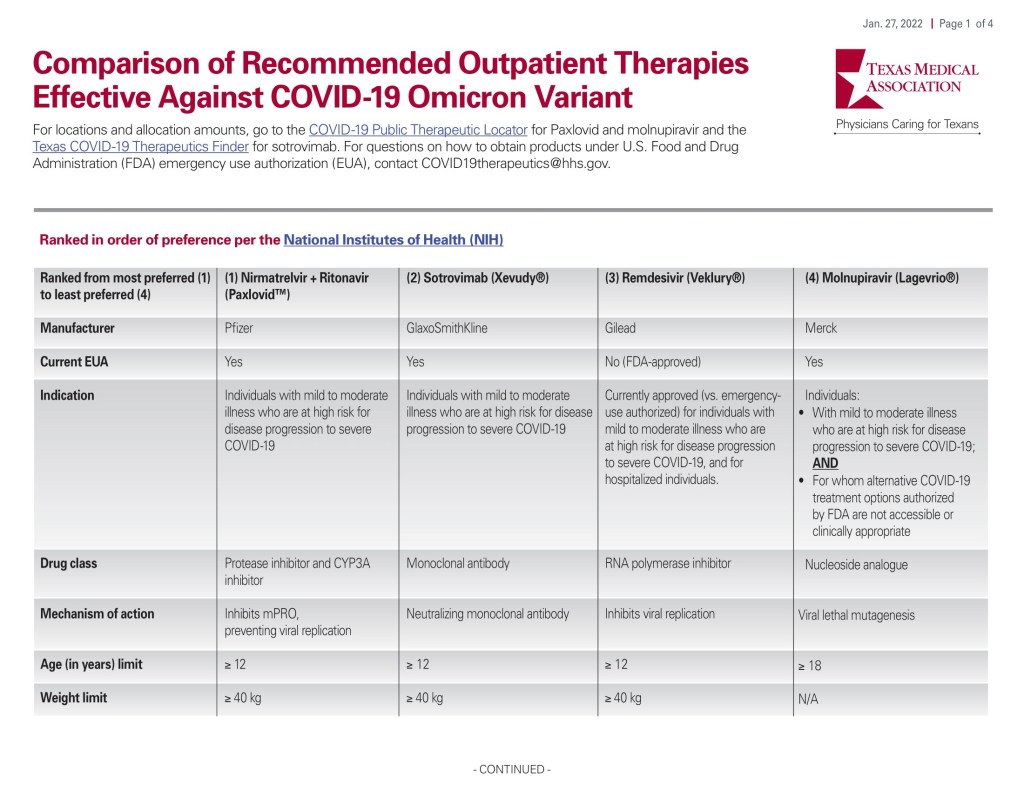
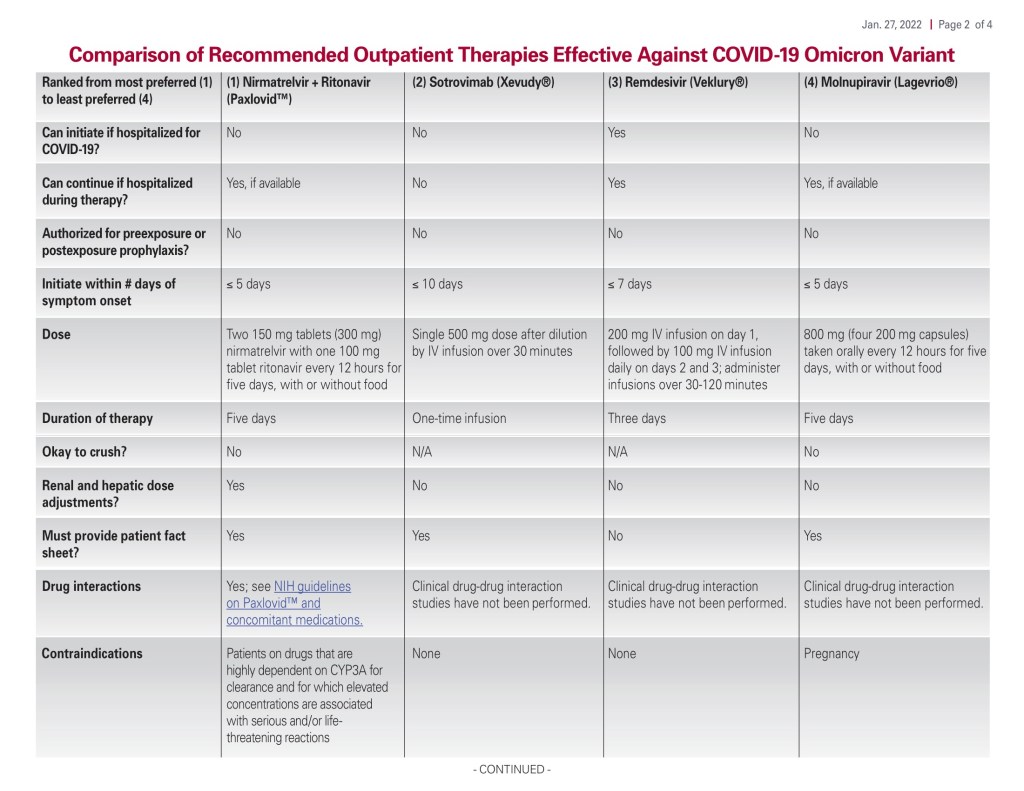
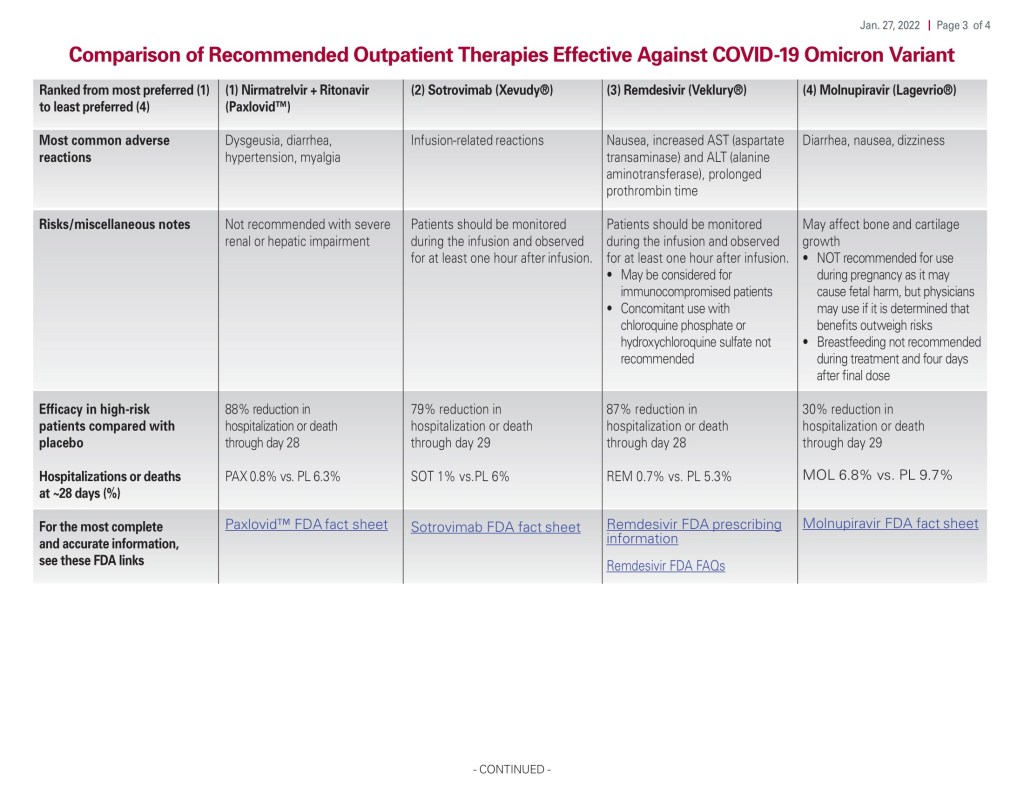
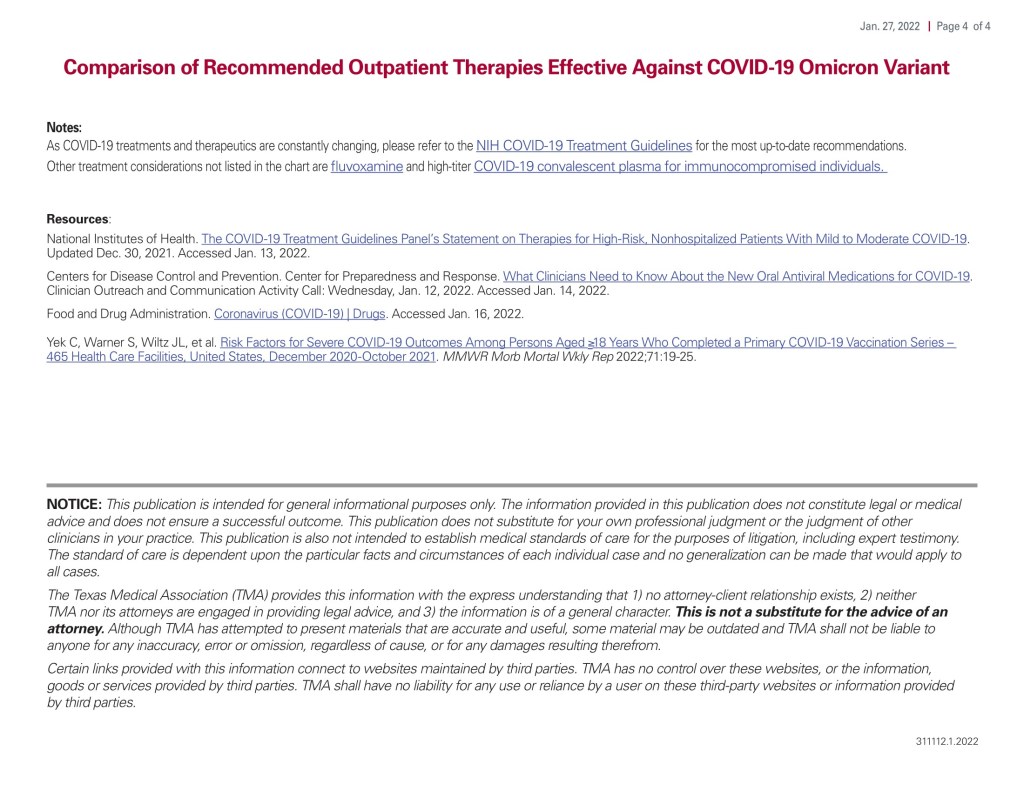
So far, only a single monoclonal antibody treatment (sotrovimab) is effective against the omicron variant. Supplies are extremely limited.

“On top of this, the omicron variant is incredibly infectious, even more so than previous variants,” Dr. Carlo added.

The Texas Department of State Health Services has reported more than half a million cases since Jan. 1.

“The good news is we know how to protect ourselves,” Dr. Carlo said. “Vaccination with a booster, diligent and effective mask-wearing, and avoiding poorly ventilated indoor settings are effective.”

Physicians also worry about Texas hospital beds filling up too quickly, as area hospitals already face staffing shortages due to sick workers. “We want to make sure we have the space for every patient who needs care,” Dr. Carlo said.

TMA’s COVID-19 Task Force recommends reiterating to patients the following protective measures:

  • Get vaccinated against COVID-19: Get the booster shot as soon as eligible, too.
  • If you must leave your home: Physically distance yourself, wash your hands frequently, and wear your mask anytime you need to be near someone when outside your home. Wear the best mask you can get: N95 masks are best, followed by KN95 masks, then surgical masks, then multi-ply cloth masks that fit snugly around your face. Wear masks if you can’t socially distance, even if outside, and even if everyone attending is vaccinated and boosted.
  • If you must gather with others from outside your home: Choose an outdoor or well-ventilated space.
  • If exposed to someone who has tested positive for COVID-19 (you were within 6 feet of him or her for at least 15 minutes in 24 hours): Quarantine away from others for at least five days and get tested after five days even if you do not develop symptoms. 
    • Watch for symptoms. If you have no symptoms after five days, wear a well-fitted mask for the next five days anytime you’re near anyone and avoid being around people who are at high risk.
    • If fully vaccinated or you have had a confirmed case of COVID-19 within the past 90 days, it is not necessary to quarantine, but you still should wear a well-fitted mask when around others for 10 days and get tested after five days even if symptoms do not develop. 
  • If you test positive for COVID-19 or have mild symptoms, regardless of vaccination status: Isolate for at least five days and until you are fever-free and your symptoms improve (stay away from other people, including people in your own household). (This applies to mild-symptom or zero-symptom cases.) After five days’ isolation, wear a well-fitted mask for five more days whenever you’re around others, avoid travel, and avoid being around those who are at high risk.
  • If you have severe symptoms: Isolate for at least 10 days and consult your doctor before ending your isolation. If you develop any serious symptoms, such as trouble breathing, seek emergency medical care immediately. 

“This current wave is spreading faster than ever before, and the only way to slow this down is for everyone – not just some people, but everyone – to be vigilant,” said Dr. Carlo.

Project Access Tarrant County

Growing into the future

by Kathryn Narumiya

This piece was originally published in the January/February 2022 issue of the Tarrant County Physician. You can read find the full magazine here.

Isn’t it great when a business has more clients than they know what to do with? Of course! It’s a problem most business owners would beg for unless they are providing critical medical services to those in need. 

At Project Access Tarrant County, we are honored to have the opportunity to provide surgical treatments to our client base. While PATC can always use more volunteer general surgeons, gynecologists, and orthopedists, lack of volunteers is not the main issue. Many of you have eagerly and graciously given of your time and expertise to these patients. We are all grateful for your time and efforts. 

Unfortunately, the number of patients far exceeds the volume that Tarrant County hospital partners can provide on a charity basis.  For us, having clients on long wait lists or undergoing emergency surgery because PATC is unable to coordinate their surgeries is heartbreaking. We don’t want these outcomes to become normalized or acceptable. 

In 2020, we began working toward reducing our wait times. While progress has been slow, we have made significant strides in this direction. After considerable research into alternative services offered by peer organizations across the country, we have identified an opportunity to strengthen the number of patients we can serve through an additional lane to our current panel of services. To be clear, Project Access Tarrant County as it currently exists is not going away.


Introducing – Access Surgery Partnership. 
Based on Surgery on Sunday, a medical nonprofit organization in Lexington, Kentucky (www.surgeryonsunday.org), Access Surgery Partnership will host surgery days in a separately leased surgery center on a periodic basis on a day when the facility would traditionally be closed. The surgery center partner(s) will receive compensation for use of the facility. The surgery center staff will be comprised of teams of volunteer surgeons, nurses, and ancillary staff, both medical and non-medical.  The united surgery center staff will perform multiple outpatient surgeries and procedures in one day, effectively eliminating long surgery wait times. 

The traditional PATC model will still exist as we realize that not all procedures are appropriate for an outpatient setting, and not all physician volunteers will participate in the new model. We will still need our current hospital partners in order to serve our client base. 


We are not doing this alone. We are building a strong foundation for this new service line by collaborating with Brittain-Kalish Group and Dynamic Development Strategies to complete a proforma, business plan, timeline of milestones, and a long-term development plan. Several funders have shown interest in backing this initiative, and we are continuing to cultivate and update those parties as we progress. In fact, the Sid Richardson Foundation has singlehandedly funded the “discovery phase” of this project as we research and plan. 

A lot of work remains to be done with various challenges to overcome. Our primary and most imperative challenge is finding a surgery center partner. Additional challenges include recruiting volunteer medical non-physician staff and obtaining our own surgery center license. 

 This is where you come in. We need your help!

1. CONNECTIONS to Leaders!

    o Do you know leadership at a Tarrant County surgery center? 

 Please make an introduction to PATC!

2. Staff VOLUNTEERS! Talk to your medical staff about volunteering. 

3. STEP UP YOURSELF! If you have not been able to volunteer previously due to conflicts, this new model may be more conducive to your schedule.

      o Contact me and we can discuss options!

As other opportunities to help arise, we will let you know about them. We will also keep you apprised of our progress towards making Access Surgery Partnership a reality. With the Tarrant County Medical Society membership, we know we are well on our way. 

The Last Word

By Hujefa Vora, MD – Chair, Publications Committee

This piece was originally published in the January/February 2022 issue of the Tarrant County Physician. You can read find the full magazine here.

The medical students were sent into hiding.  We chose not to risk their bodies to the unknown illness.  Instead, most of them sat alone at home in front of computer screens.  They attended lectures virtually.  Physical contact became taboo.  Learning turned into rote memorization of presented facts, with little opportunity for the hands-on training of our time.  

In our clinics, we went into hiding as well.  Our appointments became virtual.  We too hid behind these computer screens.  Physical contact became taboo.  To start a visit note, we would write that the patient had consented in an informed fashion to participate in a virtual visit, utilizing a platform with audio and visual capabilities.  Patients would take their own blood pressures using their automatic home monitors.  Often, they would not only create their own objective findings, but also their own interpretations of their subjective history.  When we no longer touch our patients, when we can no longer hold their hands, we become severed.  The patient-physician relationship is powered by the force of our connection to our patients.  

A story that needs to be told.  I had a patient who smoked incessantly.  He was referred to my office by his cardiologist, who explained his worsening shortness of breath by saying it is not his heart.  He came into my office for the first and last time in March of 2020 just prior to the lockdown.  We spoke of his three packs a day habit.  We talked about how for the last month, he was unable to walk across his living room without becoming short of breath and coughing until it felt like his heart would pop out of his chest.  Fearing the worst, I sent him out to get a chest x-ray.  Those fears were confirmed with the finding of a complete white out of the right lung.  A CT scan confirmed the presence of malignancy in the setting of emphysema.  We couldn’t get a biopsy right away because the lockdown happened.  Many of you will remember that elective surgeries were put on hold.  Biopsy of a mass which I was sure was cancer was not necessarily elective, but getting the procedure done became nearly impossible.  I had to present the case to our surgical review board at the hospital in a Zoom meeting.  They authorized my procedure and scheduled the next available interventional radiologist.  As the day of the biopsy approached, we were informed that the patient would not be admitted without a negative COVID PCR result.  In the early days of the pandemic, PCR results took sometimes one or two weeks.  We had 72 hours, and it took about that long to actually get the test done.  Upon finding that we were not going to get the biopsy done, I spoke to the patient and his family over the telemedicine platform my office had just installed.  If we admitted him to the hospital, we might be able to get things done more efficiently.  The patient’s daughter refused this option.  We will be surrounded by COVIDI can’t risk that.  The patient continued smoking his cigarette pensively, deliberately.  The patient was offered a pulmonary consult instead and possible bronchoscopy.  It took another three weeks to get the patient in front of the computer screen of the pulmonologist, and then another two weeks after that to get the bronchoscopy done.  Ten days later, a pathologist called me to let me know that the patient had waited too long to quit his smoking habit and now had squamous cell carcinoma of the lung.  This is the kind of news that needs to be conveyed in person, not something to be said over the phone.  The patient refused to break his lockdown, so that meant the phone was how this would happen.  Unfortunately, the patient’s daughter was unavailable, so we were unable to establish the video component of the virtual visit.  I told my patient he had cancer over the phone, unable to reach out and make any physical contact, not even something as simple as a handshake or a pat on the shoulder.  I couldn’t see his face to read his thoughts, get some signal of the inner turmoil he might be experiencing.  I did my best to follow his verbal cues.  We talked about the plan.  He wanted to know our next steps.  Well, it took another month to get the patient onto a Zoom call with an oncologist.  Another three weeks got us into the virtual room of a cardiothoracic surgeon.  The surgeon agreed that the patient would need surgery to remove the tumor and at the very least improve his quality of life by making it so he could breathe.  The patient was referred back to our original cardiologist for cardiac clearance prior to surgery.   In order to get his stress test, he was subjected to another PCR test for COVID-19.  This came back a little quicker than expected, negative as was expected.  The patient underwent his stress test and was negative for inducible ischemia.  He was cleared for surgery.  At his preoperative evaluation for his scheduled surgery, the patient was told he would need another COVID-19 test.  He refused, as he had the PCR just two weeks prior at his stress test, and he was tired of the runaround.  Unfortunately, this assertion of control, this blatant attempt by the patient to avert further procrastination, further delays of his surgery, backfired.  In the meanwhile, I had been following the patient’s progress for the past six months with monthly phone visits or Zoom calls.  And so, I tried to take control of the situation.  I spoke to the surgeon, questioning why it had been necessary to delay surgery for a cardiac clearance in a patient with known cancer.  We would not have delayed the procedure for CABG had this been necessary.  So we had lost more time.  I produced the records of three COVID testing results over the past few months.  I again met with the hospital’s surgical review board.  We worked out a plan of care.  I brokered a deal.  The patient would go for surgery as soon as the surgeon scheduled.  We had one last meeting before surgery.  It was now September.  The patient asked me if he would be recovered by November 4th, election day.  I told him that I was not sure.  He informed me that he would not schedule his surgery until after election day, because he needed to vote in the election.  The surgeon reluctantly agreed to schedule him for surgery on November 5th.  The oncologist interceded and demanded that another PET CT be done prior to scheduling the surgery.  Another PCR was ordered and refused.  Another deal was struck.  The patient’s PET CT showed progression of the disease – not a surprise.  On November 5th, the patient finally went for his surgery, 249 days after our opening salvo. Ten days in the ICU.  I didn’t see him because we were in the heart of COVID at this point.  You know this patient though.  He was too stubborn to let this cancer beat him, too tough and thick-skinned to allow even COVID to get through.  He survived all of this.  The oncologists offered him chemotherapy and radiation treatments, but he refused.  He went back home to his couch and his cigarettes.  Behind the scenes, I continued to coordinate his care with the surgeons, his oncologists, the cardiologist, and the pulmonologist.  To him though, I was just another voice over the phone, a talking head disrupting his existence.  Molasses.  Quicksand.  COVID testing.

Our patients went into hiding.  Their trust of the medical establishment is broken.  Our relationship with them, though we looked out for their best interests, is broken.  We have socially distanced ourselves into a corner.  It is time to come out of hiding.  It is not taboo to touch our patients’ lives.  It is what they expect.  With this new year, we must wake up.  We must remind our patients that we will always fight for them, whether we are fighting against cancer, against COVID, against politicians, against ignorance, against fear.  Never against them, but always with them.  My patient survived, thrived, but I have never seen him again.  This is the Last Word.

Design a site like this with WordPress.com
Get started