This article was originally published in the September/October issue of the Tarrant County Physician. You can read find the full magazine here.
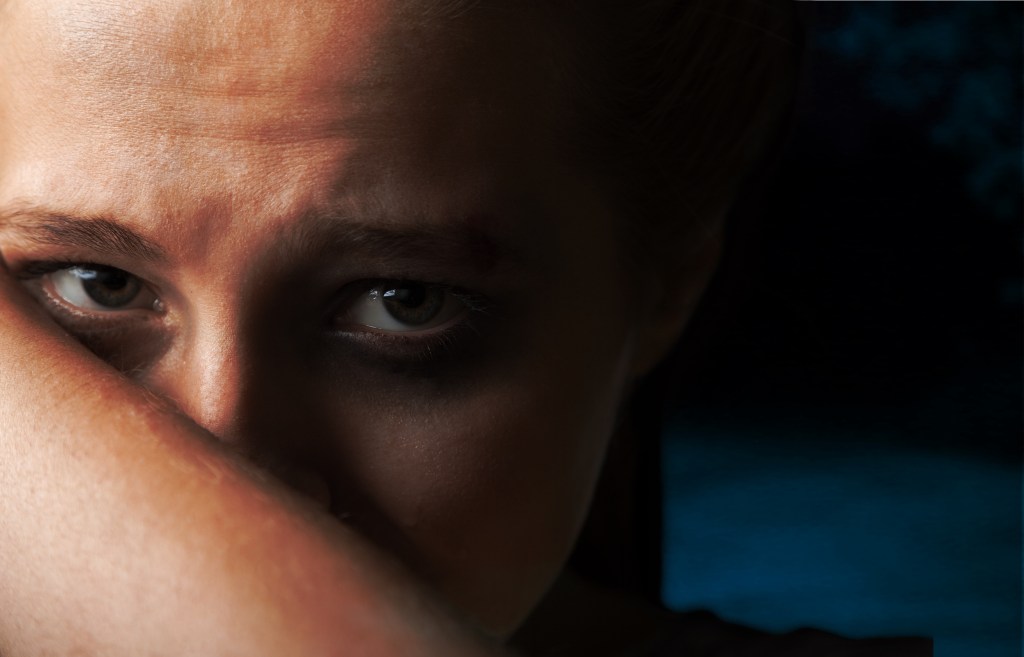
I will remember Project Access forever because not only did it save me, but it also helped my family.
I am twenty-eight years old. I have been married for seven years and I have a son and a daughter. Five years ago, I was diagnosed with rheumatoid arthritis. Doctors were shocked. They had never seen a patient my age with such severe rheumatoid arthritis.
My condition has affected everything. It has been the cause of my depression. I felt like giving up on life. I could not be a mom or a wife. My husband would always see me sick and in pain. I could not take my kids to the park. My son would ask me to kick a ball with him, but I could not do simple things.
It has been a major setback in my life. Since being diagnosed, I have had to quit three jobs because of my arthritis, especially in my knees.
This year has been hard because my pain has increased so much. It has been hard on me physically, emotionally, and mentally. One day, the pain was so unbearable that I went to the emergency room. After many tests, I was told that I needed an orthopedic surgeon. I knew that it was going to cost so much money. My husband told me that he did not care if he had to give up his whole paycheck for me to go to the doctor but that I was going to get the care I needed. That was when I started seeing Dr. David Brigati at Texas Bone and Joint. He immediately saw how bad my condition was and he told me he did not care what he had to do, that he was going to help me. He contacted Kathryn and that is when Project Access started helping me.
Dr. Brigati performed my double knee replacement at Baylor Surgicare. My life has changed so much since the surgery. I am 70-80 percent better. I can walk and get around on my own now, which is a huge accomplishment for me. I can finally drive and get in my car. I have been able to take myself to the grocery store. This past Sunday, my family and I went to the zoo. It was a big milestone for us because I was able to walk and go up and down the stairs. My husband kept asking me if I was okay because he couldn’t believe how much I was able to walk at the zoo.
Project Access also connected me to Baylor Community Care Clinic, where I have been seeing a therapist, and that has helped my mental health so much. The fact that I am now able to move freely and be more independent has helped me mentally. I feel so much better knowing that my family is not so concerned about me because they know I am improving day by day.
I will remember Project Access forever because not only did it save me but it also helped my family.
I have been connected to a rheumatologist, and I plan on starting treatment soon. Eventually I hope to go back to work because I can finally walk.
I want Dr. Brigati to know that I am forever grateful for him. He listened to me, understood me, and validated me. He did not just help me. He helped my husband, my kids, and my whole family. He helped me come back to life. I just want to say “thank you.” I do not have words to describe my appreciation. We need more doctors like him.
For a long time, I dealt with so much pain that was contributed to my depression. It has been very hard for me to get healthcare. I just wanted to stop trying. I did not know there are resources out there that are willing to help. It’s amazing to me that there are organizations that want to help others. I have seen how much the surgery and physical therapy costs and I am so fortunate to not have to pay for these services. I am so grateful that PATC was able to help me. Diana and Kathryn were so helpful, and I am grateful for their patience. They have been a huge blessing in my life. I will remember this forever because not only did it save me, but it helped my family.
by Catherine Colquitt, MD Tarrant County Public Health Medical Director
This article was originally published in the September/October issue of the Tarrant County Physician. You can read find the full magazine here.
With healthcare systems, policy makers, and community partners preoccupied with the ongoing COVID-19 pandemic, other infectious diseases are percolating in the United States and across the globe, reminding us that Hamlet was right: “There are more things in heaven and on earth, Horatio, than are dreamt of in your philosophy.”1
Recently, the National Vital Statistics System (NVSS) issued a rapid release describing the effects of COVID-19 on U.S. life expectancy, which declined overall by 1.5 years between 2019 and 2020, from 78.8 years to 77.3 years.2 It is the sharpest decline in U.S. life expectancy since 1943, when World War II casualties were to blame for the decline from 1942 to 1943. Life expectancy decreased by 3.0 years for persons of Hispanic origin, and by 2.9 years for the non-Hispanic Black population over the same time period. The magnitude of the drop in life expectancy and the disparate effects of COVID-19 based on race and ethnicity are sobering.
In addition, many epidemiologists and public health experts are anticipating a busy influenza and other respiratory virus season after very low incidences of flu and other non-COVID respiratory infections in 2020 (attributed to COVID-19 shutdowns of schools, workplaces and businesses, masking requirements, and social distancing guidance). The CDC says to plan for “resumption of seasonal flu virus circulation” in the population with decreased “immunity due to lack of flu activity since March 2020” along with “co-circulation of flu, SARS-CoV-2, and other viruses like RSV” which may “place a renewed burden on the health care system.”3
The Texas Department of State Health Services attributes drops in vaccination rates to “stay-at-home measures, school and school-based clinic closures, and business closures” during the COVID-19 shutdown along with healthcare providers “suspending or postponing wellness visits including vaccinations in some cases.”4 From April 2019 to April 2020, vaccination rates through TVFC program decreased by 43 percent and remain well below 2019 rates even now. ImmTrac2, the Texas Immunization Registry, reported on July 1, 2021, that age-specific benchmarks for most VFC-supported immunizations (including pertussis, Hepatitis B, Hemophilus influenzae, rubella, measles, mumps, and varicella) remain well below benchmarks with schools soon to reopen for in-person classes.
Dallas County Department of Health and Human Services reported 100 cases of Hepatitis A in 2020 (an increase from an annual average of 19 cases for the prior 10 years) and has already recorded 52 Hepatitis A cases in the first three months of 2021.5 The outbreak in Dallas County is associated with drug use (both injection and non-injection) and homelessness. Tarrant County is working with the Tarrant County Homeless Coalition and John Peter Smith Hospital among other partners to offer homeless Tarrant County residents Hepatitis A vaccines (highly efficacious at preventing future Hep A infections).
And in July, the CDC issued a statement on Monkeypox in Texas.6 The infected U.S. resident had recently returned from Nigeria and traveled by air from Lagos to Atlanta and then to DFW International Airport. A contact investigation is underway; Monkeypox is rare in the U.S. The last large outbreak occurred in 2003 and was associated with transmission from pet prairie dogs to humans. Monkeypox can cause serious morbidity and is usually contracted through contact with infected animals (bites, scratches, or dressing wild game) but can be transmitted via respiratory droplets, body fluid contact, or fomite spread (via contaminated clothing or bedding). More information about monkeypox is available at https://www.cdc.gov/pox virus/monkeypox,index/html.
This article was originally published in the July/August issue of the Tarrant County Physician. You can read find the full magazine here.
After nearly a decade under the leadership of Dr. Jim Cox (and during a pandemic, no less), Dr. Stuart Pickell joined Project Access Tarrant County as the new medical director. He reviewed his first patient chart in December 2020 and made the transition seamless.
Dr. Pickell has long been involved in Tarrant County’s charitable network. He volunteered at Beautiful Feet (Christian Community Health Clinic) for over fifteen years and became involved with an informal gathering of clinic leadership, led by then-TCMS CEO Robin Sloane. In these meetings, attendees shared challenges and possible solutions regarding their patients’ barriers to care. Dr. Pickell says, “Access to specialists and surgeons was always at the top of the list.” As a member of the TCMS Board of Advisors and the current TCMS vice president, Dr. Pickell has stayed apprised and supportive of PATC’s activities over the past decade.
We are blessed with many gifted and generous physicians willing to donate their time and expertise to care for patients in need. Our next hurdle is to build and expand collaborative relationships with the entities we need to allow those physicians to do just that. David Capper, MD, long-time PATC board member, says, “Stuart Pickell carries forth from the superb foundation of medical direction and immense respectability established by Dr Cox. He also enriches the position with practical insights that benefit both patients and clinicians.”
While he was not surprised, Dr. Pickell was pleased to learn the number of physicians who volunteer with PATC. Because of his history of volunteering in a primary care clinic setting, he was well aware of the barriers clinics face with accessing specialty care. He also knew that many specialists want to give back but do not feel they have a mechanism to utilize their area of expertise. This connection, Dr. Pickell believes, is where PATC shines. “By creating networks of charity clinics, specialists, and surgeons, supporting personnel and outpatient facilities specialists and surgeons can treat as many patients as they want in their own clinics on their own time. It’s a win-win.”
Dr. Pickell recognizes the challenge that PATC faces in trying to provide care to as many patients as possible. “Leveraging the strength of many team members with unique skill sets and gifts, we can realize better outcomes for patients,” Dr. Pickell says. “Medical systems, which are the community’s greatest tangible resource for healthcare, value collaboration as well, but most of their energy is spent within their systems. They may share common goals and understand the community value of bridging silos, but they continue to function independently, competing rather than cooperating with the other systems.” Dr. Pickell sees this as a critical area of growth to sustain PATC.
When asked what his vision for PATC’s future is, Dr. Pickell says, “There are several priorities that I believe will help PATC continue to be strong and expand. The first is financial sustainability. Even though we offer charity care, there are still costs. We seek to minimize these, but they are an ever-present reality. The second is to expand networks – build a stronger team of partners willing to donate time, equipment, and facilities. Finally, we need to expand the specialty services we can offer. We already do well at this, but there is always room for improvement, and we still have needs in some specialties.”
“Fundamentally, my long-term vision is that Project Access Tarrant County would become a model for providing healthcare services to the underserved. We need to expand on the excellent foundation that has been laid by Dr. Cox and his team and expand our network so that patients who need specialty services will be able to access them.”
Dr. Pickell is a welcome addition to PATC leadership. “I am a strong advocate for teamwork in healthcare, for collaboration, and for cooperation,” he says. “Project Access is about improving the healthcare of our most vulnerable residents through collaboration. It seeks to create bridges between the silos in health care – the hospital systems, the physicians, the all-important ancillary staff – to improve the health of those who otherwise would be unable to afford it. Project Access seeks the common ground of shared values, those things that unite us in our human condition. This may be aspirational, but it is an aspiration worth striving for.”
This article was originally published in the July/August issue of the Tarrant County Physician. You can read find the full magazine here.
On the heels of the COVID-19 pandemic, pediatric suicide and mental health diseases are at all-time highs. According to the Centers for Disease Control and Prevention, suicide was the second leading cause of death for individuals between the ages of 10 and 34 in 2019.1 This research also noted that suicide rates have risen by 35 percent from 1999 to 2018 across the United States.1,2 With the arrival of the novel coronavirus pandemic and resulting social distancing, financial losses, and increased morbidity and mortality, we have seen an increase in the already high number of mood and anxiety disorders across all age groups. Children and adolescents have been especially impacted because of parental distress, social isolation, and difficulty adjusting to the virtual school environment. Many children with a pre-existing psychiatric diagnosis have experienced an exacerbation while others have experienced mental health symptoms for the first time, not knowing how to cope with the stress of their severely altered circumstances. Because the pandemic is currently ongoing, there is scarce research available to quantify the increase in mental health needs in the pediatric population due to COVID-19 and its restrictions.
Primary care providers and pediatricians have been on the front lines and often are the only point of contact for many patients before a suicide attempt. In 2015, researchers used National Institute of Mental Health-funded Mental Health Research Network data from 2009-2011 and found that 38 percent of patients who attempted suicide had made some type of healthcare visit within the week of the attempt, 64 percent within the month, and 95 percent within the year.3 This data shows us that primary care providers are integral in identifying and treating vulnerable patients that may not have access to psychiatric services.
Due to this urgent need for further pediatric mental health care services, the 86th Texas Legislature passed Senate Bill 11 in 2019, enacting the Child Psychiatry Access Network (CPAN), a telephone consultative service for primary care providers caring for children and adolescents with mental health needs. The caller will be greeted by a member of our team who will ask general questions about the call and can provide resources such as outpatient therapists, local partial hospitalization programs, and/or pediatric inpatient programs in the area if needed. If there are diagnostic questions or the need for support with treatment planning, consultation with a pediatric mental health provider can be arranged the same day.
Your local CPAN team wants to support you as you treat your pediatric patients’ mental health needs. The University of North Texas Health Science Center (UNTHSC) has partnered with John Peter Smith Health Network (JPS) to provide these services for Tarrant County and eight of the surrounding counties, including Parker, Wise, Cooke, Erath, Palo Pinto, Jack, Montague, and Clay. This service is free of charge with a response time of within five minutes for resourcing requests and 30 minutes for consultation with a child psychiatry provider. CPAN is ready to provide support to Texas primary care providers Monday through Friday from 8 am to 5 pm. Just call 1-888-901-CPAN, press 1 for North and North East Regions and press 1 again for the UNTHSC/JPS hub. You will be able to obtain needed resources or a consultation immediately. You can also contact the CPAN coordinator, Janet Thompson, at JThompso04@jpshealth.org to enroll, though enrollment is not required to make a call. We look forward to partnering with you to help your pediatric populations and their families.
2“Vital Signs: Trends in State Suicide Rates – United States, 1999–2016 and Circu stances Contributing to Suicide – 27 States, 2015.” Centers for Disease Control and Prevention. Centers for Disease Control and Prevention, June 10, 2019. https://www.cdc.gov/mmwr/volumes/67/wr/mm6722a1.htm?s_cid=mm6722a1_w.
By Susan F. Franks, PhD, David Farmer, PhD, and Janet Lieto, DO The University of North Texas Health Science Center at Fort Worth Texas College of Osteopathic MedicineDepartment of Family Medicine and Osteopathic Manipulative Medicine, Department of Medical Education
Now more than ever, the most satisfying aspect of care—interacting with and helping patients—is overshadowed by the complexities of the modern-day practice of medicine. Your day may be more focused on interacting, coordinating, and making decisions with numerous ancillary people and various entities and stakeholders than the person before you who is seeking care. Coordinating your team and the administration of your practice demands independence, leadership, communication, and organizational skills. As the practice of medicine has evolved, you have progressively faced cumbersome EMRs, nuanced billing and coding expectancies, misinformation that patients get from the Internet, and varying organizational expectations. The on-going evolution of practicing medicine places further demands on the skills of flexibility and stress tolerance.
But perhaps the most subtle transformation in medicine is the increased necessity of creating and maintaining interpersonal relationships. The traditional circle and hierarchical approach of running a practice in the past has transformed into collaborative partnerships with patients, families, colleagues, consultants, administrators, and other key stakeholders. At times you are required to be a team leader, at times a team member. You must still attend to patients and provide expert counsel and education, all the while dealing with interruptions, personal agendas, and a vast array of different communication and personality styles. All your responsibilities are expected to be fulfilled with confidence, respect, professionalism, and above all, treatment effectiveness and a gracious attitude of sharing in successful outcomes, but while still bearing the burden of responsibility when things fall short. You must approach each day with an appropriate balance of assertiveness and impulse control, objectivity and optimism, and emotional expression and empathy.
The twenty-first century physician is immersed in a continually evolving interprofessional, team-based environment where medicine is delivered under an often-fragmented system of care.1 The traditional patient-physician dyad has expanded to encompass a wider net of individuals, all of whom must be integrated to meet clinical outcomes, patient satisfaction, and fiscal demands. Added to this is the increasing awareness of inequities in medical care, an explosion of public access to medical information and misinformation, cost-control strategies, and the politicization of medicine, adding enormous complexities to the primary task of simply caring for the patient sitting before you.
Never has the practice of medicine and the expectations of the people involved in every aspect of it been more dependent on the social and emotional skills of the physician than they are today. This is a world that the doctors of the future must be prepared to enter. A world where cognitive intelligence is not the only predictor of success. A world that depends on the emotional intelligence of the physician for the system to function effectively.
What is Emotional Intelligence?
Emotional intelligence (EI) is a set of social and emotional skills that collectively establish how well we perceive and express ourselves, develop and maintain social relationships, cope with challenges, and use emotional information in an effective and meaningful way.2 EI skills are also associated with the development of empathy, self-awareness, motivation, emotional control, and effective communication.3,4 Compared to people with low EI skills, individuals with high EI perceive, understand, and manage emotions better, are less likely to engage in problematic behavior, and have more positive social interactions.5 Individuals with high EI skills also report lower perceived stress, are highly adaptable, and are more successful in leadership.6
Never has the practice of medicine and the expectations of the people involved in every aspect of it been more dependent on the social and emotional skills of the physician than THEY ARE today.
Several models of EI have been introduced, but all are founded on four related fundamental skills: self-awareness, self-management, social awareness, and social management.7 To best manage your behavior, you must first be aware of your emotional states. People with low self-awareness may have difficulty distinguishing between the nuances of feelings, for example the difference between irritability and anger. They may display emotions that are out of proportion to the situation and have difficulty recognizing that their response may not be appropriate. This places them at risk of not being able to maintain mutually respectful relationships, tolerate frustration, be a collaborative member of a team, or create an environment of psychological safety expected from a good leader. Interestingly, 95 percent of people believe that they are emotionally self-aware, but only 10–15 percent are.8 In contrast to earlier beliefs, we now know that the skills of EI can be taught and improved.9
Emotional Intelligence in Medical Education
Many students entering medical school do not have mature development in interpersonal and communication skills (ICS), particularly in dealing with patients and interprofessional relationships. Competency in ICS is woven throughout Entrustable Professional Activities (EPAs) that are being taught in medical schools. As teamwork becomes increasingly important in medical care and decision-making, physicians of the future need to be poised to collaborate so they can achieve the best patient outcomes. Teams with high EI can create a shared vision and achieve results through mutual trust that is fostered through empathy, flexibility, and other key social and self-regulation skills. Furthermore, EI has been found to predict psychological well-being, life satisfaction, and success in collaborations and interpersonal relationships. It enhances higher level thinking through the development of advanced cognitive strategies used to understand and respond to others, thereby improving diagnostic and therapeutic decision making.3,10 Alarmingly, when unattended, EI may diminish throughout medical training, contributing to reduced resiliency and the increased number of residents entering the profession feeling burned out.11,12 EI is now more widely considered to be an essential skill set for medical student development.13
At the Texas College of Osteopathic Medicine (TCOM), we promote the progressive development of emotional and social self-awareness by having medical students reflect on their EI skills and establish targets for growth. They work with an accountability partner to identify progress and areas needing improvement. It is often during clerkships that the social, emotional, and behavioral skills associated with EI are most observable and can provide a deeper understanding of why a student might be experiencing difficulties. Preceptors and residents give feedback on professionalism, teamwork, and interpersonal communication, helping students explore their use of EI skills. For example, a student who is overoptimistic may miss preceptor comments and clues indicating a need for improvement. They are then caught off guard at the summative performance evaluation when they rate lower than they anticipated. Progressive guidance in targeted EI skill growth can help students manage pertinent skills effectively.
In the TCOM curriculum, we integrate educational activities to improve the skills of EI. We start with a baseline assessment during the first week of their Medical Practice class using a well-established self-report assessment of EI called the EQi-2.0.®14 A student’s results are explained, and the student is introduced to the basics of EI and given a framework that emphasizes how EI skills are applied to patient care, teamwork, leadership, and personal well-being.
Activities to develop EI are strategically integrated into our Medical Practice course curriculum, which teaches students to gather health information and perform appropriate physical examinations, acquire competency in Osteopathic Manipulative Medicine, and apply knowledge and skills to patient encounters. Topics begin with a focus on self-care and the use of the EI skills of flexibility, optimism, and stress tolerance to aid in adjustment to the rigors of medical school. Students later examine the role of emotional self-awareness, self-expression, and empathy as applied through standardized patient encounters. As students engage in small-group learning, EI skills of teamwork and leadership are introduced, and students rotate leading their team. In one particularly cogent activity, students each select a respected faculty physician as a model of emotionally intelligent leadership.
When students approach Year 2 board exams, we advance their stress management skills toward peak performance, and they evaluate their balance of optimism and reality. In the Professional Identity and Health Systems Practice Course, EI aids students in the development of professional identity and in management of that identity as they contemplate how they will fit into the healthcare system as an osteopathic medical student, a resident, an attending, and a life-long learner. EI is reassessed prior to the clerkship year to identify their progress and areas in need of further improvement. It is then revisited in the Family Medicine Clerkship, with a focus on patient care and interprofessional collaboration. Throughout the integrated EI curriculum, evidence-based principles of social learning and cognitive-behavior strategies help promote lasting change.
Conclusion
EI development can help physicians navigate the intra- and interpersonal complexities of the practice of medicine in areas not directly related to technical skill or medical knowledge.13,15 EI is a significant part of clinical competence and is tied to increased patient satisfaction, because it affects a physician’s ability to understand and relate to emotional barriers that patients experience.16,17 In support of the patient, EI can also increase the effectiveness of the healthcare team. In support of the healthcare team, EI can help reduce burnout through the development of resiliency, psychological safety, and mutual support. A focus on personal well-being can include EI development for improved resiliency, personal relationships, and work-life balance. With this understanding of the nature of EI, educational strategies are being utilized to prepare high EI physicians for the challenges of the twenty-first century.
4Orak, Roohangiz Jamshidi, Mansoureh Ashghali Farahani, Fatemeh Ghofrani Kelishami, Naima Seyedfatemi, Sara Banihashemi, and Farinaz Havaei. “Investigating the Effect of Emotional Intelligence Education on Baccalaureate Nursing Students’ Emotional Intelligence Scores.” Nurse Education in Practice 20 (June 23, 2016): 64–68. https://doi.org/10.1016/j.nepr.2016.05.007.
5Mayer, John D., Peter Salovey, and David R. Caruso. “Emotional Intelligence: Theory, Findings, and Implications.” Psychological Inquiry 15, no. 3 (2004): 197-215. http://www.jstor.org/stable/20447229.
6Chun, Kyung Hee, and Euna Park. “Diversity of Emotional Intelligence among Nursing and Medical Students.” Osong public health and research perspectives vol. 7,4 (2016): 261-5. doi:10.1016/j.phrp.2016.06.002
7Bradberry, Travis, and Jean Greaves. Emotional Intelligence 2.0. San Diego, CA: TalentSmart, 2009.
8Eurich, Tasha. Insight: The surprising truth about how others see us, how we see ourselves, and why the answers matter more than we think. New York, NY: Penguin Random House, LLC. 2001.
10Johnson, Debbi R. “Emotional Intelligence as a Crucial Component to Medical Education.” International Journal of Medical Education 6 (2015): 179–83. https://doi.org/10.5116/ijme.5654.3044.
11Dyrbye, Liselotte N., Colin P. West, Daniel Satele, Sonja Boone, Litjen Tan, Jeff Sloan, and Tait D. Shanafelt. “Burnout Among U.S. Medical Students, Residents, and Early Career Physicians Relative to the General U.S. Population.” Academic Medicine 89, no. 3 (2014): 443–51. https://doi.org/10.1097/acm.0000000000000134.
12Hansell, Maggie W., Ross M. Ungerleider, Courtney A. Brooks, Mark P. Knudson, Julienne K. Kirk, and Jamie D. Ungerleider. “Temporal Trends in Medical Student Burnout.” Family Medicine 51, no. 5 (2019): 399–404. https://doi.org/10.22454/fammed.2019.270753.
13Parks, Mitchell H., Chau-Kuang Chen, Christina D. Haygood, and M. Lisa McGee. “Altered Emotional Intelligence through a Health Disparity Curriculum: Early Results.” Journal of Health Care for the Poor and Underserved 30, no. 4 (2019): 1486–98. https://doi.org/10.1353/hpu.2019.0091.
14Multi-Health Systems, Inc. The Emotional Quotient-Inventory 2.0® (EQi-2.0®). MHS Beyond Assessments. https://mhs.com/.
15Coskun, Ozlem, Ilkay Ulutas, Isıl Irem Budakoglu, Mehmet Ugurlu, and Yusuf Ustu. “Emotional Intelligence and Leadership Traits among Family Physicians.” Postgraduate Medicine 130, no. 7 (2018): 644–49. https://doi.org/10.1080/00325481.2018.1515563.
17Wagner P.J., Ginger C. Moseley, Michael M. Grant, Jonathan R. Gore, ChristopherOwens. Physicians’ emotional intelligence and patient satisfaction. Fam Med. 2002 Nov-Dec;34(10):750-454. PMID: 12448645.
This article was originally published in the May/June issue of the Tarrant County Physician. You can read find the full magazine here.
My stomach somersaulted as I sipped on another cup of coffee, preparing for a long night of studying cardiology. I realized it was my fifth cup by that point in the afternoon, but I—or more specifically, my grades—could not afford rest. This was my first semester of medical school, when I struggled to see if I truly belonged. It seemed as if everyone around me was adjusting so well, making friends and staying on top of the material, while I was getting buried underneath hundreds upon hundreds of PowerPoint slides each week and felt like I was losing touch with what the art of Medicine meant to me. Whenever this feeling stirs up, I reflect on the experiences that remind me of the humanity behind Medicine.
“Can you help me?” asked one of the residents on the shift. I was part of that summer’s Project Healthcare team, a group of pre-health students volunteering at the emergency department of Bellevue, the country’s oldest hospital. As a volunteer who constantly felt self-conscious about being in the way, I was eager to help. I held an emesis container as the patient, a woman in her 30s, vomited. Afterward, I conversed with her and discovered she was in the ED due to severe abdominal pain. “Maybe it was the spicy food I ate,” she speculated. The resident returned to the bed, preparing to insert a nasogastric tube. As he explained the procedure, the patient became nervous, fearing the pain that was about to compound what she already felt. She asked me if I would hold her hand during this procedure, which I agreed to do. Although I could not alleviate her medical issue, I felt honored and humbled. The patient placed trust in my presence and allowed me, for a brief moment, to provide comfort through physical touch during a painful procedure.
During my undergraduate years, I also volunteered at MD Anderson Cancer Center. I had the opportunity to assume different roles, but the one that shaped me most was being an in-patient unit volunteer. This entailed visiting patients on the floor I was assigned to and seeing if they were in the mood to converse. As someone who primarily spent time with my peers, I pushed myself out of my comfort zone and learned how to strike up conversations with individuals of different ages from varying walks of life. While I felt a slight wave of nervousness every time I knocked on a door, I became more confident in my ability to interact with patients. Although time to converse with patients is much more limited now that I am a medical student instead of a volunteer, I hope to carry over the conversational skills I developed to establish rapport and instill trust in my future patients.
These experiences shaped my time before medical school. However, as a pre-clinical medical student, it is still important for me to seek experiences that show me what type of physician I would like to be. An activity that I have found incredibly rewarding is writing letters advocating for the release of individuals at immigration detention centers for medical reasons during the COVID-19 pandemic. I review relevant patient medical records and compose the letter in collaboration with an attending physician and an attorney. Not only do I learn more about the medical conditions of the patients but also how I can apply the knowledge I am spending years gaining to help improve someone’s environmental conditions.
The science behind Medicine has allowed us to achieve great feats in the prevention and treatment of disease, such as the creation of hemodialysis and the discovery of penicillin. Thorough knowledge of anatomy, physiology, and pathology is foundational in Medicine but is insufficient in our role as physicians. We see people in their most vulnerable states and owe it to our patients—and ourselves—to seek experiences that show us what it means to be human beyond the biology of our bodies.
This article was originally published in the May/June issue of the Tarrant County Physician. You can read find the full magazine here.
by Shanna Combs, MD, TCMS Publications Committee
I did not get into medical school.
I failed my oral board exams.
I lost my job.
It all sounds like the trailer to an incredibly sad movie. But the reality of the situation is I am a board-certified obstetrician gynecologist who has the best job ever. So how did I get here?
“Everything will be okay in the end. If it’s not okay, it’s not the end.”
These are the words I discovered many years ago when a friend was going through a hard time, and it is still a phrase we shoot back and forth when times are tough and not going the way we planned. This is the same friend that picked me up after receiving my rejection letter the first time I applied to medical school. I was not allowed to wallow at home alone—a night of dancing was in order.
Once the dust settled on the acute shock of “not getting in,” I had to decide if this is truly what I wanted to do. I had been a ballet dancer for almost my whole life and was making my income as a dancer, teacher, and rehearsal coach, as well as working at the community college in the physics lab. Such is the lifestyle of an artist and their multitude of jobs.
Upon not getting into medical school, I initially thought about working in education with the goal of teaching ballet. Ultimately though, the call to Medicine was too strong, so I re-took my MCAT, took a biochemistry course, and set my path toward reapplication the next year. I cast a broader net and, in the end, I obtained the privilege of placing “MD” after my name.
Fast forward a few years. I completed my residency in obstetrics and gynecology, passed my written board exam, and began my career as an attending physician. I found my way back into teaching as an assistant professor for medical students and residents. (Guess that career in education was always going to be there.) During this time, I collected my cases and prepared for the next step in board certification—the oral board exam.
Since you read the opening lines, you already know the outcome. Let’s just say, I knew I had failed the minute I walked out of the exam. “Everyone says that” is what I kept being told, but the following week I discovered the truth. It was a difficult time for me. I went through some frustration before I got to acceptance, and there were definitely times where I was not the best person I could be. In the end, I dusted myself off again, pulled up my big girl pants, and began the process for taking the exam again the next year. After multiple reviews of my case list, many practice exams/pimping/torture sessions, I walked in for my second try at the oral board exam.
I left the exam with a vastly different feeling. I knew I had passed. The following week, while driving back from Colorado with my parents, I got the good news that FACOG could also go behind my name. My mom made me pull over, and somewhere on the side of the road in rural New Mexico we got out of the car to dance and celebrate my success.
Fast forward a few more years, and we were hit with the global pandemic: COVID-19. The world as we knew it was changed forever. Little did I know that my personal world was soon to change as well. A few months into the pandemic, I was notified that the clinic I worked for had terminated my contract without cause. I lost my job. How does a busy obstetrician gynecologist lose their job in the midst of a global health crisis? I will never know—that is the problem with the phrase, “without cause.”
In life there will be successes and there will be failures. We always talk about the successes but almost never talk about the failures.
Once again, I found myself wondering what the next phase in my life would entail. I remembered not getting into medical school and wondering if I even wanted to be a doctor anymore. I had worked so hard to get to where I was, yet I was questioning it all over again. Soon after finding out I had lost my job, a friend told me, “You know, you really have not been happy for the past year or two. Maybe this is just what you needed.” Harsh words to hear at first, but in the end, she was right. So, once again I dusted myself off, put on my extra big girl pants, and looked for what I was going to do next.
I have found true joy in working in the field of women’s health, but I always had a special interest in taking care of kids and adolescents. Too often this population gets lost in the shuffle. I am now happy to say I have found a new landing spot in pediatric and adolescent gynecology. Young ladies go through many changes during their young lives and even more so during the transition of puberty. I frequently say, “Puberty is hard,” and I am now able to provide the care and support these young ladies need.
In life there will be successes and there will be failures. We always talk about the successes but almost never talk about the failures. However, it is within these moments that you learn the most. So, why not talk about your failures? I have truly found the honesty of my inner self when I fail. I never thought I would be where I am today a year ago, five years ago, or 17 years ago. Yet, I kept rolling with the punches and taking the next step forward always remembering,
“Everything will be okay in the end. If it’s not okay, it’s not the end.”
This article was originally published in the May/June issue of the Tarrant County Physician. You can read find the full magazine here.
I once wrote about my hopes for life after medical school. I would imagine my office decor, my conversations with patients, the time I would spend coordinating their care. The thoughts were all happy and gave me hope when the dark days of medical school cast a shadow over my upbeat mood, when classes took me down the road of insomnia and gave me a near flat affect from studying more than 12 hours a day during exam time. I guess we all looked like zombies immediately before and after our exams, and some even had the fragrance.
Once a girlfriend came to visit me and she stayed at a hotel on the beach. I discovered the pleasure of sitting and enjoying a piña colada and having zero thoughts of gluconeogenesis or small, slow-conducting fibers (protopathic). Denise, the Coyaba hotel, and a piña colada were all little lights for a med student who was over 2,000 miles from home.
There are times during my professional life that I once again feel like I’m over 2,000 miles from home. Denise is now married and living in Ohio. Piña coladas have way too many calories. The Coyaba hotel would require more PTO than I’m able to take. I’m sitting at my dining room table as I write this because stepping back into the office would make me feel like I’m still at work. I started to take an evening walk but turned around when a close friend told me how much my article sucked (the one you’re not going to read). He didn’t actually say that it sucked; he just pointed out how opposite of uplifting or encouraging it was and said, “It’s not your best work.” Thank you, “D,” for your honesty.
Why would I not be the happiest person you could meet? I have a great job. I am happily single and able to go out and meet a girlfriend for coffee any time I want. I see my beautiful daughter on a regular basis (who is working, doing well in school, and enjoying her youth by spending time with her close friends). My mom survived a hospitalization that nearly took her life in 2013 and has never smoked again (I had taken her home on hospice ten days after she was admitted). Heck, I barely have enough bills to qualify as debt. I should be dancing around the whole Grapevine/Colleyville area. But I’m not.
The strange thing about being there for everyone else is that you sometimes forget to keep a little piece of yourself to enjoy—you just give it all away. Yes, this is a “me” problem. I am the one who picks up the phone when I know the person calling is going to vent for the next 30 minutes, but after 20 years of friendship, you make an effort to still “be there” because that’s what friends do. When your very best friend calls and frantically asks for prayer because the vet is coming to put their horse down (which happened two days ago), how do you not take that call? When your mom wants to tell you about a grandkid she’s concerned about and says the stress is overwhelming, are you going to hang up on her? Another friend tells you they are really concerned because they are still having fatigue and shortness of breath since their heart procedure—and this is one of your health-conscious friends. How can you not feel that? Then there is the job that you love doing, but sadly you do it for 12 hours many days. I find myself on long walks, asking, “Am I missing something?” I wonder if there are elderly patients that I could be helping, or if I’m not fulfilling my calling by now being on the “administrative” side of Medicine.
Long walks, good coffee, and two cats have replaced Denise, the Coyaba, and even the piña colada. As I walk along, I play music from the 80s and 90s and look at all of the different trees—I love the long needle pines the best, they look and smell good. I see the cardinals and the other birds flying around and admire how they know the meaning of commitment. On the weekends I spend hours at the coffee shop with the same few people I’ve been meeting there for years (none of us got COVID-19, and almost everyone is getting vaccinated). They give me a special discount at Buon Giorno, just don’t tell anyone. What? They give everyone that same discount for bringing their thermal mug? I look up at the stars and try to find the big dipper, but I live in Grapevine and, you know, light pollution. I run a hot bath and sit there until it’s barely warm. Netflix holds many fond memories from my COVID-19 nights: Shtisel, Sex and the City, The Crown, Girlfriends . . . I really do make the most of each day and try to laugh as much as I can. It’s just been hard to laugh lately, and I wanted to share in case someone else is also having a hard time laughing, or sleeping, or even folding the laundry.
We are the ones who are there for everyone else. Who is there for us? Though my friends and family can drain the very life force from my body, I want you to know that I am here for you. You have sacrificed so much for others, and your colleagues see you. They care even though you thought they didn’t like you. I am struggling a bit these days, as I suspect many of us are after the year we’ve been through.
Perhaps this is just my COVID-19 carb crash, but I am ready for this season to end. I am praying; I like to pray. I am even going to church on occasion . . . not that I care for going to church. But my faith has always seen me through the most difficult of times, and I once again find myself reading Joshua 1:9, knowing that He will be with me wherever I go. I am going to put that and a few other verses on the wall behind my laptop as a reminder that He is always with me. I have friends who do not share my faith, my politics, or my taste in music, but we do share the need to connect, to laugh, and to be heard. Thank you for reading my article and for being one of the lights in a sometimes dark place. Call me any time at 817-798-8087 (text first if you actually want me to pick up). We’re all walking through this—let’s do it together.
This article was originally published in the May/June issue of the Tarrant County Physician. You can read find the full magazine here.
As we start a new year, health care providers should consider a compliance check. Health care laws change, new regulations are promulgated, and advisory opinions1 are issued on a frequent basis. Healthcare policies and procedures need to be reviewed to make sure they are up to date, and organizations may need to undertake certain necessary actions, e.g., updating their HIPAA security policy. Compliance checks are ideally performed at least once a year.
In the past year, for example, the federal Stark anti-referral regulations were amended.2 The Stark amendments made significant changes to the rules, including revising the definitions of “fair market value” and “commercial reasonableness.” In addition, amendments to the HIPAA regulations have been proposed,3 and the Office of the National Coordinator for Health Information Technology (ONC) finalized rules for electronic records that include provisions relating to patients’ access to their medical records.4
For a compliance review, HIPAA issues to consider include, but are not limited to:
Review employee training to confirm it is up to date, including necessary or desirable written documentation;5
Review Notice of Privacy Practices provided to patients – is everything current; do new areas need to be added or sections deleted? Are the explanations of possible uses of patient data correct?
Review the security risk assessment, particularly given the increase in cyberattacks. Review any changes to technology, new equipment such as computers or servers, new software, and what third parties and employees have access to medical records. Has your location changed? Is your security contingency plan still accurate?
Review to verify patient access to their records complies with the new ONC rules and HIPAA;
Determine if there are new business associates to add, business associates that need to be deleted, or agreements amended;
Verify that the named HIPAA privacy and/or security officer is still in that position;
Review the breach reporting policy and make necessary or desirable changes;
Determine if any third-party agreements or business associate agreements have been revised or added, and if so, if the agreements in writing include any amendments;
Assess compliance with state privacy/medical record laws, which often have different provisions than HIPAA.6
In other areas, things to consider include, but are not limited to:
Perform an inventory of third party agreements and verify, for new or amended relationships, as applicable, that an appropriate Stark referral analysis was performed and is up to date and that an anti-kickback analysis also was performed and is up to date, i.e., is remuneration fair market value?7
Update policies and practices to conform to the new Stark rules and any other applicable new or amended federal and state laws;
Review continued compliance with any safe harbors relied on under the Stark rules and/or anti-kickback rules, if applicable, e.g., equipment or real estate leases, personnel service and/or management agreements;8
Confirm employee background checks are up to date;
Confirm federal health care exclusion screening is up to date;
Confirm licensed employees have completed continuing education requirements and any other conditions to maintain licensure;
Inventory leases and any amendments and make sure appropriate documentation is in place, including, if applicable, a fair market value analysis;
Verify record retention policies still comply with current laws and that the procedures are being followed;
Consider whether an audit of the use of appropriate billing codes is necessary;
Verify required licenses are up to date for personnel and any equipment;
Verify compliance with federal and state telehealth laws, if applicable, including any provisions related to COVID-19;
Verify that patient record request policies are up to date and that personnel are complying with the policies;
Verify appropriate due diligence is being performed for applicable laws when new vendors or contractors are engaged.
Your organization should also consult in-house or outside counsel to verify any changes to federal and state laws before beginning the compliance review process. Furthermore, there is value in engaging an attorney and seeking legal advice on the review in order to invoke the attorney-client privilege where possible. The privilege will not protect all documents or all communications, but it provides significant protection during the process for covered communications.9
Again, this “list” is not comprehensive, particularly given the plethora of health care laws that could apply and the complexity of such laws. As an example, this list does not focus on Medicare or Medicaid compliance. Nonetheless, it should provide a reminder for the key areas to cover when conduct a general healthcare compliance check.
References:
1. This article is not intended to be a comprehensive summary of all final or proposed changes to federal and state health laws and regulations. Additionally, given the many types of healthcare providers, the article does not address all possible federal and state laws but is intended to provide an example of the type of questions they should ask.
2. See, e.g., OIG Advisory Opinion No. 20-08 (Dec. 20, 2020) ((regarding a federally qualified health center’s proposal to offer gift cards to incentivize certain pediatric patients to attend rescheduled preventive and early intervention care appointments).
3. 85 Fed. Reg. 77,492 (Dec. 20, 2020).
4. See 85 Fed. Reg. 6,446 (Jan. 21, 2021). The proposed changes largely relate to the new ONC rules regarding access to patient records.
5. See 85 Fed. Reg. 25,642 (May 1, 2020).
6. According to many experts, training should be performed at least annually.
7. For example, the Texas Medical Record Privacy Act has a much broader definition of “covered entity” than HIPAA, being any person who engages in the practice of assembling, collecting, analyzing, using, evaluating, storing, or transmitting protected health information and including any person who obtains or stores protected health information. See also 15 Tex. Admin. Code § 390.2 which lists various statutes that could be applicable to Texas covered entities.
8. The definitions of “fair market value” and “commercial reasonableness” have changed under the new Stark rules that were effective January 19, 2021 (with limited exceptions).
9. The new Stark rules also made changes in these areas.
10. Generally, the elements of attorney client-privilege are: (1) the person asserting the privilege must be a client or someone attempting to establish a relationship as a client; (2) the person with whom the client communicated must be an attorney and acting in the capacity as an attorney at the time of the communication; (3) the communication must be between the attorney and client exclusively; (4) the communication must be for the purpose of securing a legal opinion, legal services, or assistance in some legal proceeding, and not for the purpose of committing a crime or fraud; and (5) the privilege may be claimed or waived by the client only.
This article was originally published in the May/June issue of the Tarrant County Physician. You can read find the full magazine here.
One of my favorite roles as a physician and medical educator is the opportunity to be a mentor. At the TCU and UNTHSC School of Medicine we recently kicked off our 2021 Diversity and Inclusion Mentoring Network Series. As with everything in life, our mentoring network had been put on the back burner due to the COVID-19 pandemic. It was so refreshing to get back into the mentoring groove again with our latest event, even if it was virtual.
Mentoring is a critical piece to the development of aspiring physicians, not just at the medical training level but also at the college, high school, and school age level. Unfortunately, over the past few decades the decision to become a physician has all too often been met with negativity…
. . . too much schooling, too much debt, no time for a family or a life, medical-legal concerns, too much paperwork, financial concerns, and ultimately, physician burnout.
I still remember telling physicians that I wanted to be a doctor when I grew up and immediately hearing how that was not a good career choice, and if they had to do it all over again, they would choose another field. Thankfully, I occasionally met a doctor or two who showed me how much they loved their work and encouraged me in my pursuits. This is why mentorship matters.
During this crazy year of a global pandemic, we have truly seen the importance of our healthcare team members and have even named them heroes. I only hope that this will continue. While our path as physicians is not always easy, I feel that it is an extremely rewarding one, and I want to help others see how amazing it is to be a doctor. Mentorship comes in all forms, and one just needs to be willing to share their guidance and expertise to become a mentor. Mentoring can be formal, peer-to-peer, developmental, instructional, or informal. No matter the form, mentorship is extremely important and provides benefits to the mentor as well as the mentee.
At our recent mentoring event, not only was I able to provide guidance and nurture our up-and-coming physicians, but I was also able to learn a lot about our community. Some of the amazing features of the TCU and UNTHSC School of Medicine Diversity and Inclusion Mentoring Network are that it crosses multiple areas in Medicine, includes mentors from a variety of backgrounds and journeys in life, and is made up of physicians, researchers, administrators, and leaders in the community. In addition, due to the need to meet virtually, it now includes mentors from across the country who have a connection to our school. It was exciting to hear about others’ successes, failures, and varied experiences in Medicine as well as to hear about their “why” for pursuing it as a vocation. It was also refreshing to see the joy on the students’ faces as they were able to interact in small groups with mentors and hear the various pearls of wisdom each one had to share.
By mentoring medical students, you can provide opportunities for growth and professional development, demonstrate the various careers and specialties in Medicine, and give career advice and counseling. Most importantly, though, you can see the enthusiasm for your chosen profession. So, if you need a little more joy in your life, I highly recommend finding a way to be a mentor to those in need of guidance and encouragement. Please feel free to join our Diversity and Inclusion Mentoring Network at the TCU and UNTHSC School of Medicine. As with everything in life, a village can only make you stronger.