When I began searching for internship opportunities needed for completion of my public health degree at UTA, I immediately thought of Project Access Tarrant County.
I originally became aware of PATC when my mom received their services a couple of years ago. Through that experience, I knew that PATC assisted patients with access to specialty medical care, but I was not fully aware of everything PATC did until I started interning. I have always had a passion for helping others and I knew that I wanted my intern experience to be at an organization that truly helped the community and upheld their values. I found just that and more at PATC.
My role is to facilitate and maintain patient re-enrollment; I am able to help patients gather the needed documents to meet our requirements. I also interview new patients via Zoom, completing their enrollment process. I have learned many skills that will be useful in any career I choose after my internship, and I am so glad I have had such a great group of women to help me succeed. I did not expect to have such an important role as an intern but PATC has challenged me in the best way possible.
One of the most rewarding aspects of my internship is following up with patients who have finished their care and hearing about their experiences. There is one patient whose interview I will never forget. This patient was diagnosed with rheumatoid arthritis in her mid-twenties. She had been in severe pain for the past few years, and just recently, PATC was able to help her get a life-changing surgery that will allow her to walk again. During her interview, she shared with me all of the hard times she had endured, times that made her want to give up on life. In that moment, I realized just how big of an impact PATC makes on not just individual patients but their entire families. I was so glad we were able to help this patient, but I also felt amazing knowing I am now part of this organization and can continue serving my community.
“One of the most rewarding aspects of my internship is following up with patients who have finished their care and hearing about their experience.”
Many people are fortunate enough to have access to healthcare, but there are many others who do not have the same opportunity. As a community, it is important that we provide resources to those who are underserved and that we understand their needs. I have been able to experience exactly how PATC is able to do just that not only from an administrative point of view but also from a medical perspective. It takes a village to make it work. From Kathryn, Diana, Angie, and TCMS to the volunteer doctors and their staffs, everyone works together to ensure that they are able to successfully meet our patients’ needs. Hearing patients’ stories about how we have changed their lives and their families is such a heartwarming feeling. There is nothing better than seeing our patients thrive.
by Michael Bernas Scholarly Pursuit and Thesis Program Director
This article was originally published in the March/April issue of the Tarrant County Physician. You can read find the full magazine here.
Have you ever been curious about an unknown in your practice? Do you ever find yourself thinking “what if…”? Have you always been curious about doing a little research, but not sure where to start? If so, you may be interested in participating in a research project with a medical school student from the TCU and UNTHSC School of Medicine.
The program is called the Scholarly Pursuit and Thesis (SPT) course and it is a four-year research project that all students at the school undertake as part of their education. It was designed for students to explore medical research, practice critical inquiry, and use medical information literacy to become patient-centric physicians with life-long curiosity and learning skills. The course begins with students reinvigorating their curiosity and questioning skills. This is followed by some basic research training, including literature searching and appraisal skills, research question development, and human subjects training through the Collaborative Institutional Training Initiative program. Program faculty will help develop these skills and assist students throughout their research projects.
Many students have prior experience with research from their undergraduate or post-college education. During the first year, students work with their mentor to produce a prospectus that is similar to a small research grant application, detailing project parameters. During the next two years students work on projects with their mentors, and in the fourth year they produce a thesis as well as a poster for a public presentation.
Some common questions from potential research mentors include:
What is the role of the mentor? The mentor acts as a guide to the student in the research project. He or she will assist the student in designing the research project and often help with providing data or access to data for research. The mentor will work with the student as they monitor data collection and interpretation, will be available for questions, and will assist the student with the final thesis conclusions.
What areas and topics are appropriate for student research projects?Mentors and projects can come from any field (see Table). The only requirements are that the project is researched effectively, includes some sort of intervention or examination (experiment, chart review, product design, data collection, etc.), has a good plan for analysis of results, and includes a discussion of the results with potential application and questions for the future.
How does a student decide what research project to do? Generally, there are four ways to develop the projects. Firstly, the mentor may already have some ongoing research that the student can join or carve a piece from. Secondly, often mentors have some questions that they have been curious about and want to explore further. Thirdly, students sometimes have their own specific question to start with as the basis for their project. Finally, after some discussion concerning issues and questions in a specific area, the mentor and student can design something completely new. Whatever way the decision is made, communication between the mentor and student helps drive this process.
How much time will this take? Time with the student will vary from project to project and there are no specific program requirements. Overall, the mentor needs to commit to working with the student for four years (projects chosen and designed at approximately end of semester 1 and thesis submitted at approximately end of semester 7). However, during this time, due to obligations and schedules of both, this could mean meeting almost every week in some labs (approximately one hour) to perhaps only meeting every two to three weeks for some clinicians or mentors. As the project progresses, there may be less need for frequent interactions until data review and analysis. We anticipate that mentor-student meetings will also include some “life lesson” discussions and the potential to develop a lasting relationship.
Do I need to have experience as a researcher? No, there are no requirements for prior experience, only your willingness to work with the student.
Does the student need to publish a manuscript on the results? There is no requirement that the students publish a manuscript before they graduate. However, it is the expectation that the majority of student projects will result in publication in addition to abstracts and posters/presentations from project results as appropriate.
What are the benefits to me as a mentor? All mentors will receive an academic appointment with the TCU and UNTHSC School of Medicine. In addition, you get to work with an enthusiastic and curious student for four years, who will perform most of the work. The curriculum design provides education in basic science (year 1) and clinical training (year 2) in an accelerated fashion, producing an experienced mini-physician to enhance your research team. Finally, students will have educational experiences throughout North Texas with the potential to share or expand your research.
How do I learn more? This article is just an introduction. For more detailed information and any questions, please contact Program Director Michael Bernas at m.bernas@tcu.edu.
This article was originally published in the March/April issue of the Tarrant County Physician. You can read find the full magazine here.
The last words I wrote in this journal were printed in January 2020, after a family trip to Disney World:
“I returned to work in this New Year, in this new decade, invigorated. My optimism stems from the smiles of my baby girl and her beautiful mother. It stems from an understanding that our imaginations power our spirit and our spirit powers our hearts. This year, 2020, will be an amazing year for all of us because I will will it to be so. The world is full of magic. We are so blessed to be physicians. I needed a particular princess to remind me of this. Search your feelings, you know it to be true. I hope your year is starting out as well as mine. I pray that all of us can find perspective and optimism somewhere in this world, so that despite the bureaucrats and the obstacles and the hazards along our journey, we can continue to serve our patients in this, the highest of all callings in the Galaxy.”
This was quite obviously written before a viral pandemic spread across the United States, infecting countless numbers of our families, friends, and loved ones, killing over 500,000 Americans. It was written before our world changed forever.
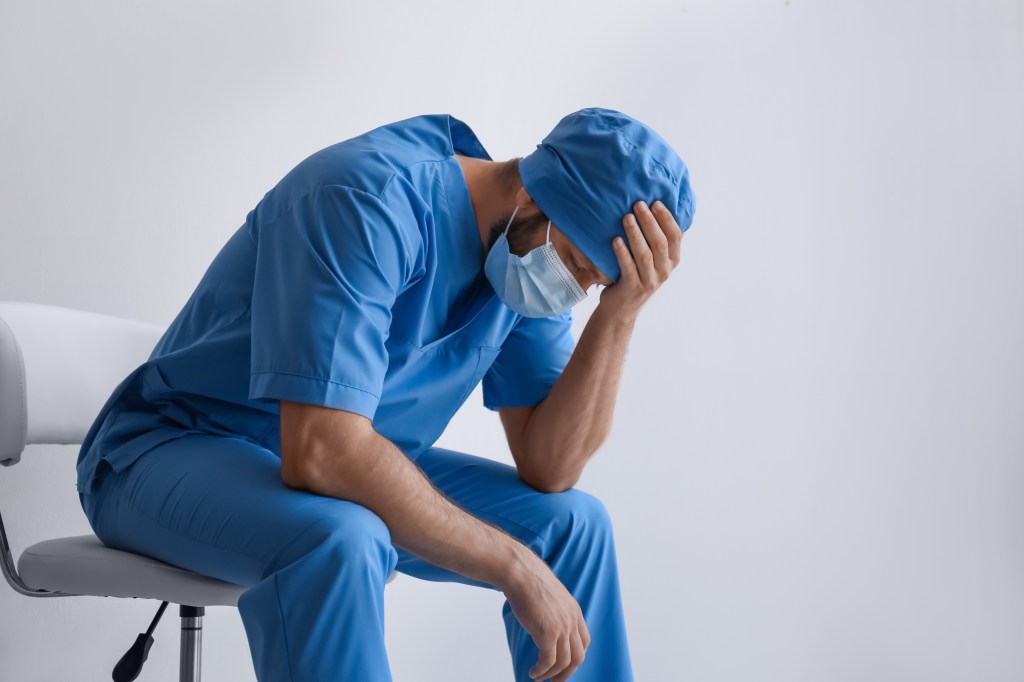
Overwhelmed. Exhausted. Fatigued. These are the emotions that have defined our existence on the front lines of the COVID-19 pandemic over the last year. We have watched helplessly as many of our patients and loved ones have slipped away. We have held the hands of patients who have passed away in respiratory isolation, their closest loved ones on phones and miles away, not allowed into the hospital. But I have seen Joy, when the infection overwhelms but the body and spirit fight on, conquering the virus and returning our patients to health. We have seen families reunited after long battles in the hospital ICU or at home in quarantine. We have seen Hope. We have known Love. I have seen the fantastic power of the human spirit. I have seen God’s love, and the power of prayer. There were moments when I felt that I could no longer fight for myself or anyone else, when the exhaustion would creep into my bones, and leave me battered, bruised, and almost beaten. But we are physicians. And we work with amazing, powerful nurses, medical assistants, medical techs, therapists, and hospital administrators—a formidable health care team. So I saw unexpected acts of bravery, acts of selflessness, moments that were etched into my soul forever. I saw us fight an unknown adversary. I have been privy to courage and honor, as we wrapped our patients in an armor of hope. I have seen hands that are raw from washing and sanitizing and wringing but showed no signs of relenting or retreat or defeat.
And in early January of 2021, at the hospital where I have seen and experienced all of this, there was a moment where my hope was recovered, where I became recharged and ready to step back onto the battleground. I saw the proverbial light at the end of the tunnel, the sun peeking over the horizon at the end of a cold dark night. The promise of a new day. The vaccine.
“Overwhelmed. Exhausted. Fatigued. These are the emotions that have defined our existence on the front lines of the COVID-19 pandemic over the last year.”
As I received that second dose, I wondered how any of us survived this year. I wept tears of joy, thinking that I finally knew in that moment that we would make it through this war. The tears burned with the memory of all those we have lost. It didn’t need to get this bad. Why did we have to lose so many? And how many more will we lose? The answer depends now on our resolve. We must resolve to vaccinate as many of our patients as we can as soon as possible. As a medical community, we should assist our public health departments, hospitals, clinics, and our federal, state, and local governments to roll out these vaccines with great efficiency. The only way we will win this war now is by vaccinating the masses and following the public health guidelines to wash our hands, distance, and wear masks.
I returned to work in this New Year, 2021, reinvigorated. My optimism stems from the smiles of my colleagues, which have been renewed with hope that the tide is turning. My optimism stems from an understanding that our imaginations power our spirit and our spirit powers our hearts, and that science and ingenuity and heart will prevail with the advent of this vaccine. This year, 2021, will be an amazing year for all of us because I will will it to be so. The world is full of magic. We are so blessed to be physicians. Search your feelings, you know it to be true. I hope your year is starting out as well as mine. I pray that all of us can find perspective and optimism somewhere in this world, so that despite the ill effects of COVID-19 on all of our lives, and the obstacles and the hazards along our journey that was 2020, we can continue to serve our patients in this, the highest of all callings. I want to thank all of my colleagues and compatriots who have shared this year with me and my family. We have shown that together we are stronger, and we will overcome. My name is Hujefa Vora, and this is the Last Word.
This article was originally published in the March/April issue of the Tarrant County Physician. You can read find the full magazine here.
Medical school has one primary goal: passing on humanity’s medical knowledge to a new generation. There are a few challenges to accomplishing this goal. First is a static problem, i.e., the sheer magnitude of information. Second is a dynamic problem, i.e., the rate of change of this information. Humankind’s medical knowledge is growing and being refined at an incredible rate. These forces are constantly at play in medical school, and they only become more obvious the deeper one’s understanding of a topic becomes. Learning more means absorbing all of the idiosyncrasies and all of the exceptions as well as confronting the burden of complexity. This is a problem that our species has been dealing with forever. Just take the ancient story of Adam and Eve; life was simple until they ate the apple and had to deal with the consequences of knowledge.
“Drinking from a fire hydrant” is the analogy often used to describe the intensity of learning in medical school. This is what medical students volunteer for beginning in year one, and it will continue until we retire. The best and only solution is old-fashioned hard work and careful thinking. This is the reality that you have to accept if you choose to be a doctor. Unfortunately, this same reality of drinking from a fire hydrant now applies to our whole society that is woefully unprepared for the flood of medical knowledge and information.
Our society’s fire hydrant does not come in the form of a pathology textbook, but in the form of the Internet and social media. Everyone is bombarded with health content, and the mishandling or misinterpretation of this information has many potential problems. These can range from wasted patient resources to creating false expectations—they can even lead to physical harm. As doctors we become familiar with information overload and have the opportunity to develop strategies to handle it. We learn to be skeptical, research thoroughly, test our assumptions, and rely on experts. It is sometimes easy to assume the whole world has some of these strategies too, but this is obviously not the case. I don’t even need to give a specific example, just browse Twitter or Facebook for a few minutes and I am certain one will present itself. Ideally, everyone would have instant access to a healthcare worker to help them navigate the things they see online. This is currently impossible, so many patients will have to sort through the overload of truth and misinformation on their own. In light of this problem, I am reminded of a famous quote by a pillar of our profession:
“One of the first duties of the physician is to educate the masses”1
–Sir William Osler.
I believe that we can benefit society by educating our patients about strategies to sort through medical information they find online. Strategies like having some skepticism toward this information, researching it through reputable sources, and trying to disprove something they see on social media before they believe it. Strategies that we have had the opportunity to develop through our medical education.
I am like most second-year medical students and I am probably too eager to share what I have learned with those around me. What has been surprising to me is that most of the health questions my friends and family ask or the incorrect assertions I hear are different from what I expected. For every time I get to explain how someone’s medication works, there are five times of disputing something someone saw on social media. I understand that not everyone has the benefit of medical school, but I fear that the massive amount of online health information has the potential to cause harm if people do not have basic strategies to handle it.
In closing, I will admit that the quote I used was not complete. The full quote says that “One of the first duties of the physician is to educate the masses not to take medicines.” I completely misrepresented the quote because it demonstrates how the simplest strategies can be used to check the validity of something you read. One Google search is all it takes to gather evidence that I was not being completely truthful with Dr. Osler’s claim. That being said, if Osler were alive today, I believe he would agree with the sentiment that “One of the first duties of the physician is to educate the masses not to believe everything they see online.”
1Osler, William, Robert Bennett Bean, and William B. Bean, Sir William Osler Aphorisms: from His Bedside Teachings and Writings, (New York: Schuman. 1950).
This piece was originally published in the March/April issue of the Tarrant County Physician. You can read find the full magazine here.
We can all learn in many ways from the intellect of Greece and Rome. This principle applies to infectious events which took place in those societies in the long distant past and were well documented by ancient writers in their descriptions of early epidemics.
In these difficult COVID-19 times we still rely on these empiric approaches obtained from past management of epidemics in times of war and peace. We have also learned how to complement this management with careful scientific research and study to develop more specific treatments and successful vaccination programs. Additionally, we have learned that it is important to have consistent, well-coordinated public education.
The Athenian Plague
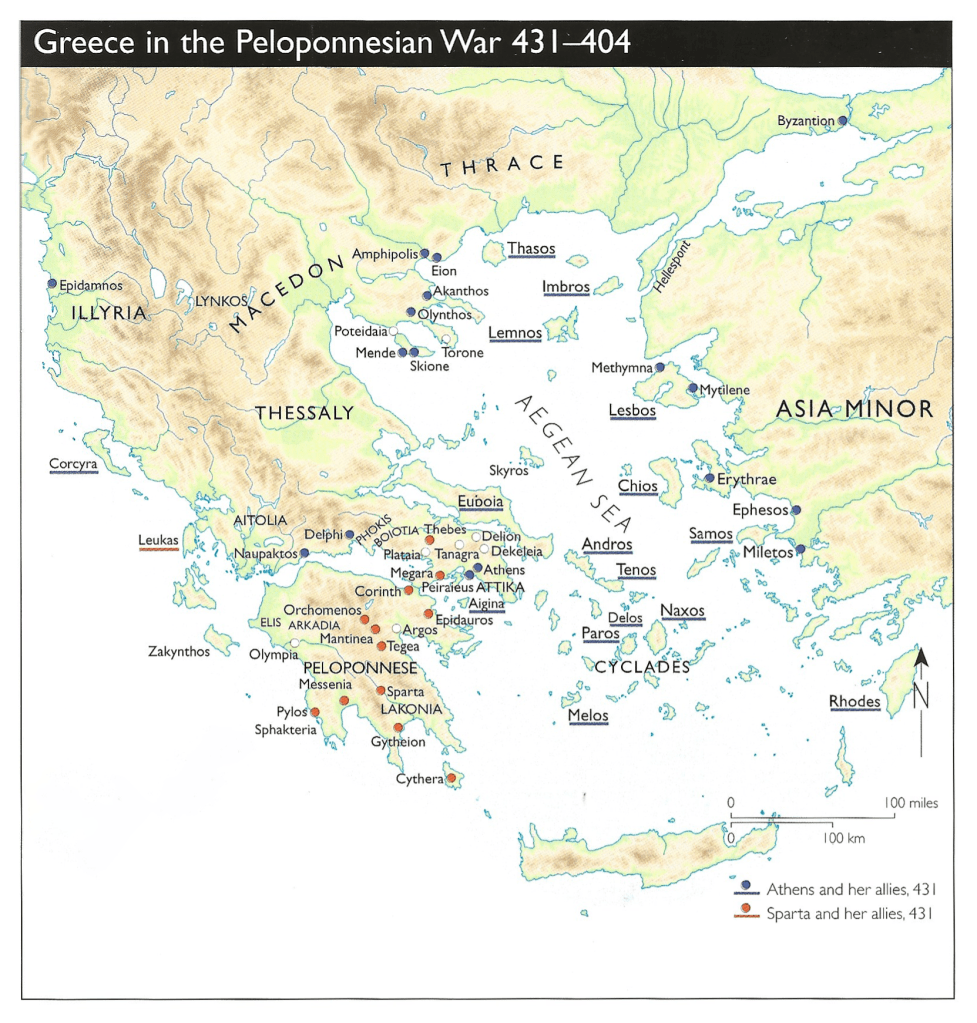
This plague occurred in the setting of the Peloponnesian War, a long war caused by conflicts between the states of Athens and Sparta and their allies.1,2,3 Democracy originated in Athens in 500 B.C. It was brought about through the assembly of the 500, a group chosen to make important decisions regarding essential affairs of the city.
Athens, expanding into Attica and controlling the surrounding Ionian Islands, established the Athenian (also called Delian) League and built a naval empire. It became wealthy by exporting olive oil and wine and trading silver from nearby mines. It thrived under Pericles, a leader who built the Parthenon and encouraged culture and creativity in the city.
Sparta, by contrast, was a land-locked military state comprised of rigorously trained soldiers. It was ruled by kings that controlled underclass servants. They also expanded into neighboring city-states. Athens and Sparta became rivals that clashed due to their different styles of government and policy.1,2,3
The Spartans also built their own defensive alliance, the Peloponnesian League, which antagonized the Athenian League.
Athens protected its neighboring states from Spartan attacks and built walls between Athens and Piraeus (also spelled Peiraieus). To prevent further clashes Athens and Sparta signed a peace agreement, but the Spartans and their allies disliked the democratic and expansive Athenian approach and felt it needed to exercise greater restraint. Therefore, in 431 B.C., Spartan troops and allies made several incursions through Attica into Athens. This started a long series of battles with inconclusive results that were fought for 26 years in different sites either by land or sea. This ruined the Greek economy, adversely affected the lives of many families, and changed the course of Greek history.
This so-called Peloponnesian War has been described at length by the brilliant general and historian Thucydides and is still studied by contemporary researchers.1,2,3 The final downfall and cultural deterioration of Athens was caused by the combination of damage to its fleet after a failed invasion of Sicily and by the enormous loss of life caused by the Athenian plague.
This epidemic started in the second year of the Peloponnesian War, after the Spartan invasion and siege of Athens in 430 B.C. As reported by Thucydides, this disease appeared suddenly, with high fever, red eyes, sore throat and tongue, hoarseness and cough, vomiting bile, severe diarrhea, restlessness, purplish cutaneous pustules and ulcers, and also lesions over fingers and toes, sometimes with gangrene. Recent review articles suggest that the most likely epidemiological diagnosis was smallpox, with typhus being less probable.5 It did not appear to be bubonic plague.
Thucydides described the overcrowding in the walled city of Athens where he proposed the important concept of contagion of disease. He defined it as the transmission of illness from a sick person to a healthy individual. He was then influenced by the ideas of Hippocrates, who claimed that the secretions of a sick individual would contaminate the air during an epidemic.6
This proposal anteceded by thousands of years Pasteur’s and Koch’s observations on germ transmission. Thucydides also noted that death could occur on the seventh or eighth day of disease but observed that those who recovered might acquire partial immunity and did not die from a second round of disease.
Waves of infection affecting the local population led to the death of one-third of Athens’ inhabitants. So many of the dead remained unburied that at times the corpses piled up on the street. Thucydides blamed this on lack of humanitarian response of the survivors. He himself, who got the disease and recovered, suggested avoiding overcrowding and exposure to the sick; however, Pericles, who was leading Athens at the time of the infection, suggested the transfer of rural refugees to the walled city. This increased the risk of their contagion. He also became a victim of the illness, from which he did not survive.
Euripides, who also lived at the time of the war in 415 B.C., described in an allegorical drama, “The Trojan Women,” a prophecy for a tragedy that predicted the disaster that would befall Athens after the failed Sicilian campaign when Athens lost her entire fleet, and a large number of young sailors became enslaved. This was a message on bad war planning in a Greek drama written in the fifth century B.C.7
As Rome conquered Greek territories, the Roman Empire in turn was deeply influenced by Greek culture, which became integrated into buildings and sculptures. The Roman Empire was also influenced by their religious beliefs and images. Hellenistic centers created in Alexandria and in cities of Asia Minor were later absorbed and integrated into Rome.
Antonine Plague
The first recorded epidemic in Roman times was called the “Antonine plague.” It appeared in A.D. 165 to 180, and waves of disease followed between 211 and 266. To Galen, the observant Greek physician, the victims presented with fever, chills, sore throat, bloody diarrhea turning black, and a pustular rash on the ninth day consistent with smallpox. The acute phase of the disease lasted two weeks. It affected large numbers of Roman residents, with high mortality due to the density of population and excess of waste and sewage.4 It killed Marcus Aurelius Antoninus and Lucius Verus, the two reigning emperors.8 It is believed that the Roman soldiers brought the organism from Egypt and the Middle East into Rome.
In those times, early Christians were persecuted for refusing to honor the Roman gods. However, they endeared themselves to the sick for providing them with some form of care.
The Roman Empire later became stretched financially by excessive warfare, rapid emperor turnover, and increased civil wars. Rome was eventually sacked by invading Visigoths in 410, and the last western emperor was deposed in 476 A.D.
Justinian Plague
The Eastern branch of the Roman Empire was then established with Constantinople as the capital of what was to become the Byzantine Empire. A different type of plague appeared in 541 A.D. during the Emperor Justinian’s rule in Constantinople. Justinian (527- 565 A.D.) is known for military campaigns, civil law reforms (he wrote Codex Justinianeus), and for creating important buildings (Hagia Sophia in 562 A.D.).
It has been claimed that this plague caused the loss of up to one-third of the total Mediterranean population. It may have presented in recurrent intermittent waves that, lasted up to 200 years. It has also been suggested that it led to the waning of the Roman Empire and the advent of the Middle Ages.11
The historian Procopius (500 – 565 A.D.) described the appearance of this plague in Pelusium, Egypt, on the Eastern Nile, and its spread to Alexandria and later to Constantinople, Asia Minor, and the Middle East.
Procopius observed subjects with fever. They had “large painful swellings” in groins, armpits, and neck followed by delirium, black blisters, and vomiting, which frequently led to death. Occasionally, he noted, “The lumps start draining pus, the fever subsides, and the person sometimes may even recover.” There were similar reports from other observers at that time, like John of Ephesus.8
We know now that rats carrying fleas were brought in by ships supplying grain from Africa to Constantinople. Bubonic plague’s causative organism, Yersinia pestis, has been isolated and its DNA sequenced.10 This was obtained from tombs in sixth century Bavaria. It was found to represent a distinct genetic lineage originating from a different rodent reservoir for this pandemic than the one occurring in medieval Europe.
States controlled by Athens (blue) and Sparta (red) at war1
A recent detailed research paper by a multidisciplinary group questions the Justinian plague as being such a watershed event in history.9 After examining a series of independent fields of study such as papyri, inscriptions, and coins as well as pollen and burial sites, the authors conclude there is little evidence that the Justinian plague was a major driver of demographic change in the sixth century Mediterranean area. These findings indicate this plague was therefore very different from the devastating second pandemic that presented later in the Middle Ages.
We have learned that two ancient pandemics, the Athenian plague in early Greece and the Antonine plague in early Rome, appeared in cities with overcrowded populations. Their disease presentation at the time indicated exposure to a highly infectious, rapidly spreading agent that caused an acute, devastating disease of high mortality. Both epidemics had similar clinical presentation, in which fever and mucosal and pustular skin lesions predominated. We know now that they most likely represented smallpox, and this disease became airborne from mucosal lesions but could also spread by contact of skin ulcerations. It affected people of all social classes, including leaders and emperors. Such a contagious disease would have made patient care very risky and difficult. No wonder the corpses piled up on the streets of Athens!
Smallpox ravaged the entire world. It reached the Americas, including the U.S. and Mexico during colonial times. It decimated the Aztecs when the Spanish conquistadors arrived in Tenochtitlan, as the Aztecs had no previous exposure to this virus.
After Jenner published his spectacular results with vaccination in 1798, smallpox immunization was eventually adopted all over the world and the disease was completely eradicated by 1980.
Prevention of social gatherings was applied during the severe 1918 flu pandemic with measures such as closures of schools, shops, and restaurants, mandated social distancing, and home quarantining when needed. In cities in which these multiple recommendations were implemented earlier and kept in place, transmission of disease and mortality were reduced. This beneficial result demonstrates that avoidance of contact between individuals can be helpful in controlling transmission of highly contagious disease, which is why this approach is being used for the management of the COVID-19 virus.
References
1RMorkot-HistAtlas Ancient Greece- Penguin 1stEd 1996
2D Kagan – The Peloponnesian War – Viking 2003
3VHanson-A War Like No Other- RandomHouse2006
4ErinyHanna-Cities,Disease,Trade, Epidemics in Roman Empire Vanderbilt-Uni 2015
5RLittman-The plague of Athens. Epidemiol and Paleopathology. Mt.SinaiJMed 76:456
6HippocraticWritings:The natureof man Penguinclassic1983
7Euripides TheTrojan women Signet classic 1998
8GKohn; Encyclopedia of Plague and PestilenceWordsworth1995
9LMordechai-The Justinian Plague An Inconsequential Pandemic? PNAS 116-5125546
10D Wagner – Yersinia Pestis and the Plague – Genomic Analysis Lancet 14 April 2014
11Bassareo – Learning from the past in Covid-19 Era – Post Grad Med J 114:633
Images
1Souza, Philip De, The Peloponnesian War, 431-404 BC., (Oxford: Osprey, 2002).
Originally published in the January 2021 issue of the Dallas Medical Journal. Reprinted with permission.
There is a prospective optimism that a new year brings allowing a “start over” positivity that helps our collective need to shed and renew. Yet, before we burst out the Champagne, we should process how we got here as 2020 may well have been the most challenging year of our lives, with enough despair, wounds, and wisdom, such that we are Turning 2021, metaphorically speaking, of course.
We have been in the grips of a worldwide pandemic that has upended our personal and professional lives. Our nation’s soul lays bare amidst a fight for racial equality. As the pandemic rages on, our mental health has continued to take a hit. The chronic exposure to stress is causing a variety of issues. The uncertainty, lack of sense of control, and alteration in our values and routines have given way to anxiety. The successive, unexpected changes brought on by the pandemic have also been underscored by a series of losses—our jobs, how we work, our children’s routines, travel, finances, gathering with family and friends, and simple pleasures like eating out and entertainment. This sense of loss over life as we knew it has been a chief driver of depression. When attempting to suppress severe wildfire, there is a possibility for firefighting crews to be overrun by wildfire, known as entrapment and burnover. There are many metaphors that come to mind when we consider the toll of 2020 on our mental fitness. Move over burnout. We are suffering from burnover.
Turning 2021 might not feel like a moment to see the glass as half full, but a critical step towards restoring mental fitness, and a favorite tool in the psychiatrist’s toolbox, is perspective taking. This is not meant to minimize the harsh reality of an incredibly difficult 2020 with Pollyannaish optimism. Many of us have lost loved ones, friends, and colleagues. We are sad, frustrated, and exhausted. But as we reflect on 2020, taking stock of the losses and triumphs, there were unmissable silver linings:
Creativity Amidst the suffering, we witnessed heights of human spirit and ingenuity. Rising to the clinical and logistical challenges, we put on our problem-solving caps to make the most of a limited supply of Personal Protective Equipment (PPE), ventilators, and medications. When our hospitals reached capacity, we built makeshift hospitals and converted concert centers into giant negative-pressure rooms. We served our patients to the best of our abilities, embracing the steep learning curve and ever-changing guidelines and information on COVID-19. We held our patients’ hands to give them a dignified sendoff when their loved ones could not be there in their last moments. Our creativity wasn’t just limited to our professional lives; In addition to doctor, we added teacher, caregiver, coach, and other roles to our credit.
Technology We went virtual. Sure, we went from one online meeting to the next and had to scramble for a bathroom break, but we found a great way to safely connect with our patients, parents, friends, and each other. When we ached for culture, we brought Hamilton, the Metropolitan Opera, and concerts streaming home. We virtually toured cities and world class museums, studying art masterpieces, closely zooming in and out.
We flexed our tech muscles and found other convenient ways to bring the comfort of nourishment and shopping for essentials to our doorsteps. It took a few months to get the hang of it, but we joined online gyms and live workout classes from home.
Our internet bandwidth made it possible to meet the combined needs of work from home, telemedicine, online school, and a dozen devices streaming online platforms simultaneously. We concurrently admired and doom-scrolled the Institutional and governmental COVID-19 data repositories. Most importantly, we had real time information about this pandemic on our fingertips, (at times—perhaps too much information).
Community We learned that gratitude and grief can coexist. Our circles got smaller by necessity and we became intentional about our connections, out of which came bonus time with family and pets (and plants). Without our usual external outlets and distractions, we turned inwards and made time for introspection. We came upon unexpected opportunities for nourishment—we took up new (and old) hobbies, games, books, podcasts, yoga. We made a commitment to support struggling local and small businesses. Even if the presidential election of 2020 delivered a powerful referendum on how divided we stand, we found ways to unite over popular fads and shows. We developed new coping skills, and when these were not sufficient, we leaned on our colleagues, family, and friends for support. Meanwhile, our scientific community also embraced the challenge of 2020 with a promise of a vaccine, which has been developed in record time.
Priorities There’s nothing quite like a pandemic to make us reevaluate our priorities. As physicians, we (finally) learned to say no as self-care became more critical than ever. We watched a third of the country burn in wildfires and came to appreciate the profound impact of our choices on our environment. A discussion about Turning 2021 would be entirely remiss without acknowledging the pandemic of racial oppression thrust into the forefront in 2020. The intersectionality of COVID-19 pandemic and social determinants of health has been underscored by the disproportionate and devastating impact of the pandemic on black, latinx, and indigenous people of our nation. So, we committed ourselves to the task of self-examination and intentional antiracism. Out of activism came a commitment to change for the better with more progress on equity and justice.
If 2020 was the ultimate exercise in improv, we gave a performance worthy of cheers and ovation. Even so, 2020 was especially stressful for doctors as we were stretched beyond our capacities in all spheres of our life, all at once, and for far too long. Published research on the impact of the pandemic on health care workers in the U.S. is limited at this point, but the data from China, Italy, France, and other countries impacted by COVID-19 earlier on in 2020 are telling. As a volunteer psychiatrist for the Physician Support Line, a free and confidential peer phone support helpline for struggling physicians and medical students, I have heard countless stories of physicians and medical students, I have heard countless stories of physicians who endured a risky, exhausting, and demoralizing milieu for much longer than the human body and mind were meant to tolerate—all the elements of not just burnout, but anxiety, depression, post-traumatic stress disorder (PTSD), substance use, and much more.
In his seminal book on trauma and its effects, The Body Keeps the Score: Brain, Mind, and Body in the Treatment of Trauma, Dr. Bessel van der Kolk discusses how trauma and chronic stress rearrange the brain’s wiring— specifically areas dedicated to pleasure, engagement, control, and trust—in a process known as neuroplasticity. The human response to psychological stress is one of the most important public health problems, and doctors are especially susceptible to it because of the nature of our work and the long hours, only compounded by the pandemic. Many of us are Turning 2021 psychologically wounded, exhausted, and mentally exhausted.
Taking stock of 2020, Turning 2021 mentally fit might seem like a lofty goal. Fortunately, there are evidence-based strategies that can help us ameliorate the impact of chronic stress as we pursue our goal of mental fitness in 2021.
Recalibrate “normal” We have endured a collective trauma in 2020 that has given way to a crisis of meaning. The chronic stress might make you feel irritated, impatient, angry, sad, and you might experience feelings of disconnection, difficulty concentrating, and a range of other cognitive effects. You might also be navigating anxiety, depression, or fatigue. These are all perfectly human, adaptive responses during such a difficult time.
● Welcome and honor the full spectrum of emotions that make you human, because they are here to teach you important lessons about your triggers, coping skills, and current emotional state.
● Practice Self-compassion – as physicians, we have several personality traits that lead us to pursue careers in medicine, including perfectionism and self-denial. While these traits can serve us well in doing our clinical work, they also give way to unrealistic personal and professional expectations, including denial of personal vulnerability. Some days your best IS enough. You are a doctor, but you’re also human. Acknowledge and accept your vulnerability.
● Seek Help – part of recalibrating normal is to also normalize seeking help. Extraordinary stresses cannot be overcome with ordinary measures. Although we all have the ability within us to heal, we sometimes need support in the journey to self-realization and optimal mental fitness.
Reflect and release Unprocessed traumatic memories and stress can become sticking points that cause our mental and physical processes to suffer. As such, it is imperative that we reflect inwards and take intentional steps towards improving our mental fitness. The journey to recovery can be slow, intentional, and at times, uncomfortable, yet, immeasurably rewarding. As with any form of recovery, the first step is acceptance. ● Give yourself the permission to grieve the many losses of 2020, including loved ones, colleagues, and even your routines. This isn’t always at our forefront, but in addition to attachments to other people, we also develop powerful attachments to our work, things, and places.
We know that neuroplasticity and trauma go hand in hand. Just as traumatic events can forge neural pathways, so can positive and effective therapeutic experiences that help us cope and heal. The psychiatrist’s toolbox is equipped with evidence-based strategies to help you navigate this journey.
● Psychotherapy – if anxiety is the worst use of the imagination, psychotherapy helps us reestablish psychological safety and dial down the trauma response. There are numerous evidence-based therapies to help address anxiety, depression, and burnover, such as Cognitive Behavioral Therapy, Acceptance and Commitment Therapy, psychodynamic psychotherapy, and Mindfulness-Based Stress Reduction. The undertaking of knowing oneself might be the most challenging yet rewarding experience of one’s life, with lasting results. In fact, suffering often brings with it the opportunity that drives emotional growth for a more mentally fit self. As with anything worthwhile, this process requires time and commitment.
● Medications and more – we enter the medical profession with many underlying vulnerabilities, including personal and family medical and psychiatric history, chronic stress from childhood, personality factors, social determinants of health, and much more. Moreover, the stress from medical training is associated with systemic inflammation, telomere shortening, and oxidative stress, findings which have often also been reported in major depression. Antidepressant medications, in particular, are associated with not just mood recovery but also recovery from oxidative stress on a cellular level. There are also several medication and non-medication augmentation strategies that can help you with your mental recovery. Most importantly, a good psychiatrist can blend psychiatric medication management and psychotherapy while empowering you with skills for self-management over time.
If the body keeps the score of chronic stress, then the symbiotic relationship between the mind and body becomes a critical target for recovery.
● Mind-Body strategies – we all know the benefits of exercise as a healthy coping skill to build our mental and physical fitness. However, when we are exhausted, the last thing we might want to do is run laps around the neighborhood with a mask on. Fortunately, recovery from stress does not require us to train like an athlete. In fact, routine, less intense activities, such as walking a pet, doing the laundry and dishes, gardening, and washing your car can be just as effective and give you a sense of accomplishment. One of the best strategies to facilitate traumatic release from the body is to engage in an intentional, slow, and mindful activity like yoga, which you can easily access over the internet from the comfort of your living room.
If you’re suffering from burnover from another discussion about mindfulness, you’re not alone. I had similar skepticism about mindfulness when I first took the eight-week Mindfulness Based Stress Reduction (MBSR) course. In fact, around the third week, I recall being quite frustrated with the process of completing the same body-scan meditation every day for an hour or more, but I stuck with it. Around week six, a sense of calmness came over me. My movements and actions became more intentional and I felt less exhausted, without any change in the rigor of my clinical schedule. My relationship with nourishment also changed as I learned to chew my food instead of my thoughts, which saved me precious mental energy to devote to other aspects of my life. When I wavered from this intentionality, I returned back non-judgmentally to the task at hand. One of the greatest misconceptions about mindfulness is that it helps us fight distressing thoughts. Quite the contrary, mindfulness allows us to change our relationship to the distressing thoughts that are a part of living.
Reimagine “Work” As physicians, our careers have been shaped by the expectation of conformity married to the assumption that resilience and professionalism are in endless supply, particularly during a pandemic. Fittingly then, 2020 has been the ultimate test of our professional status quo. While the long hours and medical culture might make it seem that your personal identity is inextricable from your professional one, this is a perfect recipe for burnover. Along with recalibrating normal, Turning 2021 mentally fit requires that we reimagine work as an extension of what we do, rather than us as an extension of who we are. You are a person with many gifts, values, dreams, and talents, and one of them just happens to be being a hard-working doctor. This could be a variety of things, including spirituality, advocacy, mentorship, leadership, and other activities outside of your profession. Also, as much as possible, release yourself from the myth and burden of multitasking. Focusing on one task at a time and being mindful of the task at hand will improve your concentration and help you to be more mentally fit. Spreading ourselves thin depletes our battery faster than working on tasks individually. Like any of your devices, the more programs you have running simultaneously, the harder it is on the system. It is the same for our body and mind.
Reclaim Joy Mental fitness is not merely the capacity to endure, but also the capacity to recharge. Most of us forget the latter. Take the time to slow down and explore other aspects of life that fill your bucket and keep you mentally fit. Recreation, humor, daydreaming, connection with nature, your partner’s touch, and the simple act of doing absolutely nothing at all can all be ways to recharge your mind. Rather than spending your time on passive activities like binge watching shows, find a book or a podcast that teaches you something new. Monitor your screen time and disconnect digitally to give your mind a digital holiday. Be it while on a walk around the neighborhood or on your walk from the parking lot to your office—put down your phone, pull down your mask and stop to smell the roses. New experiences and new ways of doing old things can also set you on the path to mental fitness.
Most of all, remember that mental fitness is not a checkbox, it’s a moving goalpost practiced over time with intentionality. If at first you fail, get up and try again. And again. And again. Join me in the commitment to turn 2021 happy, healthy, and mentally fit!
This piece was originally published in the January/February issue of the Tarrant County Physician. You can read find the full magazine here.
Dr. Bailey presented this speech at the AMA’s House of Delegates on November 13, 2020.
In my inaugural address to the AMA House of Delegates in June, I talked about how a hero’s journey is symbolic of the journey we walk as physicians.
Our journey starts with a moment of inspiration to pursue Medicine. We find a mentor to show us the way. We encounter struggles and hardships before emerging stronger and more resilient . . . forever changed by the experience.
Few times in history have we embodied the hero’s journey like we have in this past year. In June I talked about Harry Potter, Star Wars, and The Wizard of Oz . . . but much of the last few months have felt more like the dystopian world of The Hunger Games.
COVID-19 has brought immense challenges and pain for so many—including our physician community. We have struggled mightily at times. Many of us know a colleague who lost their life to COVID-19. Many of us have fallen ill, or we have watched a family member or loved one battle the virus.
We have done things in 2020 that we could not have imagined . . . shining a spotlight in an uncomfortable place—on ourselves—as we repeatedly cried out for more protective equipment to keep us and our patients safe.
For the financial aid to keep our struggling practices afloat.
For the information and resources to make sense of it all. To provide counsel for our patients. To better understand what we were up against.
As we greet the new year 2021, the pandemic feels a little different now.
We don’t know if it is the end of the beginning . . . or the beginning of the end. But we are a bit wiser and a bit tougher than before.
“As with every hero’s story, we must learn from the trying times we have experienced. We must grow and move forward because that is what a hero is asked to do. “
We don’t know everything about the journey ahead, but there is plenty we do know.
This year has shown us the best in physicians and our health care community—the nurses, assistants and staff personnel who are always by our side.
Who are in the trenches with us even in the most difficult of times . . . and that understand the importance of physician-led teams.
But this year also has revealed how politics can be corrosive . . . how misinformation and anti-science rhetoric can impede our ability to respond in a health emergency and can magnify the cracks and inequities in our health system.
Nine months into our fight against COVID-19, the pandemic is as dangerous as ever. We have reached record highs and surges continue across the country.
We have learned in this most difficult year that no person and no community is safe from this virus. It reaches everyone . . . no matter their background, their income, or their politics.
And yet, in face of this pandemic—perhaps the greatest threat to public health in our lifetimes—physicians have heroically answered the call.
Time and again, through surges and plateaus, working under intense pressure and at great personal risk, our physician community has risen to the challenge of this moment.
We have done this with courage and with selflessness because of our singular dedication to our patients’ health.
And now, with a new year ahead and possible vaccines on the horizon . . . we are about to make a fresh start. Change is in the air.
Never again can we allow the politics of division to undermine our ability to deliver the very best care to our patients.
Never again can we allow anti-science bias and rhetoric to undermine our public health institutions . . . and discredit the work of physicians, scientists, and researchers.
Never again can we allow a campaign of misinformation and disinformation to co-opt conversations around public health . . . and sow divisions that only serve to prolong the suffering of so many.
Never again can we allow public health officials to feel the pressure of threats and intimidation simply for doing their jobs.
And especially when lives are at stake, never again should physicians have to fight a war on two fronts—caring for severely ill patients in a raging pandemic . . . while at the same time battling a public relations war that questions the legitimacy of our work and our motives.
This is unacceptable . . . and we will not and cannot continue to work in this atmosphere.
While we have seen the best of physicians in 2020 . . . we were reminded again of the power of the AMA, the TMA, the TCMS, and of the entire Federation community working on our behalf and being our voice when it mattered most.
Our organizations created tools and resources—all grounded in credible science and evidence—to help us respond to this historic crisis.
We pushed the administration to accelerate production for testing and PPE. TMA and TCMS kept our practices supplied with life-saving equipment.
Our medical organizations helped establish a financial lifeline for struggling physician practices, securing tens of billions of dollars in financial support, grants, and interest-free loans to infuse practices with much-needed capital to survive this pandemic.
Organized medicine was a leading national voice in support of science, evidence, and data as the surest path through this pandemic, launching a major public health campaign to encourage everyone, everywhere to “Mask Up.”
All of us should be proud of how organized medicine has stood up for physicians this year.
As with every hero’s story, we must learn from the trying times we have experienced. We must grow and move forward because that is what a hero is asked to do.
That is what physicians are expected to do.
That is what we expect of ourselves.
All of us are eager to see an end to this pandemic. And with encouraging new reports about vaccines nearing approval, there is tremendous excitement about what the new year will bring.
But we are not there yet. All of us need to continue to do our parts. We need to constantly remind everyone to wear masks, wash hands, and physically distance. We need to remain steadfast and focused until the very end.
We should not underestimate the fight in our opponent. Every time we feel like we have COVID-19 on the ropes, here and abroad, we see it roaring back.
We have to remain strong and follow where the science leads us.
The next few months will be buzzing with anticipation about the post-COVID world that will emerge.
Regardless of when that day arrives . . . and when normalcy returns, whatever that will look like . . . our AMA, specialty, state, and county societies will play a critical role in shaping the health system of the future.
A system that ensures that everyone has access to the affordable and meaningful coverage they need.
A system that relies on science, evidence, and data to guide our approach to public health and prevention.
A system free of the historic barriers to care . . . and ensures that all patients stand on equal footing.
A system that supports and integrates a revitalized public health infrastructure.
A system that protects the patient-physician relationship from outside influence at all costs.
And a system that prioritizes physician health and wellness . . . and eases administrative burdens that take us away from what we do best . . . caring for our patients.
Despite the challenges of this past year, and they have been extraordinary, I continue to believe in the power of organized medicine to fix the persistent problems in our health system.
I believe in science and evidence to light our way.
And I believe in the strength and resolve of physicians to take on any challenge . . . and rise to any moment.
The hero’s journey is our journey. And we are exactly where we are meant to be.
This piece was originally published in the January/February issue of the Tarrant County Physician. You can read find the full magazine here.
I can brag on myself as I have been involved with medical education for over 40 years now. Thirty-seven of those years were spent working as an assistant and then an associate professor of medicine at the Texas College of Osteopathic Medicine (TCOM) within the University of North Texas Health Science Center. I was the first full-time gastroenterologist there. I left private practice in Dayton, Ohio, where I was adjunct faculty at the Ohio University College of Osteopathic Medicine. I wanted to be more involved in medical education than that position offered. So why am I telling you all this? So you know that I have been around a long time and have seen a lot of changes, including monumental ones in medical education, from the classroom to clinical bedside clerkships.
UNTHSC developed an Academy of Medical Educators where physicians, other health care providers, and basic scientists at TCOM have learned and discussed the theories and principles of medical education including Bloom’s educational approach and Miller’s framework for assessing clinical competence.
After we learned the fundamentals, we now concentrate on other aspects of medical education. One of the of most significant changes that has transformed how we educate is that we no longer “lecture.” Indeed, it is now considered a four-letter word—lecturing is seen as passive learning. Also gone are reading assignments from textbooks. Other forms of education now rule the roost. This includes online education and interactive forms of learning.
So, what is so wrong with textbooks? About 10 years ago, I read a letter to the editor in the New England Journal of Medicine, where two second-year UCLA medical students calculated the total number of pages assigned by instructors for one semester. A staggering 10,000 pages were assigned and were fair game when testing occurred at the end of the semester. Too much? Yes!
A recent Google search stated the doubling of medical technology in 1950 was 50 years, in 1980 seven years, in 2010 three and a half years, and in 2019 one and a half years. Now in 2020 it is 73 days; not even three months. I recently told this to a fourth-year medical student on my service and as his eyes widened, he exclaimed, “That’s scary!” So, to revisit what is wrong with textbooks, here it is: The editors work with other experts to write a designated chapter, all work is edited and corrected, it is then published, printed, distributed, and purchased, etc., etc. This whole process takes years. So how many times has medical technology doubled in that time frame? Educators still refer to textbooks, but as references, not as primary education material.
A man walks into a bar in New Orleans and asks for a Corona and three hurricanes. The bartender hands him the bill—$20.20. Yes, the COVID-19 pandemic has changed things, possibly permanently. Virtual medical education is the current modus operandi. Zoom, WebEx, Skype, and Join.me, to name a few, are the classrooms today. Right now, learning clinical skills is generally virtual. Inconceivable but true—not hands on but virtual patients. Not entirely new, just brought to the forefront due to the pandemic.
Over the past several years, the lecture (that four-letter word again) hall has been sparsely filled unless attendance is mandatory, as some medical schools still do require, or if an in-person quiz is on the schedule. Before attendance began to drop, medical educators made the classroom an interactive session and the iClicker was used to respond to questions. However, with Power Point presentations now online before the lecture is given, and voice over with the Power Point, why go to the lecture hall? Pull up the Power Point whenever you want, play it at 1.5 to 1.8 speed, and listen to it twice. The thought is that the classroom is wasted time, and you avoid being called on in class.
There is still in-person training. I teach in the second year, which includes small group sessions called Clinical Reasoning Modules (CRMs). In the CRMs, about eight to 10 students are presented with clinical cases by a moderator who leads the discussion on history, physical, labs, imaging, etc. The model used is a version of clinical reasoning called a “mind map,” and it stresses differentials and necessary testing and imaging. Grading is based on participation. As the “clinical expert,” I rotate to all the small groups and answer questions. This is where I get to meet students I have never seen before.
So, if there are no textbooks or lectures, what do the students do to prepare or to learn? Good question! Instead of scheduled lecture time, regular time is scheduled during their day to “study.” Faculty prepares Directed Student Activities (DSAs). The DSAs include society guidelines, videos, online sites like Up To Date and more. Here textbooks are listed, usually as reference rather than test material. As you can imagine, the students are very resourceful and tell me about sites they find on their own that support their learning process. The list I have been informed about and use to refine my DSAs are Baby Robbins, Pathoma, First Aide, Sketchy Medicine, Get Body Smart, Picnomics, and Hardin MD. As you can imagine, the time spent by faculty to screen all these sites is overwhelming. Since our curriculum is problem-based, symptoms or problems are the topics of our DSAs. Since I am a gastroenterologist, my topics are abnormal liver chemistries (not called LFTs anymore), nausea and vomiting, dysphagia, GI bleeding, constipation, diarrhea, and so forth. Can you imagine the time needed to condense these topics into DSAs that are current and learnable using this format?
I have been around a long time and seen a lot of changes, including monumental ones in medical education, from the classroom to clinical bedside clerkships.
To worsen the situation, clinical clerkships have been adversely affected by the pandemic. Many institutions banned medical students from direct patient contact, and in some instances, from entry into hospitals or surgery centers. Virtual patients were used to teach clinical skills devoid of in-person contact or interviewing. When will they get to see patients in person and learn bedside and in-office clinical skills? Who knows with the recent COVID-19 surge. Some have learned telehealth clinical care, which in some cases may be here to stay. Recent legal issues about student participation in clinical care have also started to cloud the problem. How will all this impact future clinical skills?
So, all these issues in medical education will indeed have an impact on health care. Medical educators have their work cut out for them in the new learning environment compounded by a seemingly never-ending pandemic. Not only are medical students educated to pass boards and clinical competencies, but to become lifelong learners. They must learn without DSAs and with doubling of medical technology every several months. When do they learn cost restraints, physical exam, and other competencies?
I know that this essay is called the Last Word, but this is hardly the last word on this topic. Hold on to your hats—this is a new world. Who knows what the new normal will be? As for me, the Last Word is that knowledge can be communicated, but not wisdom.
This piece was originally published in the January/February issue of the Tarrant County Physician. You can read find the full magazine here.
The residency application process has changed significantly over the past several decades. I remember a grey-haired attending telling me that when he applied to residency, it consisted of hopping in a car, driving down the freeway, and requesting meetings at hospitals he encountered along the way. A strong handshake later, and the promise of training in the specialty of his choice was secured. Since then, the Match process has been transformed with the stratification of candidates by board examinations which dictate competitiveness for certain specialties. We are under pressure to shine starting on day one, with no assurance that our labors will be rewarded by placement into a residency program.
The class before mine underwent the pomp and circumstance of their Match days at home, sidelined by the COVID-19 pandemic. My class is interviewing for residencies through virtual platforms. We do our best to capture the vibe of a program through an online tour of a hospital recorded on a GoPro camera attached to a resident’s forehead. Our webcams are always on, and we exercise our zygomatic muscles to maintain a soft smile throughout the events of the day. We try our hardest to convey ourselves in the best light possible, both figuratively and literally (many of us have invested in elaborate lighting set-ups).
This is not an indictment of the residency programs whose attention we are vying for. These are unique times, and residencies face similar obstacles to those encountered by the applicants being interviewed. As we evaluate a place we may call home for the next three to six years, residency programs are navigating how to choose a class of interns without meeting them in person. Then there is the additional challenge of representing the program’s values and culture on a screen. Many have attempted to replicate pre-interview dinners with meal delivery gift cards or virtual resident speed-dating. One residency even sent a care package with personalized memorabilia from their city.
Although we have lost the ability to explore our future landing spots during the “golden year” of medical school, there are still many silver linings to consider. Instead of having to coordinate plane rides and lodging, applicants can interview from coast to coast in the comfort of a home setting. For students under financial strain, there are fewer restraints on our ability to consider programs that are farther away. Then there’s the benefit that few will admit—wearing shorts or yoga pants out of view of the camera frame during your interview.
While this certainly is not how I dreamed my fourth year would go, I nevertheless feel grateful. Leaders in graduate medical education are creatively finding ways to help us make informed decisions about the next step of our training. As we interview with leaders in our respective specialties, we reflect on the rollercoaster journey of medical school and the plethora of lessons learned. In the process of making our rank list, we ask ourselves hard questions about what our priorities are. How do we envision our professional identities and who are the people we want to be around during the formative years of residency training? I look forward to the day when I can be the grey-haired attending who wistfully shares stories of virtually interviewing in the midst of a global pandemic.
This piece was originally published in the January/February issue of the Tarrant County Physician. You can read find the full magazine here.
In the midst of the worst pandemic in over a hundred years, it’s easy to overlook vaccine-preventable seasonal influenza.
According to the Centers for Disease Control and Prevention, as of December 28, 2020, COVID-19 has already accounted for 336,761 deaths and 19,297,396 cases in the U.S. since its first appearance in early 2020. Tarrant County has reported more than 135,793 confirmed cases (TCPH data) and 1,425 deaths so far (https://covid.cdc.gov.covid-data-tracker). The current percent positivity (percent positive tests/all tests performed) for Tarrant County is a staggering 17 percent (also from CDC COVID Data Tracker).1
For reference, the 1918 influenza pandemic is reported to have killed 21,000,000 people including 549,000 Americans.2
Our most recent prior pandemic, the influenza experience between April 2009 and April 2010, H1N1pdm09, accounted for 60.8 million U.S. cases, 274,304 hospitalizations, and 12,469 U.S. deaths. H1N1 continues to circulate and is still included in the seasonal flu vaccine. A monovalent vaccination produced in response to the H1N1pdm09 pandemic after this strain emerged in 4/2009 wasn’t distributed widely until 11/2009.3
H1N1pdm09 was unique in causing more severe outcomes in younger persons. Approximately 30 percent of persons over 60 in 2009 were thought to have some immunity to H1N1pdm09 conferred by exposure in the past to another H1N1 strain.
As we make our way through the 2020-2021 flu season while in the throes of the highly politicized COVID-19 pandemic, how will we fare at vaccinating Americans against seasonal flu, and will flu vaccination rates provide some hint at public acceptance of, or enthusiasm for, COVID-19 vaccines?
According the CDC’s FluVaxView, during the 2019-2020 flu season, 80.6 percent of healthcare personnel received flu vaccines, with 94.4 percent vaccination in healthcare settings which required it and 69.6 percent in healthcare settings which did not make it mandatory.4
In the U.S., for the 2019-2020 flu season, CDC Influenza data are still preliminary but provide a range in numbers of influenza cases from 39,000,000 to 56,000,000, flu medical visits from 18,000,000 to 26,000,000, flu hospitalizations from 410,000 to 740,000, and flu deaths from 24,000 to 62,000. Even using the highest estimate for flu deaths from last season, COVID-19 deaths have already quadrupled the total number of flu deaths last season (https://www.cdc.gov/flu/about/burden/past-seasons.html).5
However, according to Flu Surv-NET (the Influenza Hospitalization Surveillance Network), the number of influenza-associated hospitalizations from 10/01/2020 to 12/05/2020 only totals 61 in the U.S. thus far (compared with prior seasons this is an unseasonably low number). There is not yet efficacy data for the 2020-2021 seasonal influenza vaccine because of low case counts so far, but most influenza experts expect a mild flu season due to COVID-19 practices of masking, social distancing, hand sanitization, and cough and sneeze hygiene.
As communities struggle to control the catastrophic consequences of COVID-19, getting our flu vaccines and encouraging all of our eligible patients to do the same demonstrates leadership and concern for the most vulnerable among those we serve. Discussing the flu vaccine with our patients also offers context for discussing the COVID-19 vaccines.




 Tarrant County Physician Online