Your Last Word

by Tom Black, MD – Publications Committee

This piece was originally published in the November/December 2020 issue of the Tarrant County Physician. You can read find the full magazine here.

“I can only wait for the final amnesia, the one that can erase an entire life.”
—Luis Buñuel

There is little doubt that my wife will outlive me, likely by decades. Her father lived to the age of 100, and we celebrated her mother’s 101st birthday last month. There is no substitute for good genes. Her father’s memory remained sharp until he laid down one afternoon for a nap and didn’t awaken. He had been quite a baseball enthusiast as a young man—his grandsons loved to hear him tell about the time he met Babe Ruth. In his final years, he avidly watched any and every sport on television and knew every player and their current statistics in several of the major sports. His wife, however, has followed the more familiar scenario of progressive dementia with increasingly poor short-term memory over the past three years. At this moment, she is sitting across the room from me, and she just asked for the third time in five minutes what the temperature is outside. It is sad for me to see this happening to one of the three most wonderful women I know.

I am all too familiar with dementia from my own father’s last few years. He had been a brilliant chemical engineer and remains one of the most accomplished people I have ever known. It was painful to witness his decline. I once watched him read and reread a typed letter on a well-worn piece of paper. Each time he did so, his smile faded and his eyes filled with tears before he sadly put the letter down. Within a few moments he had regained his usual happy demeanor and was about his business until he noticed the letter lying where he had placed it. He picked it back up and reread it with the same sad results. After observing this cycle several times, I peeked at the letter and saw that it was from his primary care physician. It read, “Dear Mr. Black, you have been diagnosed with dementia . . . . .” I disposed of that letter very quickly, and my father never realized it was gone. His memory loss progressed inexorably from short-term to include even long-term during his final year, resulting in a peaceful but oblivious state of total amnesia. It was no longer possible to pursue a meaningful relationship with him because we shared no common ground and could discuss only the environment around us at that moment. We could no longer revel in family memories. He recognized no photographs and could not even recall personal food preferences. Toward the end, we visited him—not for his sake, for we realized our visit would have no significance to him after we left—but for our sake, because it would be of significance to us. 

In his 1985 book, The Man Who Mistook His Wife for a Hat,  the late neurologist, Dr. Oliver Sacks, recounted the story of “The Lost Mariner.” Jimmie G. had developed amnesia due to Korsakoff syndrome. He could remember nothing of his life since the end of World War II, including all events that had taken place more than a few minutes earlier. He believed it still to be 1945, and although he behaved as a normal 19-year-old, Jimmie was, in reality, nearly 50. He was completely incapable of accomplishing anything noteworthy because he could not build one memory upon another to form a progressive narrative. His life had been frozen in time, in 1945. It was a living death.

Is there a better explanation of what makes life meaningful than Memory? Without memory, life cannot possibly be more than a moment-to-moment existence. In his memoirs, the film director, Luis Buñuel, wrote, “You have to begin to lose your memory, if only in bits and pieces, to realize that memory is what makes our lives. Life without memory is no life at all. Our memory is our coherence, our reason, our feeling, even our action. Without it, we are nothing. I can only wait for the final amnesia, the one that can erase an entire life.”  

“Generations from now, their descendants will know about them, but they won’t know them.” 

I am noticing that my forgetfulness is slowly increasing. Doorways have become amnestic devices; as I pass though one into the next room, I find I have suddenly forgotten the reason I came. I am on the hunt for ways to stave off memory loss.

Which brings me finally to the point of this essay. 

The movable printing press was invented in China around 1040 AD using porcelain type, but Gutenberg had the immense advantage of an alphabetic language when he introduced the metal movable-type printing press in Europe around 1450. Suddenly information could be much more easily recorded than ever before, and the past could now be remembered by means other than oral or hand-written accounts. Within 50 years, over 9 million books had been printed, accelerating the dissemination of ideas in the early Renaissance. What defines the Modern Age if not the ability to more thoroughly record and recall past actions and discoveries? And how much greater of an invention is digital storage, which can “remember” and make instantly available entire libraries of information. 

My father lived out west, and I was able to visit him about three times a year. At the time we celebrated his 90th birthday, my mother had recently passed away, and my father had plenty of free time. I asked him if he would do me a big favor, and he agreed. Knowing he had led a very interesting and eventful life, I asked him if he would please write his autobiography so his children, grandchildren, and future descendants could always know what a great man they had as an ancestor. He agreed to have at least one chapter completed by each time I visited, and while I was there, I typed what had he had written into his computer. After the 16th chapter, he declared that he was done. I had the book printed and bound, along with the diary that my mother had kept the last two decades of her life, and each of their living descendants received a copy. This book has become a priceless remembrance of two noteworthy lives, more meaningful to me than to my children, because I knew both of my parents so well that I seem to hear them speaking the words as I read them. For the next several years, my father spent much of his time reading and rereading his autobiography, reliving in his mind, I am sure, the halcyon days of his youth and productive adult life that he would otherwise have been slowly forgetting. 

About that time, I was talking with a friend and former college roommate. His 100-year-old father, a former physician, was living with my friend and his wife at the time, and I asked my friend what his father was doing with his time. “Oh,” he replied, “most of the time he just sits and reads the autobiography he wrote 10 years ago.” With the brain, as with a digital storage device, sometimes a hard copy is helpful to have on hand for when the primary device begins to fail.

Although a written autobiography won’t assure you of immortality in an eternal sense, it will give you an opportunity to achieve immortality in this life and assure that the memory of your existence will long outlast you. Begin writing it now while your experiences are fresh in your mind; small bits of your personal history may be eroding away even as you are reading this. It was labor intensive for my father to write the words by hand and then to type them into the word processor. It is so much easier these days with recording devices everywhere; my iPhone will even transcribe voice-to-text while I am driving, and I can edit later. I can’t imagine the process getting any easier than that, since thought-to-text technology, to my knowledge, is not just around the corner. 

Throughout their last years, my wife and I interviewed her aged parents. We quizzed them about what life was like as they were growing up during the ‘20s and the years of the Great Depression. We learned of their lives as newlyweds during World War II and as they raised their children during the mid-twentieth century. We added to what we already knew of them as empty nesters. We compiled our notes into biographies of them before and after they became a couple. A century from now my father-in-law’s descendants might still read about him growing up in a town with no paved roads and few automobiles, about his visit with Babe Ruth and his stint in the Army during WWII. They will read about his wife’s parents, who were immigrants from the Ukraine; her reputation as the best golfing, bowling, and tennis partner in the area; and how she and her future husband met on a blind date. But it just isn’t the same as my parents’ accounts; they are altogether too brief for such long and noteworthy lives. Most importantly, they lack a personal touch. I don’t hear their voices when I read their second-hand stories. Generations from now, their descendants will know about them, but they won’t know them. Don’t allow that to happen to you. For a future reader to hear your voice rather than that of your biographer, you must write your story yourself. It is your opportunity to have The Last Word.

 1Oliver Sacks, The Man Who Mistook His Wife for a Hat, [New York: Simon & Schuster, 1970]

2Luis Buñuel, My Last Breath, [London: Virgin Books, 1983], p. 4-5.

The President’s Paragraph

Coffee Talk

by Angela Self, MD, TCMS President

This article was originally published in the September/October issue of the Tarrant County Physician. You can read find the full magazine here.

Sometimes you just need to grab a cup of coffee, sit under a tree, and contemplate nothing at all. Years before I started coffee blogging, I remember watching an episode of 60 Minutes where a segment was on “living into your 90s” by Leslie Stahl (the episode aired on May 4, 2014). I was still a toddler in my appreciation of coffee, and this episode was one of the things that propelled me to look further. Some of the commonalities that these 1,600 nonagenarians shared were physical activity (average 45 minutes a day, but at least 15), moderate alcohol consumption (those who had one to two drinks a day lived longer than those who did not drink), and coffee consumption of one to three cups a day (not more). At that time, I clung to the coffee part of the study. Now, I am realizing how far behind I am in alcohol consumption.

As the story goes, coffee was first discovered in Ethiopia by a goatherd named Kaldi. He played music for his goats each day and they would come running to follow him home. One day they did not come, so he went looking and found them playing, bleating, butting heads. He wasn’t sure what was going on but noticed they were eating leaves and berries from a plant. They refused to come for hours, but they made it home eventually. He was concerned the plant might be poisonous, but the next day the goats ran to the same area and started eating from them again. Kaldi, after seeing that the goats were not ill from the plant, decided to try it himself. That is how Mark Pendergrast tells the tale in Uncommon Grounds. The Ethiopians got creative with how they consumed this energy-giving substance that heightened alertness, a very desirable property, and thus the coffee drink was introduced to the world.

Coffee was first traded to the Arabic people by the Ethiopians. Arab Sufi monks would drink coffee to stay awake for midnight prayers. Coffee was banned more than once in that society in the 1500s, but this did not discourage people from drinking it privately. The business of “coffee growing” got quite political, and because growers tried to keep their sacred plants from being shared, there were coffee beans and trees that were smuggled from one country to another in the 1600s. The beverage was becoming popularized in Europe, and in the early 1600s it was an exotic drink used by the upper class. By the 1650s it was being sold on the streets in what sounds like coffee trucks, offering coffee and other beverages. The first coffee shop to open in Italy was reportedly Caffè Florian in Venice in 1683. This café became a place of “relaxed companionship, animated conversation, and tasty food.”1

The properties of coffee make this beverage magical—I mean, medicinal. I appreciate that reflux can be exacerbated by coffee with relaxation of the lower esophageal sphincter, and that it can keep susceptible people awake at night. However, I would rather focus on its healthy properties. Studies have been done that suggest coffee can lower the risk of cancer of the prostate, liver, endometrium, colon, and mouth.2 It is also recommended for nonalcoholic fatty liver disease because it can possibly decrease fibrosis. Caffeine comprises two to three percent of the coffee content and is present as a salt of chlorogenic acid. Tannin comprises another three to five percent. The antioxidants in coffee fight inflammation, which Rubin and Farber taught me was the basis of disease.

There are 70 species of coffee (Coffea), but the two main ones that are cultivated are Coffea arabica (75 percent) and Coffea canaphora (25 percent), and there are multiple thousands of varieties or varietals. The plant is indigenous to many countries, including Ethiopia, Brazil, Mexico, Guatemala, and Vietnam. I have tried coffee from many countries and a couple of my favorites are Costa Rica and Rwanda. I really like that Rwanda has a large female-run co-op that was started in 2009 when 85 female coffee farmers pooled their resources to form the Gashonga Cooperative (fair trade certified). I first fell in love with the body and flavor of this single-origin coffee at Oak Lawn Coffee Company (sadly, it is now closed), where they served the tasty espresso from a Denver roaster, Commonwealth Coffee Roasters. I even traveled to Denver to get another sip of this juice from the gods only to learn that Commonwealth was one of a handful of similar excellent coffeemakers: Allegro, Sweet Bloom, Little Owl . . . (perhaps just read my blog on that Denver trip at coffeebyangela.com).
 

To sum it up (I think Allison is knocking on my door), coffee is healthy for most people when consumed in moderation. It contains antioxidants, caffeine, and tannin, among other natural chemicals. It has done more to bring people together in this country than anything I can think of, even music. I believe that it staves off diseases and can even contribute to a longer life.2

Also, I just like it and I think it tastes much better than beer. So, cheers, and I hope we can enjoy a cup together soon!

References

1. Pendergrast, Mark. Uncommon Grounds: The History of Coffee and How It Transformed Our World. New York: Basic Books, 2010. 

2. http://www.cancer.org 

Where Do SARS-CoV-2 Monoclonal Antibody Therapies Fit in COVID-19 Management?

by Catherine Colquitt, MD
Tarrant County Public Health Medical Director

This article was originally published in the November/December issue of the Tarrant County Physician. You can read find the full magazine here.

With local hospitals and emergency responders struggling to meet the space and staffing challenges brought on by the COVID-19 Delta variant, monoclonal antibody infusions (and subcutaneous injections when applicable for REGEN-COV) are being used to treat early COVID-19 infections. These are effective options in persons who don’t require hospitalization for COVID-19, aren’t hypoxic (or, if chronically O2-dependent, aren’t needing to augment their percentage of supplemental O2), or even as postexposure prophylaxis for persons at high risk for severe disease and poor outcome if they contract COVID-19 after an exposure. 

The science underlying the development of the three monoclonal products granted Emergency Use Authorization (EUA) by the FDA capitalizes on the importance of the COVID-19 spike protein as a means of host cell entry. When viral particles are tagged by SARS-CoV-2 monoclonal antibody therapies, the monoclonal antibody-tagged viruses can’t enter host cells and replicate.  

The mRNA vaccines, encoded for the COVID-19 spike protein and currently in wide usage, target the same essential viral spike protein by stimulating the host to transcribe the spike protein mRNA. They mount an immune response to that transcribed viral spike protein which the host’s immune system will then remember and repeat (anamnestic response) when COVID-19 viral particles present the spike protein to the now-vaccinated host’s primed immune system.1 

Three SARS-CoV-2 monoclonal antibody formulations have been granted EUA by the FDA, though the first monoclonal SARS-CoV2 product (the coformulation bamlanivimab and etesevimab) is no longer authorized in the U.S. because of the decreased susceptibility of Beta and Gamma COVID-19 variants to it.2 Two combinations remain in use— the coformulation monoclonal casirivimab and imdevimab (REGEN-COV), which binds to nonoverlapping epitopes of the spike protein, and sotrovimab (XeVudy).  Both are given under EUA’s for mild to moderate COVID-19 infections in persons 12 years or older weighing at least 40 kg and at high risk for severe COVID-19 infection.   REGEN-COV use in postexposure prophylaxis is also granted under its EUA for COVID-19-exposed persons not yet fully vaccinated and for persons who are vaccinated but regarded as unlikely to respond well to COVID-19 vaccinations.3 Locally, only REGEN-COV is in use at present.   

Comorbidities to consider in deciding who to refer for SARS-CoV-2 monoclonal therapy after onset of mild to moderate illness (early is best but both products are approved through day 10 after symptom onset) include:

  • Age 65 and older
  • BMI over 25kg/meter squared 
  • For 12 to 17 years old, BMI over 85th percentile for height and age
  • Pregnancy
  • Chronic kidney disease
  • Diabetes mellitus
  • Immunosuppressive disorder or treatment
  • Cardiovascular disease, including hypertension and congenital heart disease
  • Chronic lung disease, including COPD
  • Moderate to severe asthma
  • Interstitial lung disease
  • Cystic fibrosis
  • Pulmonary hypertension
  • Sickle cell disease
  • Neurodevelopmental disorders such as cerebral palsy or other conditions “conferring medical complexity such as congenital abnormalities and genetic or metabolic syndromes, and medical-related technology dependence such as tracheostomy, gastrostomy or feeding jejunostomy, mechanical ventilation, etc.”4

Data supporting the use of both SARS-CoV-2 monoclonal products currently in use is persuasive if primary outcomes of all deaths and hospitalizations through day 29 after administration of the products is the measure. For REGEN-COV there was an absolute reduction in death and hospitalization of 2.2 percent and a relative reduction of 70 percent in the treatment group versus placebo. For XeVudy, using the same primary outcome measures of all-cause mortality and hospitalization through day 29, the treatment group experienced a 6 percent absolute reduction and an 85 percent relative risk reduction compared with the placebo group.5

Some special considerations for the use of SAR-CoV-2 monoclonal products: 

Variants: So far both products are rated as efficacious against variants available to test, including Delta and Mu, though this is a rapidly changing field of study. 

Vaccinations Against COVID-19: Contraindicated in the 90 days following monoclonal administration due to theoretical concerns regarding a blunted immune response to COVID-19 vaccination.

Monitoring After Infusion: For one hour in a health care setting. 

Drug Interactions: None so far identified.

Pregnancy: Monoclonals can be used in pregnancy and should certainly be considered when a pregnant woman has additional risk factors (beyond pregnancy alone) for severe COVID-19 disease.

Reactions to SARS-CoV-2 Monoclonal Products: Injection site reactions (pain, redness, swelling, pruritus, injection site ecchymosis) in approximately 1 percent and infusion related reactions such as urticaria, pruritus, flushing, pyrexia, shortness of breath, chest tightness, nausea, vomiting, and, rarely, anaphylaxis. In general, the REGEN-COV current dose of 600mg of casirivimab and 600mg of imdevimab is significantly better tolerated than the previously higher dosed formulations. 

Lactation: No data yet available.

Hepatic impairment: No dose adjustment needed.

And please remember – COVID-19 monoclonal therapeutics are not a substitute for COVID-19 vaccination! 

Locations of Tarrant County Infusion Centers: 

JPS Urgent Care Center   

1500 S. Main Street, Fort Worth , Texas 76104

Call 817-702 1451 for appt.
          
North Central Texas COVID-19 Regional Infusion Center 

815 8th Avenue, Fort Worth, Texas 76104 

Call 800-742-5990 for appt 

Medical City Healthcare
(https://medicalcityhealthcare.com/covid-19

Additional Infusion Center resources are available at www.tarrantcounty.com or by phone at HHS Protect Public Data Hub
(1-877-332-6585 in English and 1-877-366-0310 in Spanish). 

Sources

1. http://www.covid19treatmentguidelines@nih.gov, updated 8/4/2021 

2. Fact Sheet for Health Care Providers and Emergency USE Authorization (EUA) of Bamlanivmab and Etesevimab (REVOKED) 

3. https://www.fda.gov/drugs/drug-safety-and-availability/fda-authrozies-regen-cov-monoclona-antibody-therapy-post-exposure-prophylaxis-prevention-covid-19 

4. Fact Sheet for Health Care Providers and Emergency Use Authorization (EUA) of REGEN-COV 

5. Fact Sheet for Health Care Providers and Emergency Use Authorization (EUA) of Sotrolivumab

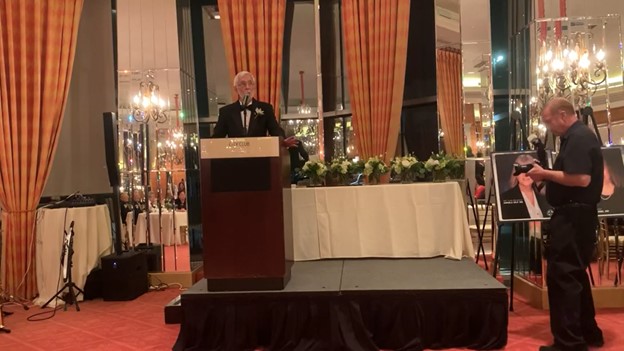
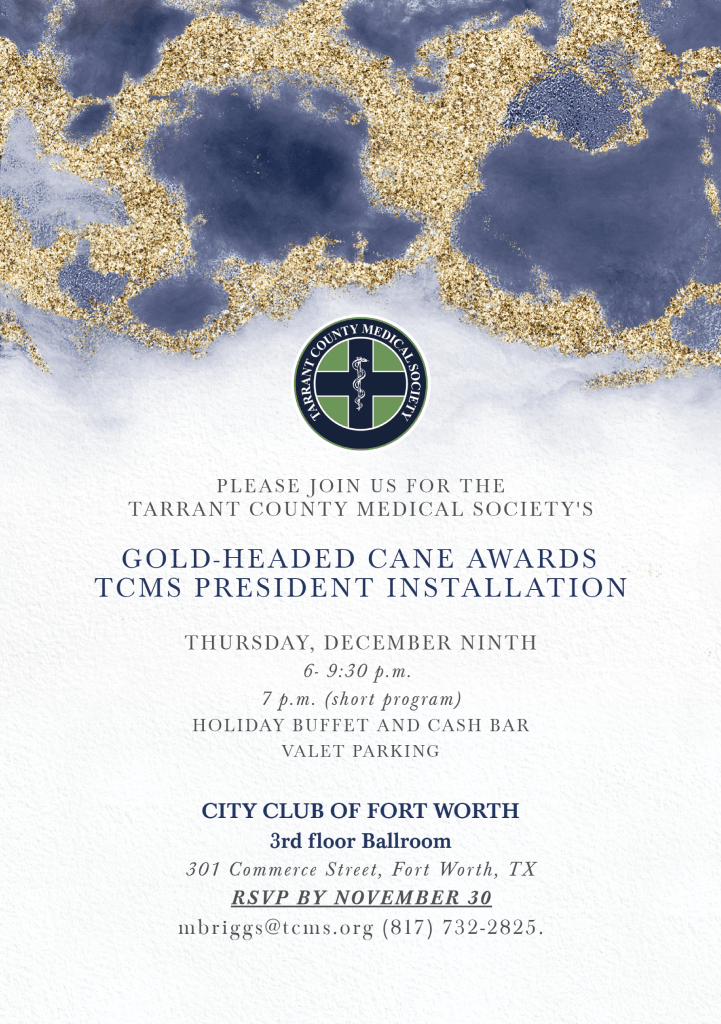
TCMS Gold-Headed Cane and Installation Celebration

Physicians, join us as we honor our 2020 and 2021 Gold-Headed Cane Award recipients and 2021 and 2022 TCMS presidents:

Teresa Godbey, MD – 2020 Gold-Headed Cane Award Recipient

Angela Self, MD – 2021 TCMS President

Susan Rudd Bailey, MD – 2021 Gold-Headed Cane Award Recipient

Shanna Combs, MD – 2022 TCMS President

The celebration will take place at the City Club of Fort Worth on December 9 from 6:00-9:30pm. If you plan to attend, please RSVP by November 30. You can do so here, or you can contact Melody Briggs at mbriggs@tcms.org.

We hope to see you there!

A Love Letter to the Community

by Rachel Marie G. Felix, OMS-II

This article was originally published in the September/October issue of the Tarrant County Physician. You can read find the full magazine here.

by Rachel Marie G. Felix, OMS-II

If everything I’ve learned in medical school thus far, my favorite realization has been that I love people. Given the fact that we live in a society rooted in individualism, becoming aware of this fundamental truth of mine was not as straightforward as it sounds. Especially when being part of the medical field, where there is constant pressure to compete, accomplish extremely taxing feats, and be the best all-around people we can possibly be at all times. From a young age, those who pursue medicine are conditioned to hyper focus on their individual accomplishments. However, through guidance from my extraordinary mom, support from my childhood loved ones, and interactions with my incredible classmates, I’ve come to truly understand my “why,” and it’s all for the community.

With a jam-packed schedule and overflowing course material, during the first few weeks of medical school I knew I had to take time to contemplate who I was and what I wanted from life, or else I would risk losing myself to the grind. And from deep reflection and unlearning during the Black Lives Matter movement, I realized that I thrive when I am able to contribute to the joy and wellbeing of those around me.

What came from living daily in this truth was life altering. I found myself soaking in every conversation shared with my mom and truly learning the depth of her selflessness. I challenged myself to go on a medical mission trip to help those with limited access to healthcare and was overwhelmed by both the support from my family and friends and the gratitude from those we were able to serve. I would even go to campus completely open to meeting new people and end up having such enjoyable conversations. This would lead to sessions of vulnerability and genuine connection, leaving me feeling enriched by the opportunity to appreciate the different sides of each classmate-turned-friend.

As I made a point to cherish each interpersonal opportunity, I realized just how fulfilling every day can be when we immerse ourselves in community. Yes, we can say we show appreciation for our communities through volunteering or even through our careers, but intentionally showing how much we care for one another as a regular practice is a lifestyle that I highly recommend. While there are many outside influences that can cause us to get caught up in our own worlds and participate in a zero-sum game, the truth is, there is abundance in the shared human experience. We are each beautifully complex and different beings with something unique to contribute to one another. So when one of us wins, we all win.

Conversely, we all hurt when one of us hurts. As made obvious by the pandemic, a flourishing community depends on the health of its people. So dear reader, I hope you are able to appreciate the unparalleled opportunity we have to positively impact those around us as healthcare professionals. Moreover, I hope you see how valuable both you and your patients are in creating a thriving community and allow every interaction—inside and outside of the clinic—to reflect that.

JPS Health Network Names New President and CEO

The JPS Board of Managers has announced the appointment of Dr. Karen Duncan as the administrator for the Tarrant County Hospital District, to serve in the role of president and chief executive officer for JPS Health Network, effective January 1, 2022. The move follows outgoing president and CEO Robert Earley’s retirement announcement two weeks ago.

“It is a testament to the strength of JPS that we found the right person to lead the health network into the future within our own ranks,” said Dr. Charles Webber, chairman of the JPS Board of Managers. “Dr. Duncan has been a steadfast champion of providing our community with the care they need and deserve, and I look forward to her leadership.”

Duncan currently serves as the network’s chief operating officer, and has been with JPS for five years. In that time, she has been responsible for transforming the community health network of medical homes and clinics, and most recently has steered the implementation of the JPS Future Plan, the bond-supported development of healthcare services and sites throughout the county.

“JPS is on the right track, and Dr. Duncan has been an integral part of that,” said Dorothy DeBose, incoming chair of the JPS Board of Managers. “We are fortunate to have a leader of her caliber ready to continue the great work we’ve already seen. We will work closely with her to design a succession plan for the organization that recognizes the current need for stability while continuing JPS’ growth.”

“I am both humbled and honored to serve as CEO of such a highly esteemed and accomplished healthcare system,” said Duncan. “JPS is well positioned to lead the transformation of healthcare delivery in Tarrant County and to improve lives within the many communities we serve. I look forward to working alongside a committed Board, a strong executive and leadership team and an amazing JPS team.”

Just last week JPS Health Network received top marks for patient safety and quality measures from the Leapfrog Group, the latest in a growing list of accreditations and honors for network which include Best Hospital for America by Washington Monthly and the Lown Institute and Outstanding Healthcare System by D CEO Magazine.

COVID-19 Vaccine Clinics for the Week of November 6

Tarrant County Public Health hosts numerous pop-up COVID-19 clinics across Tarrant County each week in partnership with public and private organizations listed below. Each site has the Moderna and Pfizer vaccines and at times the Johnson & Johnson. Vaccination are now available for children ages five and older at all of the TCPH locations. Booster doses continue to be available for those:

In addition the to the vaccination opportunities below, the cities of Arlington, Fort Worth, Mansfield, North Richland Hills, Hurst, and Tarrant County College have also added opportunities for vaccinations that are listed on our vaccine finder website.

TCPH would like to continue to partner with businesses, churches and other organizations in the community who are interested in hosting a COVID-19 pop-up clinic. It’s easy and free to host a clinic. Those interested can sign up for a public or private event at VaxUpTC.com.

Pop-Up COVID-19 locations:

Rep. Chris Turner and Commissioner Devan Allen
Saturday, Nov. 6: 10 a.m. to 2 p.m.
Bowie High School
2101 Highbank Drive
Arlington, TX 76018

Watauga Fire Department
Monday, Nov. 8: 8 a.m. to 12 p.m.
7901 Indian Springs Road
Watauga, TX 76148

La Gran Plaza
Monday, Nov. 8: 10 a.m. to 6 p.m.
4200 South Freeway
Fort Worth, TX 76115

Hurst Fire Station
Tuesday, Nov. 9: 10 a.m. to 6 p.m.
2100 Precinct Line Rd
Hurst, TX 76054

Immaculate Heart of Mary
Wednesday, Nov. 10: 11 a.m. to 3 p.m.
108 E. Hammond Street
Fort Worth, TX 76115

N. Richland Hills Fire Station 5
Wednesday, Nov. 10: 2 to 7 p.m.
7202 Dick Fisher Drive S.
North Richland Hills, TX 76180

Sundance Square Pavilion
Friday, Nov. 12: 11 a.m. to 7 p.m.
Near the intersection of 4th and Main Streets
Fort Worth, TX 76102

Northwest Public Health Center
Monday to Friday: 8 a.m. to 12 p.m. and 1 to 5 p.m.
3800 Adam Grubb Road
Lake Worth, TX 76135

Bagsby-Williams Health Center
Monday to Friday: 8 a.m. to 12 p.m. and 1 to 5 p.m.
3212 Miller Ave.
Fort Worth, TX 76119

Southeast Public Health Center
Monday to Friday: 8 a.m. to 12 p.m. and 1 to 7 p.m.
536 W Randol Mill
Arlington TX, 76011

Main Public Health Center
Monday to Friday: 8 a.m. to 12 p.m. and 1 to 6 p.m.
1101 S. Main Street
Fort Worth, TX 76104

Southwest Public Health Center
Monday to Friday: 8 a.m. to 12 p.m. and 1 to 5 p.m.
6551 Granbury Road
Fort Worth, TX 76133

Watauga Public Health Center
Monday to Friday: 8 a.m. to 12 p.m. and 1 to 8 p.m.
6601 Watauga Road
Watauga, TX 76148

COVID-19 causes respiratory illness with cough, fever and shortness of breath and may lead to bronchitis and severe pneumonia. For more information go to coronavirus.tarrantcounty.com or call the Tarrant County Public Health information line, 817-248-6299, Monday – Friday 8 a.m. to 6 p.m. and Saturday – Sunday 10 a.m. to 2 p.m.

COVID-19 Child Doses of Pfizer are Now Available in Tarrant County

Pfizer’s COVID-19 vaccine, Comirnaty, for children ages 5 to 11 years old is now available in Tarrant County. Parents and legal guardians should first talk to their pediatrician or local pharmacy to obtain their vaccination. Tarrant County Public Health will also be offering the children’s vaccine for those who cannot obtain it elsewhere.  

The Pfizer COVID-19 vaccine received final approval for use with children from the CDC on Tuesday, Nov. 2, 2021. On Oct. 29 the vaccine received its Emergency Use Authorization from the EPA. The EPA and CDC reviewed extensive data from trials to ensure the vaccine is safe for younger children. Critical points found during the studies include:

  • Effectiveness: Immune responses of children 5 – 11 years of age were comparable to those of individuals 16 through 25. In addition, the vaccine was found to be 90.7 percent effective in preventing COVID-19 in children 5 – 11.
  • Safety: The vaccine’s safety was studied in approximately 3,100 children age 5 – 11 who received the vaccine and no serious side effects have been detected in the ongoing study.
  • Dosage: The dose is just one-third (10 micrograms) of the dose for those 12 years of age and older (30 micrograms).

Children age 5 – 11 will receive two doses, 21 days apart, similar to those in the older groups already vaccinate. If a child cannot receive their second dose at 21 days, they are encouraged to get their second dose as soon as possible. Once the series has begun, there is no reason to restart; just finish up when it is possible. At this time, a booster dose is not recommended for children. 

“The more than 204,000, 5 to 11 year-olds in Tarrant County will now be able to receive a COVID-19 vaccine and help reduce the spread across our community,” said Tarrant County Public Health Director Vinny Taneja. “The fastest and easiest way to get a vaccine will be through the family pediatrician or at the local pharmacy. Public Health will offer the vaccine at each of its clinics across the County for those who need it.”

While younger children do not typically have severe outcomes when they contract COVID-19, they do act as spreaders taking it from home to school or from school to home, school to sports, school to daycare. In Tarrant County, there have been six deaths of people under the age of 18.

To find a COVID-19 vaccination clinic in Tarrant County, visit its website at www.tarrantcounty.com/vaccinefinder.

The COVID-19 vaccines are free to the recipients, whether they are insured or uninsured.

COVID-19 causes a respiratory illness with cough, fever and shortness of breath and may lead to bronchitis and severe pneumonia. For more information, go to coronavirus.tarrantcounty.com or call the Tarrant County Public Health information line, 817-248-6299, Monday – Friday 8 a.m. to 6 p.m. and Saturday – Sunday 10 a.m. to 2 p.m.

TMA Sues Feds Over Unfair Rule for Surprise Billing Law

Rule ignores statutory text and congressional intent, shrinks access to care for patients

The Texas Medical Association (TMA) filed a lawsuit in federal district court in Tyler, Texas, after the Biden administration failed to follow clear direction from Congress about how to implement the dispute resolution process set forth in the No SurprisesAct, legislation that was passed in 2020 to protect patients from surprise medical bills.

“TMA supports the patient protection intent of the No Surprises Act,” TMA President E. Linda Villarreal, MD, said. “However, TMA’s lawsuit challenges one component of the administration’s rule that ignores congressional intent and unfairly gives health plans the upper hand in establishing payment rates when a patient receives care from an out-of-network physician, oftentimes in an emergency.”

Congress intended to create a fair and unbiased process to resolve billing disputes between health insurance companies and physicians by ensuring that all relevant factors must be considered, with each given the weight deemed appropriate by the arbitrator. In contrast, the administration’s short-sighted approach will make it harder for patients to access care by driving down reimbursement rates and encouraging insurance companies to continue narrowing their networks. It will be difficult for small physician groups to keep caring for patients.

“The lawsuit filed yesterday ensures that the protections for patients against balance bills will go into effect on Jan. 1, 2022, while seeking to stop the imminent harm to physicians and hospitals created by an unfair arbitration process,” Dr. Villarreal said.

The recently released rule rewrites the statute by requiring the arbitrator in the independent dispute resolution process to presume that the qualifying payment amount (QPA), set by health insurance companies for patient cost-sharing purposes, is “the appropriate out-of-network rate.” This creates a bias that prioritizes offers closest to the QPA, rather than allowing arbitrators to exercise their discretion to weigh all relevant factors and select the reimbursement rate that most accurately reflects fair market reimbursement and individual circumstances.

The TMA lawsuit asks the court to strike this section of the rule and instead restore the fair, balanced dispute resolution process that Congress created. The lawsuit also alleges a violation of the Administrative Procedure Act, which requires a formal notice and comment period in advance of finalizing such a rule. The agencies failed to solicit and incorporate comments from stakeholders for this crucial aspect of the law.

“We wholeheartedly agree with U.S. Reps. Richard Neal’s (D-Mass.) and Kevin Brady’s (R-Texas) concern that the rule tips the scale in favor of insurance companies and will leave patients vulnerable,” Dr. Villarreal said. Representative Neal is chair of the U.S. House Ways and Means Committee, and Representative Brady is the past chair of the committee and currently ranking Republican member.

“We are disappointed the Biden administration ignored congressional intent and essentially set up the arbitration system to operate like a casino, with health insurers playing the role of the house,” Dr. Villarreal said. “Everyone knows the house always wins. With the current rule, patients, physicians, and our country lose.”

TMA is the largest state medical society in the nation, representing more than 55,000 physician and medical student members. It is located in Austin and has 110 component county medical societies around the state. TMA’s key objective since 1853 is to improve the health of all Texans.

The Hidden Paramedic

by Angela Self, MD, TCMS President

This article was originally published in the July/August issue of the Tarrant County Physician. You can read find the full magazine here.

I remember working as a medic in New York and New Jersey and loving what I did all day, every day (and many times all night). When I got “the call” to go to med school, I knew that it would be years before I could do anything clinical—at least eight years. My first procedure was at 14 years old at Southern Nevada Memorial Hospital (now University Hospital), when a surgeon let me round with him on a patient and told me to pull the tube straight back. I pulled out a chest tube at 14. Where do you go from there? Well, the day I went back to taking food trays to rooms and getting the nurse when a patient needed their bedpan to be emptied. After high school, I started taking dental x-rays, and I took great x-rays without even using the rings and film holders. I spent those moments in the darkroom praying and soaking in the blessing of the esteemed opportunity that I had been given as an almost dental assistant. Those x-ray skills thrust me into a career in dental and then oral surgical assisting. 

When life brought me back to my home state of Texas, I got my first job as an oral surgical assistant. Dr. Robert Thomas Perry hired me after looking at my résumé, which was handwritten on a 11-by-14-inch sheet of legal paper. Full disclosure, when he asked for my résumé, I did not know what that meant; he explained that it was a list of my experience. I was just about 21 years old by then, so he was an early inspiration for me. We would drive to remote sites to perform oral surgeries and I would read board review material to him for hours and hours as we drove from College Station to Corsicana and Huntsville. I learned so much about oral surgery from these hours of drives, which always included a stop for Blue Bell ice cream. 

Dr. Perry and his wife, a CRNA, were very well liked in the community, though he struggled to establish great referral patterns from the general dentists. While he was away doing his oral surgery training, two other oral surgeons, Garrett and Gray, had set up practice. Their winning personalities and ability to network between Bryan and College Station proved to be a barrier to Dr. Perry getting much business in this good ole boy country. Dr. McElroy did send us patients. Dr. McElroy is known to have left Thanksgiving dinner for an emergency; he even showed up at his office to meet a patient with a severe toothache one Christmas Day. That patient was one of my relatives (I got him on multiple holidays). Dr. Perry had me credentialed at both local hospitals and one in another town. At St. Joe’s in Bryan, I went through a week-long orientation in the OR, watching various cases so that I could assist Dr. Perry there—I knew all of the instruments he used and when he used them. I didn’t just see oral surgeries; I had a front-row seat for everything that was happening in the OR that week. I remember watching a vag hyst (in horror) and then a breast biopsy where they had to go ahead with a mastectomy right then, after the frozen section came back positive. I was a high school graduate dental assistant, and I was in the OR. 

You think it’s difficult to get someone to take a statin? Try telling them you’re going to put a tube down their throat. 

I first started assisting Dr. Perry in the OR when he performed orthognathic surgery that included down-fracturing a maxilla. I was so happy and fulfilled in my work. I had arrived. When the local hospitals stopped using CRNAs in the mid 80s, Dr. Perry had to move his family back to Ohio, where he had trained. Sue, his wife, was actually the breadwinner. Dr. Perry once had a farmer pay him with a side of beef (tractor accident). Another elderly woman paid him by making fabric holders for his surgical instruments. He was not the only oral surgeon that I worked for who depended on the income of their spouse to stay afloat. After crying every day for two weeks over having to leave Dr. Perry due to the imminent practice closure, I moved back to New York, where I had lived right after high school. I went to work for another oral surgeon there and I also joined my volunteer ambulance corps.

I was a trainee at the South Orangetown Ambulance Corps when I took my EMT course and then immediately followed with my medic course, which I studied at White Plains Hospital. I worked in Rockland County with my ambulance corps and in Westchester County as part of my medic class. I remember being in Yonkers, where the medics put on bulletproof vests at the beginning of their shift. I drove around White Plains looking for an address where there was a patient with a GI bleed. The police kept telling me to step it up (the patient was bleeding out from varices). Basic Life Support (BLS) transported the patient before I arrived as I was not familiar with White Plains, having lived in Rockland County and only commuting to Westchester. I remember once, when responding to a cardiac arrest, we found upon our arrival that the husband had coded, too. I had to decide which code we would care for, and which one would have to wait for the second unit to arrive. 

One time I regretted having taken this career path—it was in the moments before arriving on-scene at an accident involving a train. Thank God for my partner, who also worked for NYC EMS at the time. He was a calm and reassuring voice as we worked with the PD to locate the body parts. This was important, because when daylight came there would be parents driving kids to school and the carnage would be seen in the light of day. There was the time that I dropped my partner at a call with the volunteers (we worked as a pair from a fly car, which is used to carry equipment, and would split up as needed). I arrived at a scene where the wife called about her husband, who was unresponsive. I had to speak to the wife in a calm, reassuring way as I dragged her husband by the feet from the foot of the stairs to the middle of the living room floor where I would intubate, put on the monitor, start an IV and work the code until another BLS unit arrived to transport him to Nyack Hospital. An awake intubation on someone in distress from severe congestive heart failure is an exercise in coaching a patient. You think it’s difficult to get someone to take a statin? Try telling them you’re going to put a tube down their throat. 

I knew I wanted to go to med school, but it wasn’t to be in New York, and I didn’t apply anywhere else. While working in White Plains I met fellow medics George Kiss and John Brebbia. They were both students at Saint George’s University School of Medicine. I also knew Dr. Stuart Rasch, an ER doc at Nyack who was an SGU grad. I applied. I got in. I went. I continued to work as a medic per diem during my breaks from school. I worked for several companies at one time—Mamaroneck, Portchester Rye, and Larchmont, which were volunteer agencies with paid medics, and Rockland Paramedic Services and Clifton-Passaic MICU in Passaic, New Jersey. The relationships that I made still endure. The experiences that I had continue to keep the paramedic in me alive. I miss days when I would arrive at the home of an elderly person having an MI or pull up on the scene of an MCI (mass casualty incident). The other day I was talking to a close friend on the phone, and he mentioned in passing that his dad was short of breath. The last time someone mentioned that in passing (in the pulpit at a church), they ended up in the cath lab getting stents the following day. This time it was a friend, and I knew his dad. I calmly asked, “Do your parents mind if I come over?” Though it was late at night, they agreed. I got dressed and went over and did a medic questionnaire and exam which led to an ER visit and hospital stay. Though the family is thankful that I was there, I am even more thankful, because they allowed me the opportunity to remember life when I would wake up and be excited to go to work every day, all day (and many times all night).

Design a site like this with WordPress.com
Get started